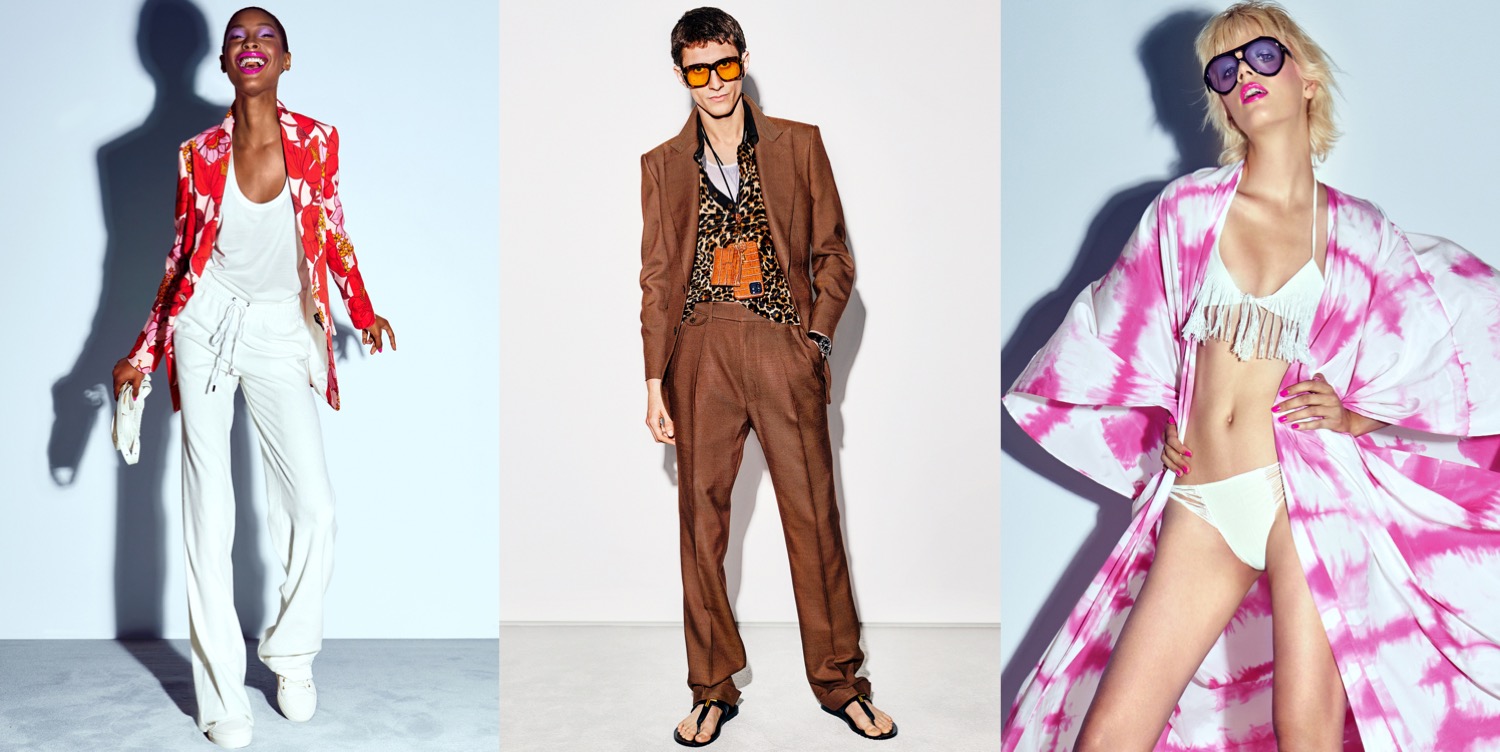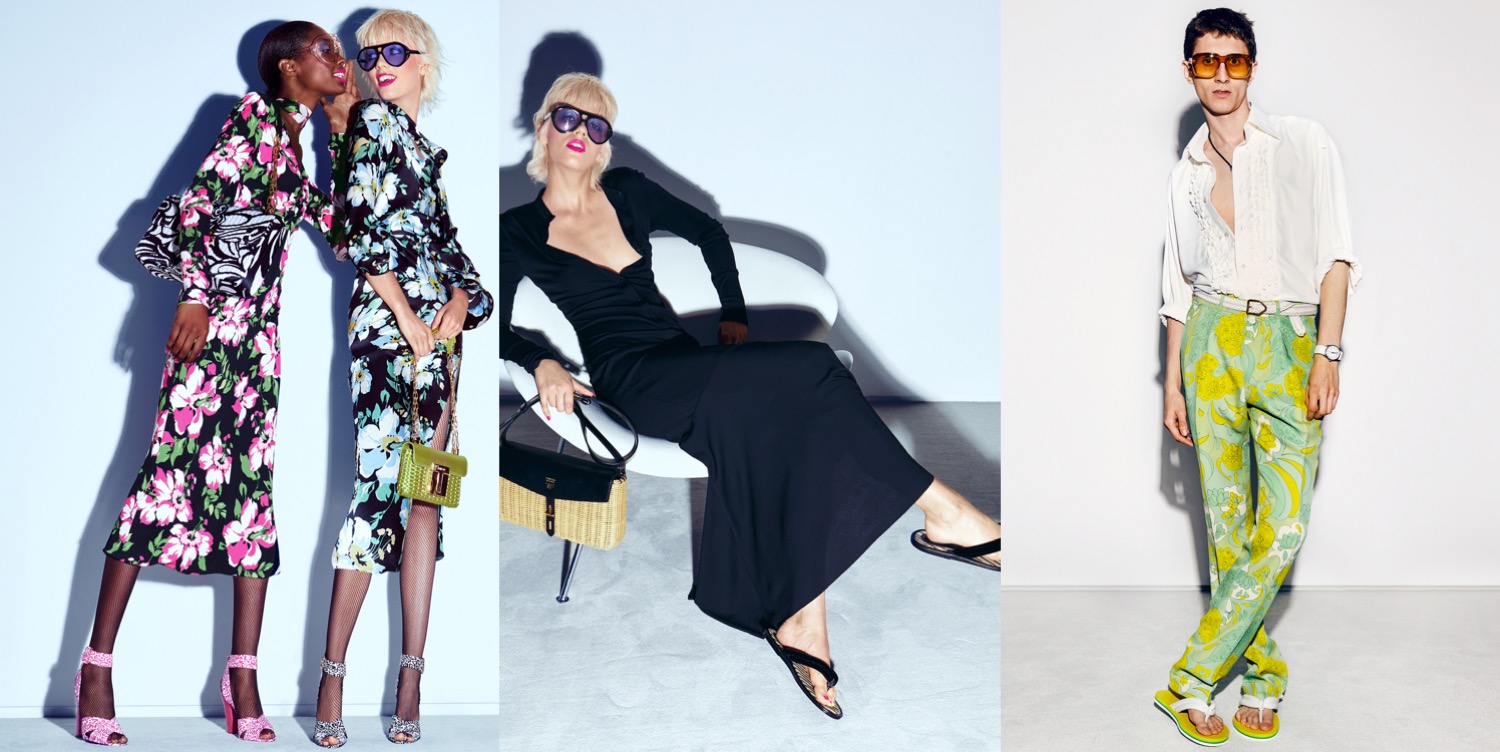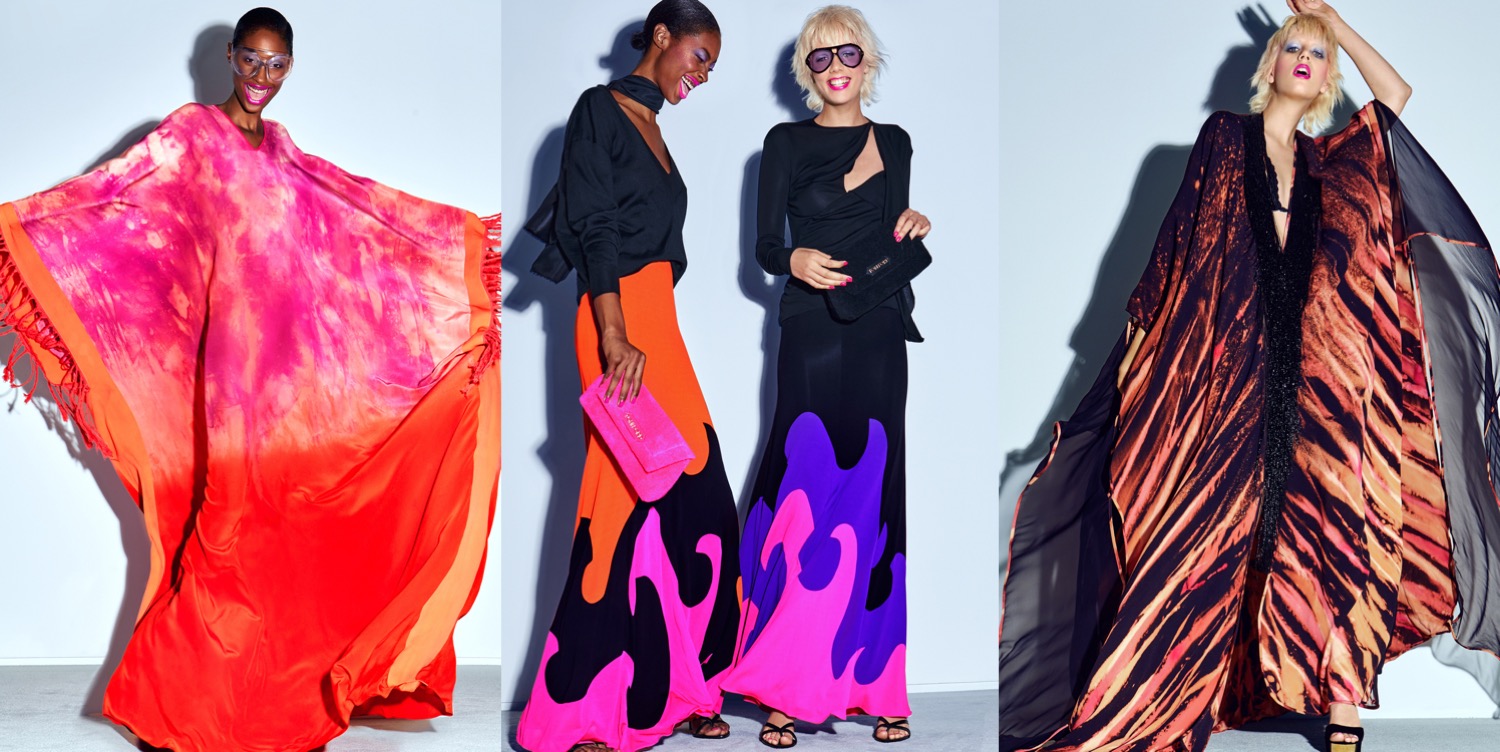
Hope Is Here. Tom Ford SS21

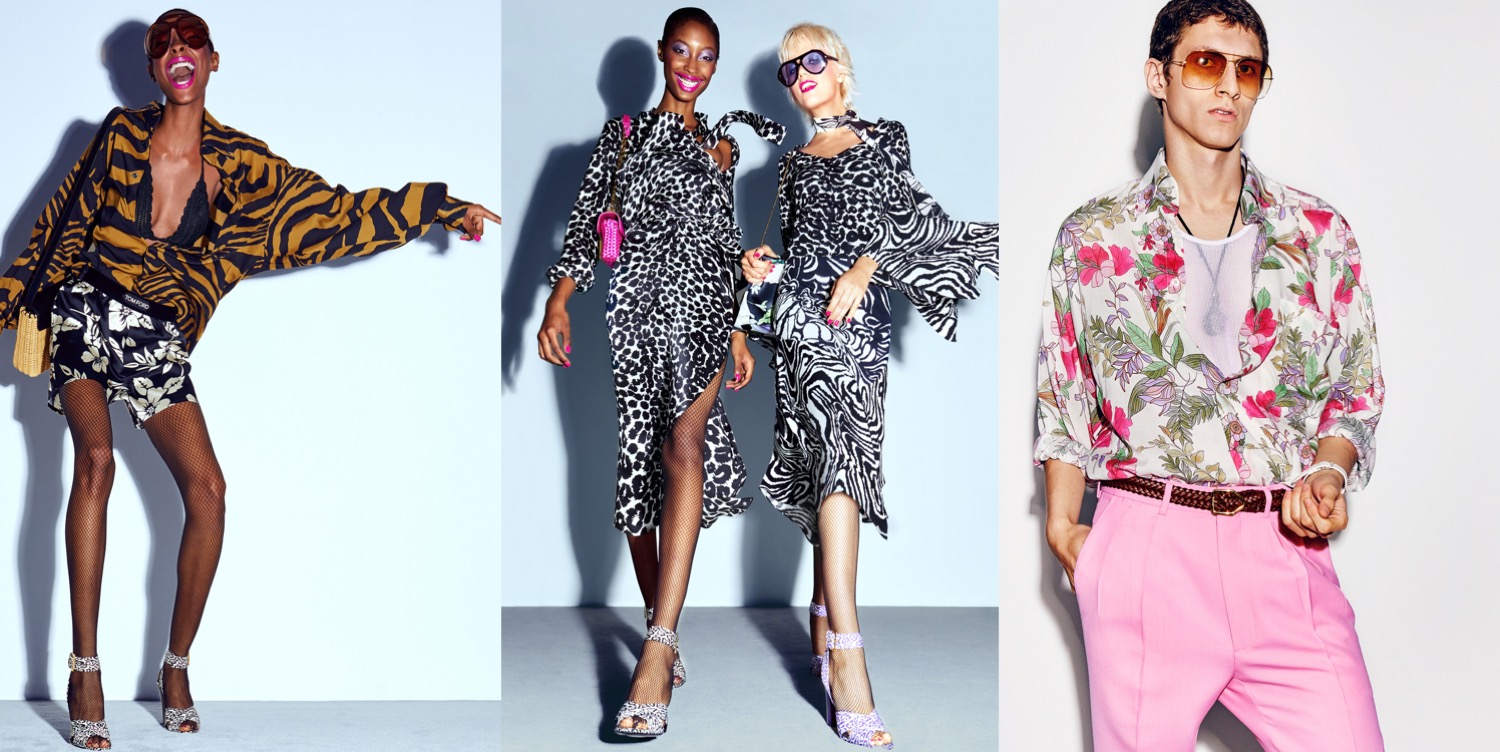
Tom Ford’s spring-summer 2021 line-up – of course presented as a look-book – is the finale of the largely digital New York Fashion Week, which had missing many big names and was a mood rollercoaster. Some labels opted for sober pragmatism (like Khaite), while others for something more joyful and sweet (Rodarte for instance). Ford’s collection falls into the latter camp. “I honestly wasn’t sure I could make a collection even if I felt inspired to do so… I felt that fashion should simply go into hibernation for a year.” Of course, that would never do. Ford is the rare designer who knows what his woman wants before she does. The collection he put on the runway back in February was loaded with athletic gray sweats and patchworked jeans – exactly the kind of glam casual things that his customer might have liked to wear through quarantine.  For spring, the designer’s gut told him to do something that’s hopeful and exuberant. “The last thing I want to see are serious clothes,” he said. “I think we need an escape. I think we want to smile. I know what’s going on in our world right now doesn’t make us want to smile. So that’s what I’ve done: hopeful clothes that make you smile.” Ford found the conduit for those vibes in a documentary about the fashion illustrator Antonio Lopez and the ’70s models Pat Cleveland and Donna Jordan whom Lopez sketched. That is the era that he loved to work around at Gucci. And when Ford looks back at his Gucci years, expect good things. This is an extrovert’s collection, with plenty of skin and very little pretense (I just hate the logo-ed bands…). There’s a compelling ease to the clothes, even though the attitude is dressed up. Shirts are unbuttoned to the navel, nodding to the cult spring 1995 Gucci show. The colorful florals seen on several slinky dresses and a pair of neat blazers for both women and men are cheering. The tie-dyed caftan and pool robes are heaven and make me think of Samantha Jones. Maybe, in the end, we will again enjoy festive garden parties?
Collage by Edward Kanarecki.
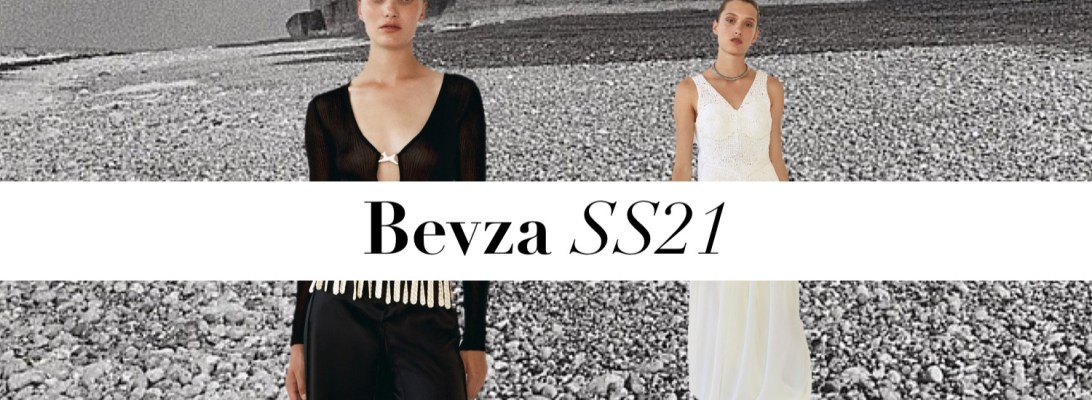
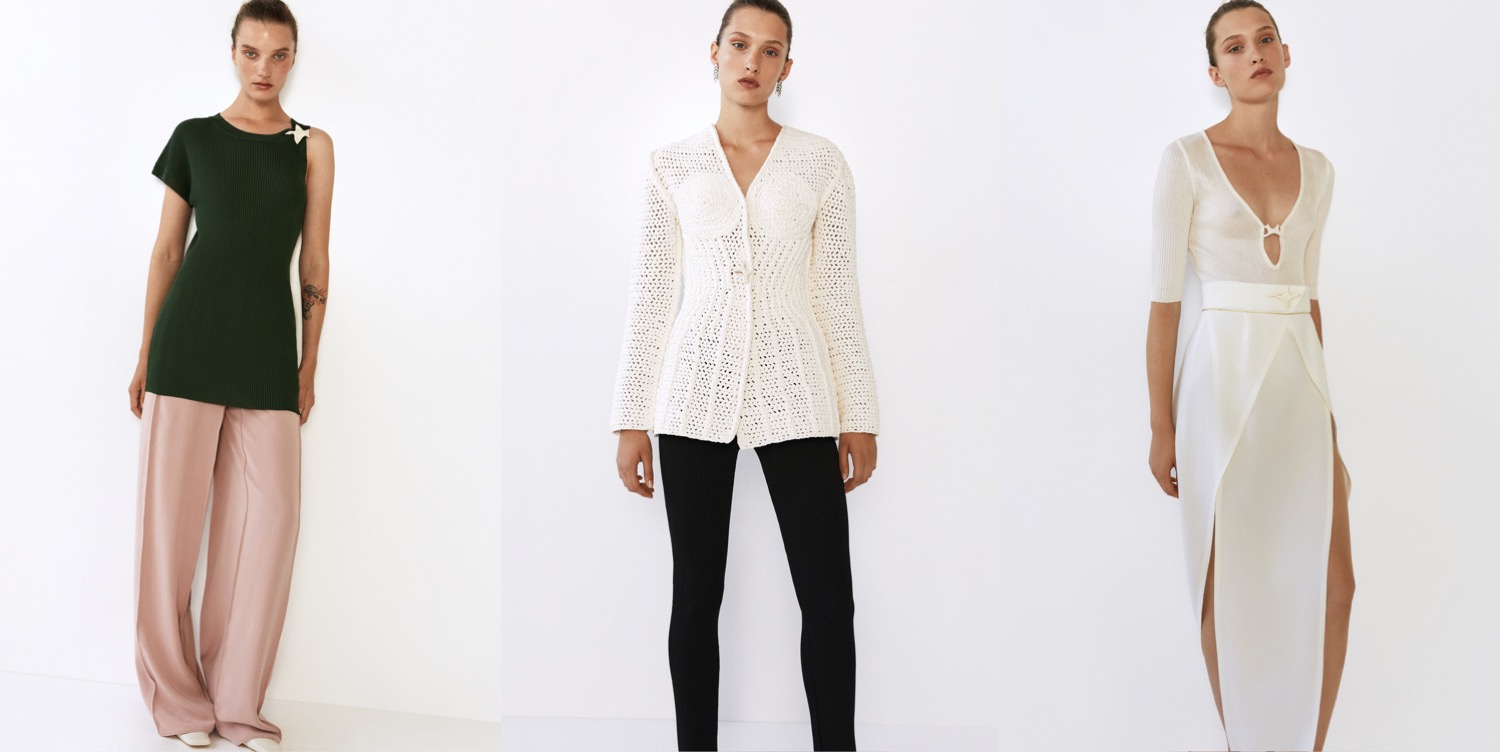
Modern Goddess. Bevza SS21

The one good thing about this season’s cropped New York Fashion Week is that the small brands that show here for years, but stay always under the radar due to overcrowded schedule, get the spotlight they deserve. Svitlana Bevza’s designs may be minimal, but there’s deep meaning and history behind their simplicity. In her previous Bevza collections, she’s often referenced her Ukrainian heritage, specifically the country’s powerful women. This season, she created a narrative around her study of Trypillia, an ancient pagan civilization that cherished women. Harvest symbols also played a role in pieces like a delicately braided knit top and a silk dress with pleating at the bodice mimicking a “tree of life.” Paying homage to the Trypillia women, Bevza designed sharply tailored, corseted dresses, and a tunic with visible stitching outlining the female figure. Those pieces were soft and sensual but still strong, especially a hand-knit ivory coat. The earthily hued, subtly textured garments were accessorized by ceramic jewelry modeled on the statues of the Trypillia people. In the absence of a show, the designer created a film that further emphasized her aesthetic and passion for sharing her Ukrainian history. This collection is an example of how fashion can tell a story and educate us on the world.

Collage by Edward Kanarecki.
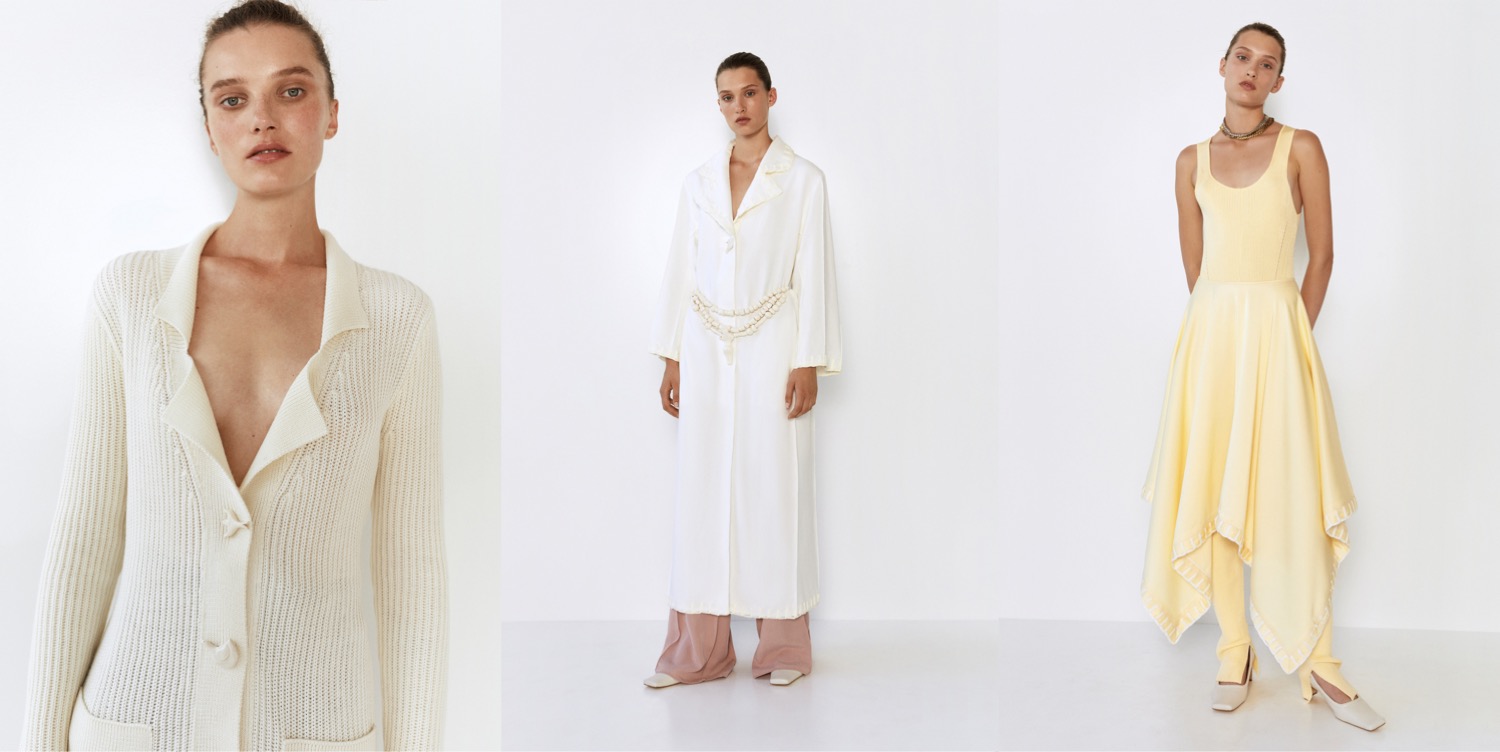
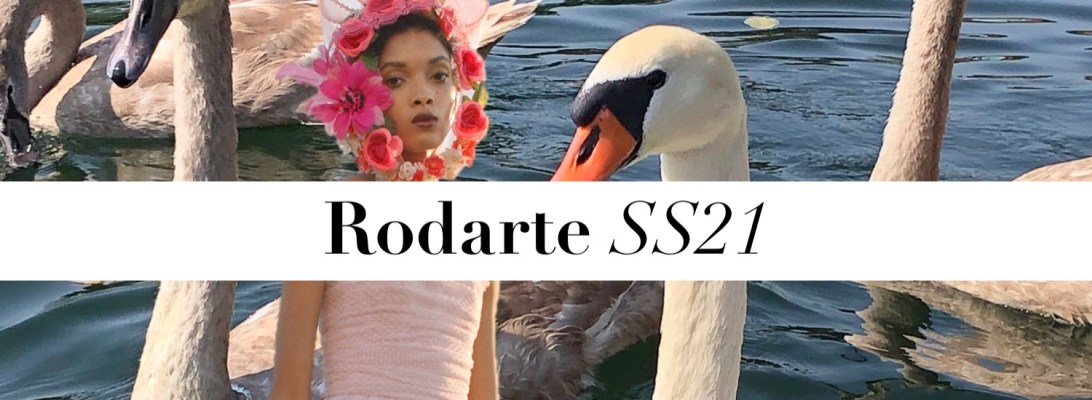
Simple Magic Is Still Magic. Rodarte SS21

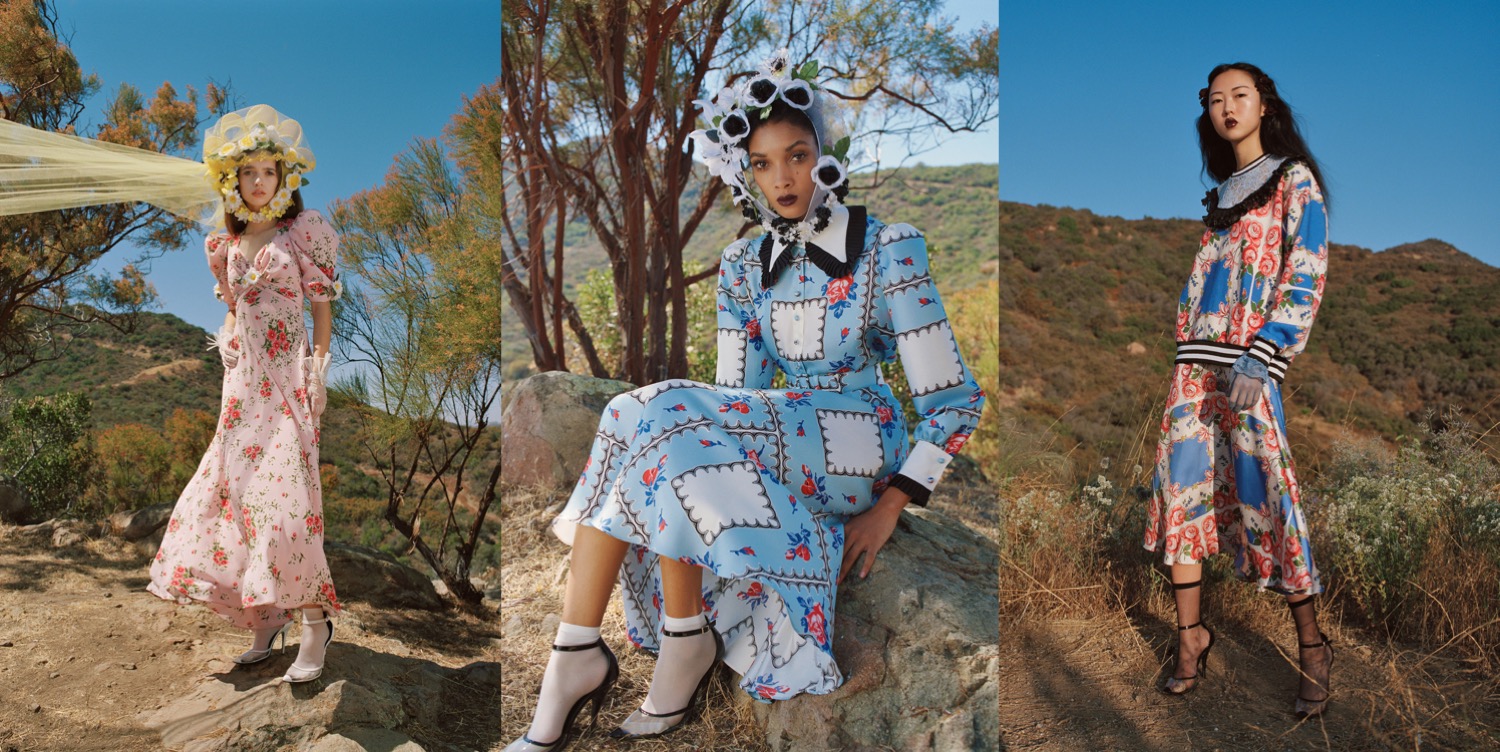
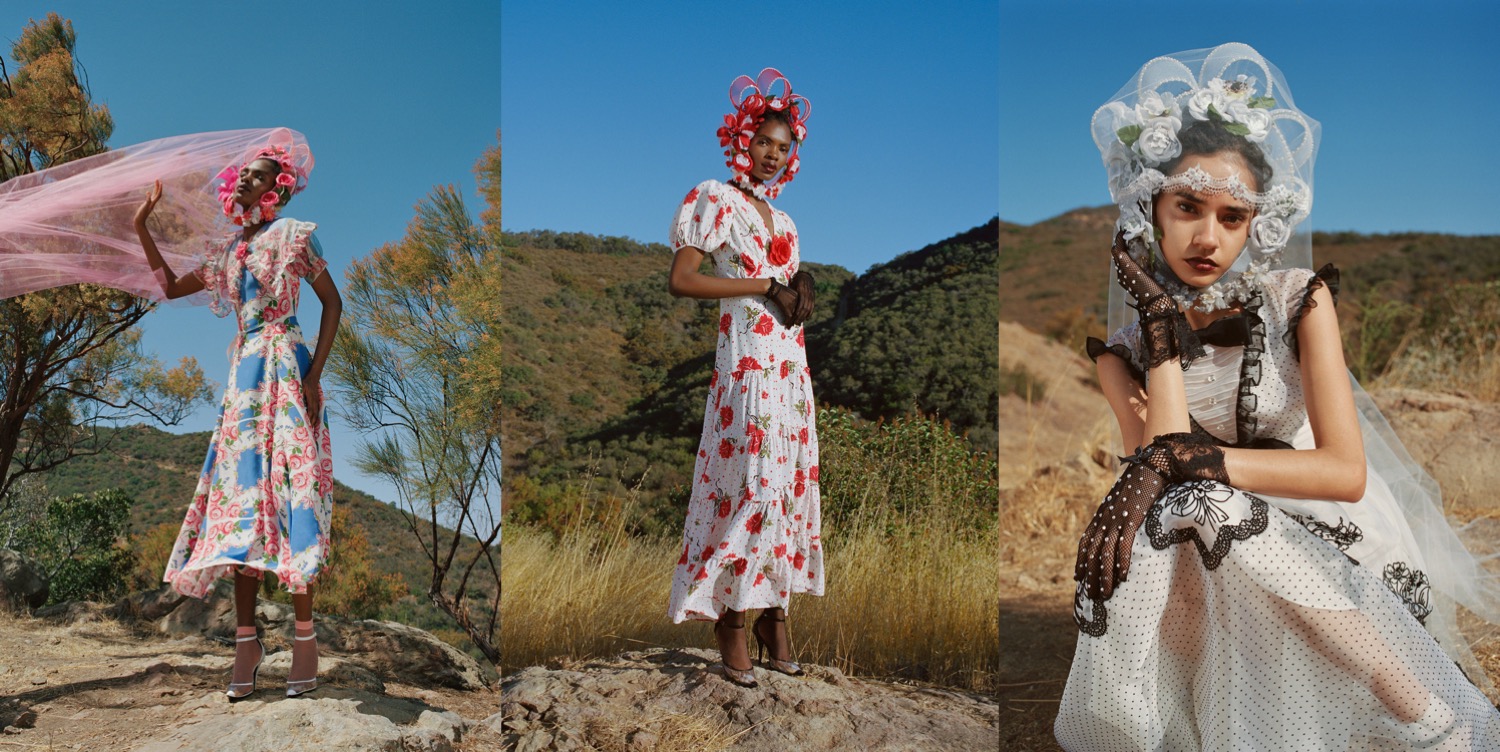
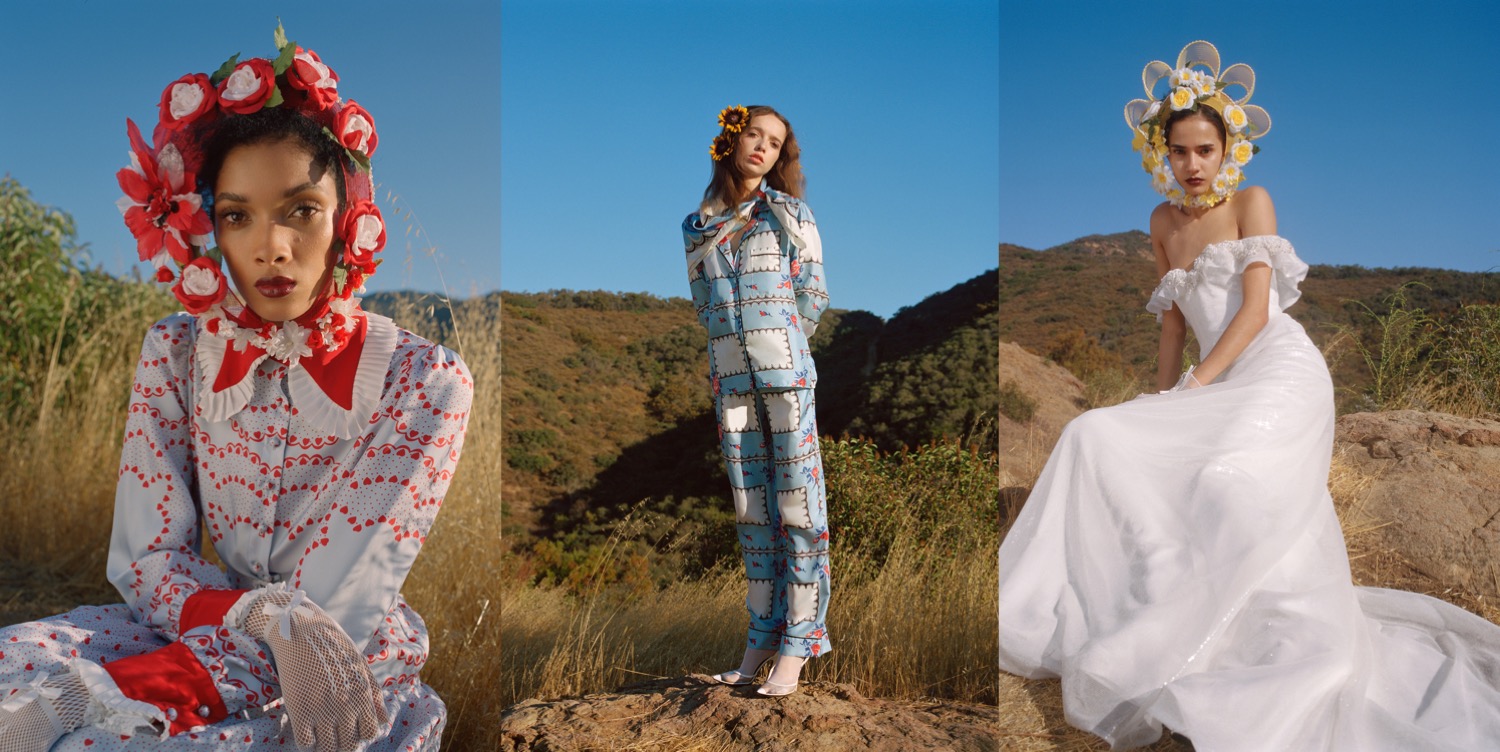
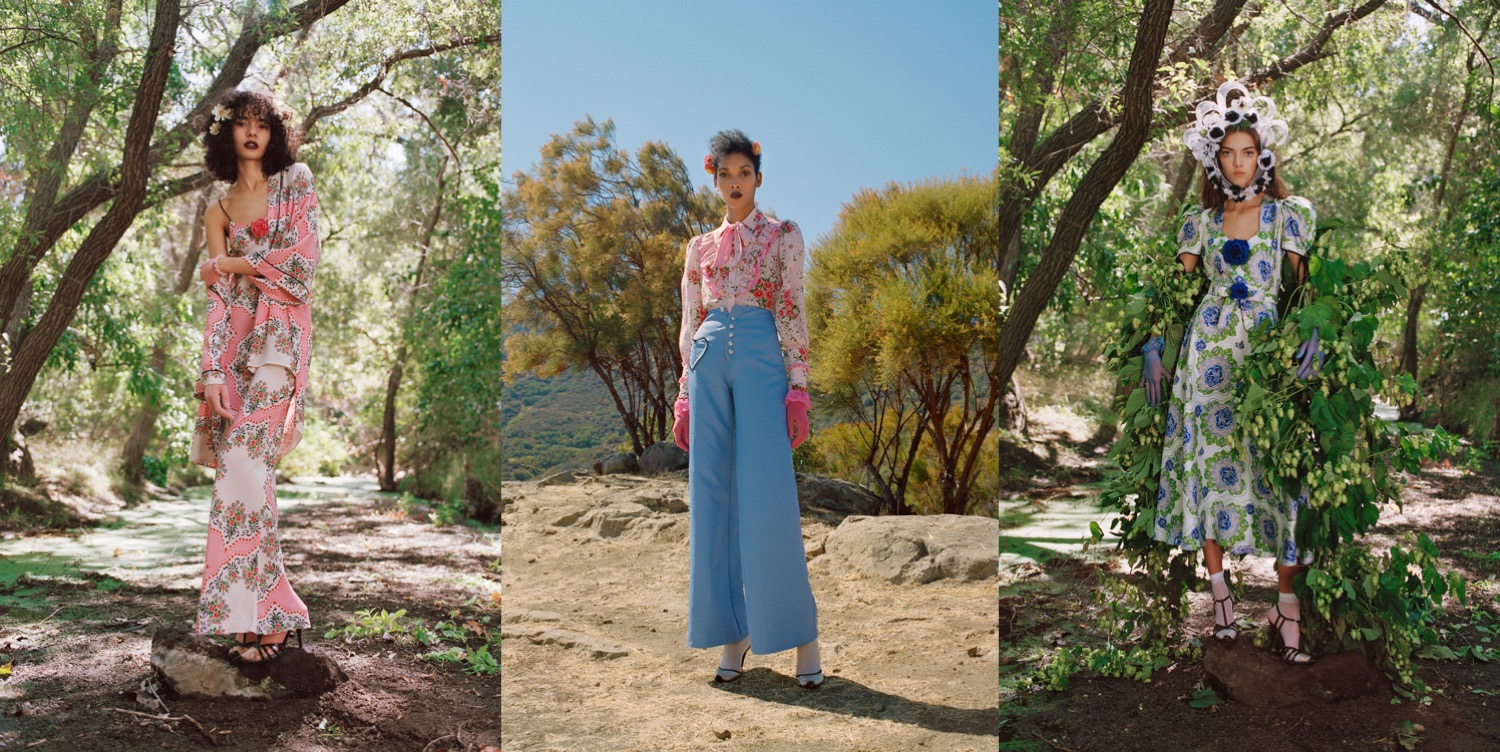
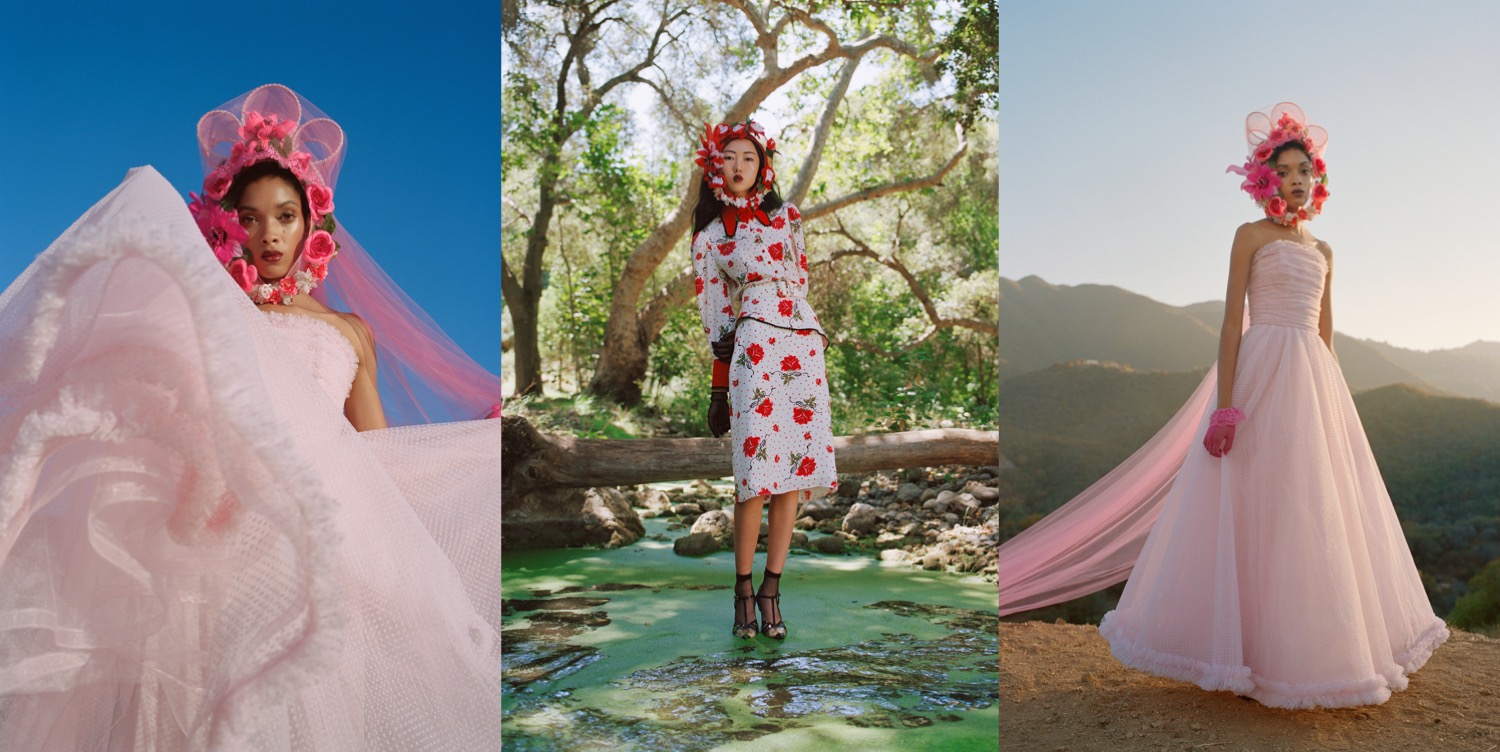
After last season’s Dracula-bitten, romantic extravaganza, Rodarte’s spring-summer 2021 collection – presented in a look-book – is understandably much less dramatic. It’s actually about coming back to the brand’s roots, according to Kate and Laura Mulleavy. The dual crises of a global health pandemic and raging wildfires in California – the sisters’ homeland – forced the designers back into that state: at home, together, with only their creativity to occupy them. While their collection was borne from the same cloistered Californian sisterhood of their earliest outings, the final products are visually different. It’s signature Rodarte, but in more practical-magic version. It’s not so much that the tulle explosions or the cake topper confections have dulled; in the face of such tough times, the sisters are emphasizing the importance of making fashion for this struggling world. “Everything we do is about fantasy and dreams, but we are located in a moment, and we are a part of what is happening now,” Kate told Vogue. A fanciful gown, both designers agree, has little place in today’s world, so instead they channeled their efforts into clothing they would want to wear now “without distilling the ideas.” Expect florals, veils, and just slightly off sweetness. Pajama sets, slips, and robes appear in dainty and orderly floral prints inspired by their local gardens. The floral story continues in the ’40s dresses they played with last season, now relaxed in shape with prints that radiate from the navel or appear in handkerchief-like grids. Silk sweatshirts (I’m on fence with logo ones, though), trackpants, and midi-skirts continue the motif, trimmed in lace or ruffles. All this is topped off with silk floral wreaths that frame models’ faces, giving them the impression of fairies, nymphs, or other magical woodland creatures. With this collection, the Mulleavys have proven their ability to make inherently useful garments that don’t compromise on the Rodarte identity.

Collage by Edward Kanarecki.

Katharina Grosse at Hamburger Bahnhof (and More!)

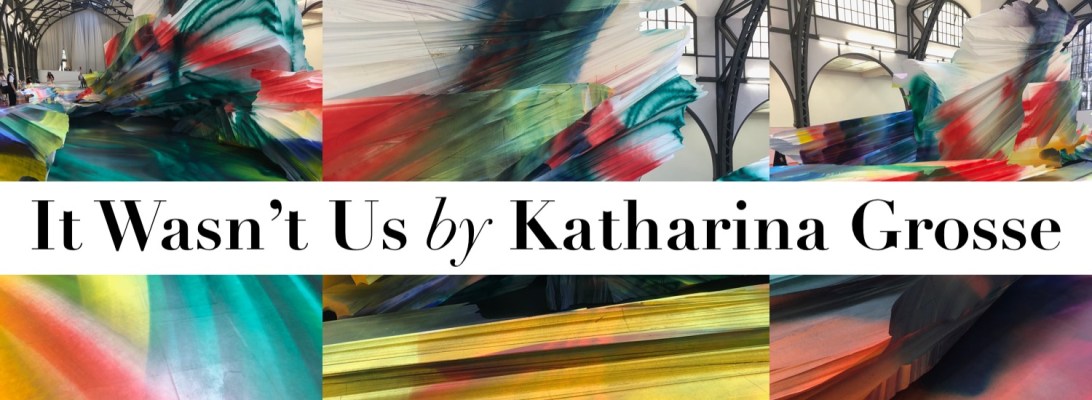
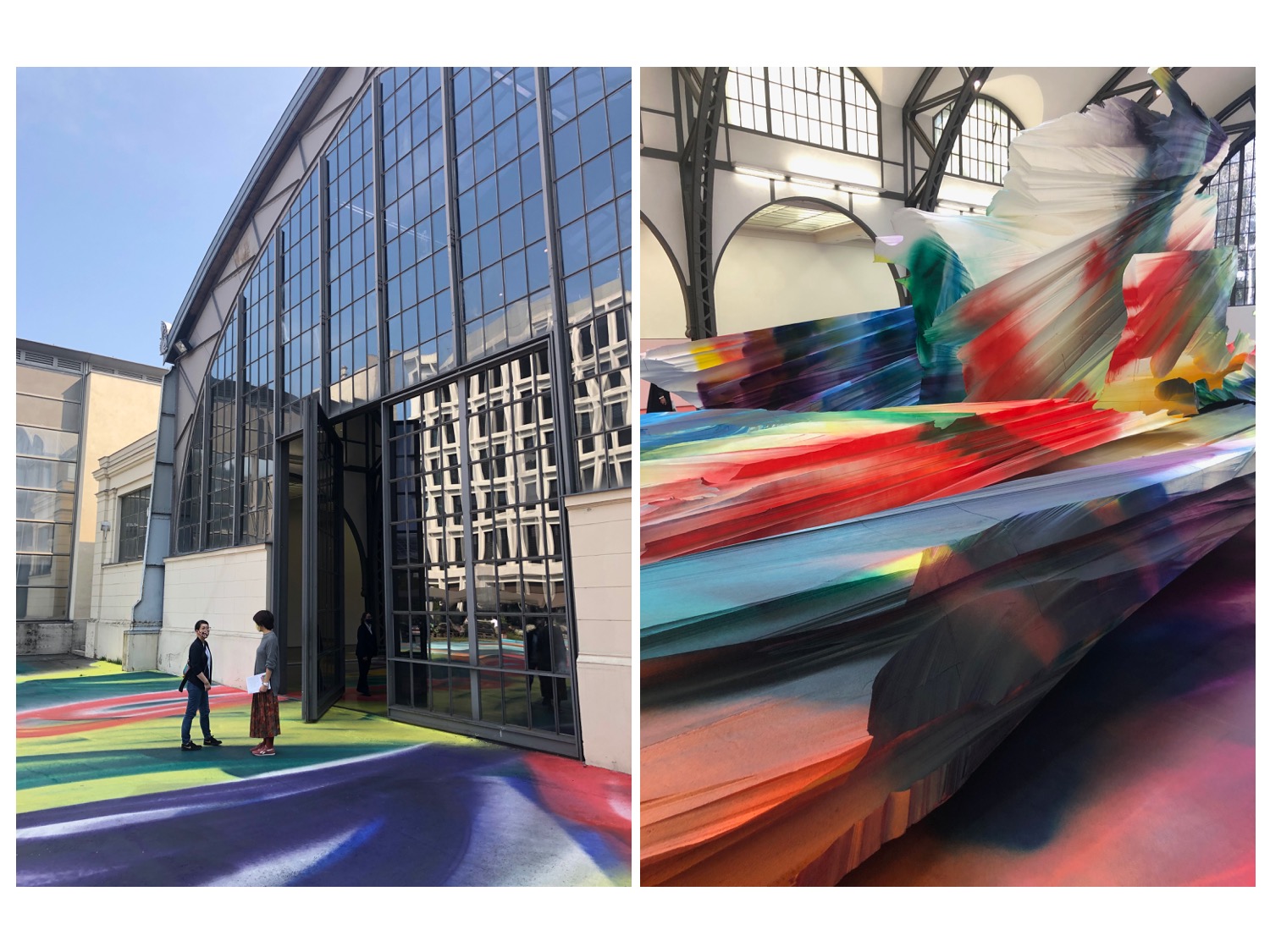
Oh, how I’ve missed museums! I wanted to see Katharina Grosse‘s “It Wasn’t Us” exhibition so badly! First, I love her immersive work. Second, coming back to Hamburger Bahnhof, one of Berlin’s best museums of modern and contemporary art, was a good idea, as I’ve been there once as a child and I forgot how great this place is. Now, back to Grosse. A painting by her can appear anywhere. Her large-scale works are multi-dimensional pictorial worlds in which splendid color sweeps across walls, ceilings, objects, and even entire buildings and landscapes. For “It Wasn’t Us” the artist has transformed the Historic Hall of Hamburger Bahnhof as well as the outdoor space behind the building, into an expansive painting which radically destabilises the existing order of the museum architecture. Katharina Grosse’s latest in-situ painting disregards the boundaries of the museum space in a grand and colourful gesture: “I painted my way out of the building,” said Grosse in relation to her work. Over the course of several weeks a vast new painting has emerged that stretches across the Historic Hall and into public space, over the extensive grounds behind the museum, landing finally on the façade of the so-called Rieckhallen which were inaugurated as a part of the museum complex in 2004. Grosse’s kaleidoscopic painting brings together colours and forms, natural and man-made surroundings and its visitors as participants in an all-encompassing, pulsating interaction of hues. The boundaries between objects, and between horizontal and vertical orientations begin to melt away, and the work’s scale continuously shifts depending on the visitor’s position. As the viewer moves through the painting new spaces emerge that are both artificial and ripe with associations, and at the same time completely real, forcing us to renegotiate our habitual ways of seeing, of thinking about, and of perceiving the world around us. The choice of the location and the many different factors and conditions it entails have influenced the development of the painting, just as the permanently shifting lines of sight of the viewer and unexpected interactions with the work affect our ways of perceiving it in the exhibition setting. In this sense, the work’s title, It Wasn’t Us, can be understood as a reference to the inherent complexity and unpredictability of a given situation, whether it be the conditions under which artists create their work, or the conditions under which it is later viewed. The painting exists only for the duration of the exhibition – which is open util the 10th of January 2021.

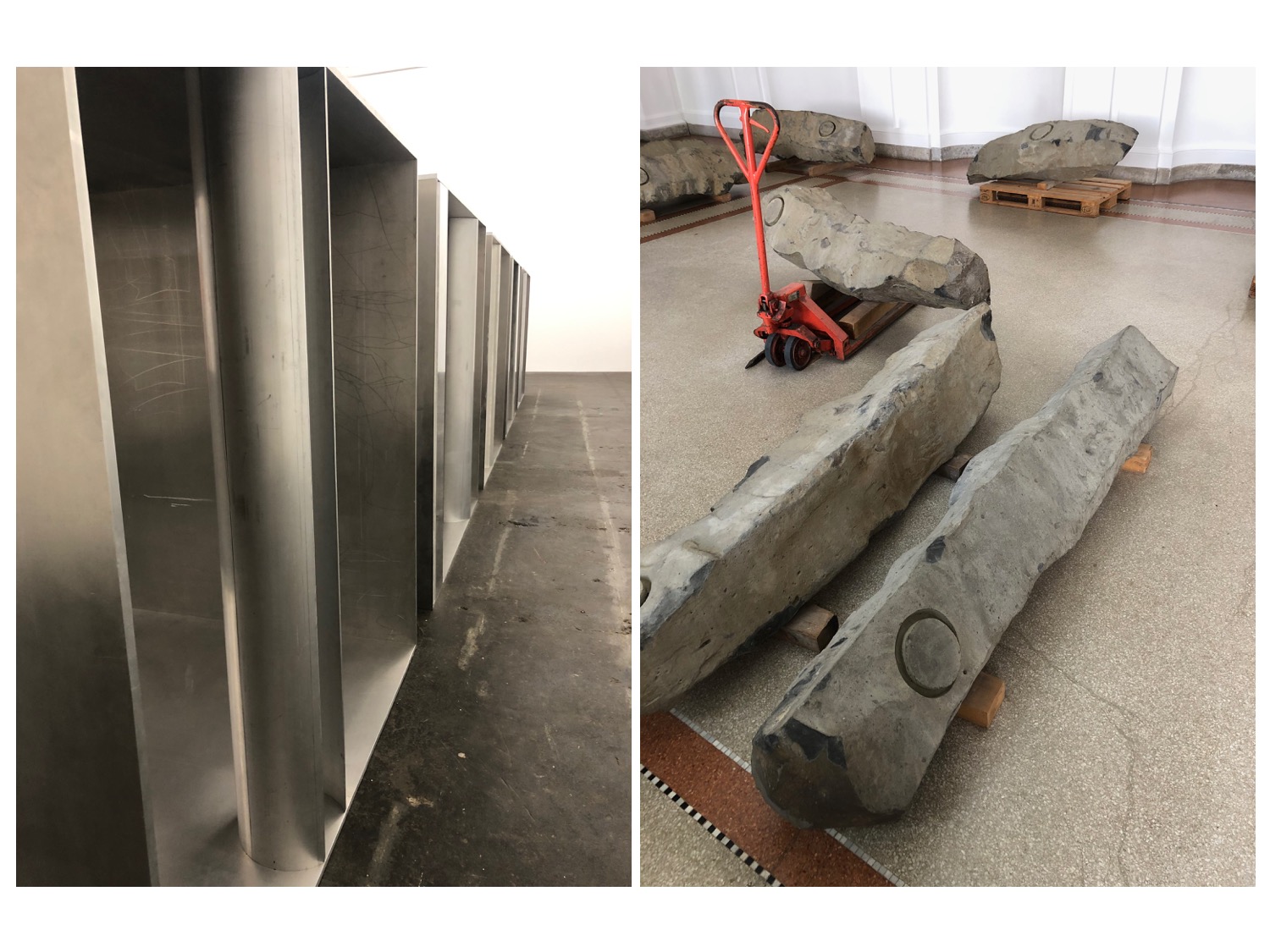
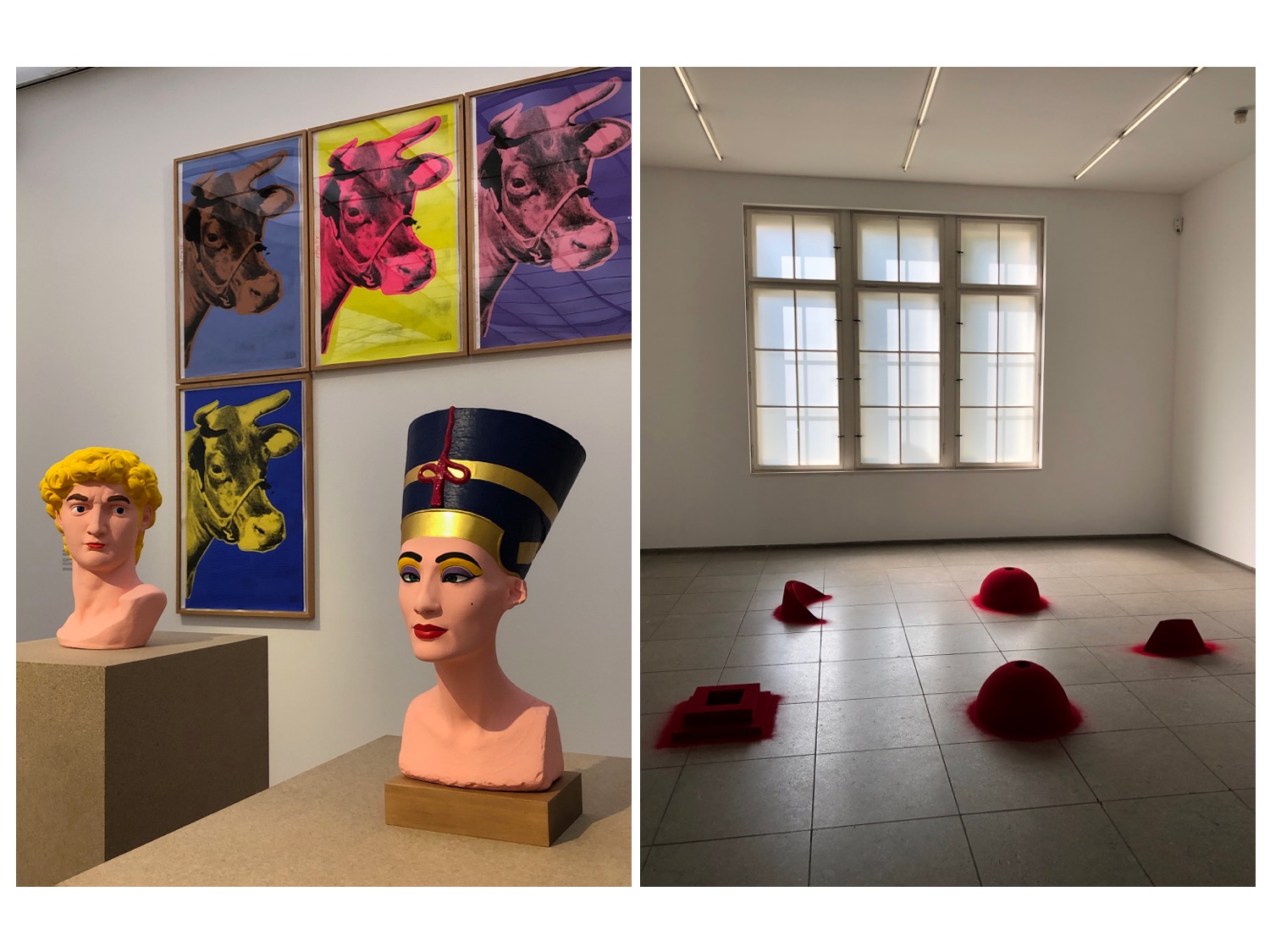
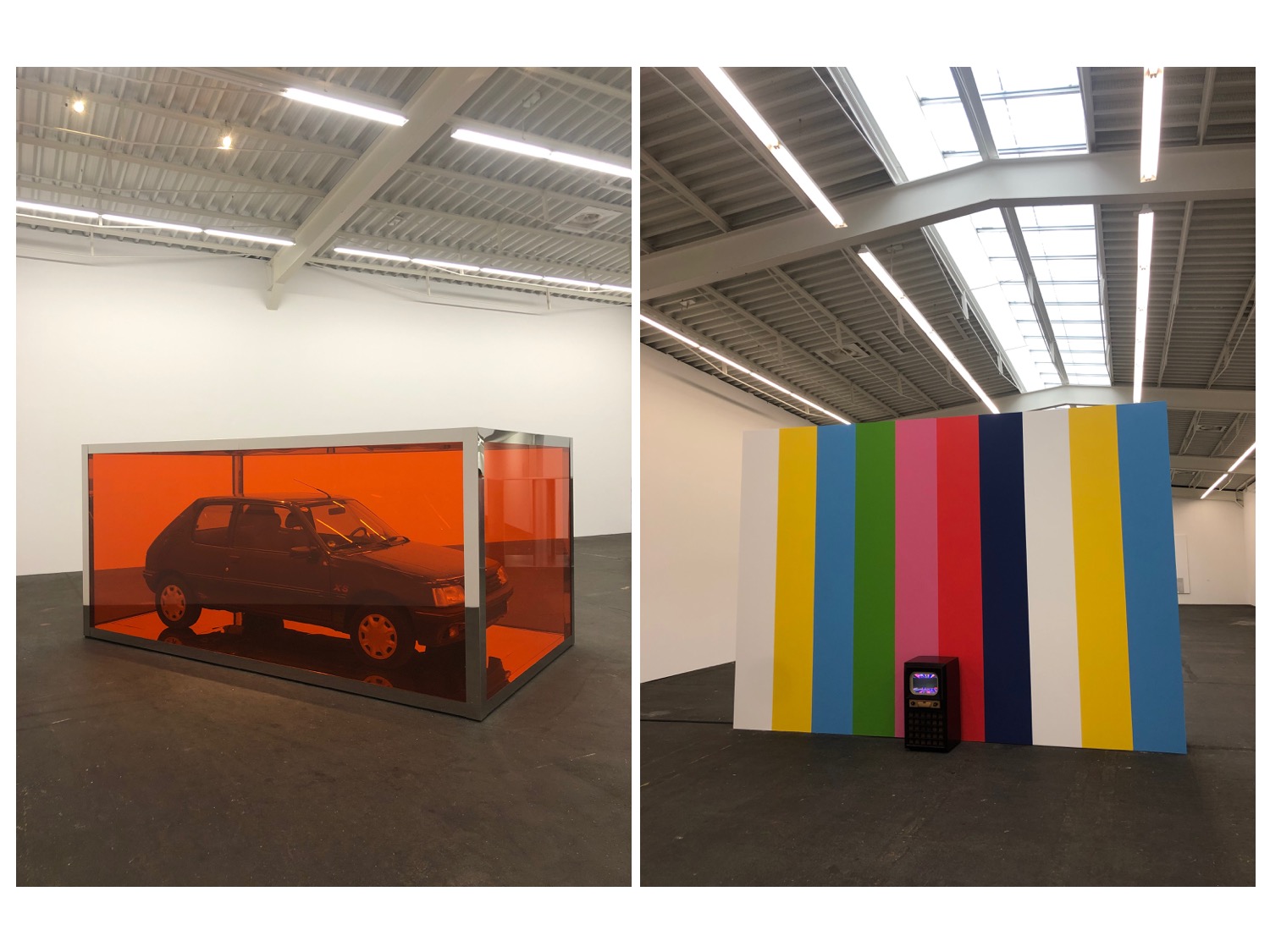
At the moment there’s also another exhibition going on at Hamburger Bahnhof, titled “Magical Soup“. Spaciously presented across more than 2,000 square metres in the museum’s Rieckhallen complex, the group exhibition features key works complemented by loans representing the latest generation of artists, with a common point of departure being the nexus of sound, image and social space. “Magical Soup” brings together works by the media art pioneers Nam June Paik, Jochen Gerz, Charlemagne Palestine, Ulrike Rosenbach and Keiichi Tanaami; by the multimedia artists Nevin Aladağ, Stan Douglas, Cyprien Gaillard, Douglas Gordon, Rodney Graham, Dmitry Gutov, Anne Imhof, Joan La Barbara, Pipilotti Rist (her installations are so powerful!), Diana Thater, Lawrence Weiner, Nicole Wermers and David Zink Yi; and by the younger artists Korakrit Arunanondchai, Trisha Baga, Dineo Seshee Bopape, Christine Sun Kim, Sandra Mujinga and Sung Tieu. Here are some of my favourites, combined with the Hamburger Bahnhof’s permanent gallery, feauturing some good old Andy Warhol and Joseph Beuys:

All photos by Edward Kanarecki.
Juergen Teller at Grisebach

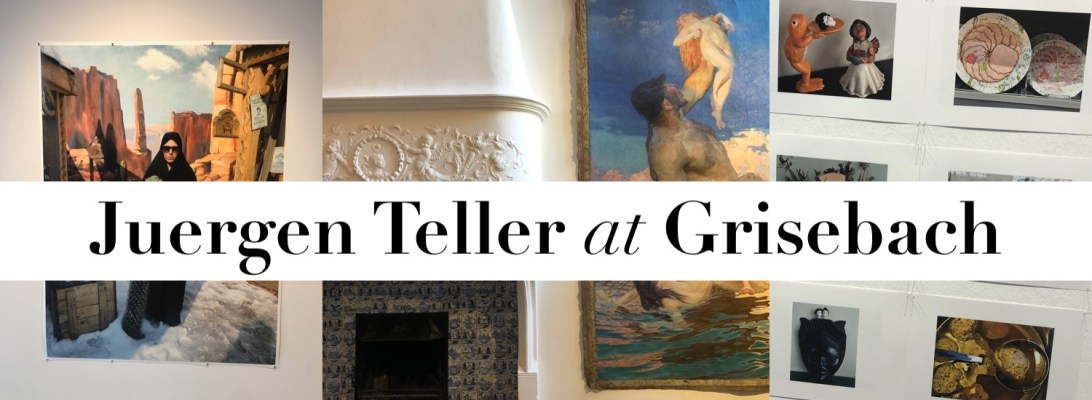
If you read my journal or follow my Instagram for a while, then you’ve surely noticed my obsession with Juergen Teller and his work. So when I discovered that his two exhibtions open at Grisebach (one of the oldest auction houses in town), I marked 12th of September right away in my calendar as a mandatory trip to Berlin. And… my dream came true. He was there with his partner, Dovile Drizyte, they both signed books and talked with guests. I even took a photo with him – just couldn’t resist that opportunity (sorry not sorry)! He was happy I came especially from Poland to attend the opening… Ok, back to the exhibitions. Grisebach presents precisely two exhibitions with the photographer: “If You Pay Attention” and “Araki Teller, Leben und Tod”. “If You Pay Attention” was completed in collaboration with Drizyte, and features a series of photographs that were taken at the end of 2019 to the beginning of 2020, on an adventurous, heavenly, yet life-threatening journey through Iran. Drizyte, Teller’s partner, wore a chador during a part of their trip and consequently discovered a new identity whilst following this dress code. Teller recalled how: “I didn’t just want to take tourist pictures, I wanted to put something of myself or us into the pictures of Iran, but I didn’t know what or how in the beginning. At the same time, I haven’t yet quite found a way of photographing Dovile, my girlfriend. Sometimes it is difficult with people who are very close to you. It took me years to photograph my Mother.” Next door, at Villa Grisebach, Teller presented his new book, “Araki Teller, Leben und Tod” which was made in collaboration with the Japanese photographer, Nobuyoshi Araki. “Leben und Tod” is the culmination of their joint exhibition at artspace AM, Tokyo held at the end of 2019 and is published by Steidl. This deeply personal project centres on Teller’s “Leben und Tod” (Life and Death) series, in which he reflects upon the death of his uncle and stepfather Artur. Teller juxtaposes photographs of his mother and their hometown in Bubenreuth, Bavaria with images from his journey in Bhutan with Dovile that epitomize life and fertility. Inspired by this series, Araki asked to photograph Teller’s “childhood memory objects”, items that carry special emotional significance to both him and his parents. Teller eagerly collected these personal treasures, gathering toys, a porcelain figurine, and bridges created in the family’s string instruments’ bridge-making workshop. Araki’s resulting images are haunting, yet playful, creating a spellbinding tale once paired with Teller’s original story. Here’s a mix of my favourite works, juxtaposed with Grisebach’s beautiful space.

The exhibitions are on until the 7th of November! More information is available right here.

Photos by Edward Kanarecki.