Interview with Arkadius

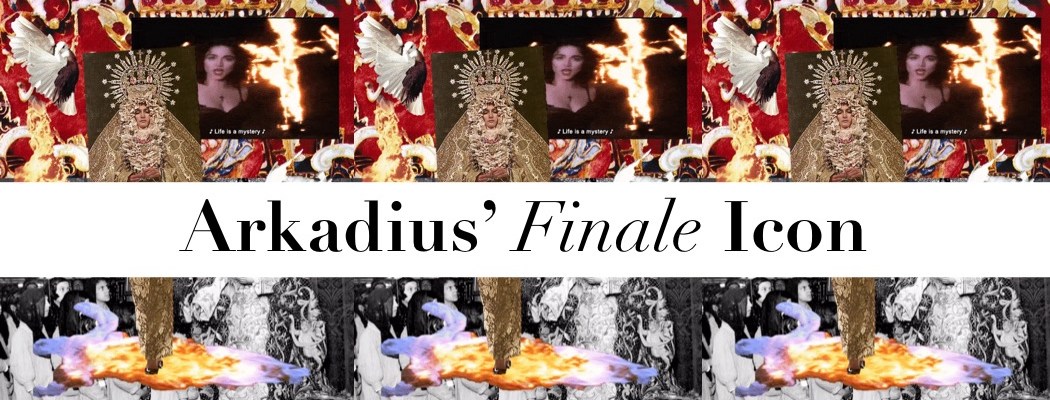
Back in July, I defended my MA Thesis in Art History titled “Selected Phenomena of Haute Couture Fashion as a Reception of Early Modern Catholic Pictorial Traditions”. In the thesis, I’ve analyzed one of the most intriguing examples of dialogues between fashion and Catholic imagery in history: ArkadiusFinale Icon which closed his revelatory spring-summer 2002 collection. For the sake of research and a better understanding of the designer’s intentions, I’ve interviewed Arkadius himself at the beginning of the year. Yes, the legendary designer, the ultimate icon of Polish fashion, the creative who enamored London in the late 1990s and early 2000s.

First, here’s an excerpt from my thesis, where I discuss the designer’s take on Catholic imagination through Finale Icon, an incredible piece of fashion history:

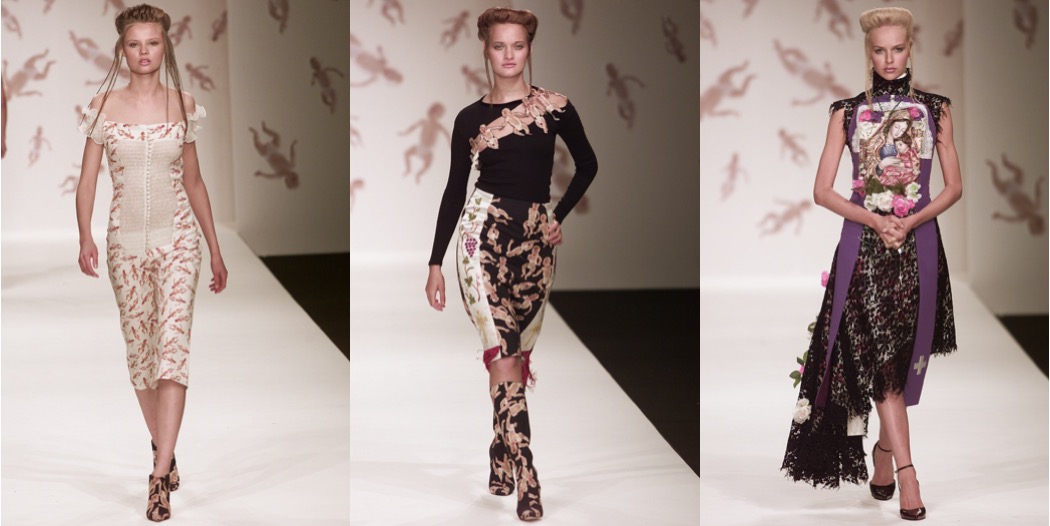
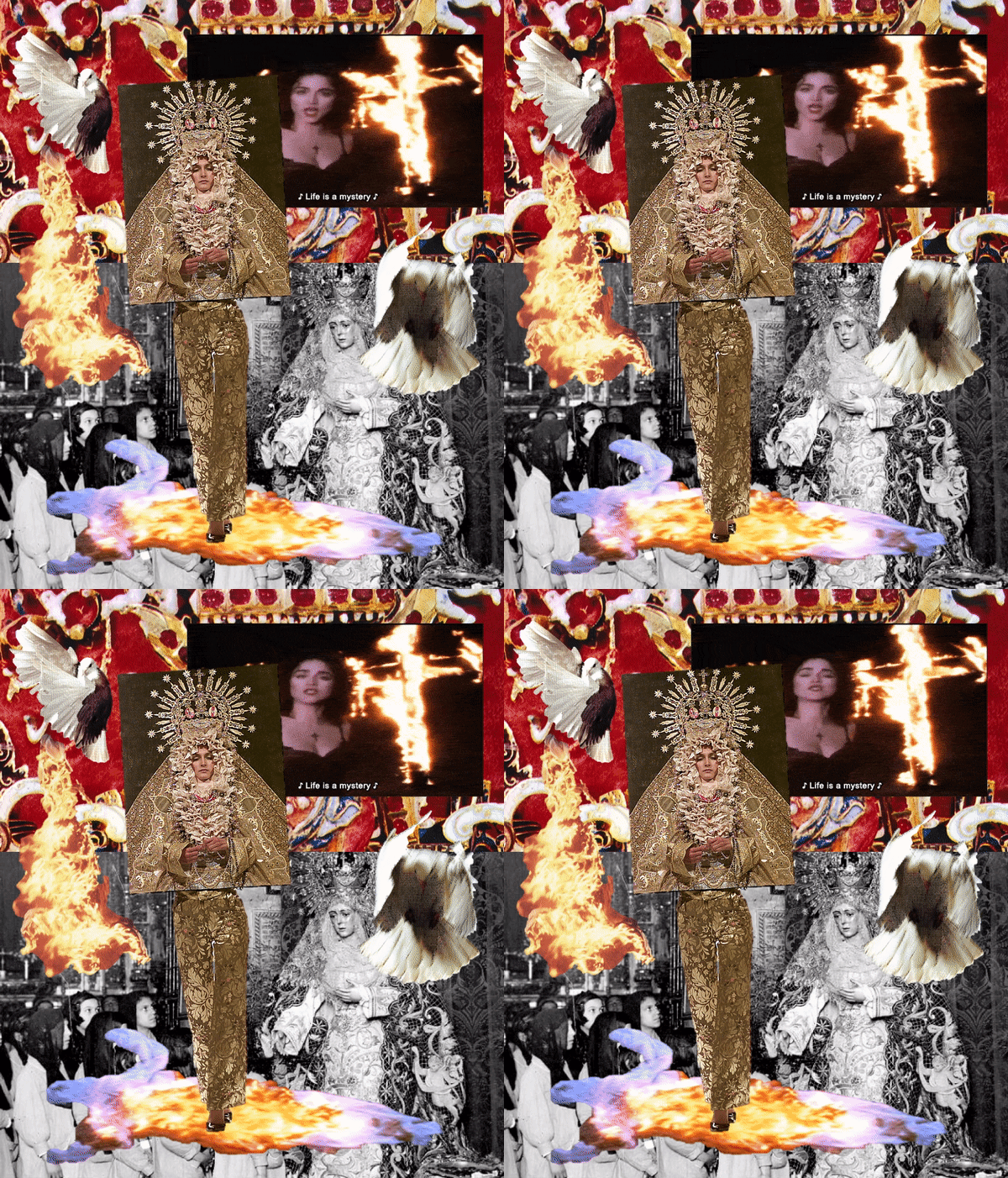
Arkadius’ design, which comes from the Virgin Mary Wears The Trousers collection, was inspired by two different artistic representations of Mary: the statue of the Blessed Virgin of Macarena from the Basilica De La Macarena in Seville and the painting of Our Lady of Czestochowa.

In his work, Arkadius drew inspiration from the world around him, from political events and social phenomena to art and literature. As with Cristóbal Balenciaga [another designer whose Catholicism-inspired work I’ve analyzed in my thesis], images of visual culture related to homeland were an important reference for him. An example of this is the spring-summer 2001 Paulina collection, where Polish folklore and rural lifestyle proved to be the key references. Polishness as understood by Arkadius, consisting of a cultural landscape built from folk traditions (including Łowicki and Podlasie cut-outs and wicker decorations), was never seen before in such a bold way in the work of any contemporary fashion designer, let alone at London Fashion Week. It seems that the Paulina collection became a starting point for the further deconstruction of Polishness, and the creation of a collection related so intensely to a significant image of native visual culture that is Catholic tradition. In the designer’s own words, “the environment in which we grow up, the society in which we function and the religion we follow shape us in a certain way.” The Virgin Mary Wears The Trousers collection appeared to be a thorough reflection on the phenomenon of religion, which can unite as well as differentiate people.
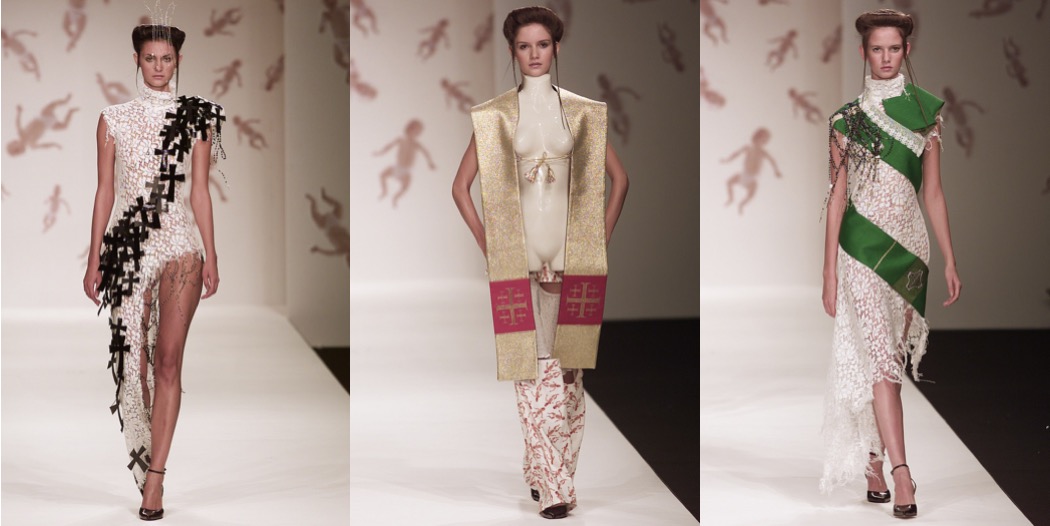
The Polish designer presented looks inspired by liturgical vestments (such as a stole), treated rosaries as decorative trims on dresses, and used ecclesiastical motifs like the Latin cross, the heart-shaped ex-voto and the representation of the white dove in the form of ornate embroidery on jackets and tops. Arkadius “desacralized Catholic images and church ceremonial and transported and exploited their aesthetic qualities for the sake of fashion spectacle”, Dominik Zieliński stated in the designer’s monograph. What interests me most, however, is the final creation in the collection, which Vogue fashion critic Sarah Mower compared to an experience of “religious climax”.

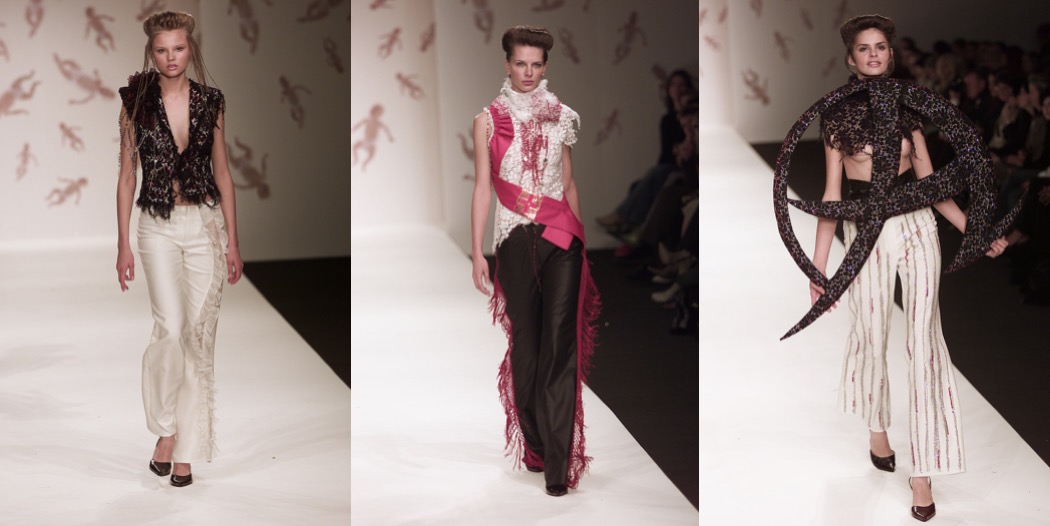
The Finale Icon look largely escapes conventional identifications of garments. Presented on the catwalk by model Kasia Pysiak, the outfit consisted of two essential pieces of “clothing”. The upper part of the ensemble, worn over a black shirt, was a rectangular black canvas stretched over a frame with specially cut holes revealing the model’s face and her protruding hands. The lower part of the outfit was a pair of pants of classic cut covered in opulent, floral pattern. The runway styling was completed with black stilettos created in collaboration with Jimmy Choo Couture. The most important element of the look is the aforementioned canvas, which was modeled on the image of the Virgin Mary as well as on the tradition of decorative dresses placed on representations of Madonnas [a historical Byzantine-Ruthenian tradition]. This part of the ensemble, with its form resembling an icon and depicting on its surface the figure of the Madonna wearing a crown, was hand-finished with gold jacquard fabric, various lace and costume jewelry in the form of cabochons. It was a “controversial combination of the traditional sacred with the modern profane”, Zieliński concluded.
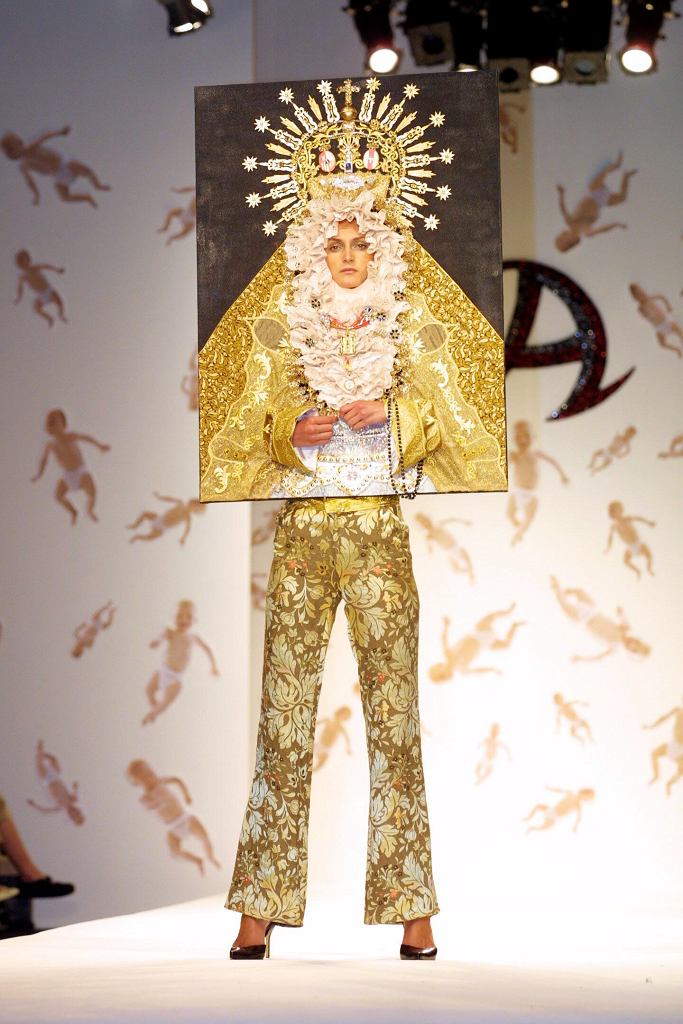
And now here’s the interview regarding Finale Icon – published for the first time here on Design & Culture by Ed!

Ed: Regarding the final look from the Virgin Mary Wears The Trousers show, what influences and inspirations from sacral art played a significant role for you? The book “Arkadius. Fashion That Became Art” mentions the inspiration coming from the Virgin Macarena of Seville. Why was this particular representation of the Virgin important to you? Did you treat that image of her in a “formal” way when creating this garment, or was it more of an initial impetus for the creative process?

Arkadius: The main reason for using the image of the Virgin Macarena of Seville was her global recognition as an iconic religious imagery. This particular image is an actual 3D sculpture and is very well known and a striking work of art, with a very deep sorrow look, tears, which capture the morbid spirit to represent the philosophy of this particular collection. The strength of the image and the entire mood of the collection was also beautifully captured by the model wearing it as the finale of this show.

Ed: Looking at the ensemble, I instantly associate it with “Our Lady of Czestochowa”, and especially with the “ritual” that is so characteristic of this artwork – that is, adorning it with the encrusted dresses. Did such inspiration take place in your creative process? Do you see any dialogue between the runway look, and this very work of art and the Byzantine-Ruthenian tradition associated with it?

Arkadius: Being Polish myself, my original idea was indeed to use the imagine of Matka Boska Częstochowska and not the Virgin Macarena of Seville, but I also knew that our Polish Matka Boska did not have the same global recognition as Macarena. The Finale Icon outfit was directly inspired by the opulence of Macarena figure, with all its intricate details of embroidery, gold and Byzantine richness. This richness is a metaphor of holiness in the Catholic religion, which very often puts more attention to the imagery rather than the spiritual connection as its religious representation.

Ed: The final look is literally related to the title of the collection. The model portrays the Virgin Mary “wearing the trousers” – that is, in a sense, occupying a stereotypically male stance/position. In my thesis, I am interested in the gender stereotypes, so deeply encoded in the Catholic imagination. Designers, through the medium of fashion, subvert them – for example, they create outfits inspired by the vestments of cardinals or bishops, strictly reserved for the male church hierarchy, and use them in women’s collections. Was criticism of the patriarchy one of the more important aspects regarding the creation of this look?

Arkadius: It is a very good question, thank you for this. I don’t think that anybody has ever asked me what was behind the title. This was actually nothing more and nothing less as a tongue-in- cheek or a whimsical exaggeration of our made-up story of who actually wore the trousers in the family. But this comparison also brought attention to a very fast changing family and gender structure and how many women are now actually running families and not men as it used to be in the past. Hence the idea of the title and the recognition of woman’s strength and her actual position in the society in the 21st century.

Ed: The entire ensemble, from the “icon” part to the trousers, is extremely tactile, rich in texture, opulent, like a real sculpture or painting depicting the Virgin Mary. Do the materials used in the creation of the outfit have an ecclesiastical origin or were they upcycled?

Arkadius: All the materials used in this outfit were recycled from already previously owned pieces of fabric. Only the frame of the icon was purchased new. The trousers fabric was bought by me in Grand Bazar in Istanbul, so it had a Byzantine origin. I bought it at the time because I liked it very much and it didn’t have a specific purpose at the time of my purchase. It became useful later on while creating this particular outfit. All the intricate details from the icon part, were used as cut outs from all sorts of other items we already had or had to find in charity shops.

I’m endlessly grateful to Arkadius for providing me with such valuable answers to my questions, and to our mutual friend Julia Strużycka for connecting us!

FYI: If you want to read my full MA Thesis (it’s in Polish) or are willing to publish it in an academic journal, please feel free to contact me at designadculturebyed@gmail.com!

Collage by Edward Kanarecki.
Don’t forget to follow Design & Culture by Ed on Instagram! By the way, did you know that I’ve started a newsletter called Ed’s Dispatch? Click here to subscribe!
NET-A-PORTER Limited

Artist At Home. S.S. Daley SS24

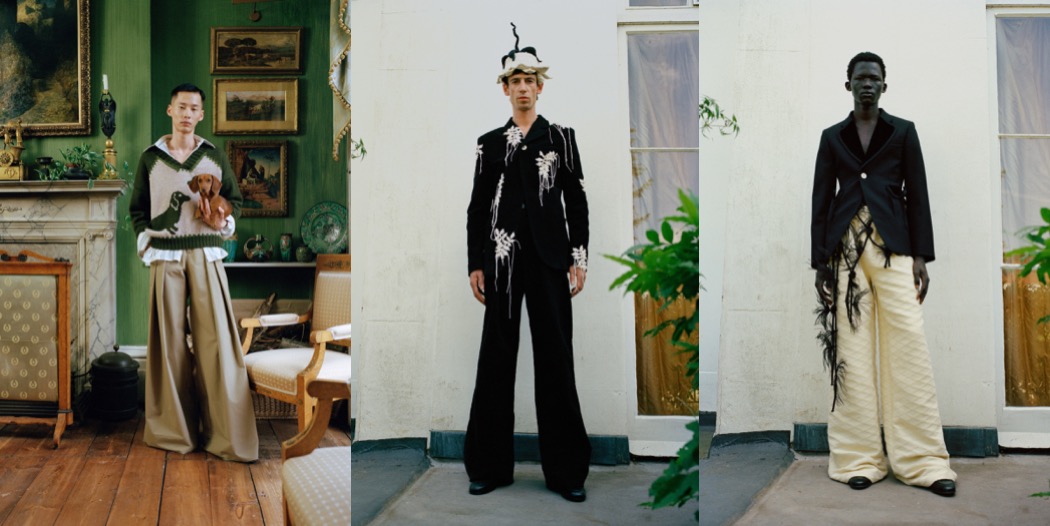
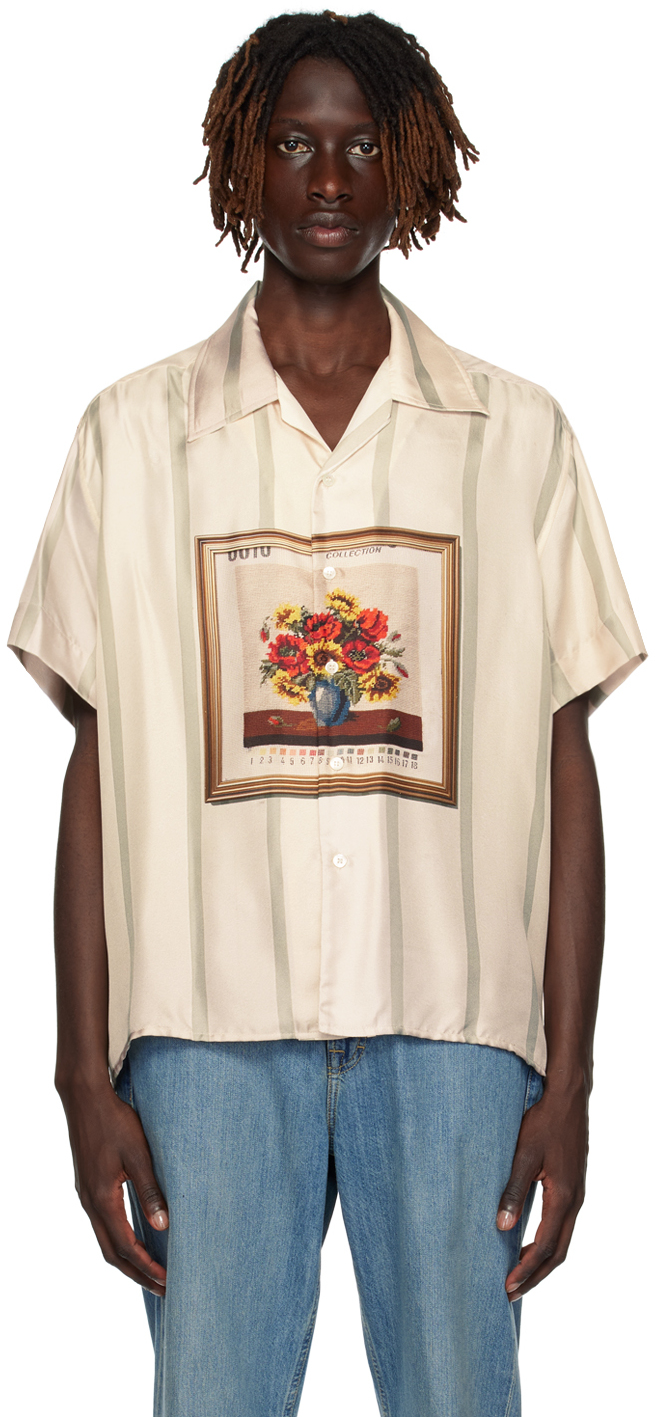
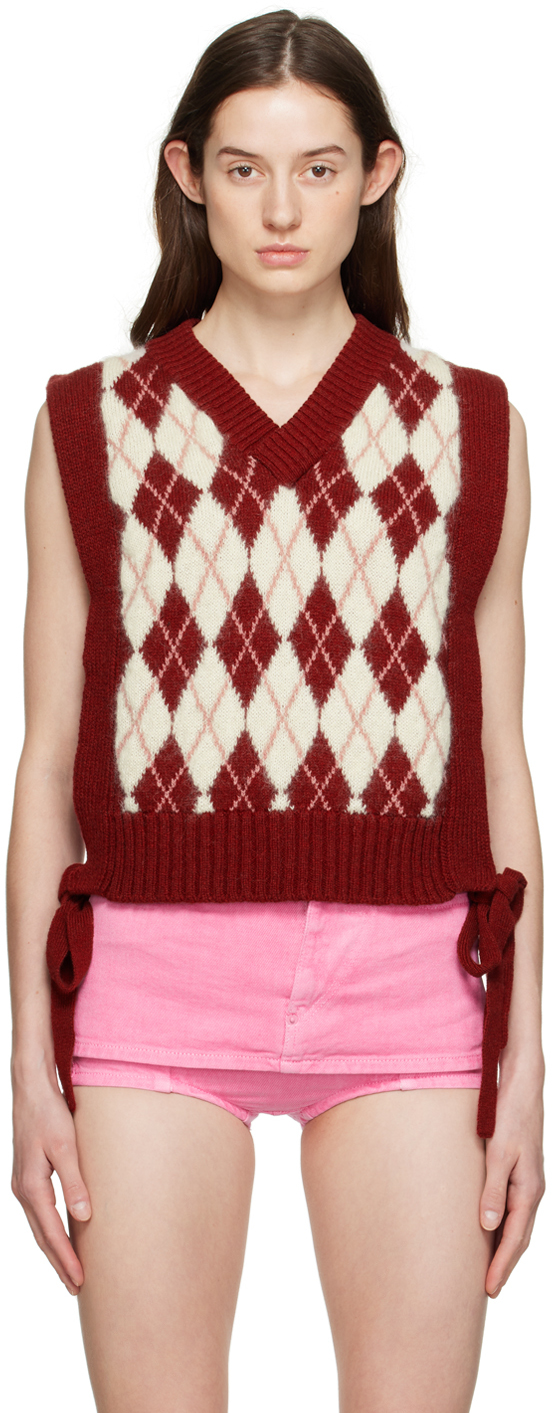
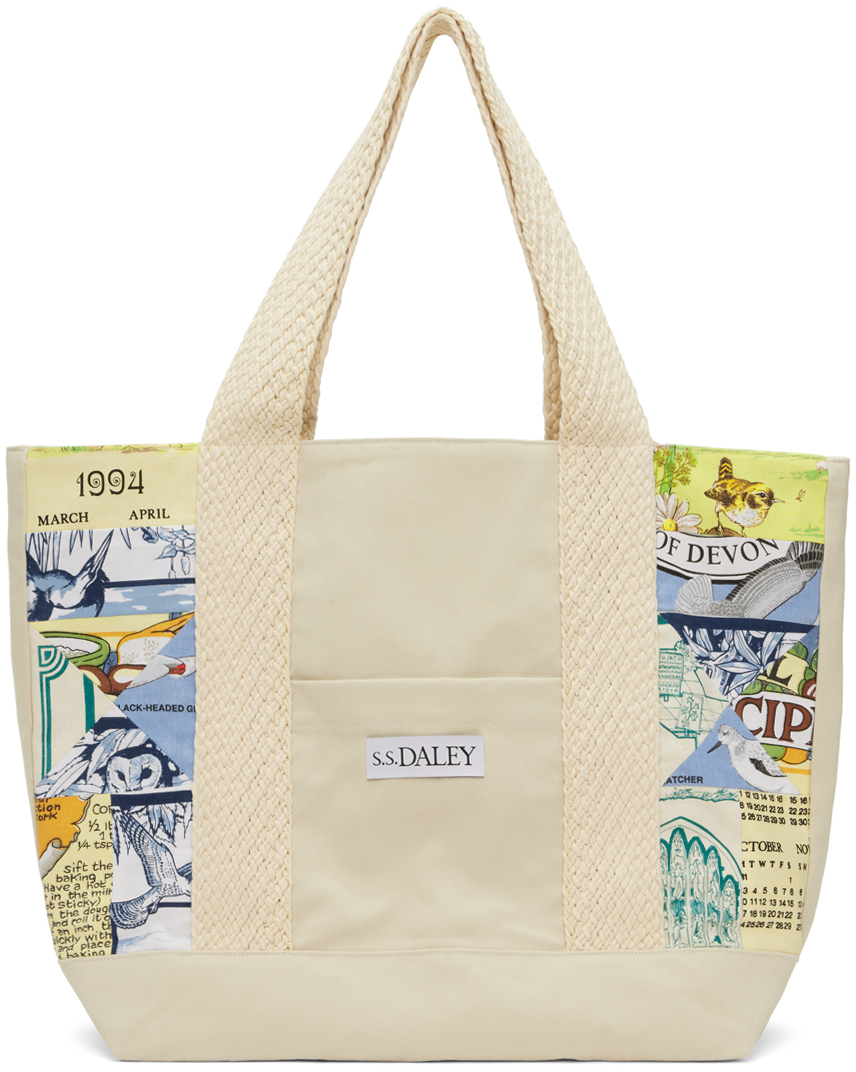
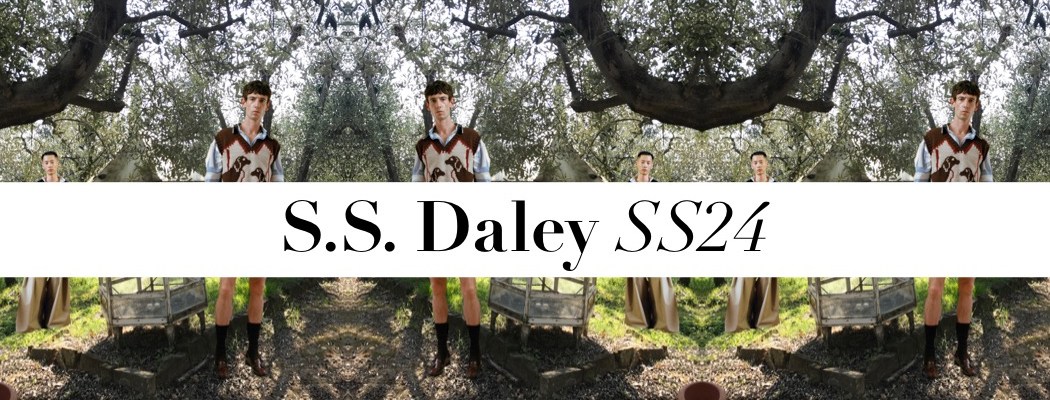
The theme of artist at home has sprung dozens of stories where a visionary creates a vividly alive environment that becomes not only their studio, but a “total artwork” (Germans have a term for it: Gesamtkunstwerk). History of art – especially the British one – has plenty of examples of such romances between creatives and their surroundings. Horace Walpole’s Strawberry Hill. Sir John Soane’s home-turned-museum. Vanessa Bell and Duncan Grant’s Charleston, which became a bucolic residency spot for the Bloomsbury Group. For his spring-summer 2024 collection, Steven Stokey-Daley centres around the duality of ceremony and practice, following the life and home of an artist. Harry Styles’ favourite designer began his research by studying the lives of British painters Lucien Freud and David Hockney in their working environments, taking a look back at British public school dress while examining the shifts in sexual identity in the early 1900s. All that sounds distinctly S.S. Daley. The new season offering is a neat continuation of Steven’s style vocabulary: clean-cut suiting is paired with pleated shorts, blooming hydrangea embroideries decorate striped workwear sets, oversized wool knits are canvases for charming dachshund puppies (Hockney’s favorite breed, as well as mine!) and ducks. Some of the shirts come in still life fruit bowl print, which reminisces the ever-evolving European artistic tradition. Multi-pocketed, waterproof coats are nonchalantly splashed with paint (you just always splatter your favorite clothes while painting!), echoing the collection’s idea of merging the domestic intimacy with the sacred act of creating and expressing your own, untamed, highly-personal thing.

And here’s a bunch of my favourite S.S. Daley items you can shop right now:

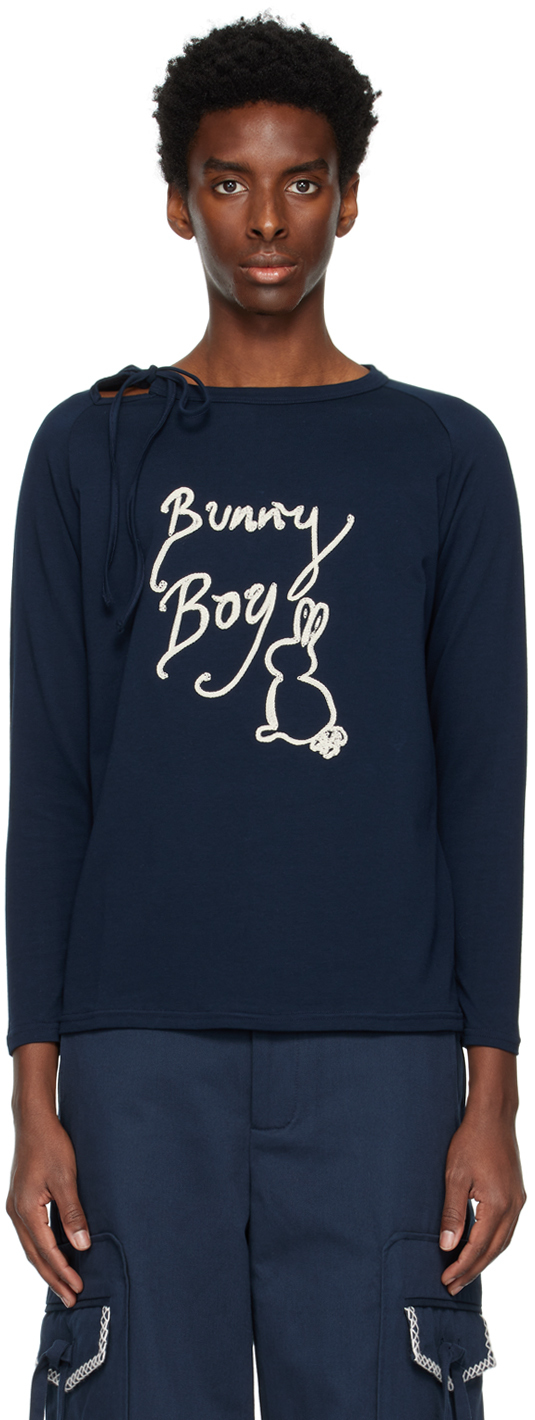
S.S.Daley Navy ‘Bunny Boy’ Long Sleeve T-Shirt


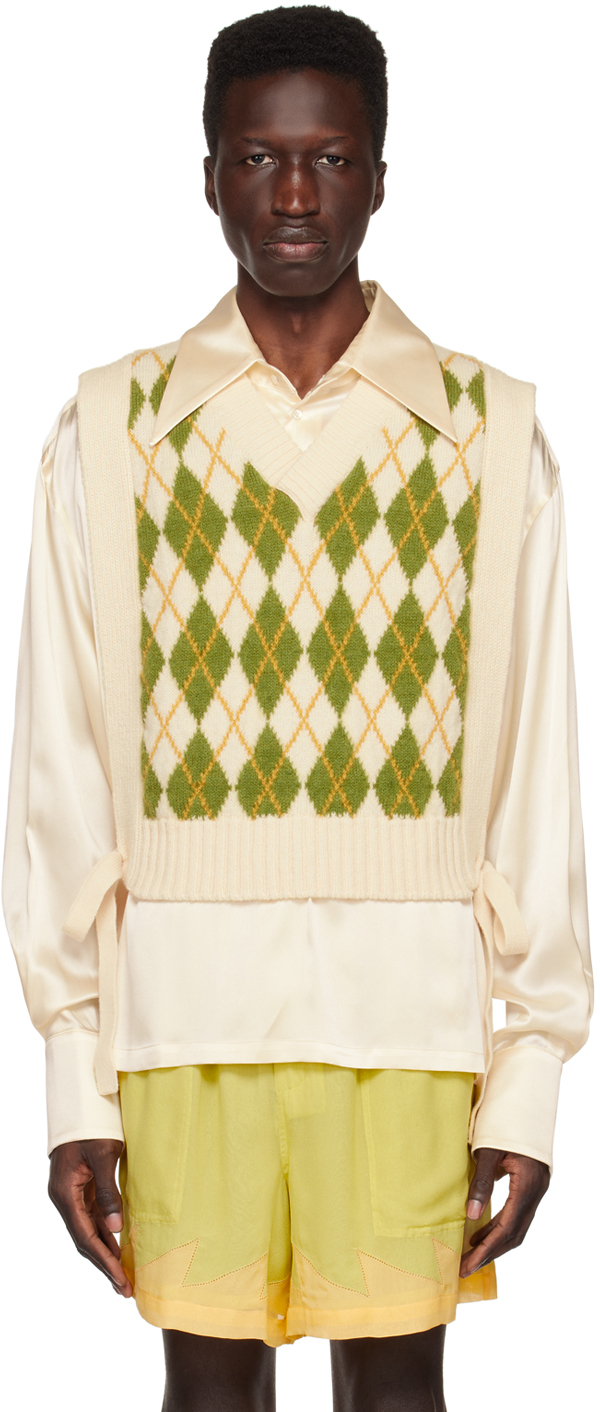
S.S.Daley Off-White Tabard Vest


S.S.Daley Off-White Striped Shirt


S.S.Daley Red Tabard Vest


S.S.Daley Beige Large Tote

Collage by Edward Kanarecki.
Don’t forget to follow Design & Culture by Ed on Instagram! By the way, did you know that I’ve started a newsletter called Ed’s Dispatch? Click here to subscribe!

NET-A-PORTER Limited

All The Beauty and The Bloodshed. Christopher Kane Resort 2024

Yesterday’s news of Christopher Kane entering administration and considering selling his namesake label make you realize that in this industry, truly inventive creatives have to struggle, while others get unlimited budgets and press just… because. It’s no news that running an independent creative fashion label in London is practically impossible, but the vision of Kane exiting fashion is just heartbreaking. His knack for wickedly original, sometimes even disturbing pairings of strange materials and references has earned him a reputation of a playful conjurer who with grace combines non-obvious sexiness with contemporary chic. Hopefully, the designer will find a financial solution similar to Roland Mouret, another significant London-based designer, and will continue designing under his own name with new, supportive partners behind his back.

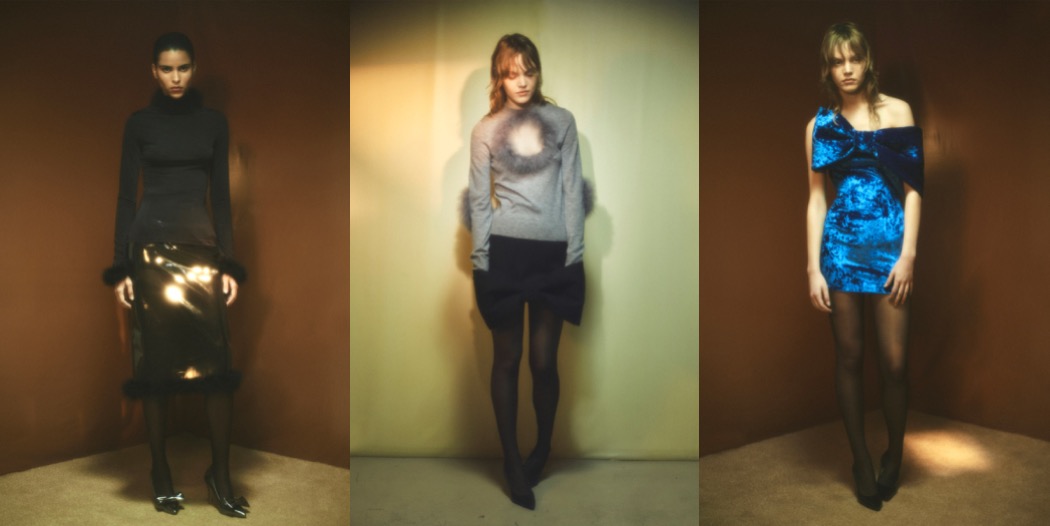
If resort 2024 is actually the last Christopher Kane collection we will ever see, then it’s exemplary of the designer’s unique fashion vocabulary. This line-up is packed with chic-funny-simple evening ideas that look like a joy to wear. Should you detect a ’50s/’80s post-punk New Wave-ish vibe coming off it, you’re not wrong. As ever, behind every brilliant Christopher Kane party-trick, there lies something darker. This time, Christopher and his sister, Tammy, had been watching All the Beauty and the Bloodshed, the documentary about Nan Goldin that weaves her groundbreaking ’70s and ’80s photography into footage of her campaign of protest against the Sackler family’s sponsorship of major museums and galleries (The Sacklers own Purdue Pharma, a pharmaceutical company whose main drug is the opioid Oxycontin). It struck them that the connection between the forces of super-wealth at one end of society, and the most deprived at the other were stingingly present – in the clothes. It was the sight of the cocktail dresses, lingerie, and scrappy gowns worn by Goldin’s penniless junkie LGBTQ friends that resonated. “The reason they looked so amazing in their poverty is that they were wearing second-hand and discarded clothes thrown out by the wealthy – couture, designer clothes from the ’40s and ’50s”. For them, that fit with their childhood and teenage memories of seeing the deprivation of communities in the post-industrial Glaswegian conurbation they grew up amongst. It took them back to remembering the glamour of the neatly-dressed barmaids serving in Working Men’s Clubs in the mid-to-late ’80s—another source for the sexy synthetic fitted dresses they conspired on in this collection. The subversive references they use aren’t at all visible, of course. What Kane always does is to turn the brew of associations into relevant fashion. Really, not many contemporary designers have that skill.

Collage by Edward Kanarecki.
Don’t forget to follow Design & Culture by Ed on Instagram! By the way, did you know that I’ve started a newsletter called Ed’s Dispatch? Click here to subscribe!

NET-A-PORTER Limited

Community. Martine Rose SS24

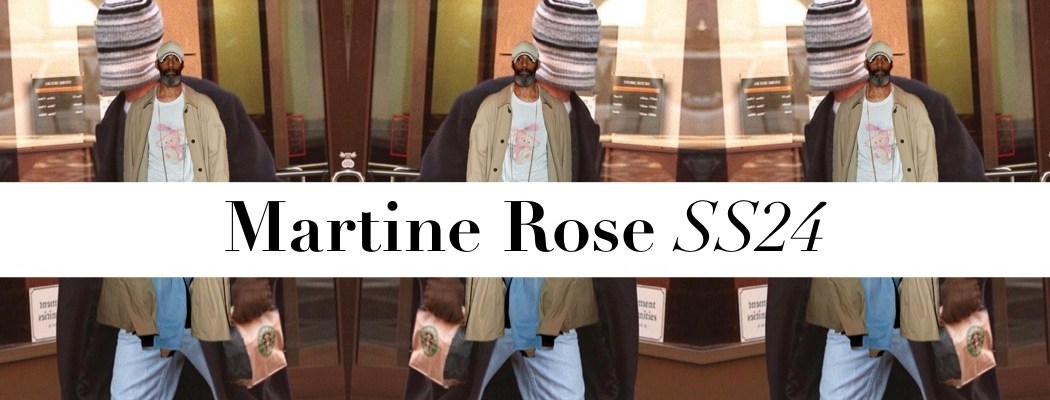
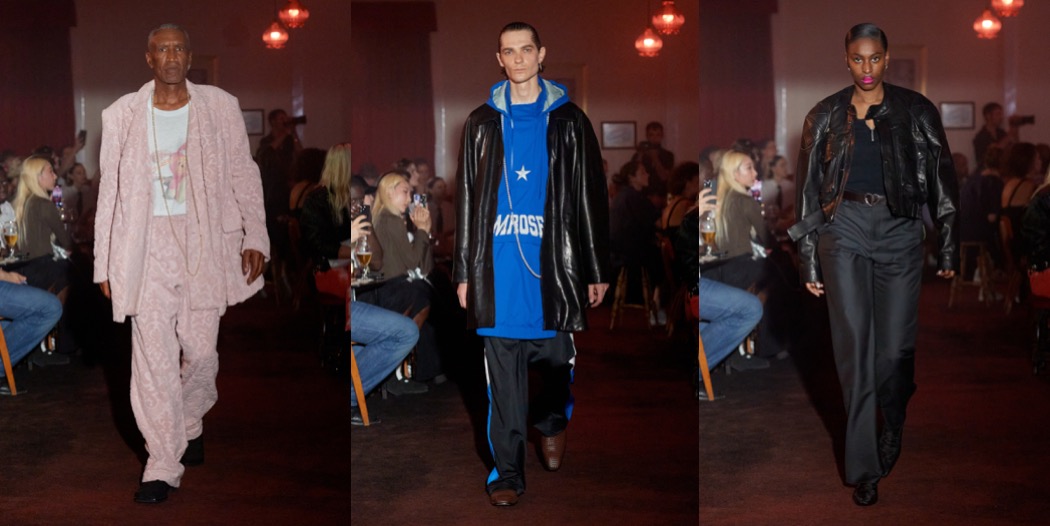
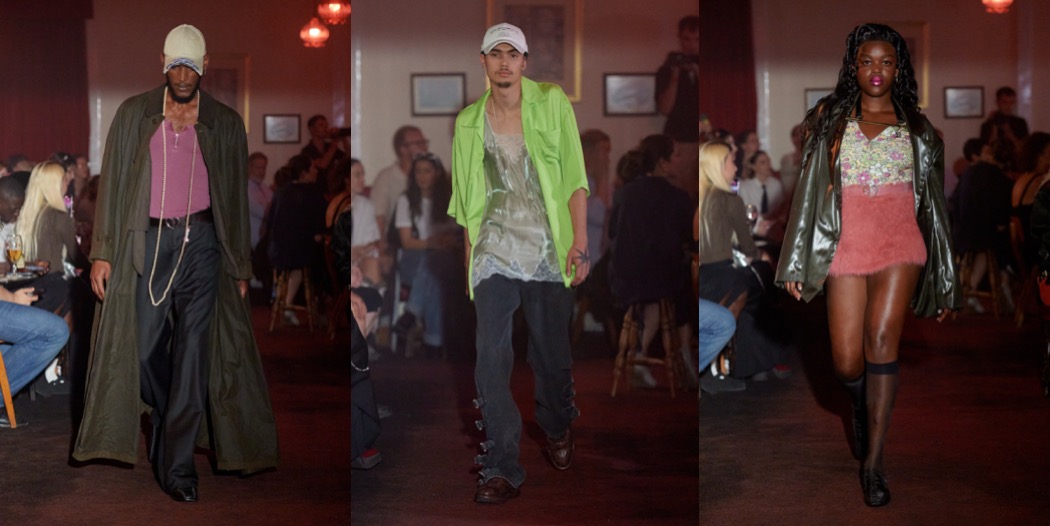
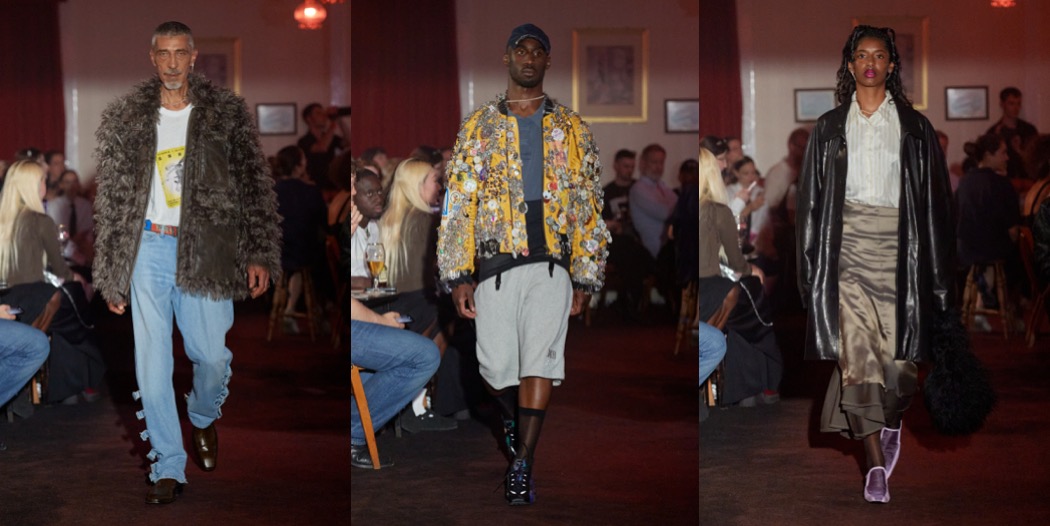
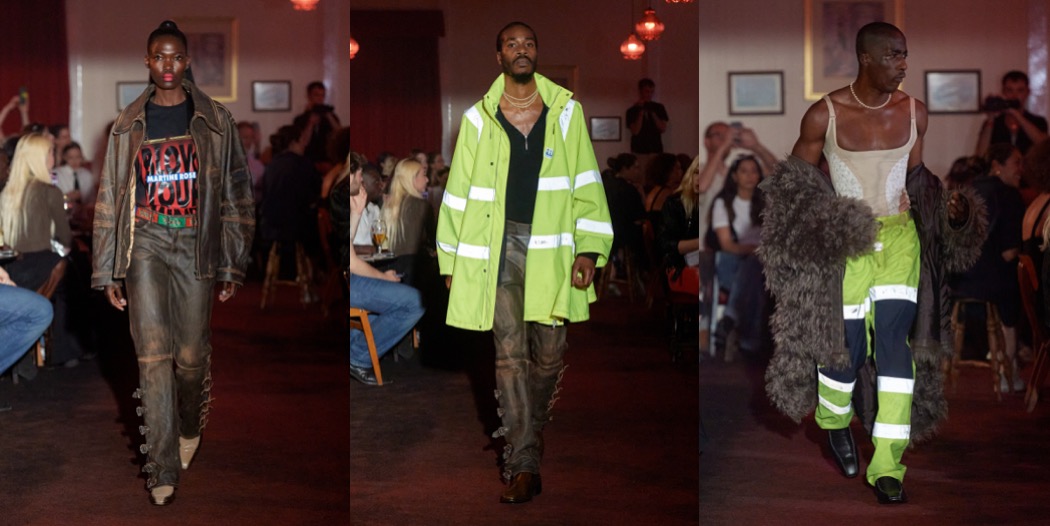
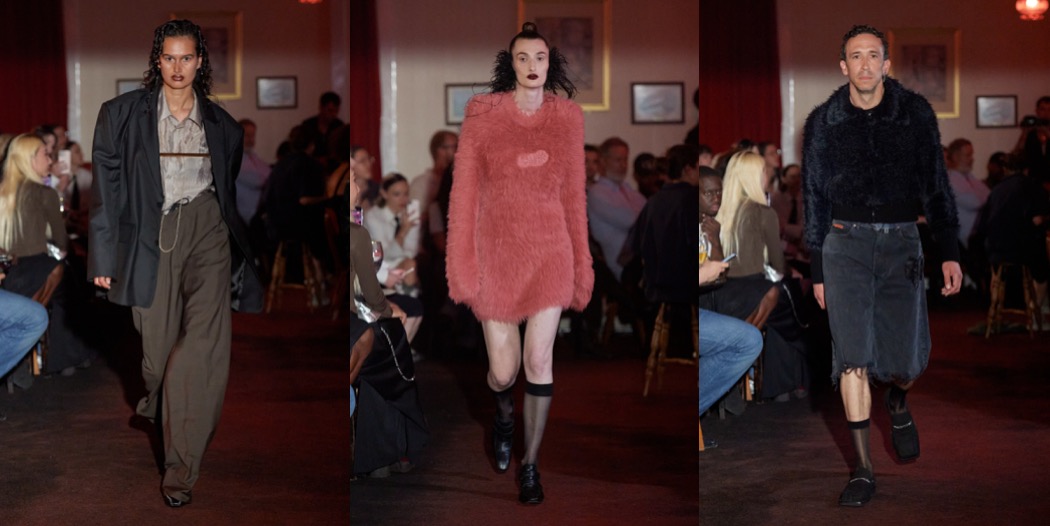
The spring-summer 2024 menswear fashion month has kicked off with Martine Rose‘s dynamic fashion show in London. “Before there were actual club venues as such, people from so many communities co-opted community centers and youth clubs to put on their club nights. All over London, wherever waves of immigrants have come in, you saw them – West Indian, Turkish, Polish, Irish – everyone has had their own community centers. They’re really important, the life-blood, ” Rose said. ”And this one – at St Joseph’s Parish Centre is untouched. I thought it would be fun for people to sit down, have a drink, and feel pulled into participating in something.” Her living celebration of London subcultural codes opened on a blast of reggae. Out walked the totally believable Martine Rose cast of characters in clothes layered in her subversively kinky takes on men’s and womenswear. “I love playing with gender lines. I find it very sexy – I love men in women’s clothes and women in men’s clothes. It’s things that I’ve played with a long time. And I think it’s a real proposition. Not a gimmick, you know, a genuine proposal.

Sure enough, there was a complete and recognizable wardrobe of recurring Rose signatures – her oversized tailored jackets, voluminous floor-sweeping coats, and reappropriated hi-viz workwear and sportswear. To give it a sense of lived-in ownership, she used worn-in, washed, and patinated materials.“Because I never like it when things look new. There’s a kind of make-do-and-mend – like denim we patched with gaffer tape,” she explained. Rose developed the hunched-forward shouderline of women’s leather jackets from looking at the posture of motorbike-riders. Her ideas seem always to come up through those kinds of socially-observed transferences—from the pre-existing, from gestures or half-dressed slip-ups. Her women’s skirts were inside out, with pleats bursting from under linings, creating a cool volume. Then there were her wicked twists of humor. “For menswear, I always like this tension between two poles. I’m using quite classic things like tailoring and sportswear, but the other pole has to be quite far apart. So I was looking at quite stately lady things, like Barbour jackets cut on a ’50s women’s a-line, corsetry, and pearls.” And all of a sudden, you glimpse a very British class joke going on.

Collage by Edward Kanarecki.
Don’t forget to follow Design & Culture by Ed on Instagram! By the way, did you know that I’ve started a newsletter called Ed’s Dispatch? Click here to subscribe!

NET-A-PORTER Limited

Goth-y Funk. Chopova Lowena AW23

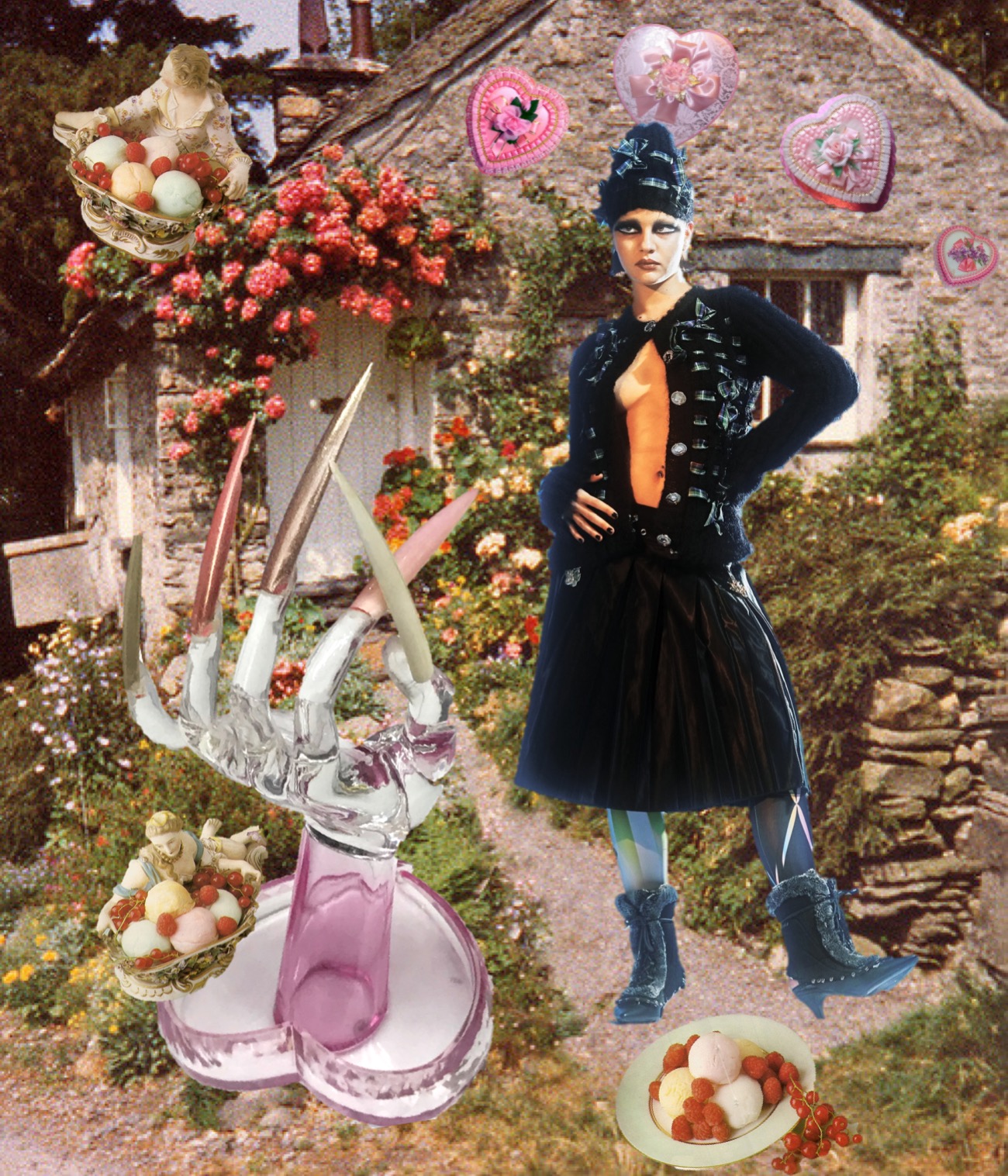
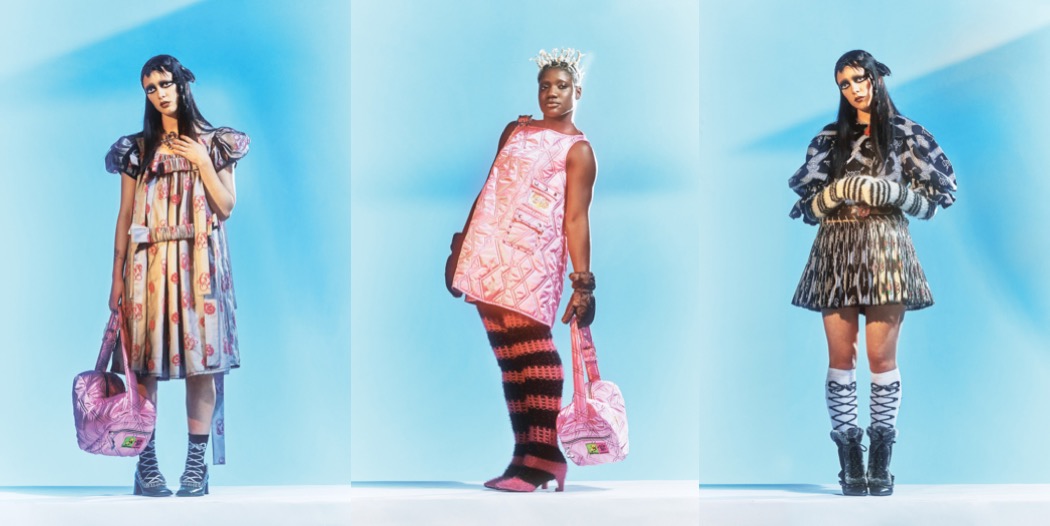
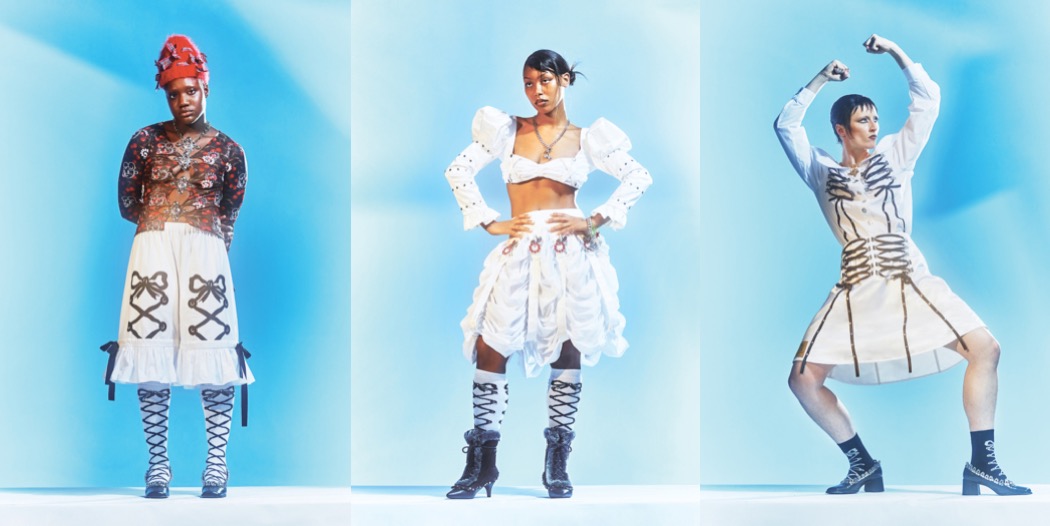
Chopova Lowena‘s style is a fine balance of alluring quirkiness and astonishingly great craftsmanship. For autumn-winter 2023, Emma Chopova and Laura Lowena went for their signature, funky eclecticism. The collection sees a ’70s ski-theme that somehow got caught up with Georgian petticoats, bloomers, cross-lacing, and bonnets. Trust the London-based designers to turn such a bonkers combo into an extensive collection of clothes and accessories that are at the service of cold-weather practicality as well as… fun. They’ve played with the idea of retro children’s patterned ski suits and sleepwear to come up with high-waisted checkered pajama-cum-snowboarding trousers, baby-bedsheet prints, and the piped-pocket detailing that made the whole recognizably Chopova Lowena. Genius cardigans – some with vintage baby-book doll characters dancing on the front, others threaded through with tartan ribbon tied in bows – evoke some sort of deranged Tyrolean classic, possibly an ode to one of Vivienne Westwood‘s signature looks. There are layers and layers to explore here, from heavy-duty brown leather ‘carabiner jackets,’ through ski-capris with frilly knees, stripy wool scarves, tights, and knotted-top beanies, all the way through to stuff that sorts out how a Chopova Lowena person parties – which is to say in lacy white and bows, but with a definite Goth-y attitude.

Collage by Edward Kanarecki.
Don’t forget to follow Design & Culture by Ed on Instagram!

NET-A-PORTER Limited