Urban Romance. Khaite SS20

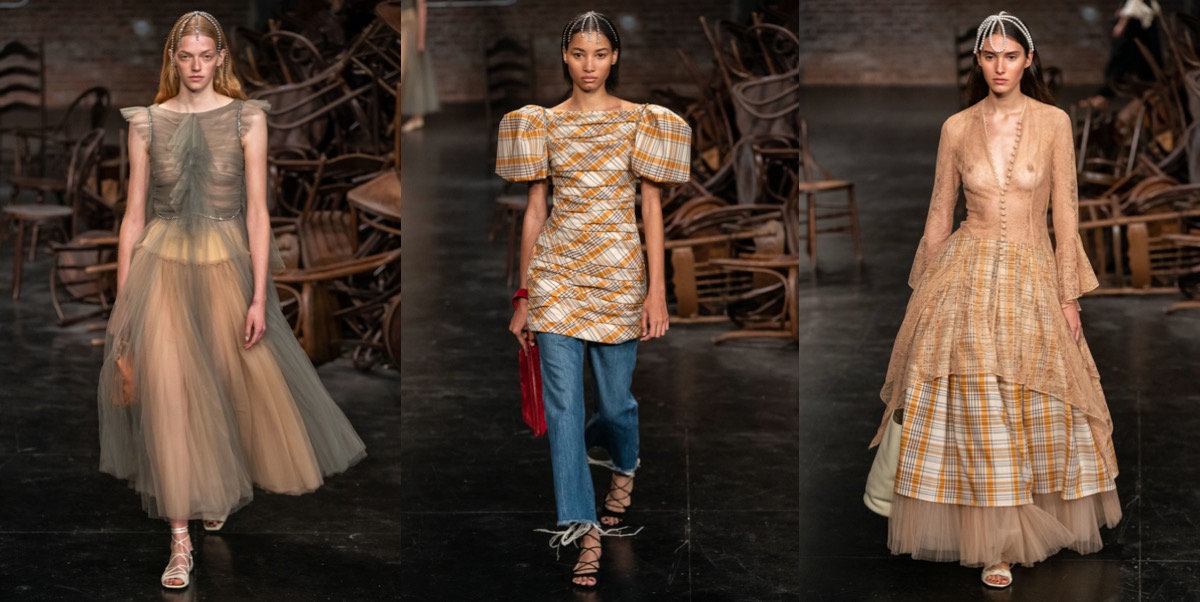
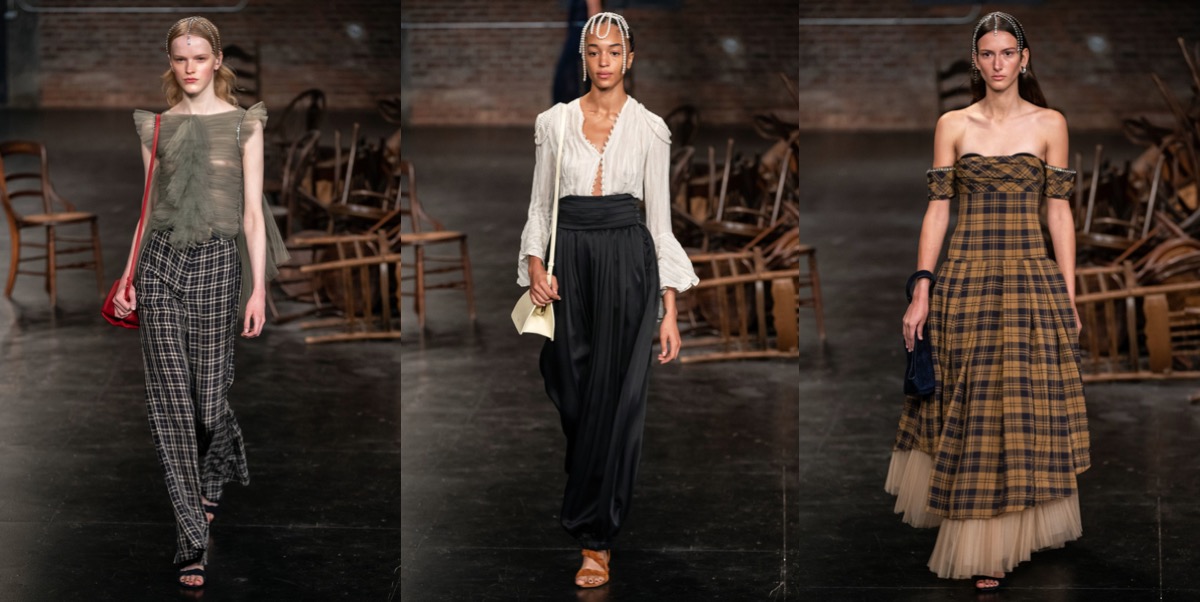
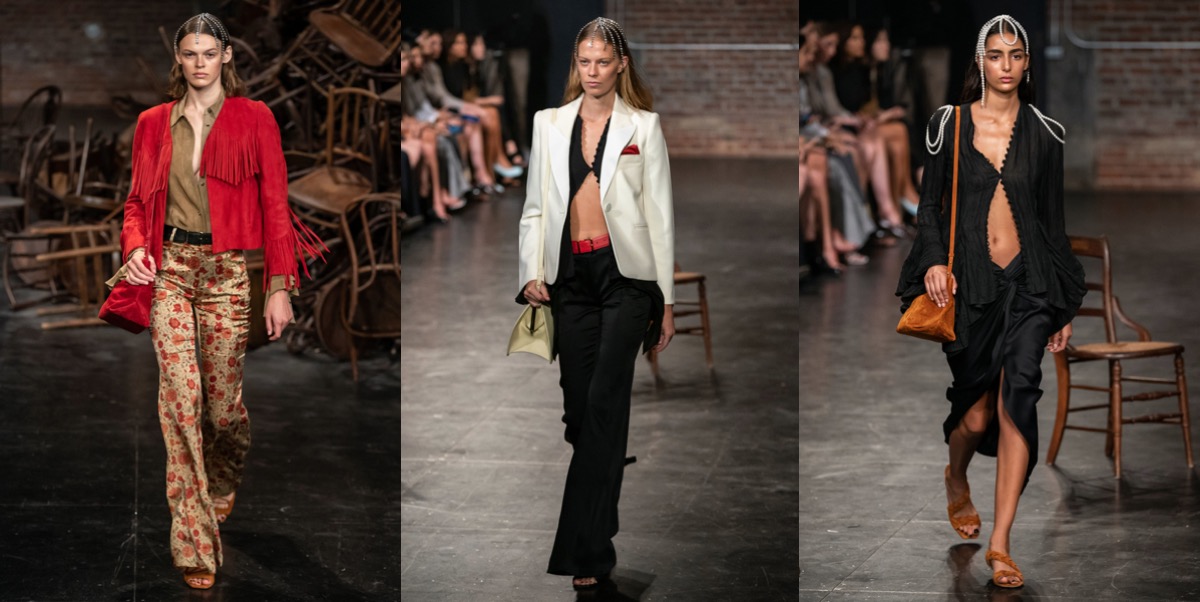
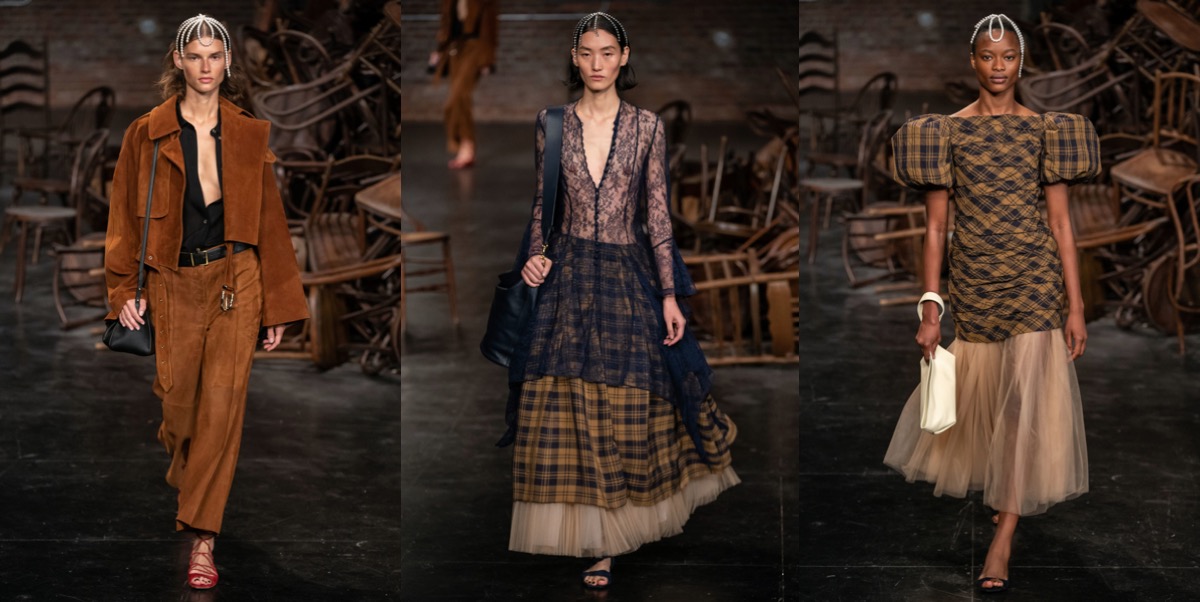
Khaite had the best possible breakthrough moment to the wider audience about a week ago, when Katie Holmes wore that cashmere bralette-and-cardigan look and everyone went crazy. But the label’s founder and designer, Catherine Holstein, doesn’t rest on laurels and isn’t planning to sell knitted bras for the rest of her life. The spring-summer 2020 collection was all about urban romance, full of contrasts: suede fringed jackets and sheer tulle dresses, rhinestone embellishings and denim, sharp tailoring combined with sarongs. “I wanted it to feel more sensual,” Holstein said. “It’s a riskier take, especially for a line that’s kind of synonymous with ‘easy.’ But there’s a side of me that loves a sense of gaudiness and flash . . . I’m so much more into that than a minimalist approach, so I want to start incorporating those aspects into my work.” Khaite isn’t a brand that will shock you with something new (I wonder who does so today…), but it’s the place to look at when you’re not sure what’s relevant now. Looking at the brand’s new season, keep everything you’ve got in your wardrobe for the next summer – lace, tartan plaid, florals, ripped jeans, big shoulders, cowboy jackets, everything will work.
Collage by Edward Kanarecki.

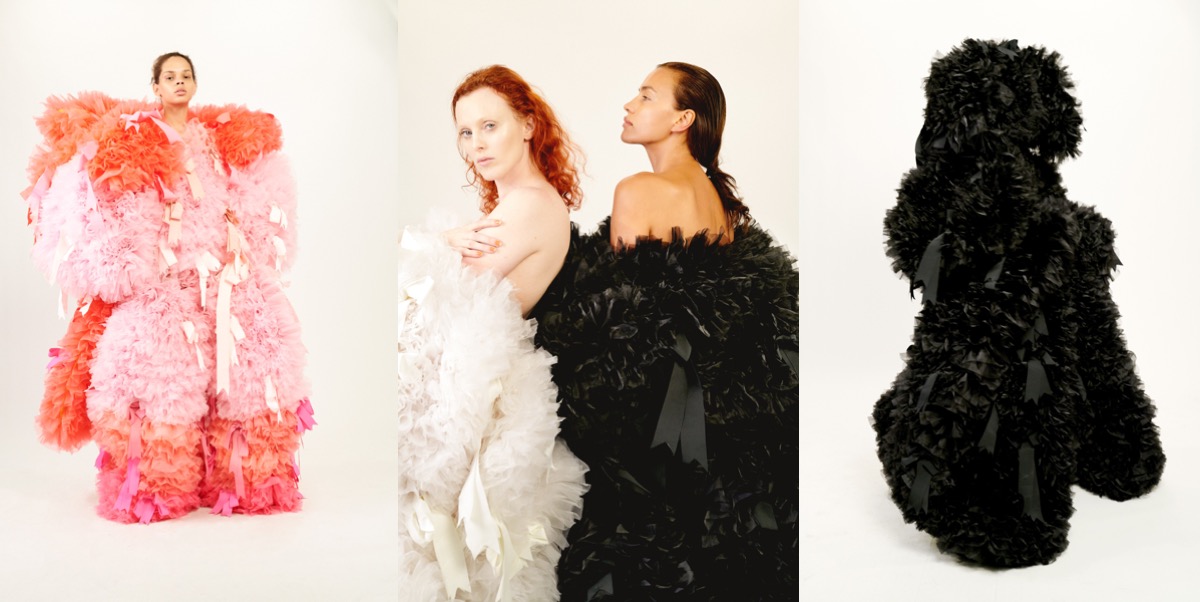
A Gift. Tomo Koizumi SS20

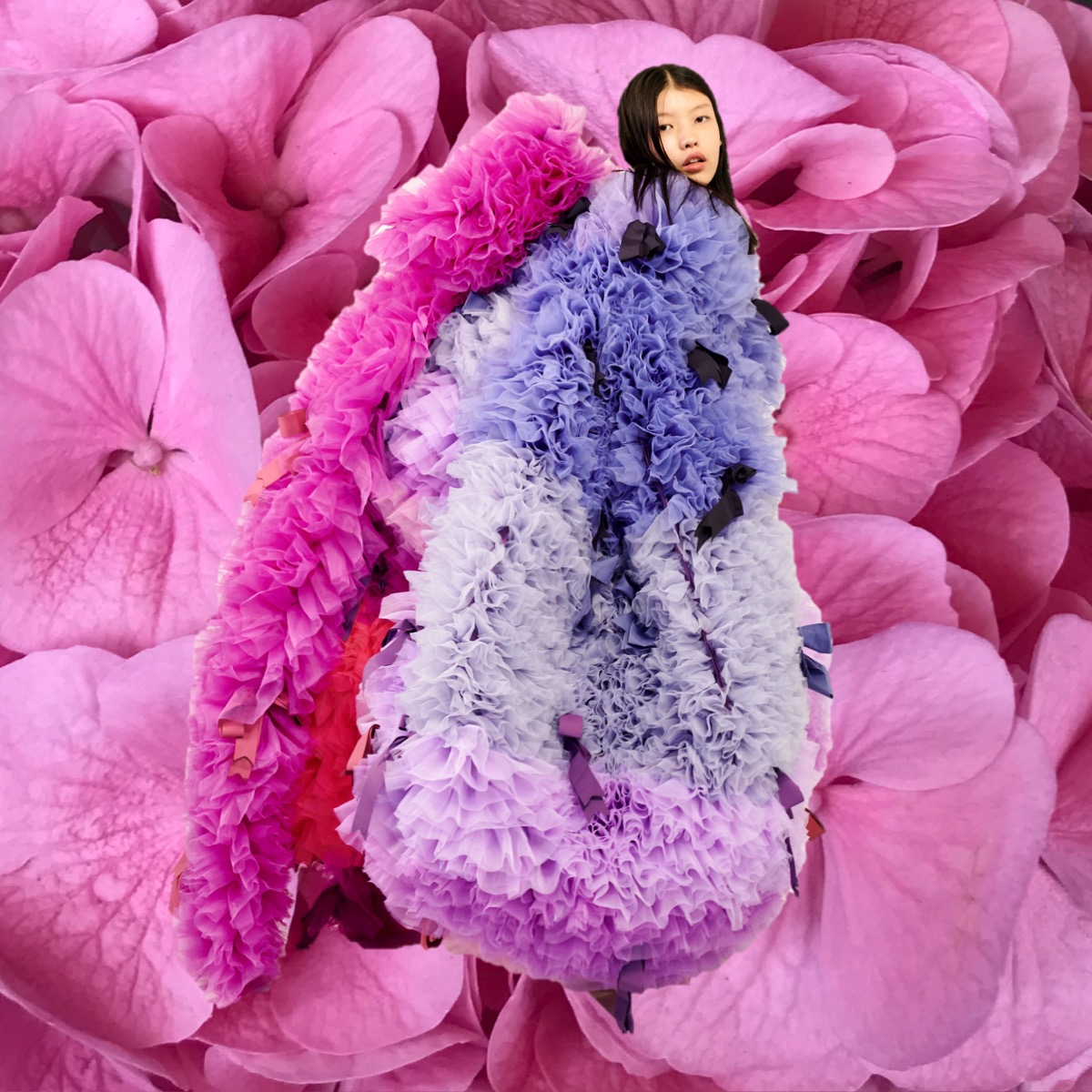
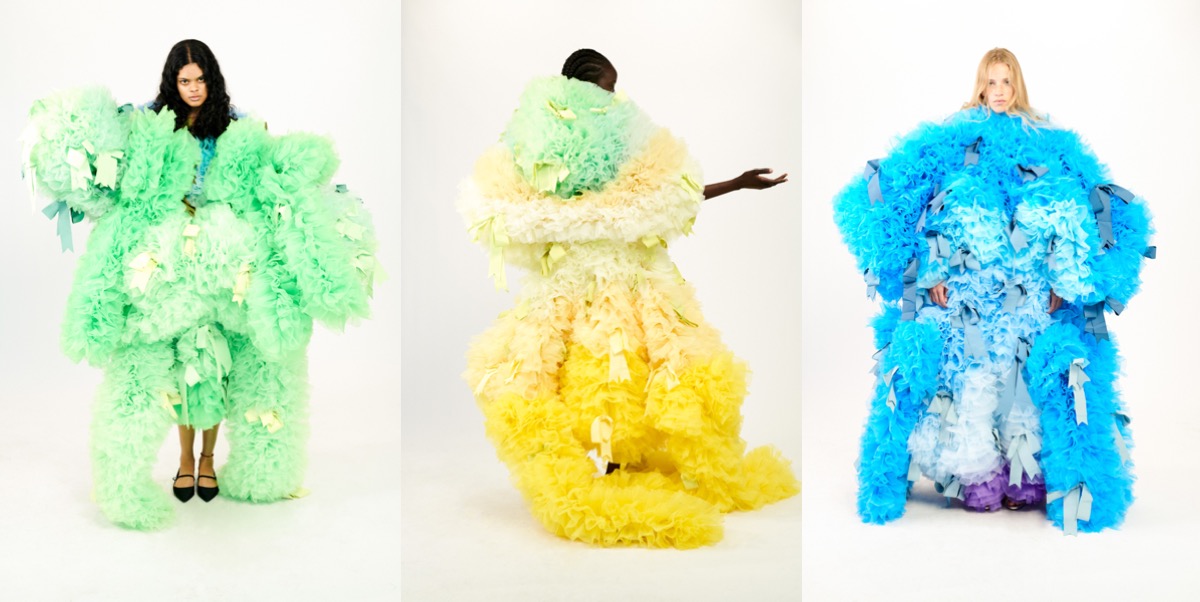
New York fashion week is in full swing. Tomo Koizumi, Marc Jacobs and Katie Grand’s protégé, had Ariel Nicholson do a theatrical performance in his new season ruffled Japanese polyester organza creations at Marc’s Madison Avenue flagship. The Japanese designer, who already amazed everyone with his work last season, explained his spring-summer 2020 process as the following: “I tried to make more 3D patterns with ruffles – it’s kind of like a boxy shape, because I wanted to make something like a gift box.” When he was sketching the designs for the garments, the designer drew inspiration from his own culture – using Lolita fashion as a primary reference, he also crafted the shapes of the dresses based on Japanese robotic cartoons, which he grew up watching. The looks – if you can even call them like this – really had something of gift wrapping, bold and knowing no borders of ‘too excessive’. Tomo doesn’t want to be commercial, and his costumes are for the most daring ones. You can hate it or love it, but this sort or joyous non-chalance is not only growingly rare in New York, but across all the fashion capitals.

Collage by Edward Kanarecki.
Lady-Like & Cartoonish. Rodarte SS20

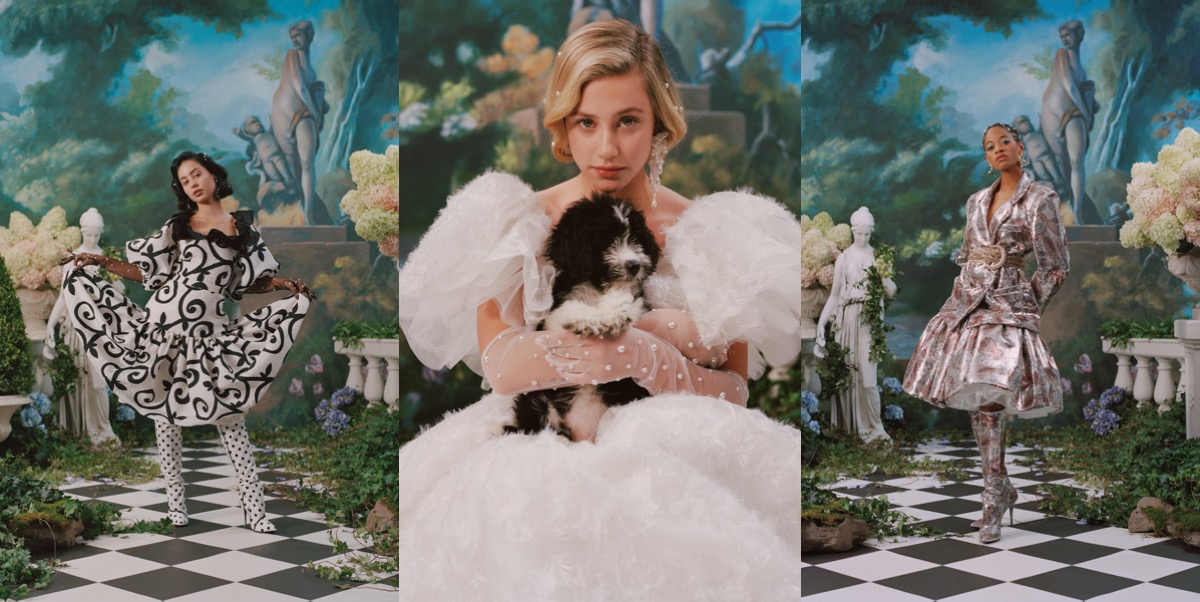
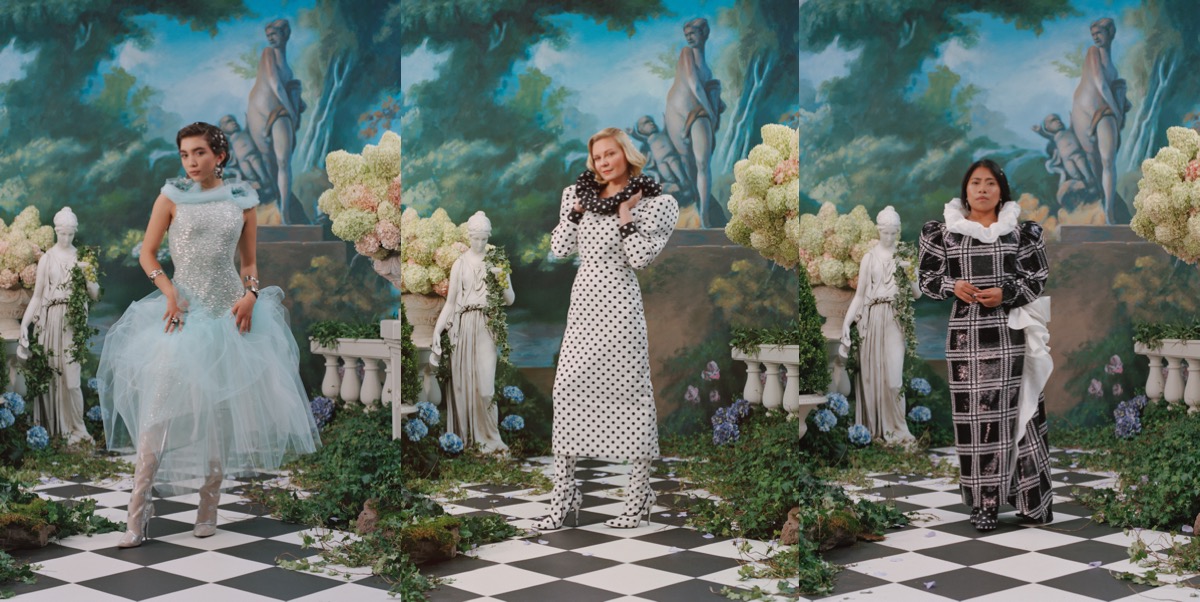
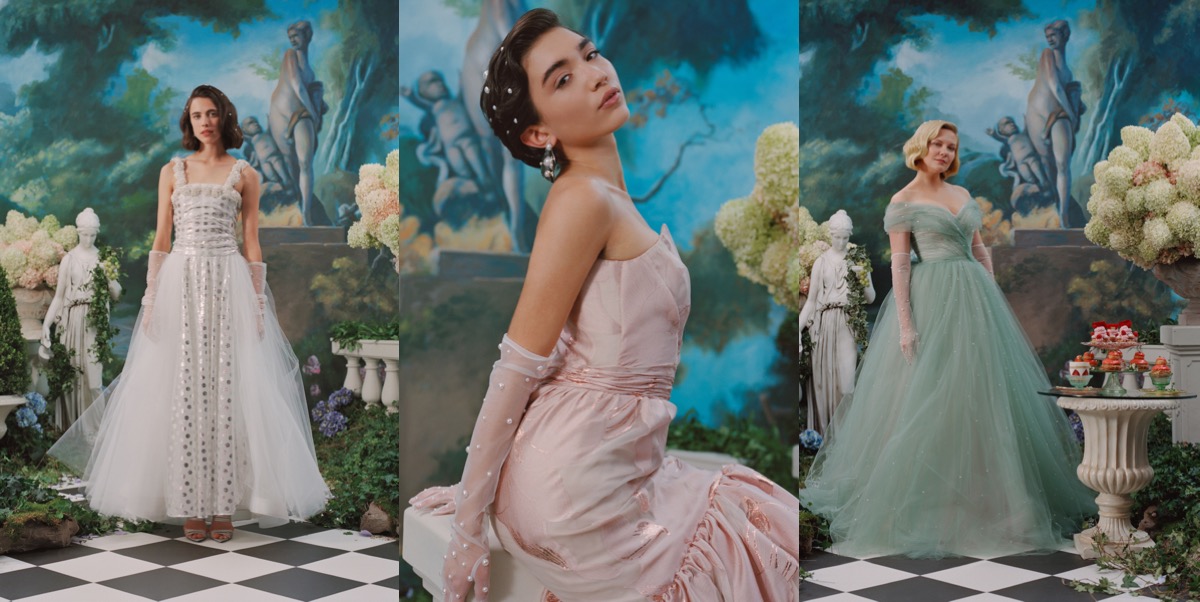
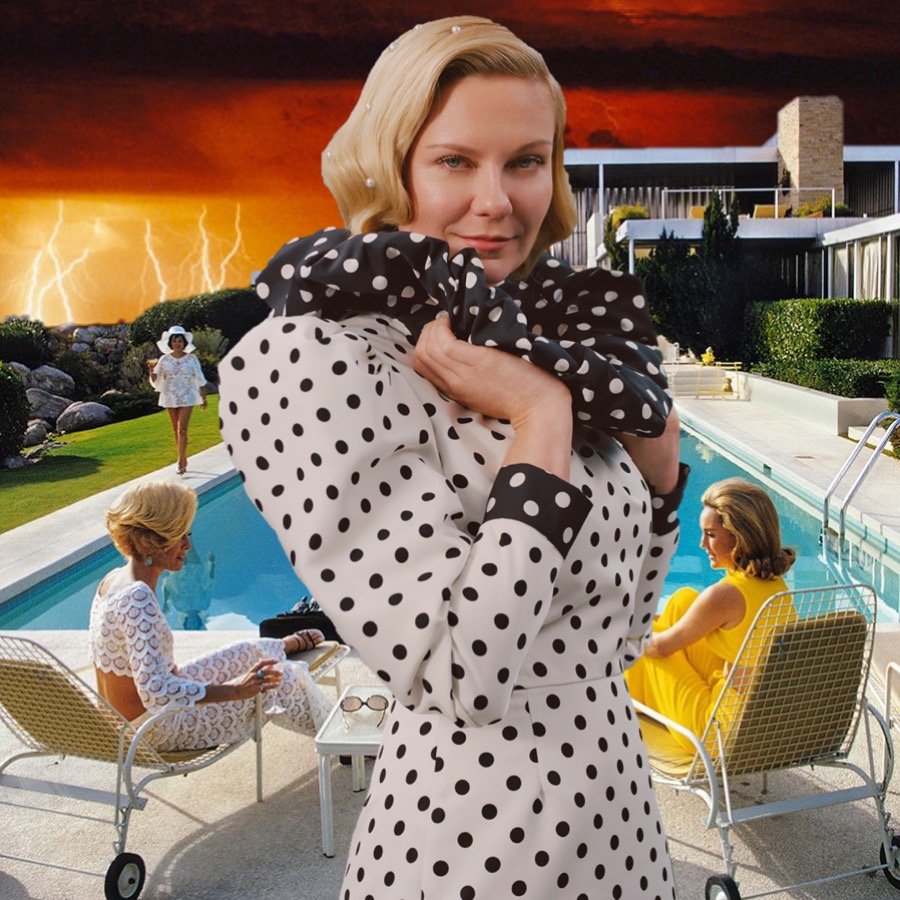
So here we go again – the official (I emphasize ‘official’, as we’ve already seen Jacquemus in Provance and Vetements in McDonald’s two months ago as the aperitif of the season) fashion month triathlon is upon us! Lets start with Rodarte, which is a brand that navigates between Los Angeles and New York. Kate and Laura Mulleavy took a tactic they tried out for the first time a few seasons ago. No fashion show, but a look-book feauturing women they love and are friends with. This season’s bold, 80s-heavy sequins, ruffles and polka-dots are worn by the always amazing Kristen Dunst (I hope you’re watching On Becoming a God in Central Florida that’s airing now), Yalitza Aparicio, the sisters from Haim band, Margaret Qualley, Rowan Blanchard, Kiernan Shipka and basically all the girls Rodarte dresses for different occasions. All these women have a certain spark that feels so close to Rodarte and its dreamy womanhood concept behind. But put the look-book’s cast apart, there’s nothing ground-breaking about the collection – it’s a signature Rodarte line-up filled with couture-ish gowns. This time, though, the aesthetic feels more like Fragonard’s The Swing remixed with Slim Aarons’ photographs of rich, suburbian families having their garden parties. Lady-like combined with cartoonish. No other brand would pull this off without looking ridiculous.

Collage by Edward Kanarecki.
Alix of Bohemia And Its Treasures

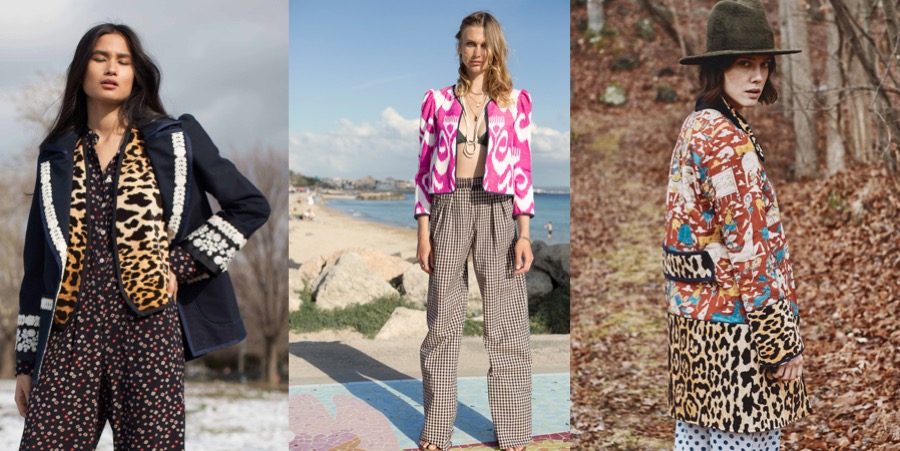
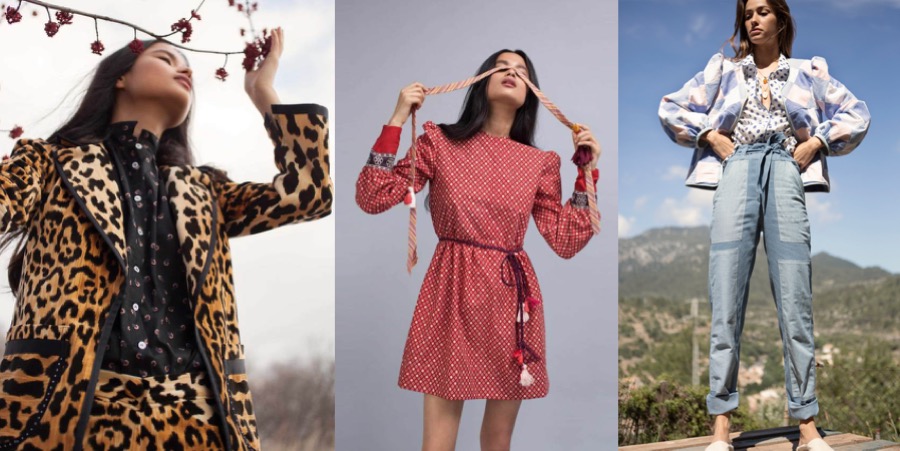
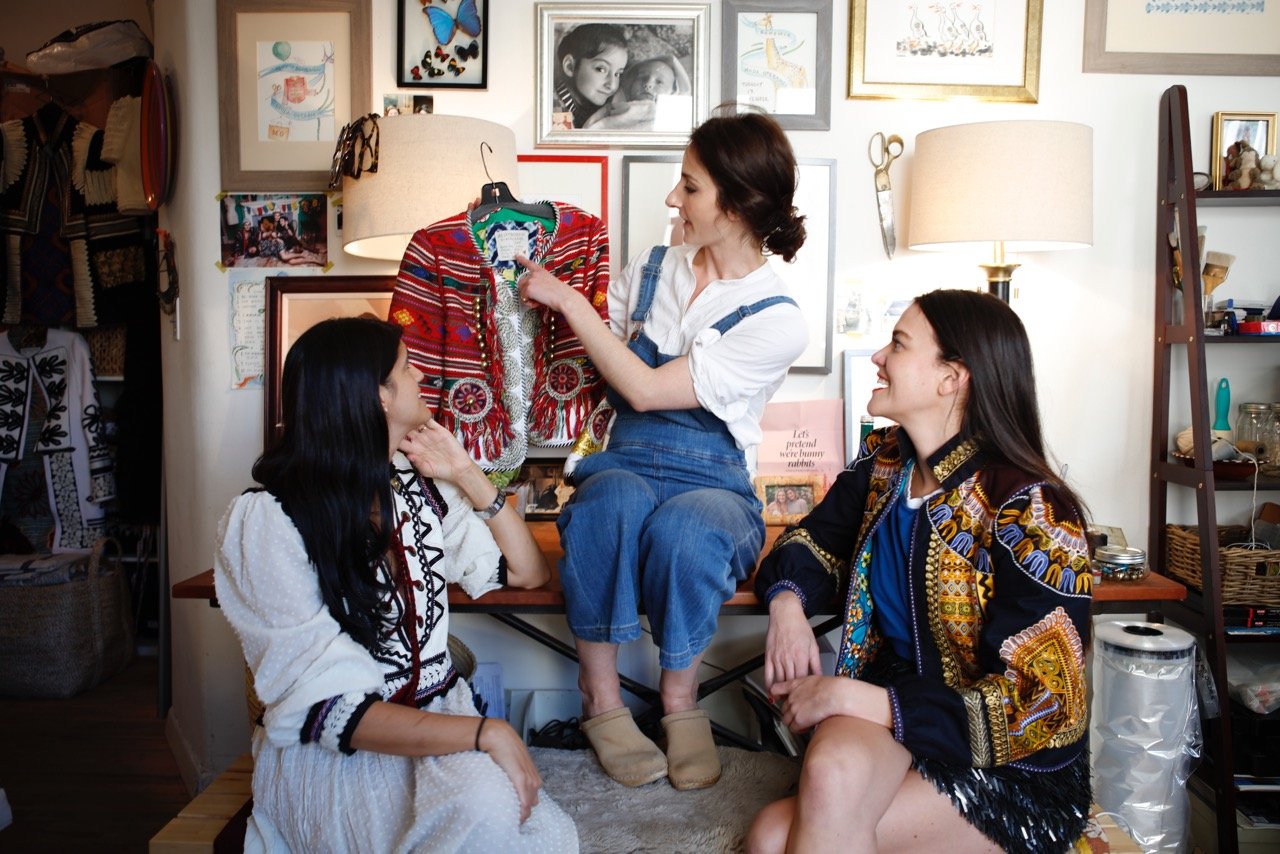
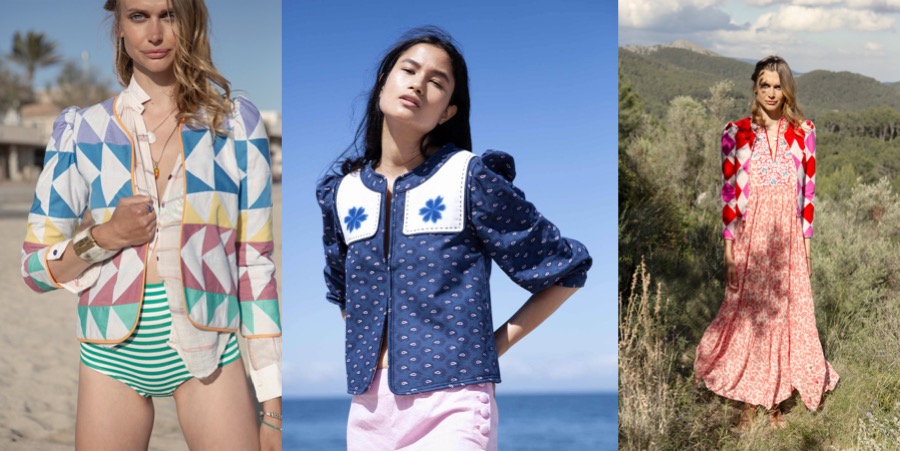
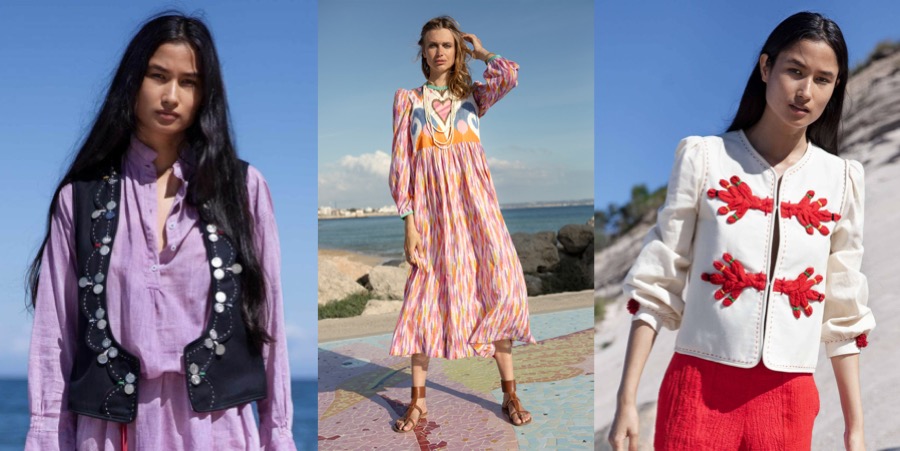
How about discovering a new brand this Sunday afternoon? The offspring of an Italian textile legacy and generations of French artists, it was at University in Scotland that Alix Verley-Pietrafesa, inspired by the mid-century Bohemians of Paris and the Bloomsbury Group, picked up a needle and began making clothes by hand. Seeking to create pieces which reflected the free-spirited muses of her studies and facilitated adventure, Alix of Bohemia was born, formally established in London in 2009. The last decade has seen Alix living and working in Europe, Asia and the US. Her far-flung travels, stories, techniques and textiles are the canvas of her collections. Alix currently lives between New York and Mallorca where she sews daily in her Ateliers with her team, producing limited runs, one of a kind pieces and custom commissions by appointment. In 2019 the label opened opened its first store in New York. From patchworked bolero jackets (obsessed!) to gorgeous, vintage-y cotton-voile dresses, Alix of Bohemia is all about a nostalgic, made-with-love feeling. Also, it’s very Anita Pallenberg in the 1970s. Here are some of my favourite pieces from the last (and upcoming resort 2020) collections.

Collage by Edward Kanarecki.

Calder’s Necklaces

Anjelica Houston wearing Calder’s necklace, photographed by Evelyn Hofer for The New York Times in 1976.

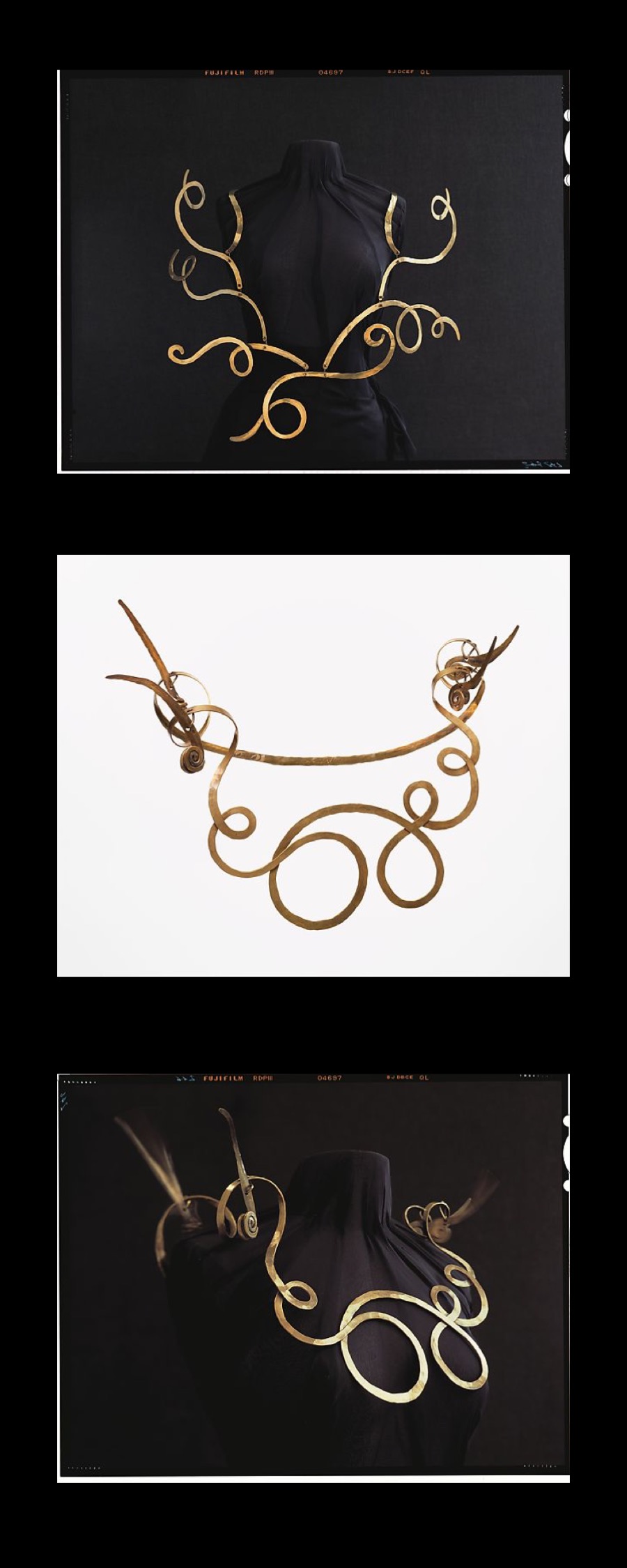
Browsing The Metropolitan Museum of Art’s digital archives can bring so much joy. I knew that Alexander Calder induldged himself in making one-of-a-kind jewellery when not creating his hanging installations, but I never actually saw his necklaces. Calder produced more than eighteen hundred pieces of jewelry, most of them between 1933 and 1952. Many of these pieces were made specifically for family members or friends and given away on special occasions. Each necklace, bracelet, ring, pin, or earring was a unique, handcrafted design to which he applied his skills as a metalworker and his visual wit, just as he did when he created mobiles and bent-wire sculptures. The necklaces below were made by hammering brass wires into flat strips and then fashioning them into a linear design that relates directly to his early wire portraits. Incredible, wearable works of art.

All photos via The Met’s digital archives.