Fashion Uniforms. Balenciaga SS20

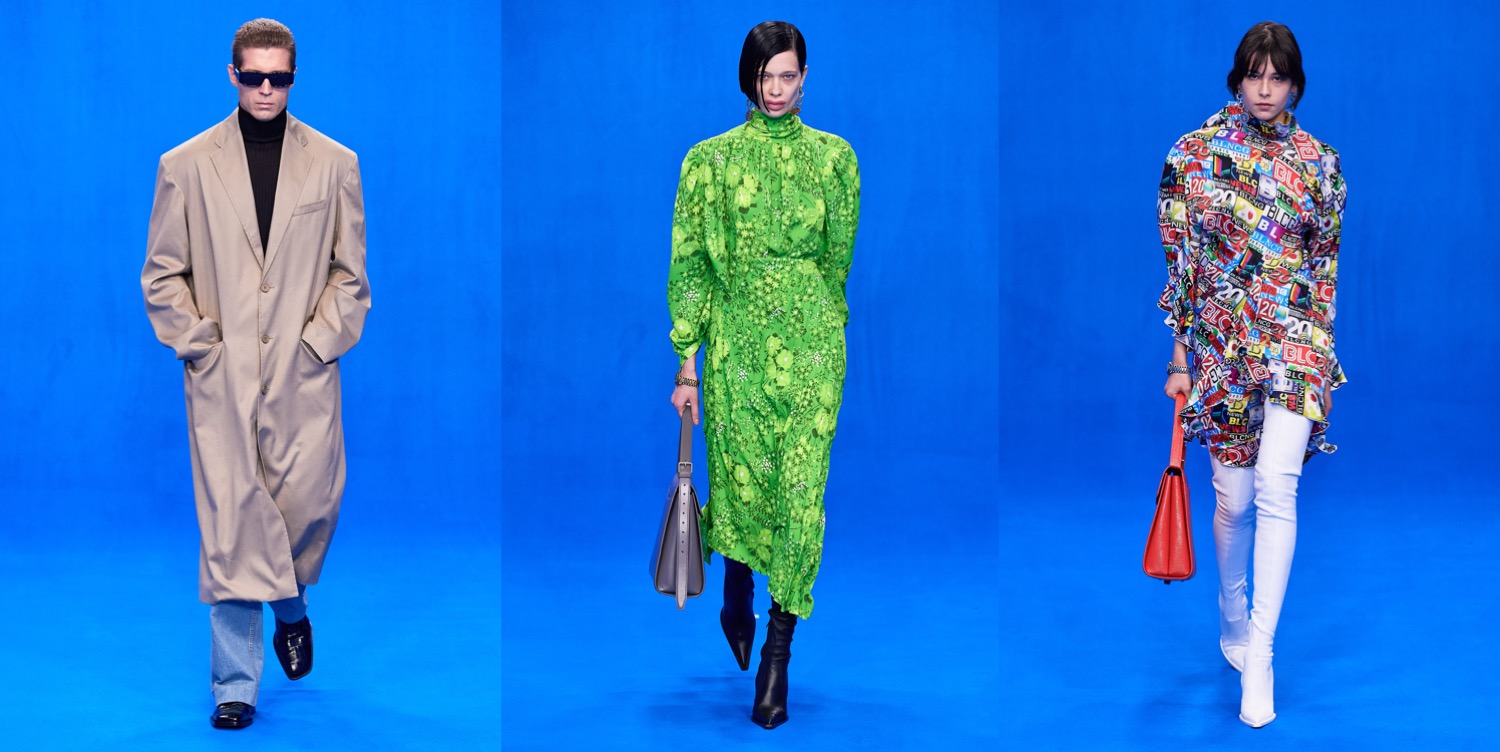
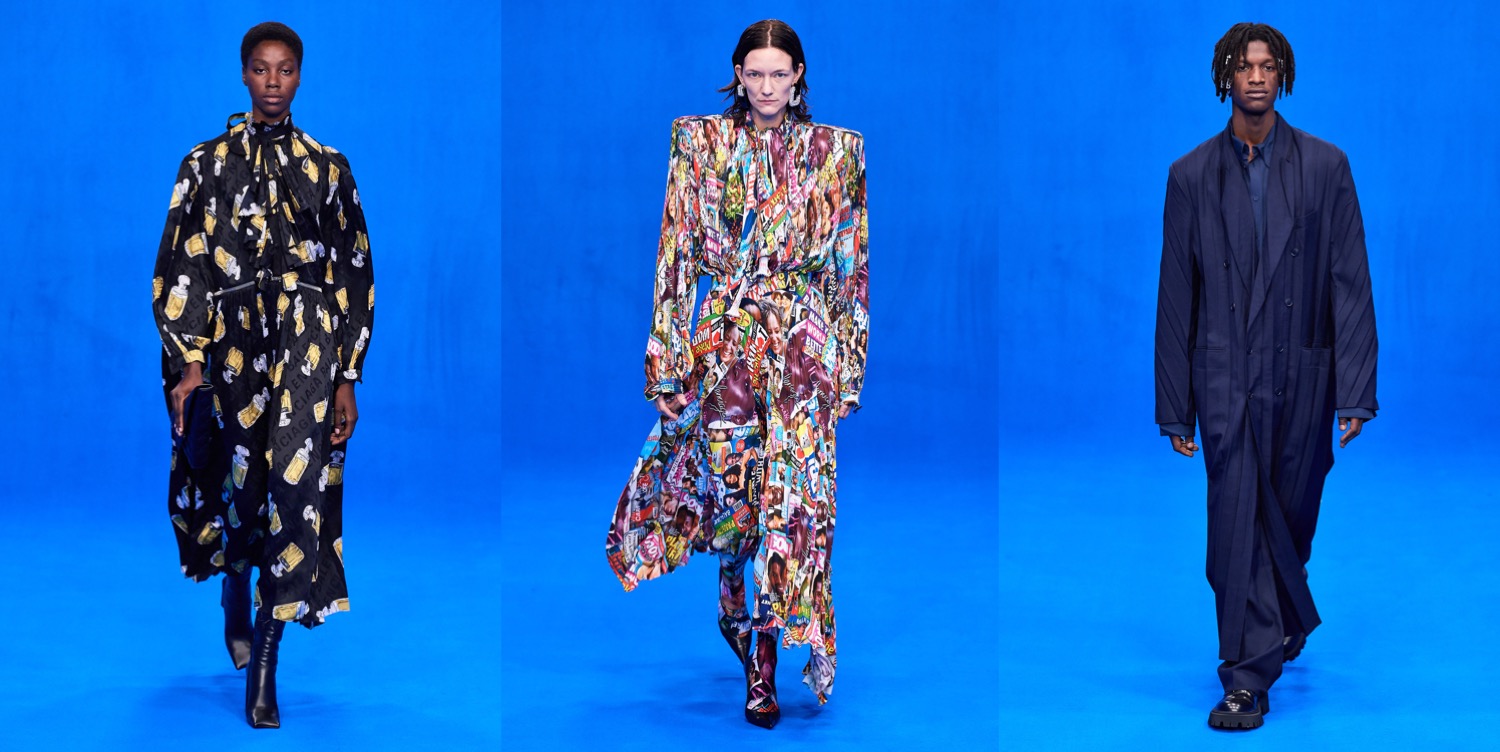
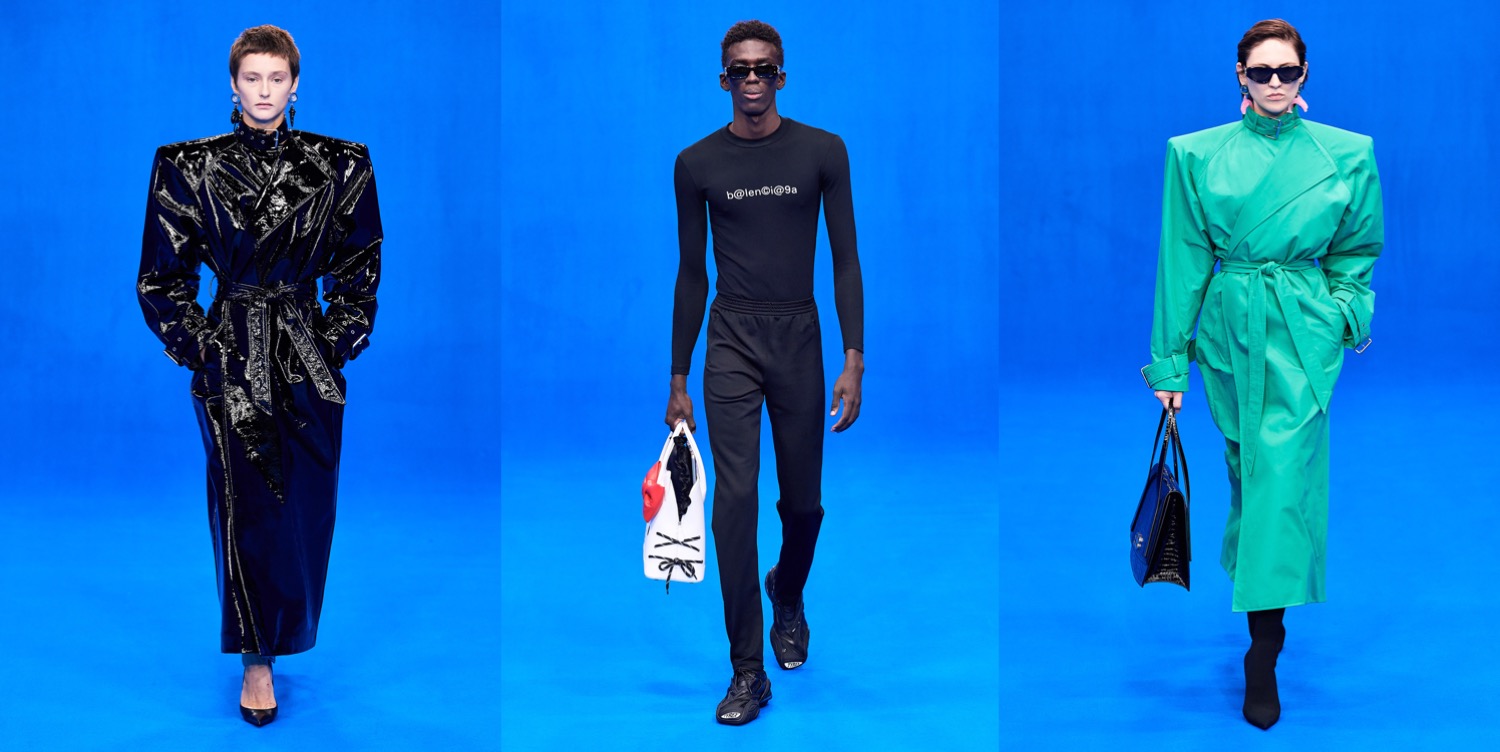
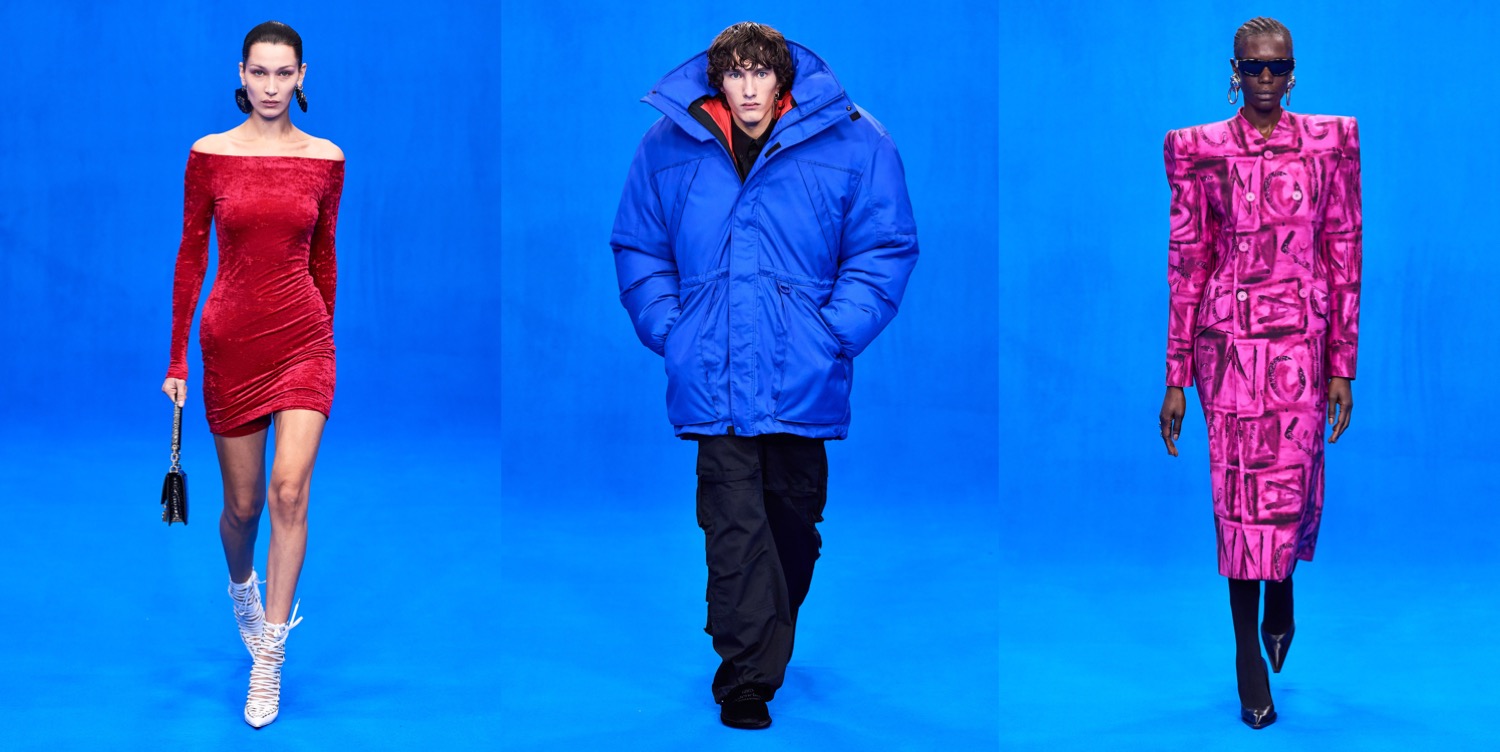
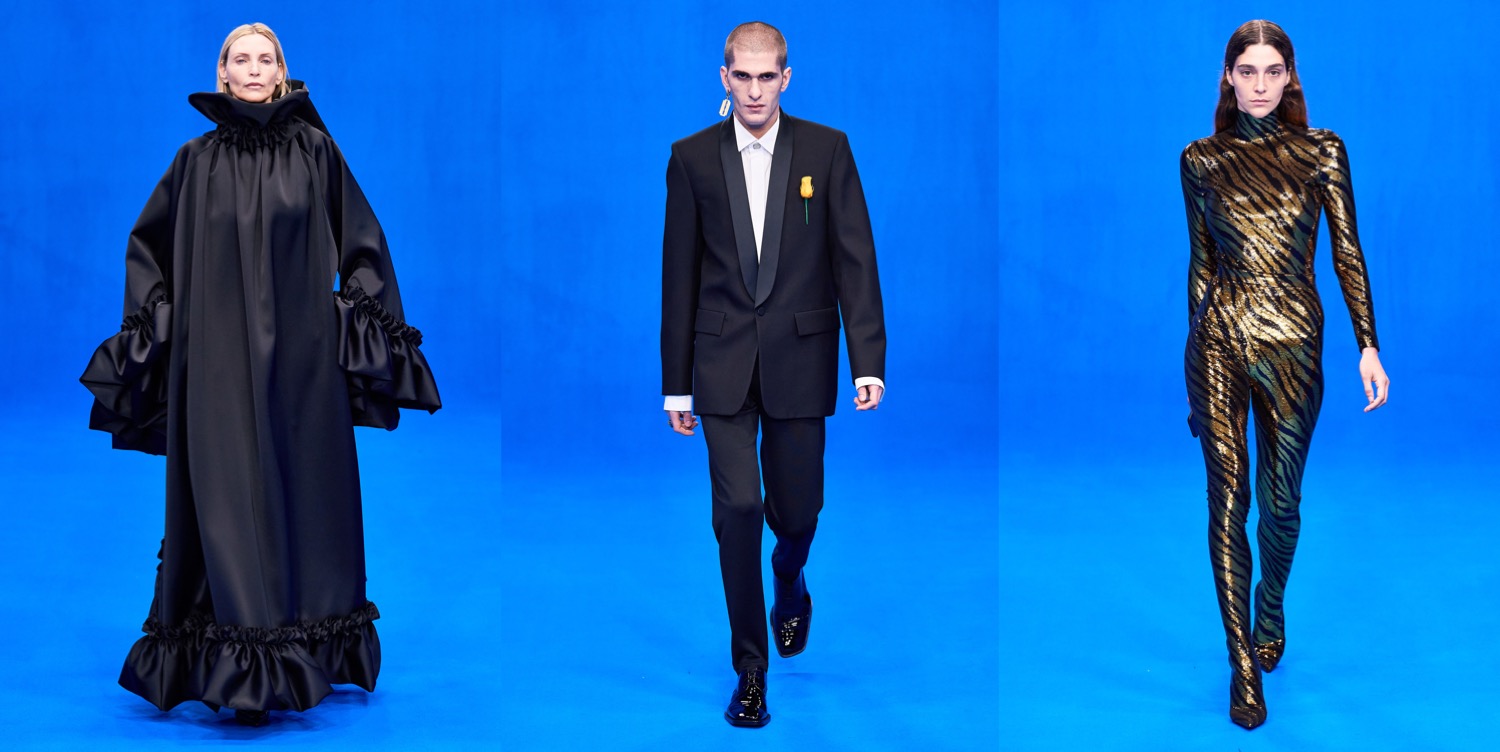
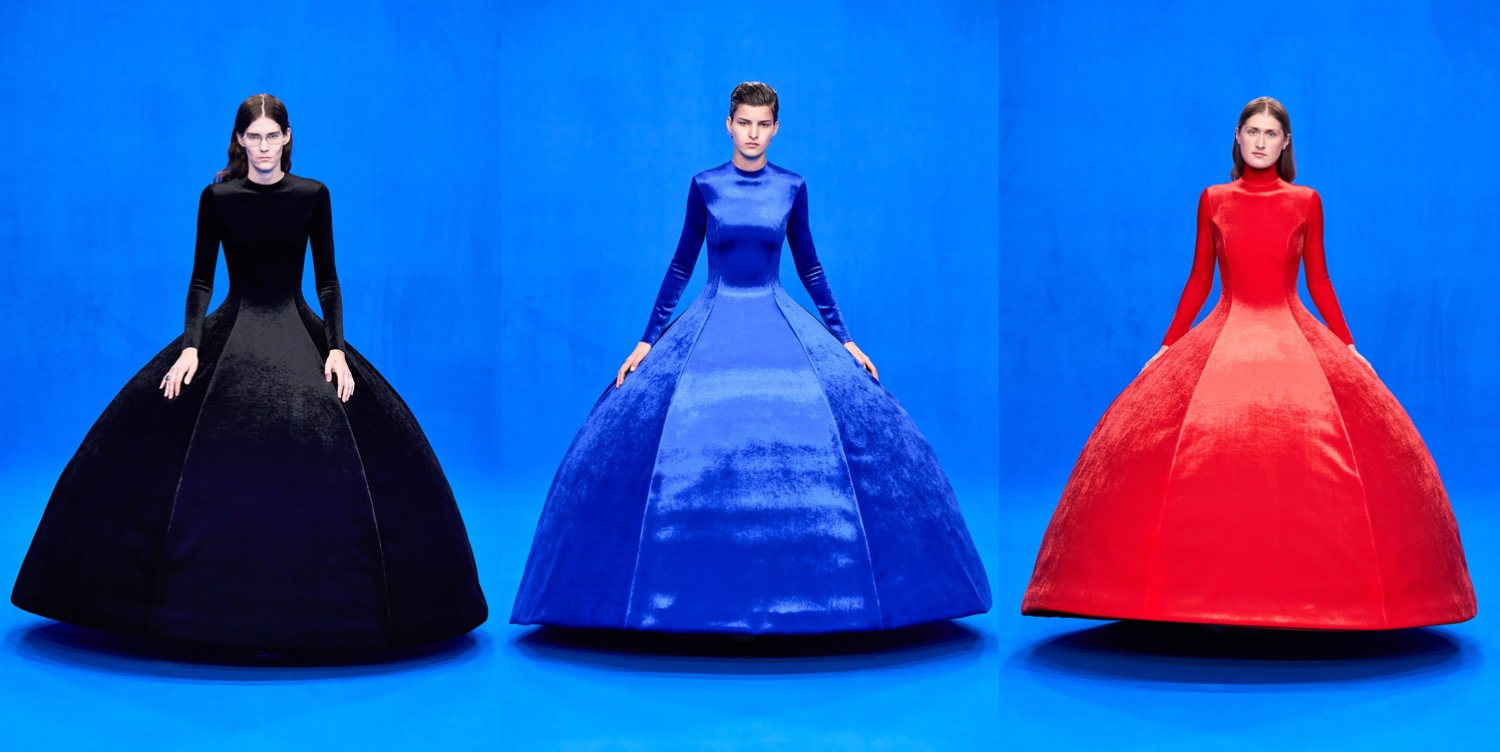
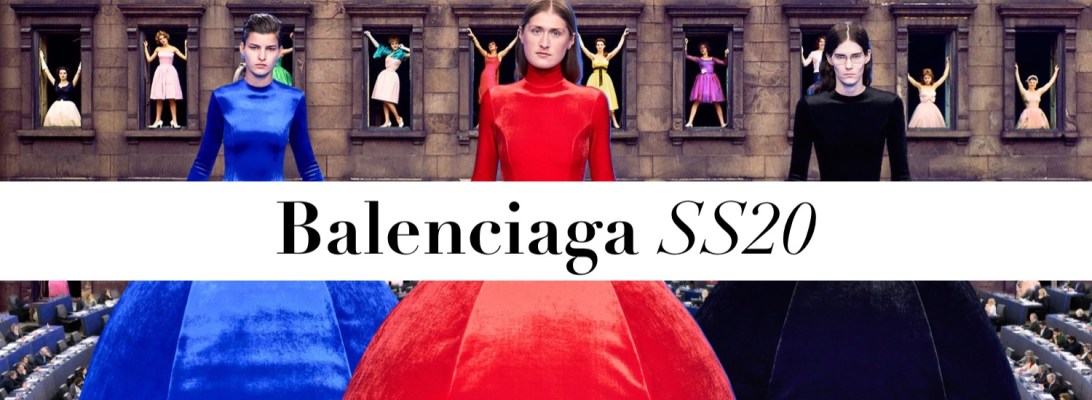
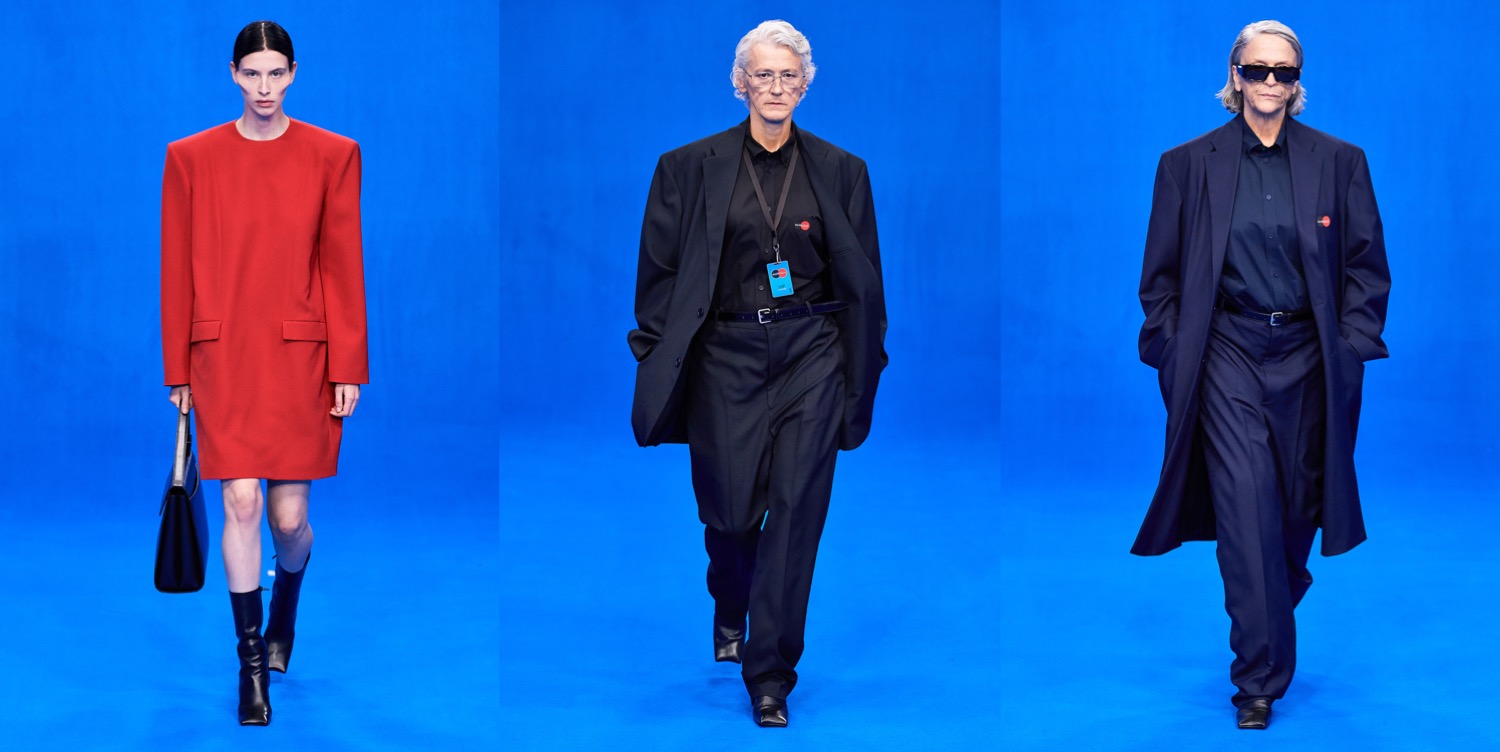
Balenciaga‘s spring-summer 2020 collection was really something. It’s quite clear that since Demna Gvasalia departed from Vetements, his focus is solely directed on the Parisian maison. For me, his latest line-up was as incredible as his debut collection – it proved again that his take on ready-to-wear is truly visionary. The collection was raw, properly odd, ironic and real (all the models come from different walks of life: there were nurses, actresses, super-models, lawyers, gallerists, engineers, etc.). But so, so desirable! Lets start from the beginning. He set the collection in a political arena – a faux “Balenciaga parliament or assembly,” which he’d convened to investigate the subject of “power dressing and fashion uniforms.” First looks: senior delegates in corporate tailoring. On their breast pockets were embroidered badges, two discs bisected with a Balenciaga logo (very Mastercard). Then came what Gvasalia called ‘the campaign dresses’. “We looked at pictures of women politicians, of what they wear campaigning. We took this type of tailored daywear dress and tried to make it cool – not an easy challenge, to be honest,” he said. His solution was to “make them more boxy and cocoon-y, which is quite Balenciaga. So many body types can wear it. Democratic and easy-to-wear volumes.” Later, he sent down a line-up of over-sized, turtleneck frocks in logos, perfume bottles and sneakers prints, and long-sleeved t-shirts with cliche slogans you see in cheesy gift shops (like ’18+’ or ‘Top Model\). In his latest interview with Jo Ellison for How To Spend It, he told the critic that not doing simple, commercial stuff is simply not honest at a brand like Balenciaga. And he’s right. Next: turtle duvet jackets (their construction is amazing – it’s modern day Cristóbal Balenciaga sort of thinking); hybrid, velvet garments that in front look like dresses, but in the back appear to have pants; coats, in faux fur or bold colours, with exaggerated shoulders; XXL, black, widow dresses (worn by Nadja Auermann and Renata Litvinova). If it couldn’t get any more eclectic, here’s the best part. The eveningwear, which instantly became the most memorable / meme moment of Paris Fashion Week. Specifically, crinoline dresses (two in lurex and with a huge, doll-like bow in the back, and three identical velvet masterpieces in different colours). “Ballroom dresses go back to the beginning of Balenciaga, when Cristóbal started in Spain. It was mostly this type of silhouette he did, from Spanish painting,” Gvasalia observed. “But we wanted to make sure they were wearable. If you take out the crinoline, you have a sort of goth dress.” True, there’s something that makes you feel uncomfortable while looking at the collection: maybe it’s the extreme blue of the venue? The prosthetics used as part of models’ make-up? The chilling soundtrack created by Demna’s boyfriend, Loik Gomez? Still, I can’t help but love it. Good fashion makes you want something for a moment. Great fashion makes you feel something and think about it for a couple of days.
Collage by Edward Kanarecki.
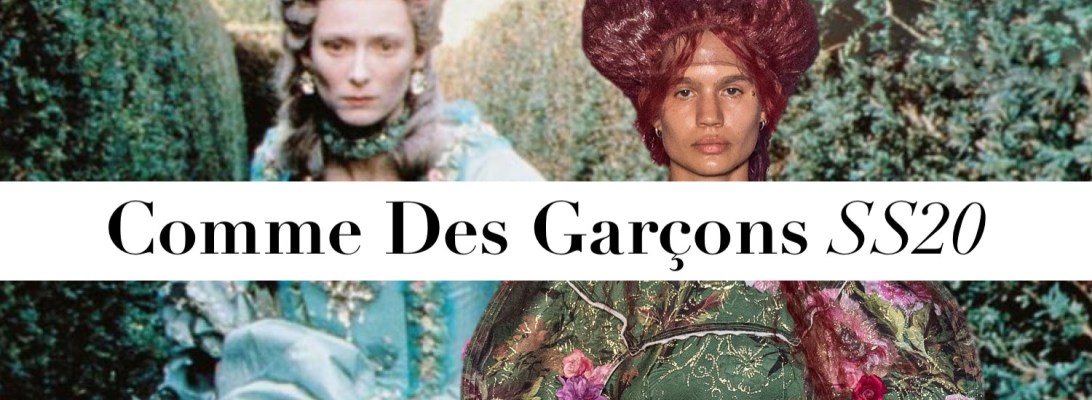
Orlando. Comme Des Garçons SS20

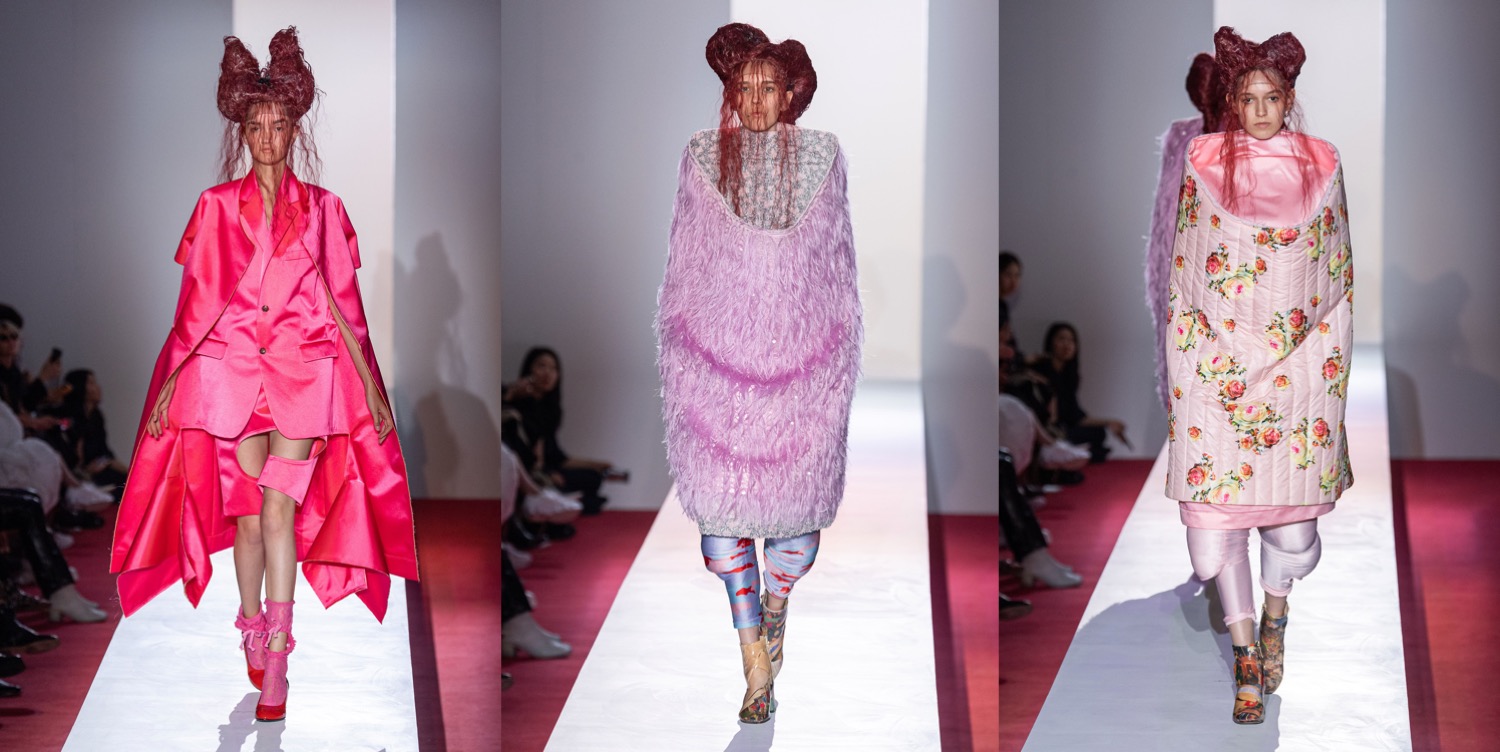
Rei Kawakubo presented a collection of unbridled opulence and transporting fantasy in the second of three shows themed on Virgina Woolf’s ever-inspiring novel, “Orlando“. The men’s show back in June was Act I, this is Act II. Act III is coming up in Vienna in December, at the premiere of Olga Neuwirth’s opera adaptation of the mentioned literary masterpiece. The narrative of the Comme des Garçons show ran in tandem with Woolf’s time travelling protagonist, jumping from Elizabethan times through the 18th and 19th century to the present. And, Kawakubo also added her own chapter: the future. The first part of the show, the Elizabethan period, was overfilled and stuffed with ornaments and details, and the garments seemed to be decaying with their splendour the same moment they appeared on the runway. With every look, the amount of decorations seemed to decrease. The last silhouettes – would never call them clothes – were all-black, minimal in cut and big. The future is unknown and uncertain. Or maybe black is the symbol of transformation, Orlando-wise? As always, Kawakubo raises many questions for you to answer yourself.

Collage by Edward Kanarecki.
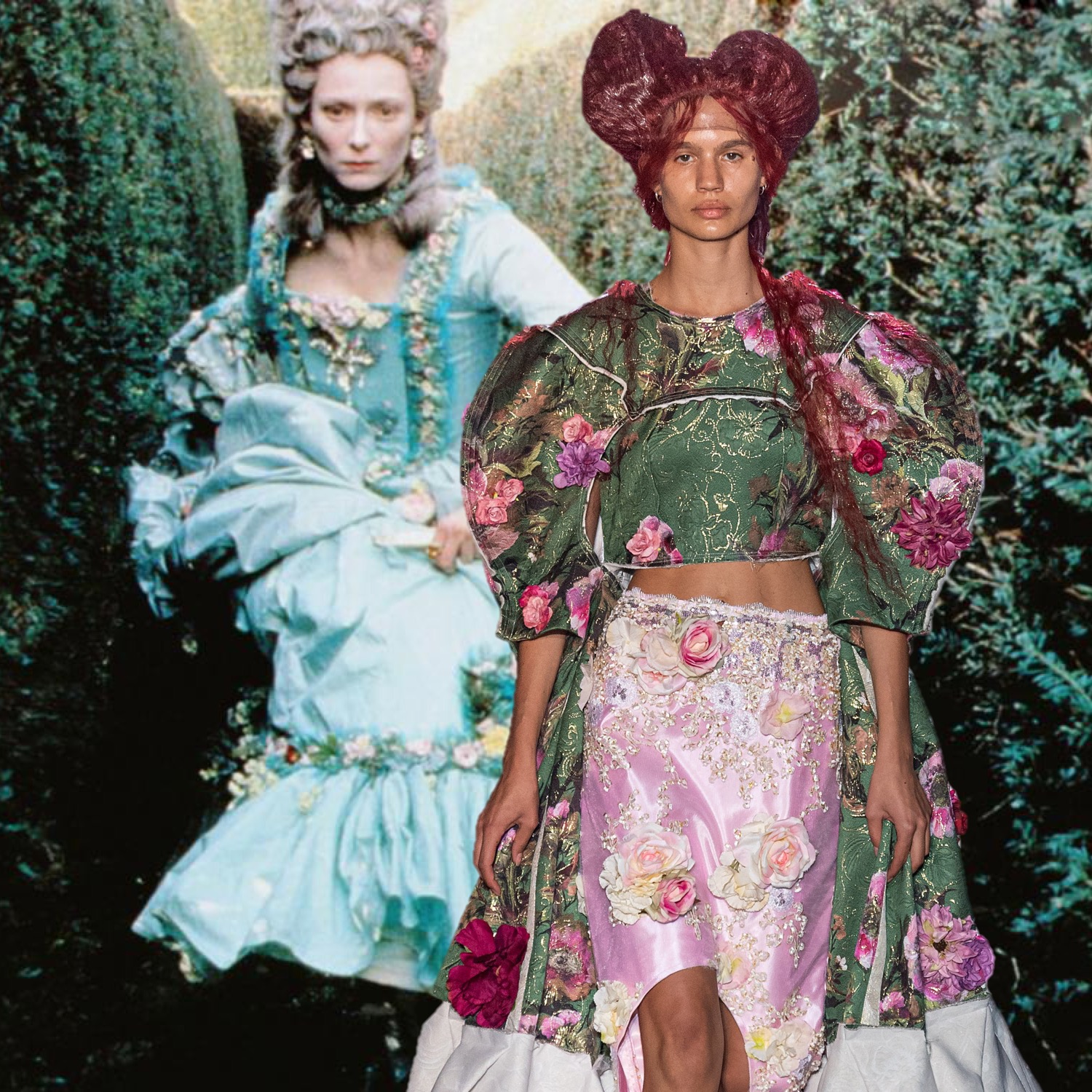
Extreme Nature. Noir Kei Ninomiya SS20

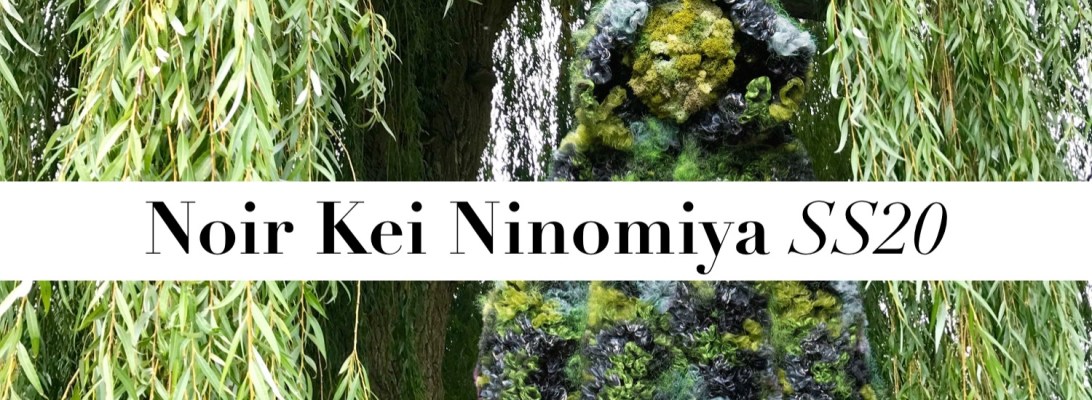
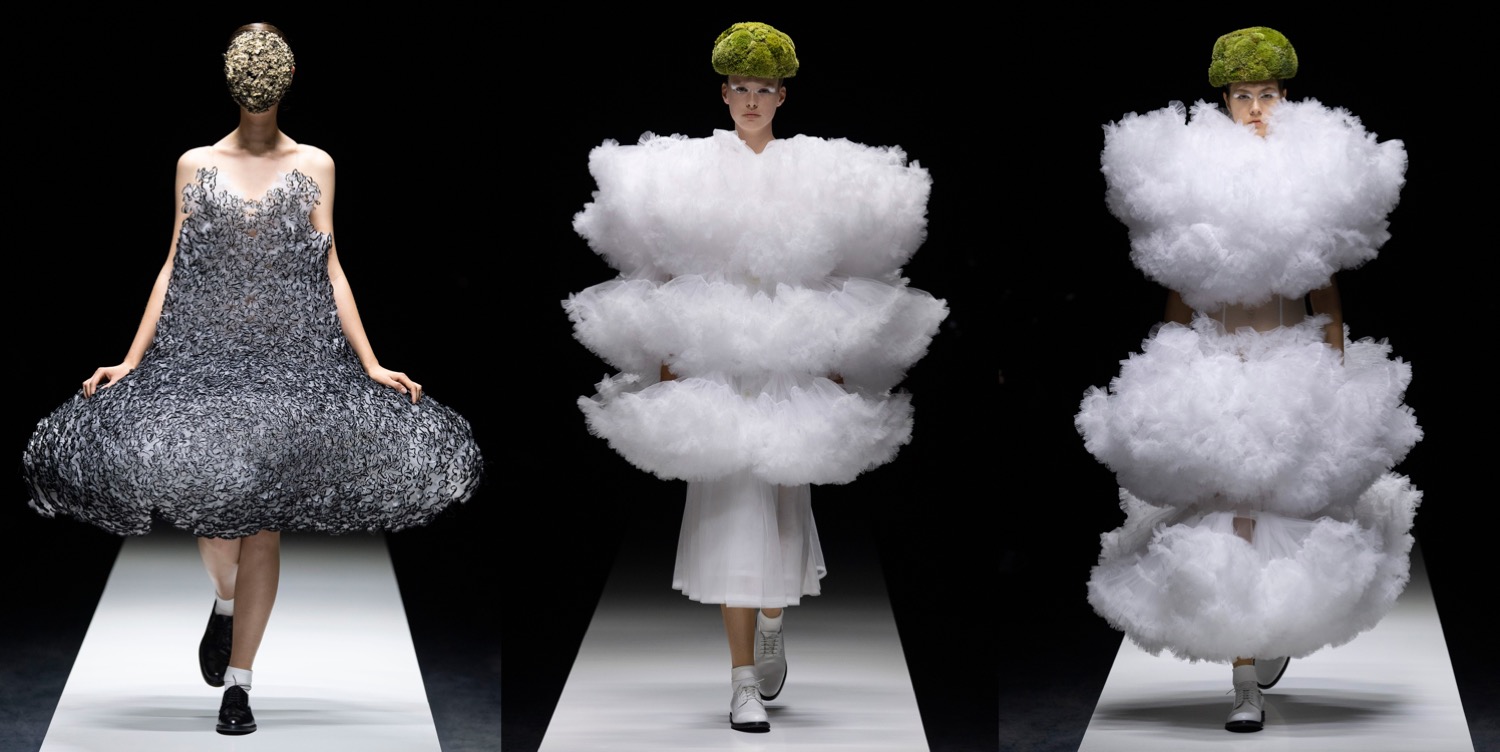
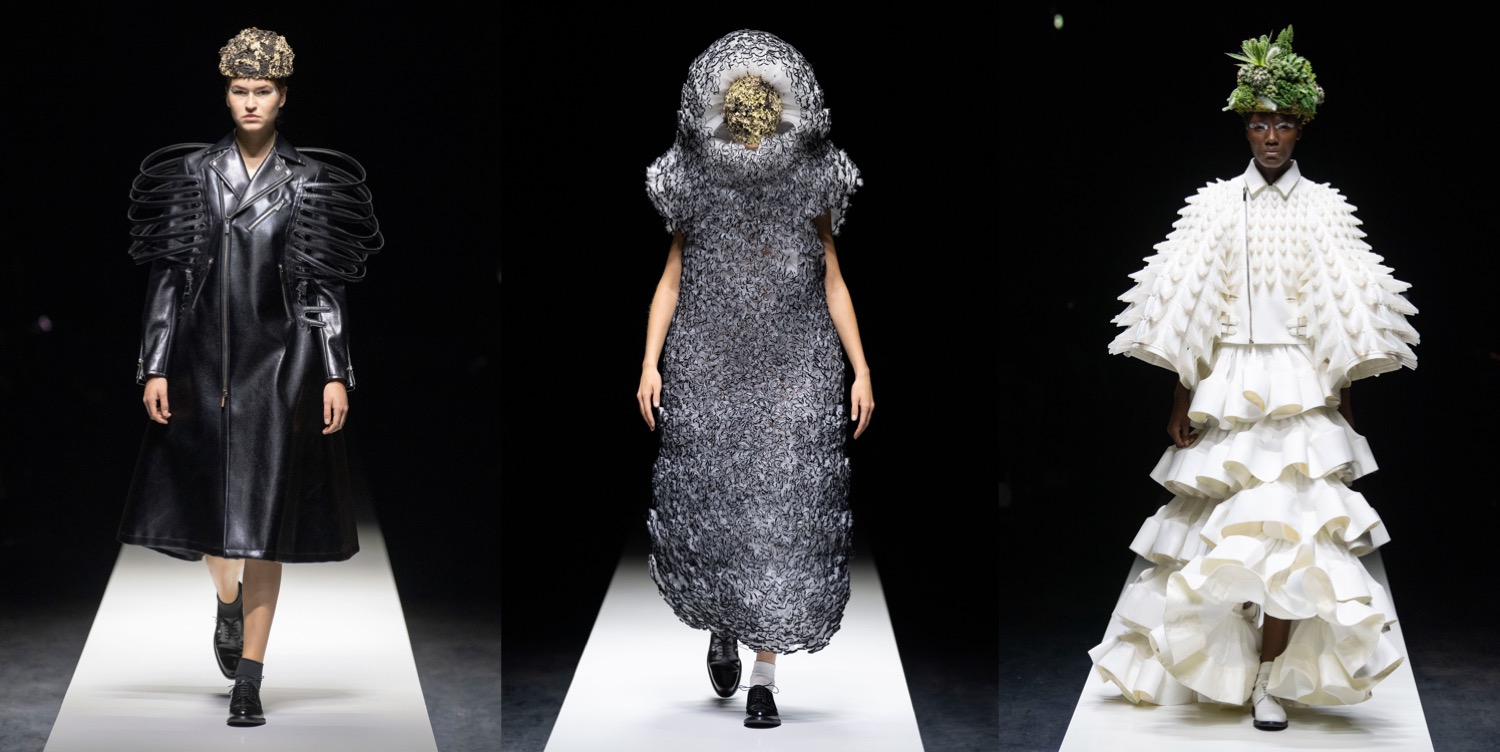
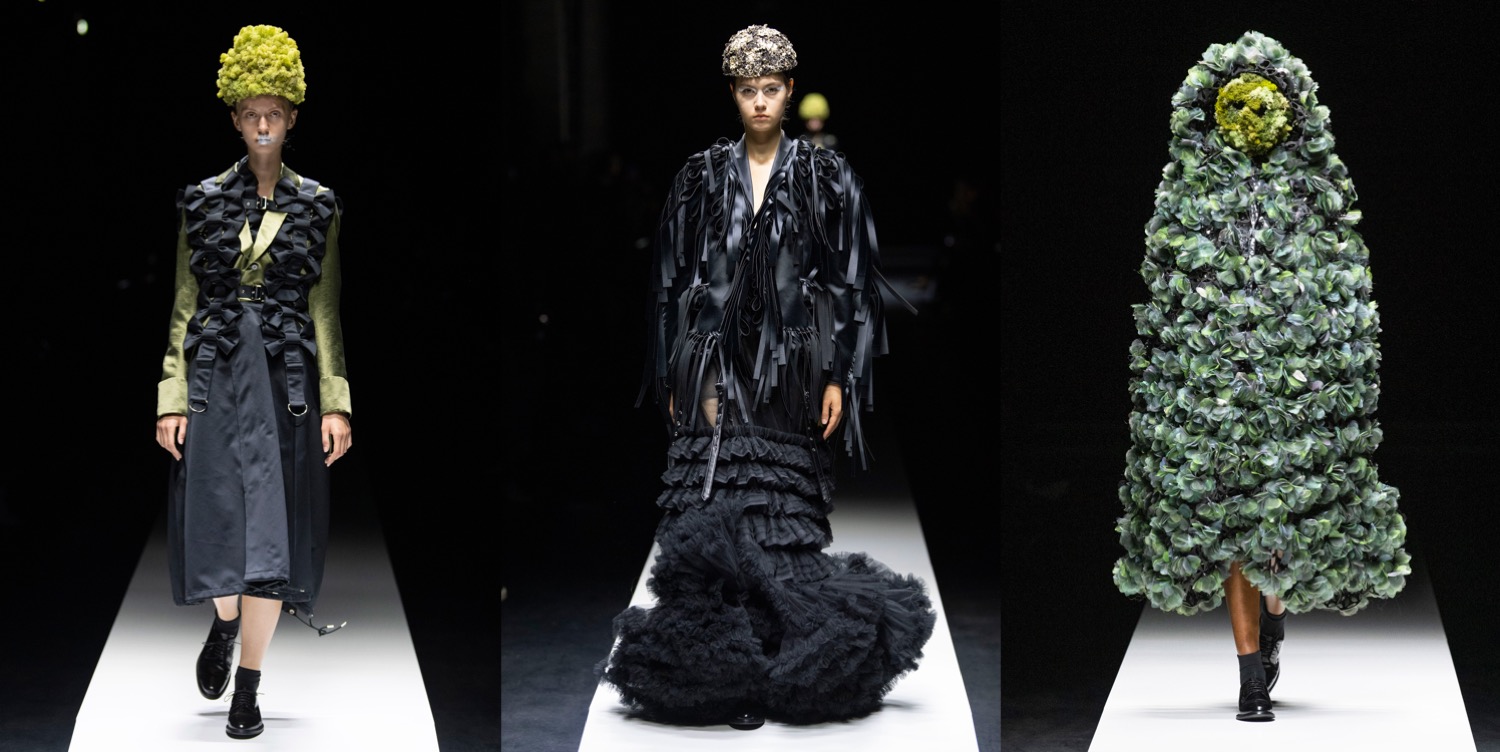
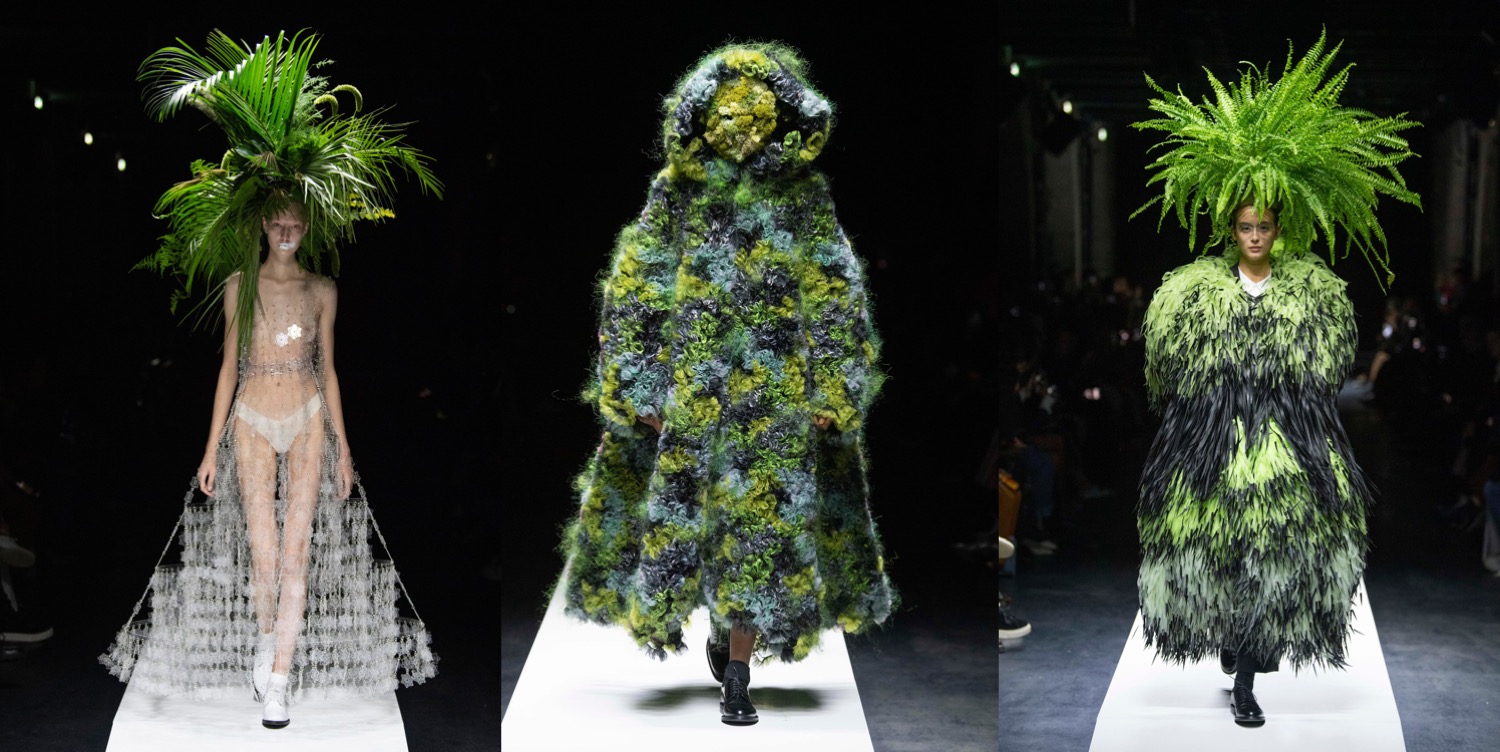
Noir Kei Ninomiya is one of the most fantastic brands present on Paris Fashion Week schedule. For spring-summer 2020, Kei Ninomiya looked towards nature, creating unbelievable wonders. The models seemed to walk in clouds (made out of tulle), in huge chunks of spiky salt crystal (the material is a mystery) and coats that looked like forest moss creatures. Azuma Makoto’s hats were made of real ferns, palms, and moss and worked as a finely landscaped complement to Ninomiya’s fashion. I really dream of a behind-the-scenes film showing Kei’s design process. Just incredible.

Collage by Edward Kanarecki.
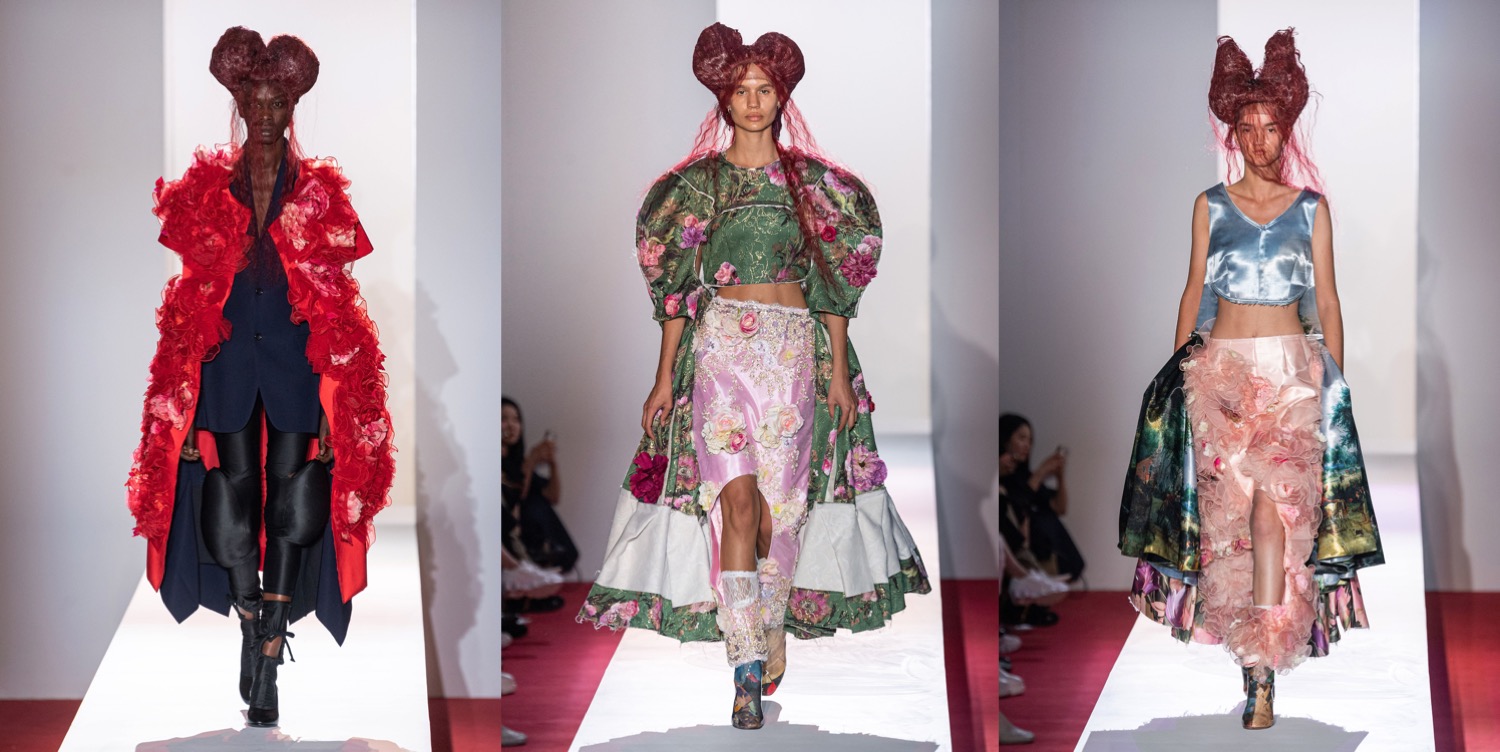
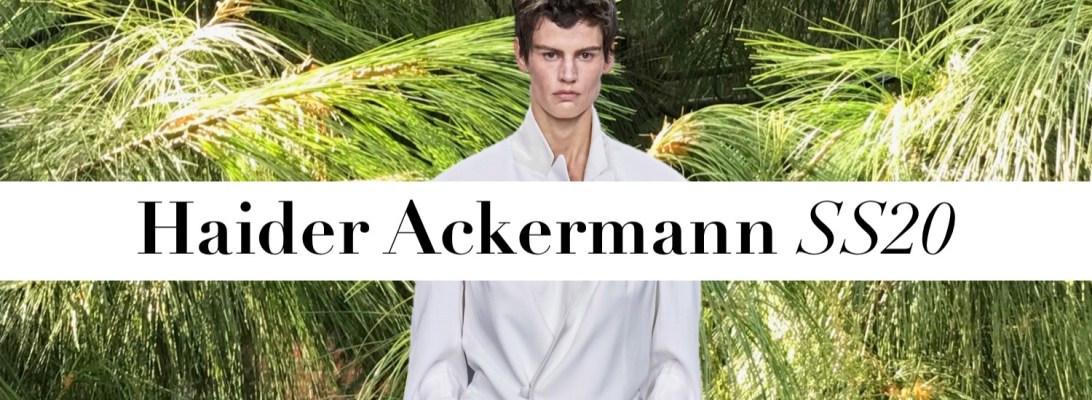
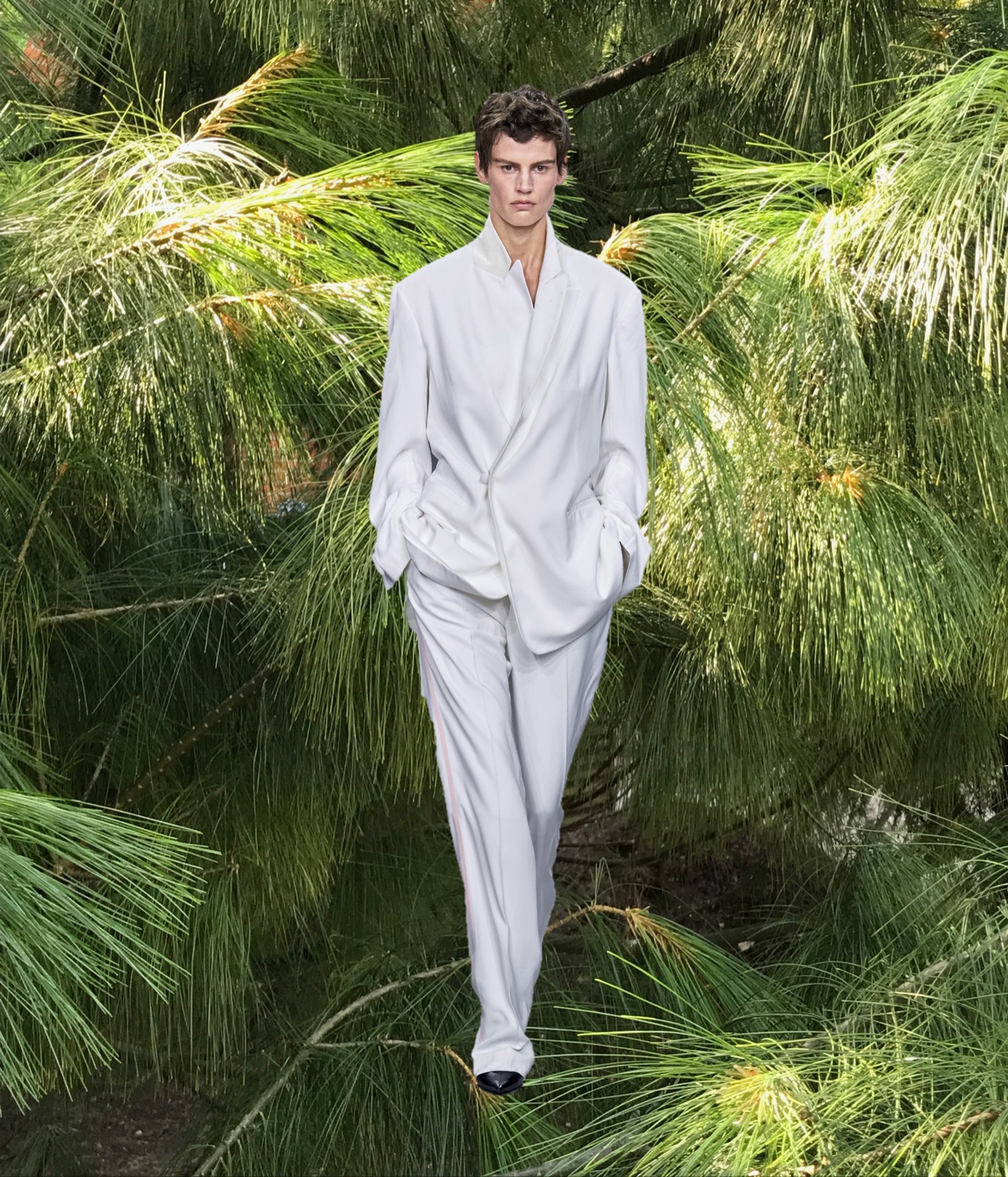
The Art of Sensual Tailoring. Haider Ackermann SS20

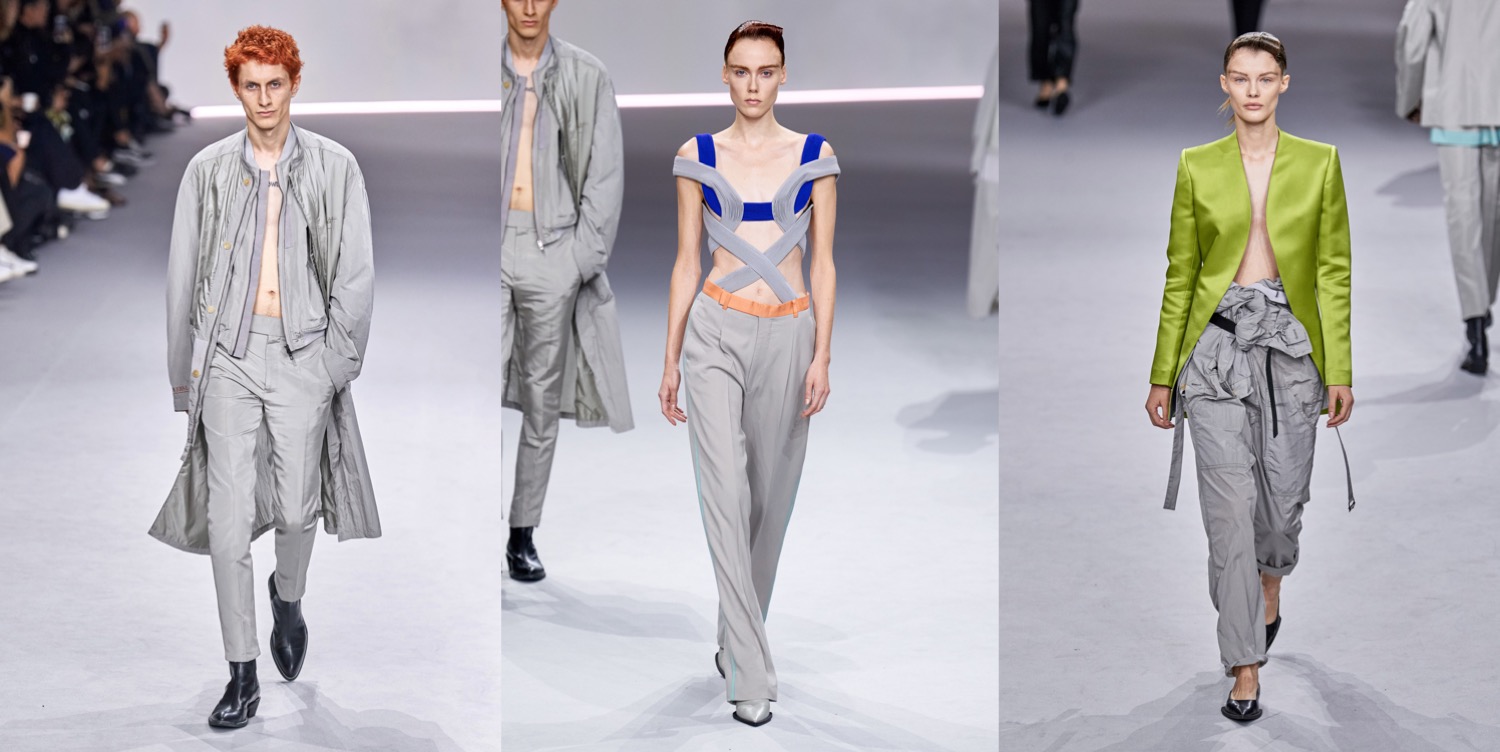
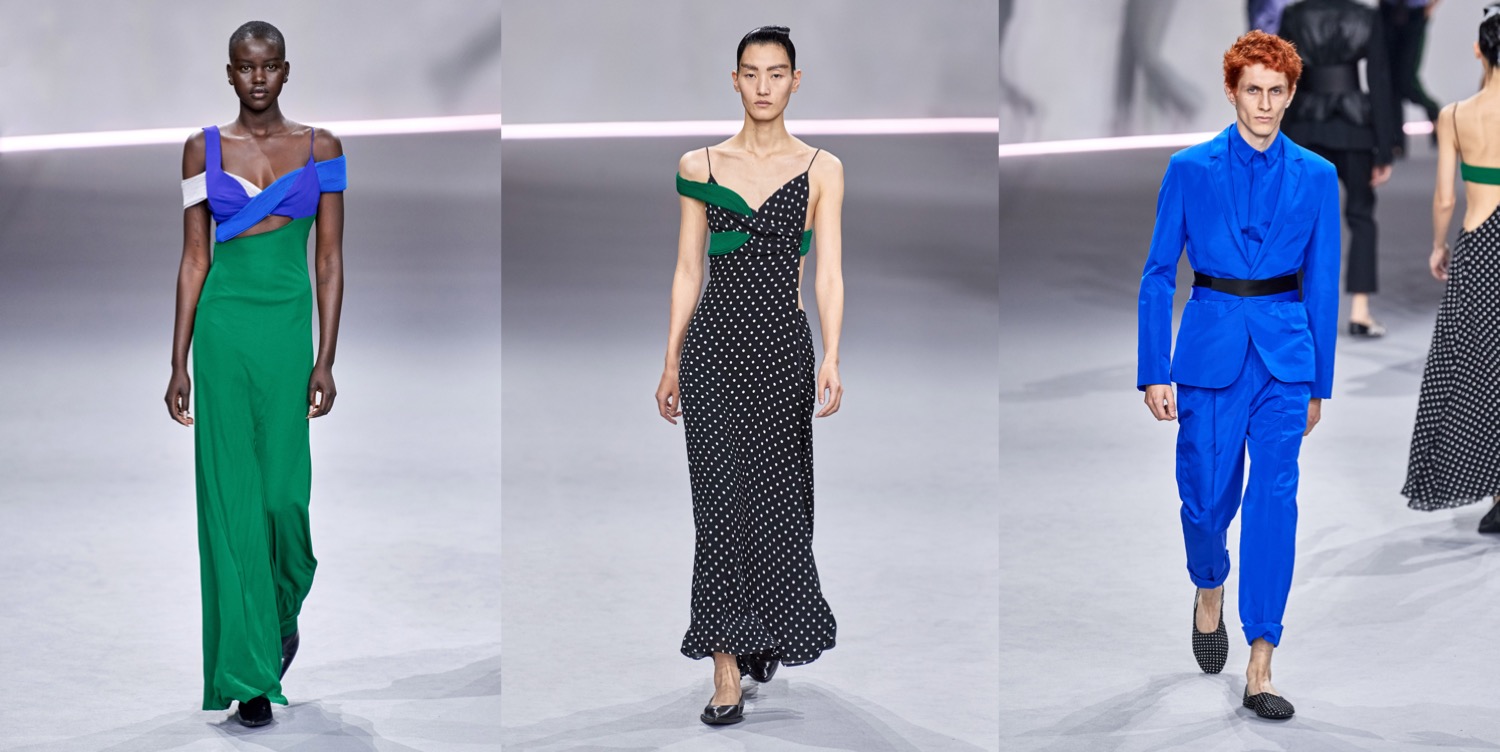
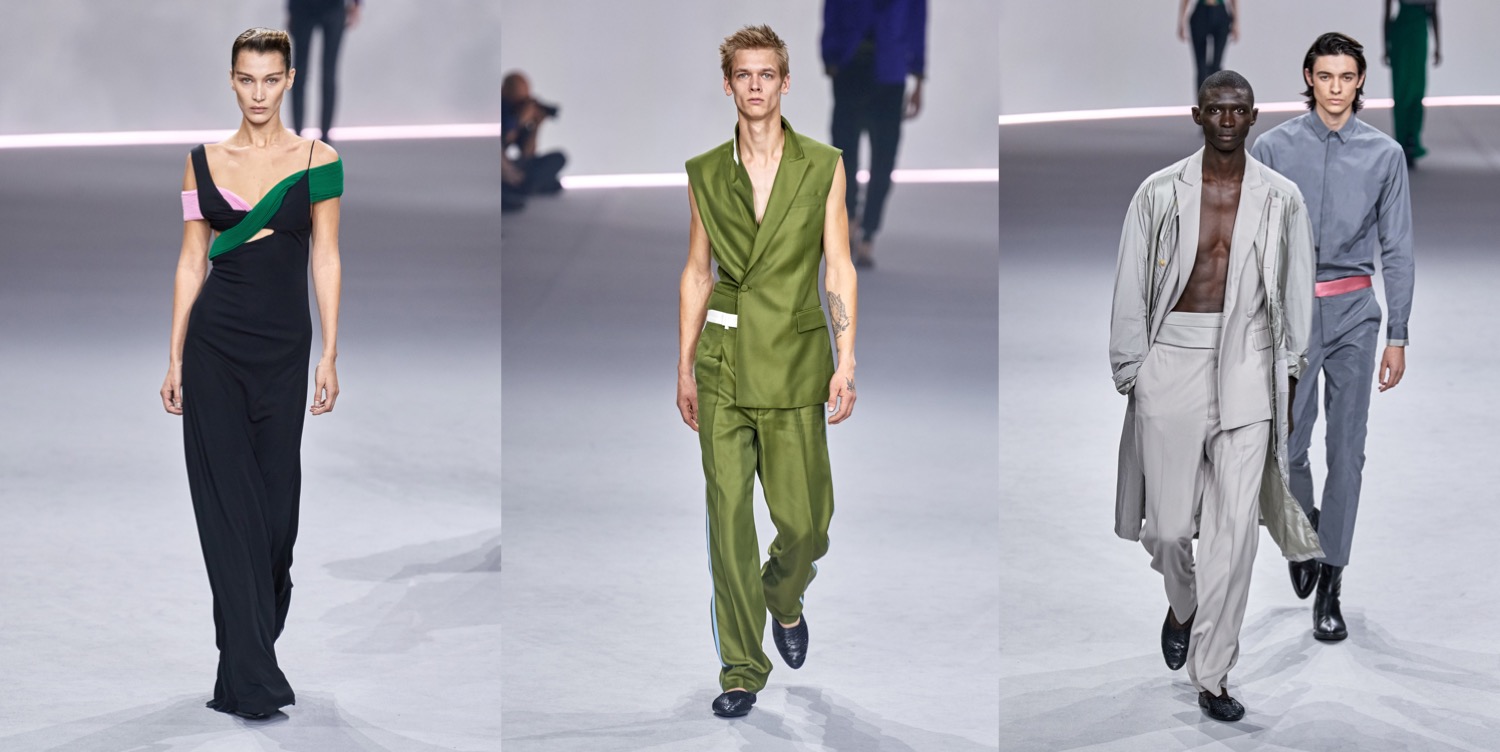
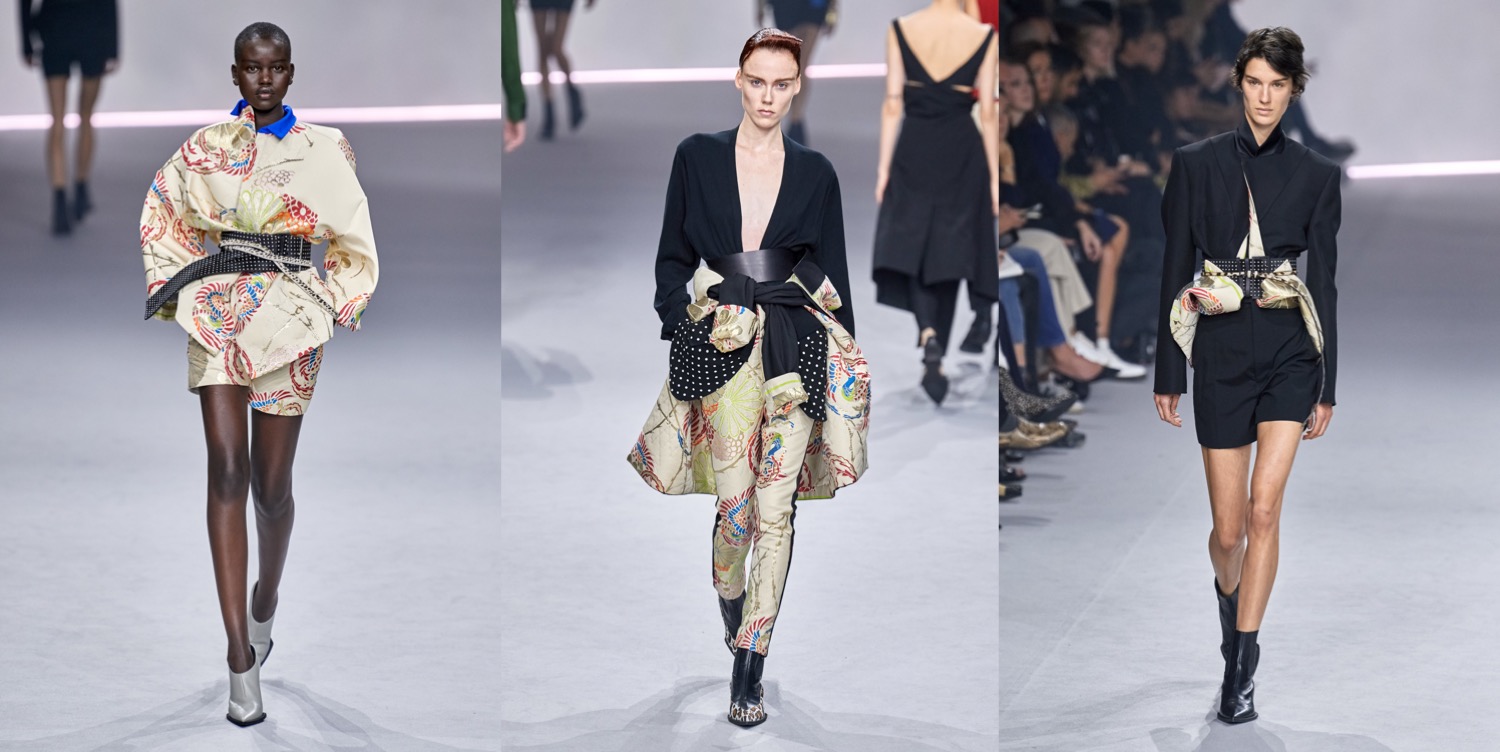
Haider Ackermann‘s spring-summer 2020 was about combining sensuality with tailoring – a sort of art that the designer mastered to perfection. The waist was a big focus of his new season line-up. Men and women both got midriff-spanning leather belts, and other times Ackermann knotted a jacket at the hips with a casual flourish. It looked especially compelling in the case of a jacket lined in vintage kimono silk. But if anything, this was a less androgynous collection than usual, due to the work the designer did with plissé bands of color, wrapping and twisting them around female torsos in a style reminiscent of Madame Grès. The tops, that are actual ribbons of fabric, are daring, just as the jumpsuits with the bumster-low cut-out detail in back. Bella Hadid and Adut Akech’s plissé bandeau dresses are highlights. The women’s and men’s show featured as well an ensemble first worn by Timothée Chalamet at the Venice Film Festival: a dove gray lapel-less suit in technical nylon with a flash of aqua blue at the hem. The belted tuxedo in the same pale shade with a liquid silk top underneath Chalamet wore not a while ago also appeared on the runway, styled in a slightly different way. Ackermann never disapoints.

Collage by Edward Kanarecki.

The Daughter of a Bourgeois. Celine SS20

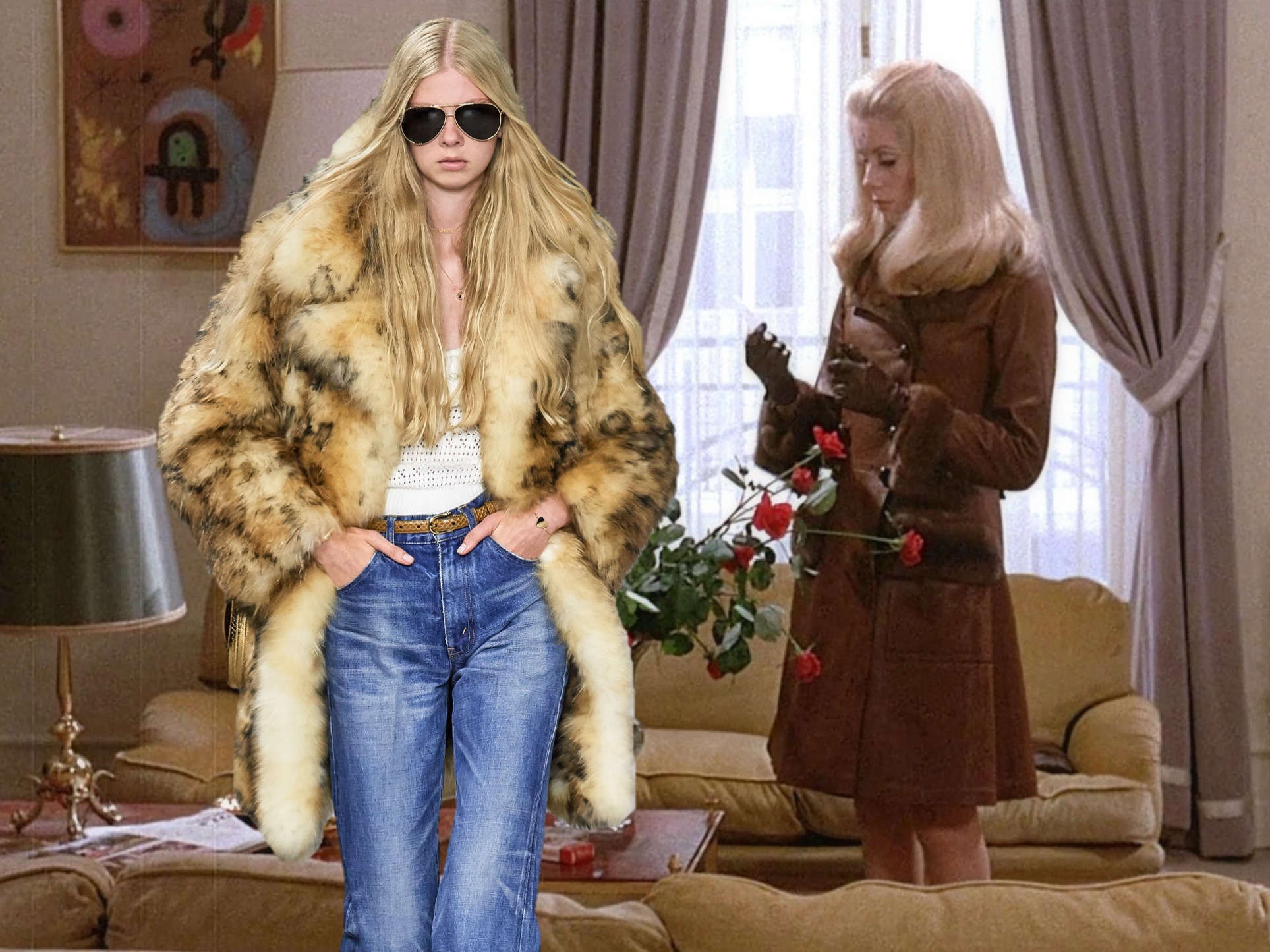
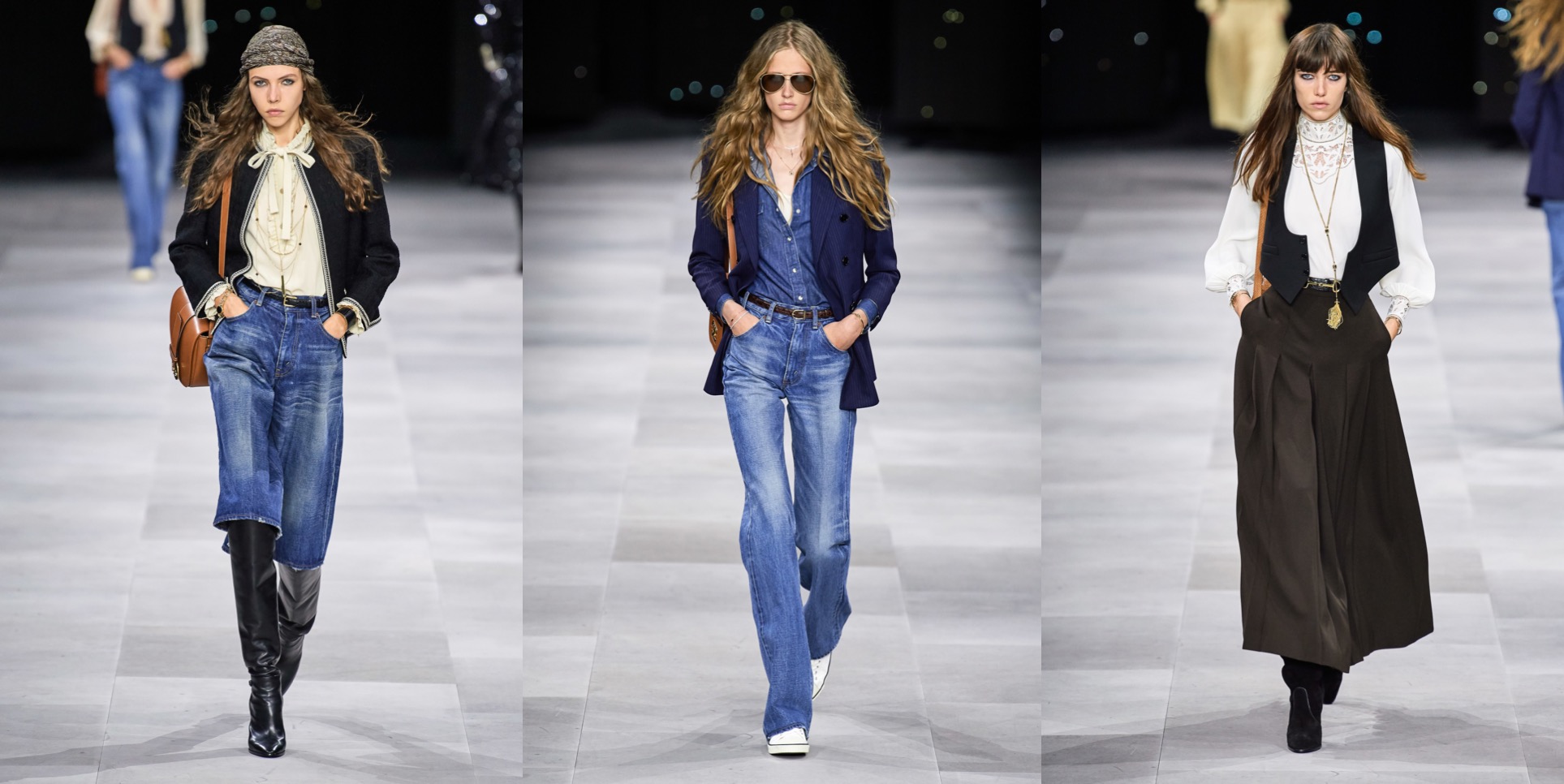
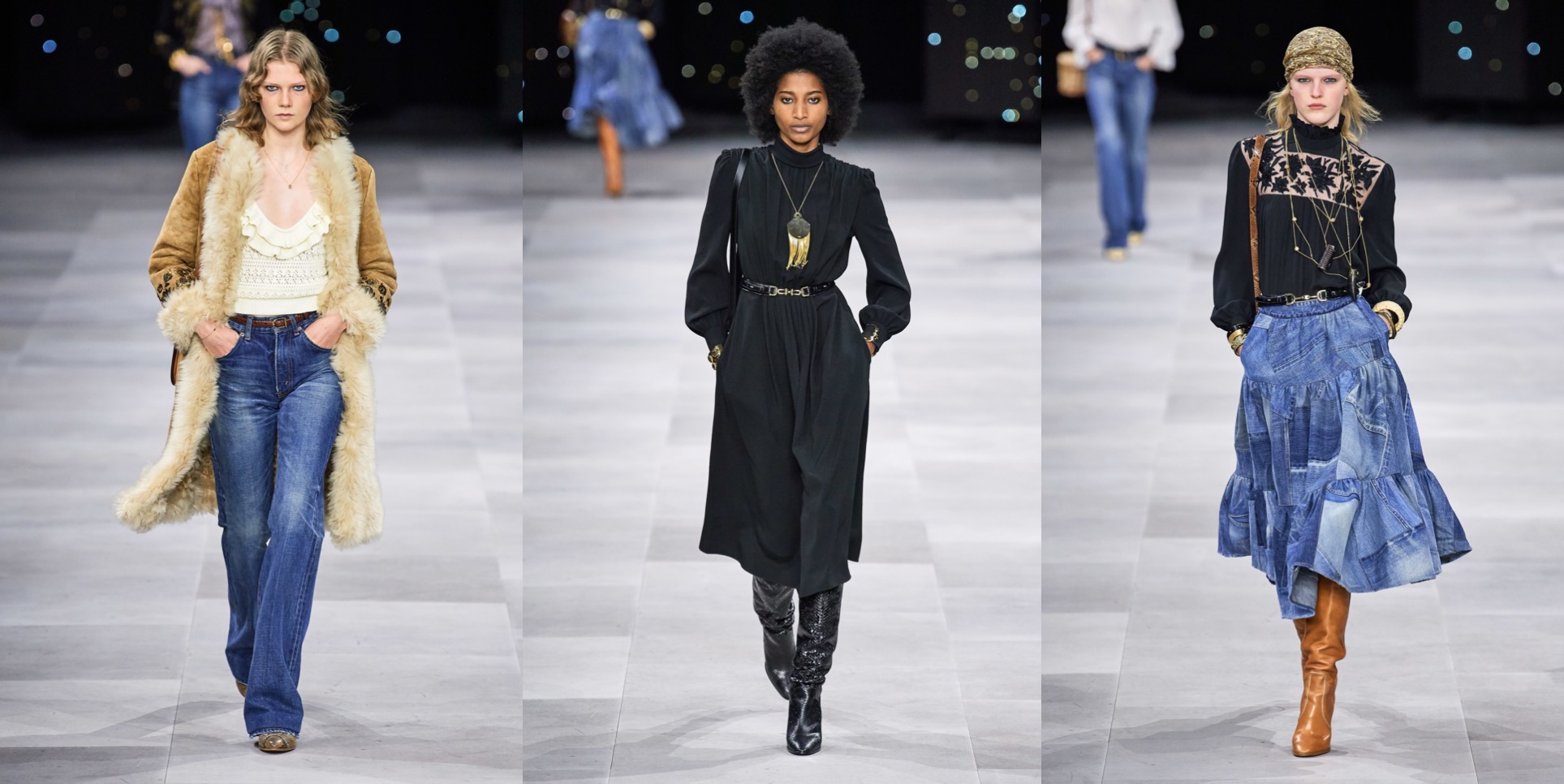
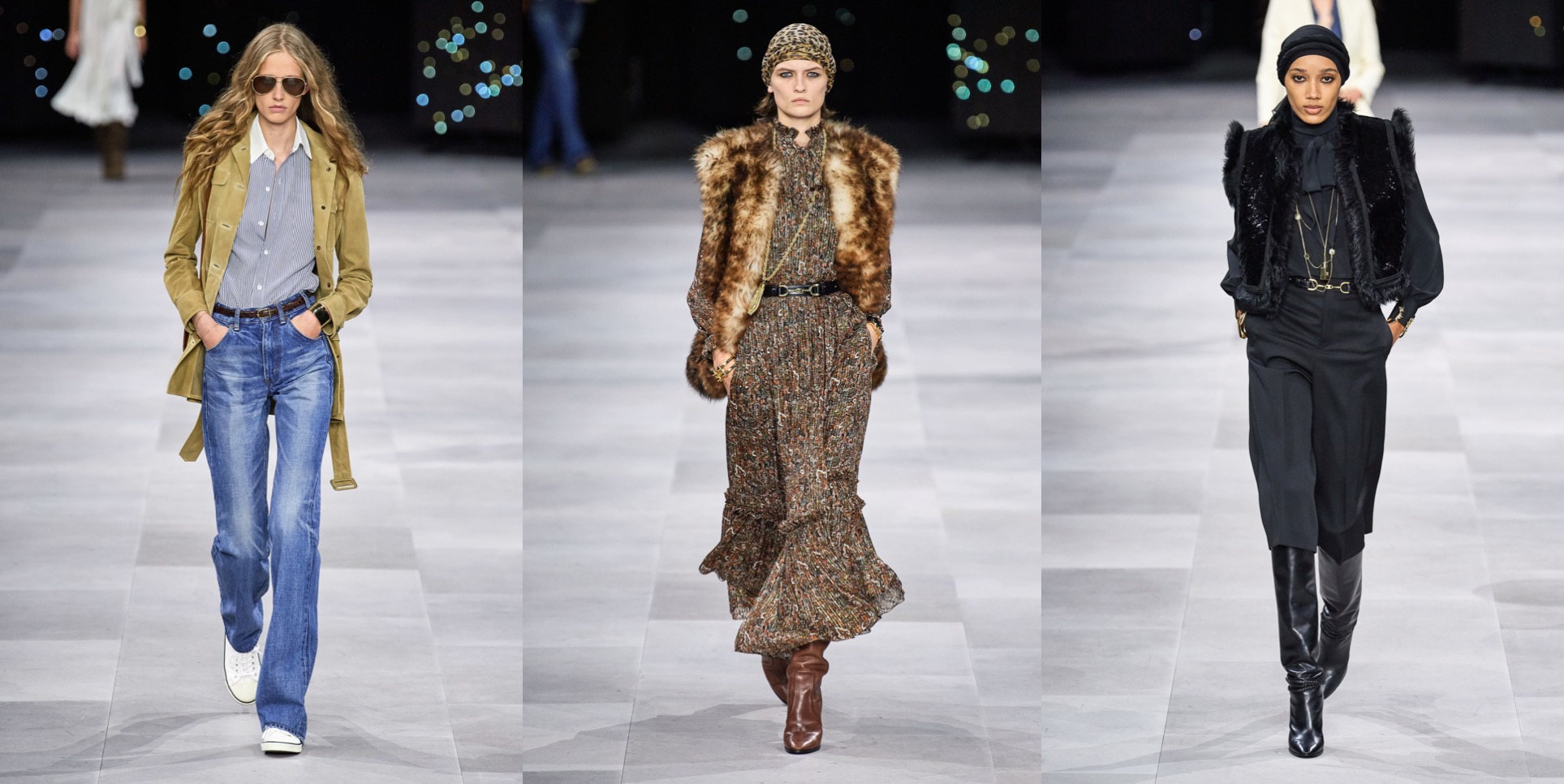
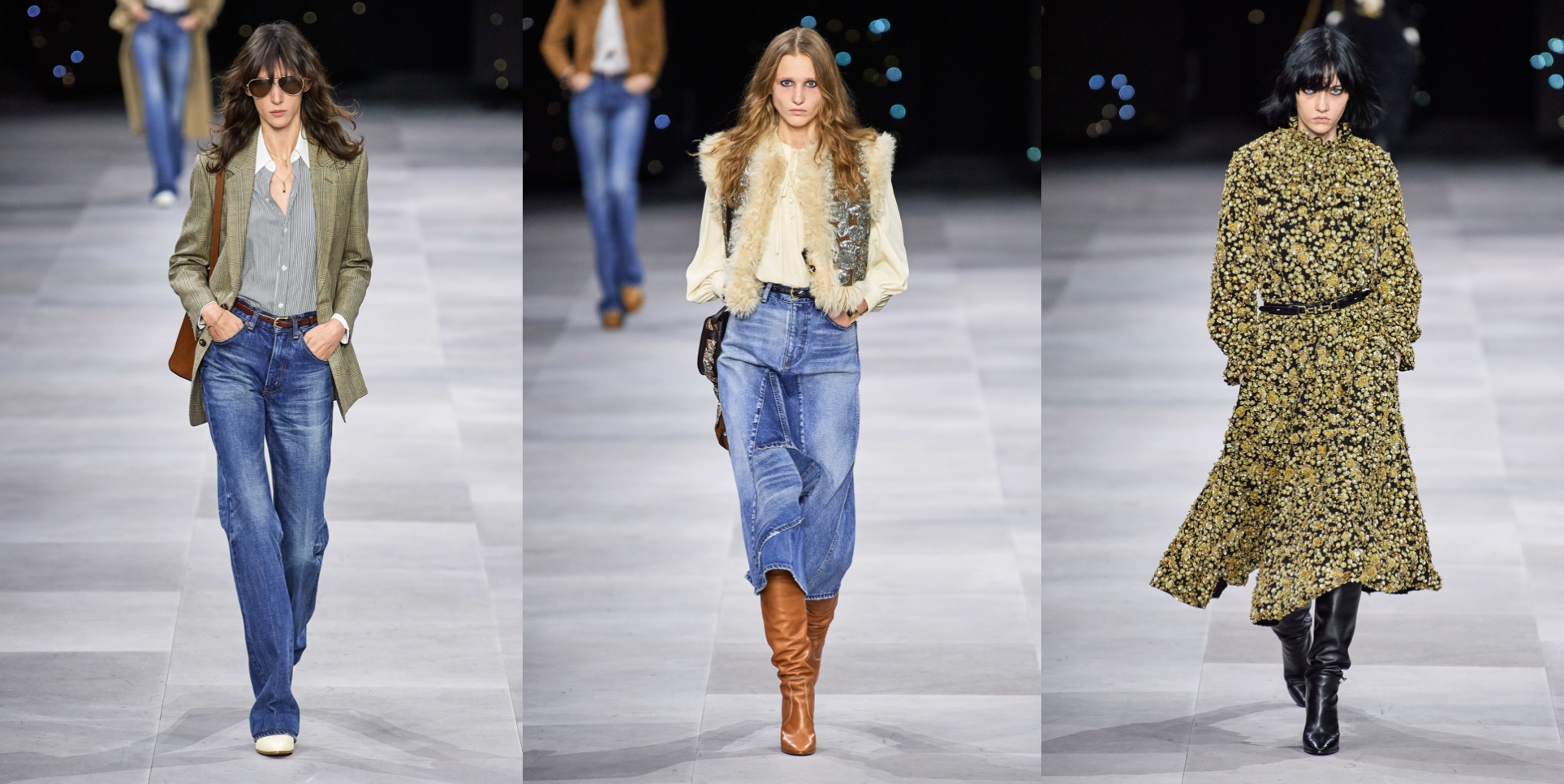
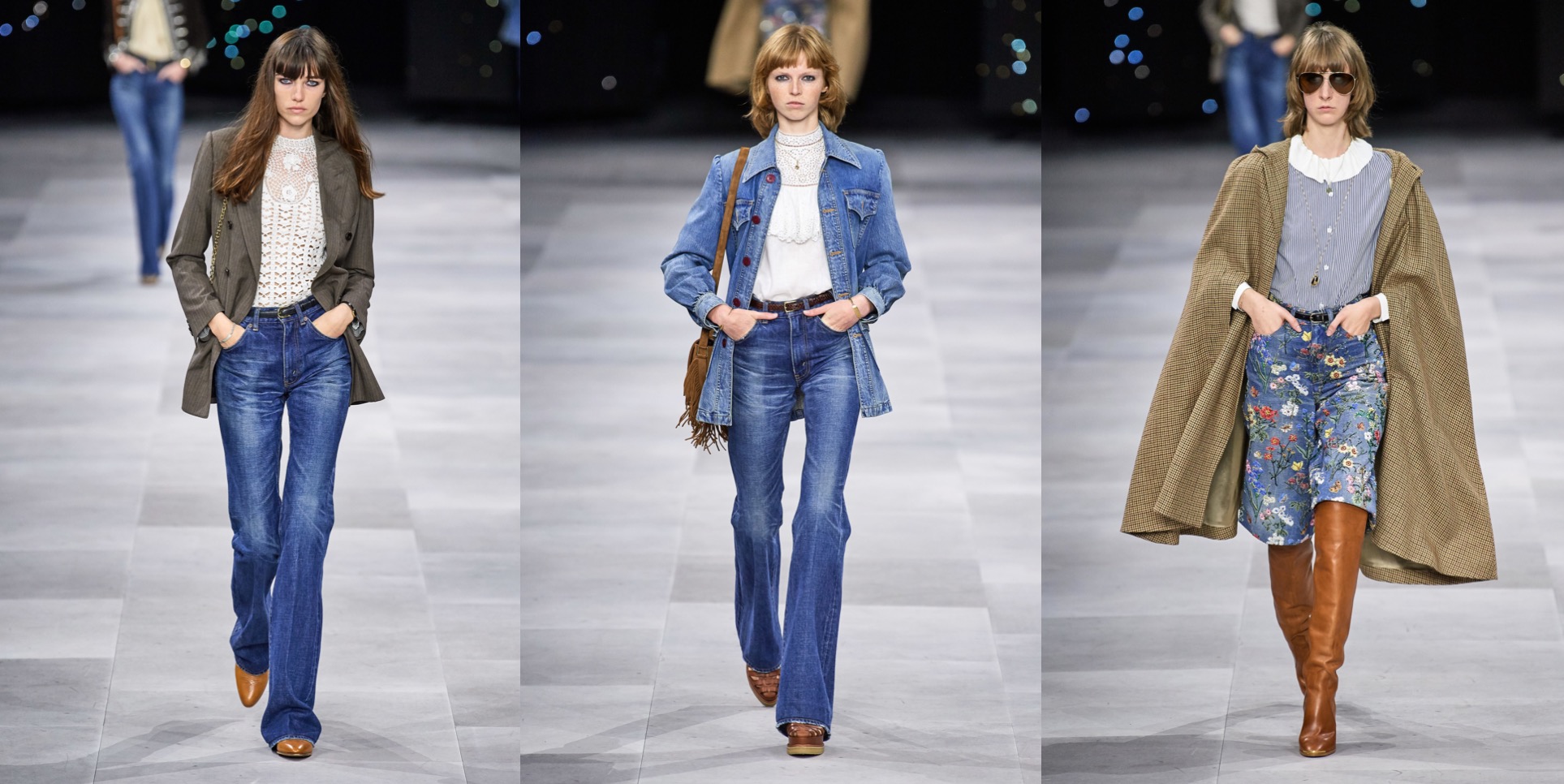
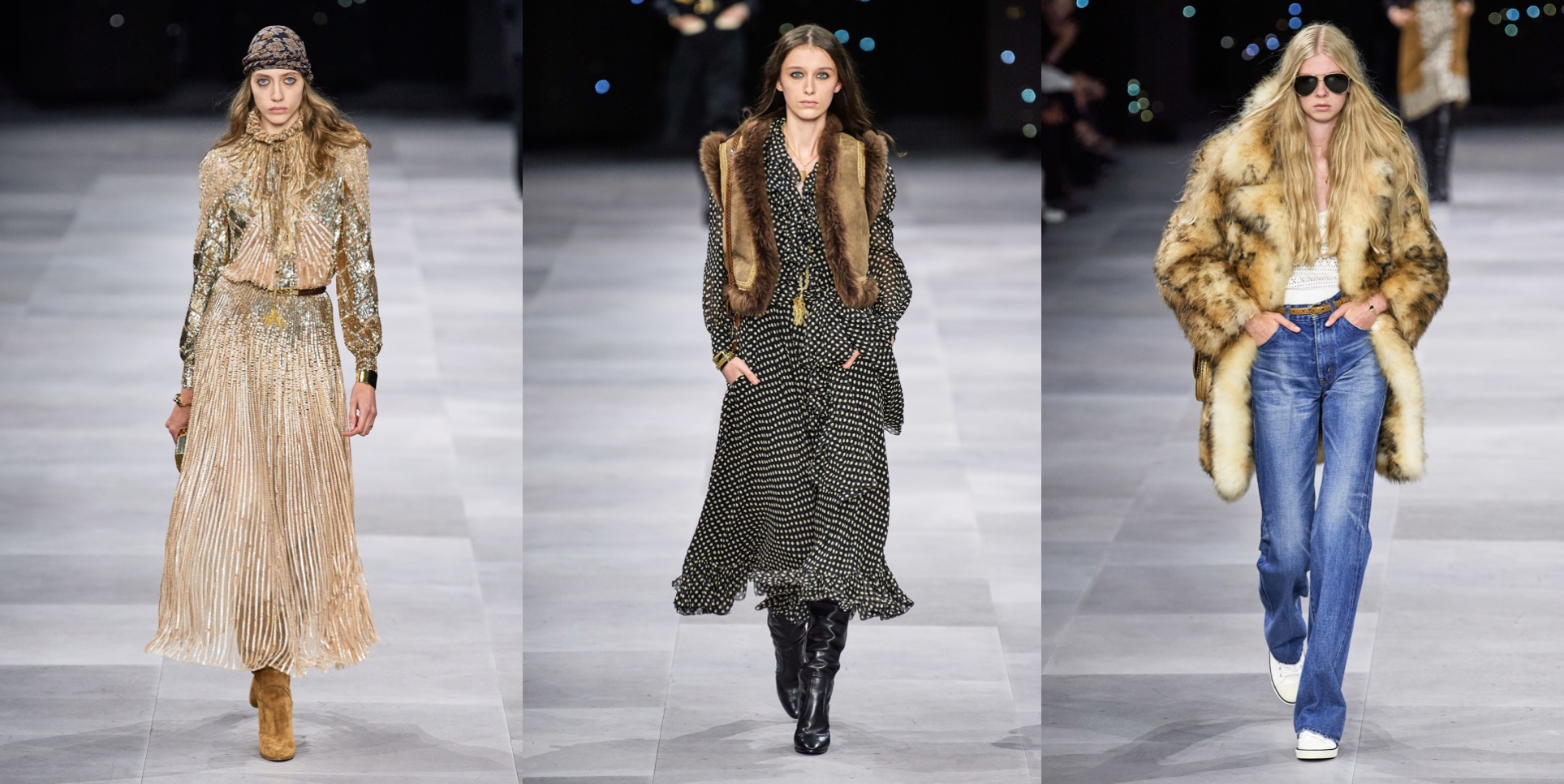
Last season, Hedi Slimane‘s Celine was about the Parisian, bourgeois woman. For spring-summer 2020, it’s about her daughter, who wears nothing else but denim, dreams of Woodstock and eventually takes part in street protests. But still, she’s bourgeois, no matter how she tries to rebel. Slimane doesn’t overstrain himself. His collection is again a 1:1 version of Celine’s 1970s archives, with a bit more of slouchiness and the presence of Yves Saint Laurent turbans (and, oops, it seems that Anthony Vaccarello pulled them off as well at Saint Laurent – the two brands are dangerously the same this season). While fashion drowns in nostalgia, there are designers who interpret the past in a fresh way – take Marc Jacobs or Paco Rabanne‘s Julien Dossena for SS20. In case of Hedi, noting how masterful he is in rebranding and shaking things up in the most of frustrating ways, it’s laziness. And confidence that anything will sell. Well. It will. Those denim culottes, fur coats and peasant dresses are destined to sell well, because they are easy, undemanding and chic. And, comparing to Vaccarello’s Saint Laurent, not so revealing. One more thing. Here’s to the Philophiles: there are parallers between Phoebe Philo’s Céline and Hedi Slimane’s Celine. Actually, Philo was really good at the bourgeois style, even though nobody noticed that at the time. Her swan song collection is the best example. But while Phoebe’s take on Parisian bourgeois aesthetic was modern, comfortable, unobvious and less strict, Hedi is literal. And there’s nothing noble about doing things in a literal way.

Collage by Edward Kanarecki.