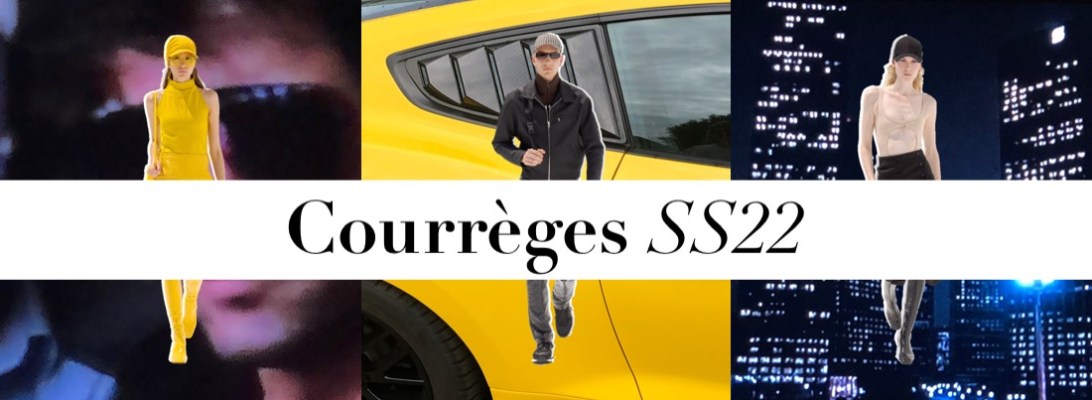
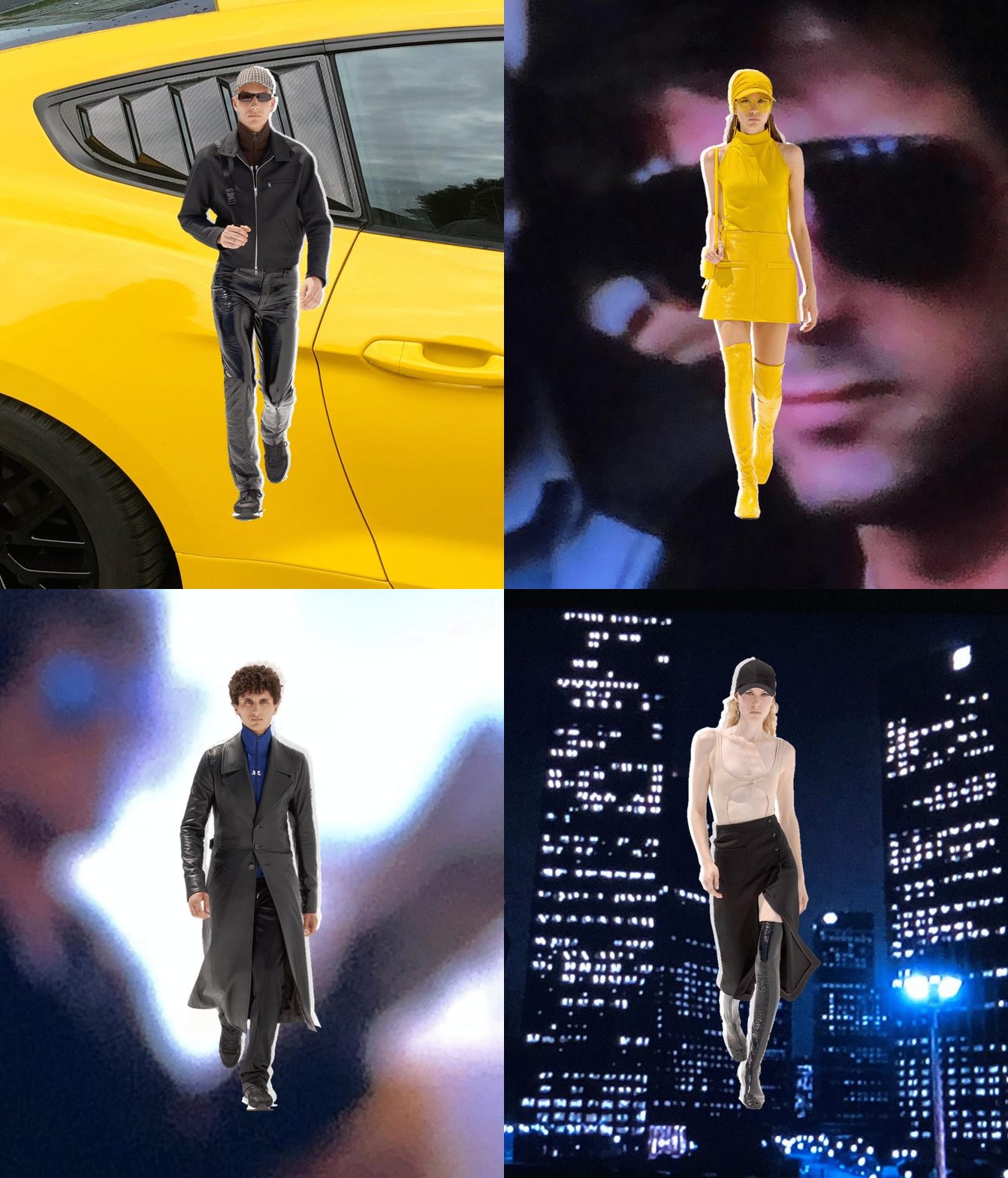
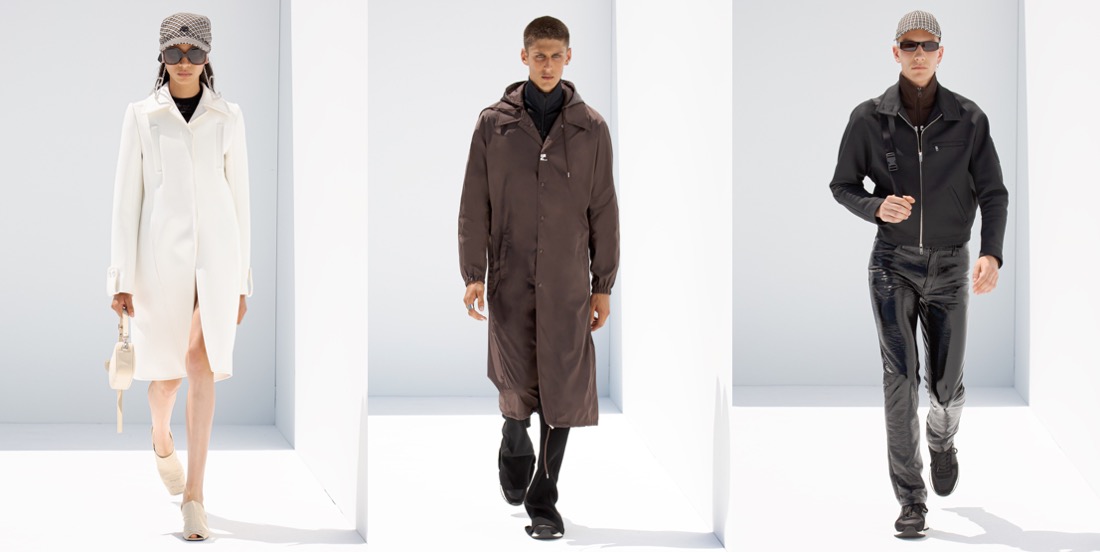
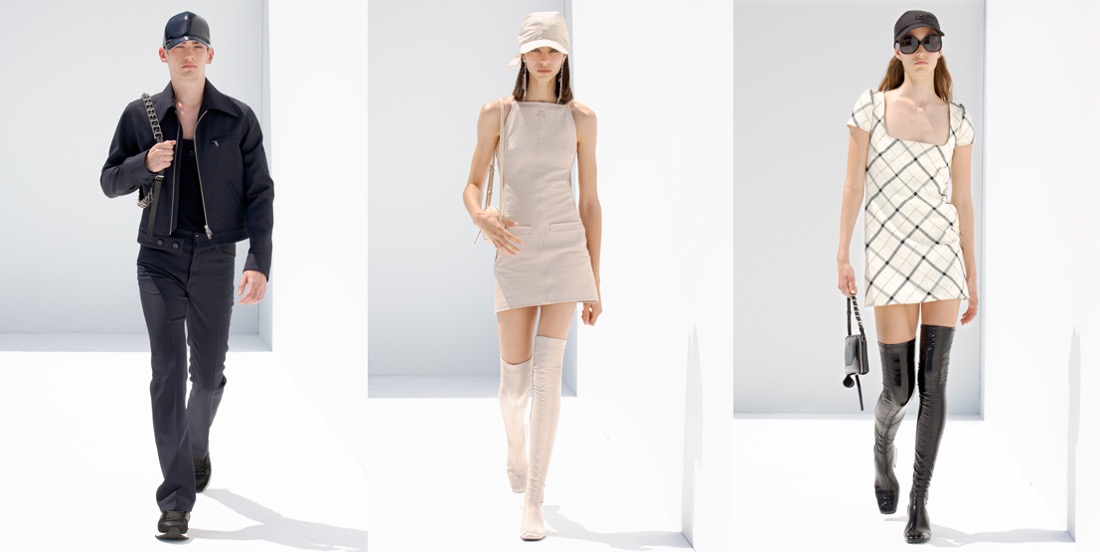
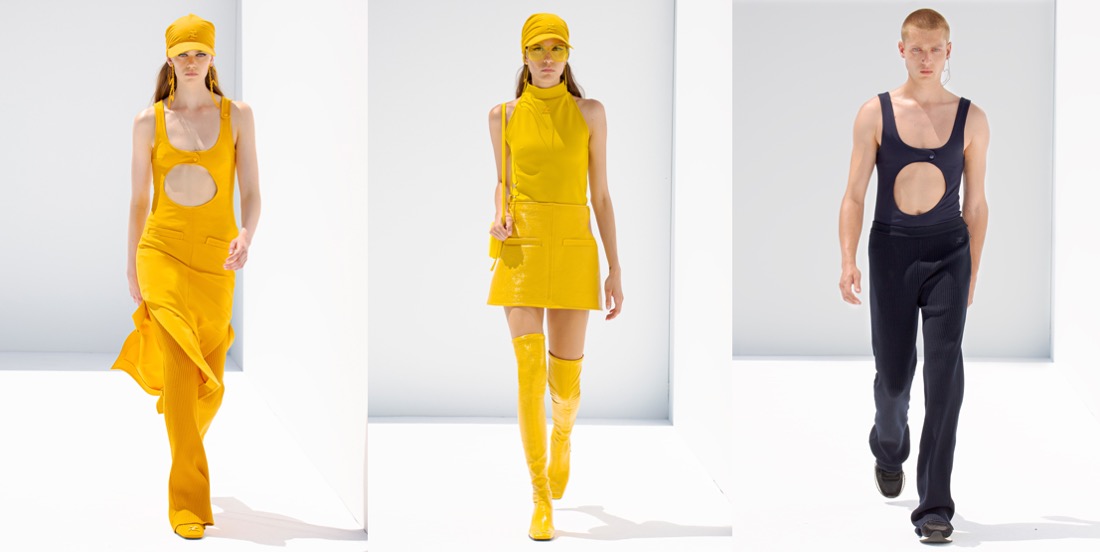
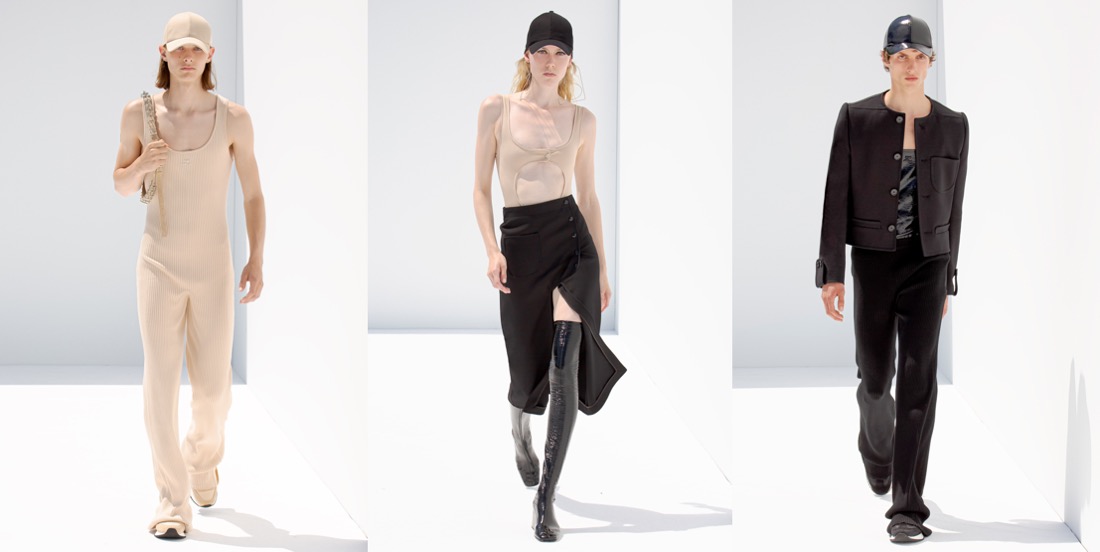
I wasn’t entirely convinced by Nicolas di Felice’s debut at Courrèges last spring, but things are looking up with his venture into menswear. It’s actually his first men’s collection period; Di Felice has only designed womenswear until now. André Courrèges himself made men’s clothes from about 1973 to the mid-’80s, but it hasn’t been part of the brand picture for many years, so launching it was a blank slate situation. Di Felice’s approach was to think hard about what he and the guys on his design team want to wear. The streamlined, minimal sensibility of original Courrèges remains, but there’s little to none of the leftover Space Age vibes that could’ve materialized. Instead, you’ll find straightforward trucker jackets in leather or washed denim; a single-breasted coat in a micro-check; ribbed knit, elastic waist pants; even jeans. There’s a pair of stretch vinyl trousers with circular cut-outs down the side seams and a tank with a single, bigger cut-out on its front, but with the hot vax summer that’s ahead of us and the new gen’s openness to experimentation that level of exposure is likely to look less provocative that it once did. The bright spot among the women’s pieces he showed today was a tank dress with the signature cut-out paired with kick-flare pants in sunshine yellow. The overall result isn’t ground-breaking, but it’s good. And really, the Courrèges brand had a very hard time in finding its voice since it’s revival (which goes on for years and years now). One thing’s sure – Nicolas is giving his Courrèges an item-y spin, turning out relatable, identifiable clothes that took any anxiety out of buying; they’re statement-making but easy to wear.
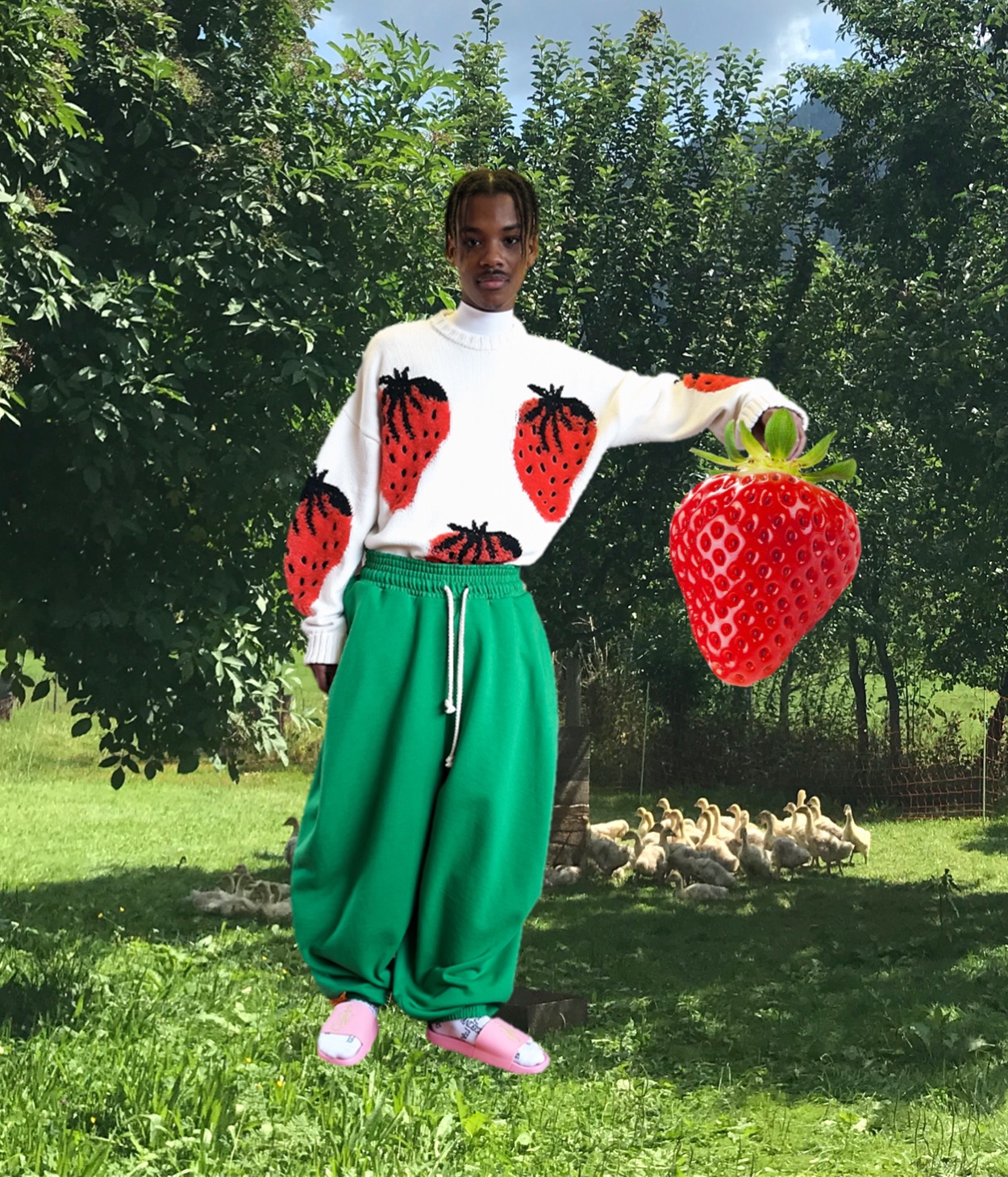
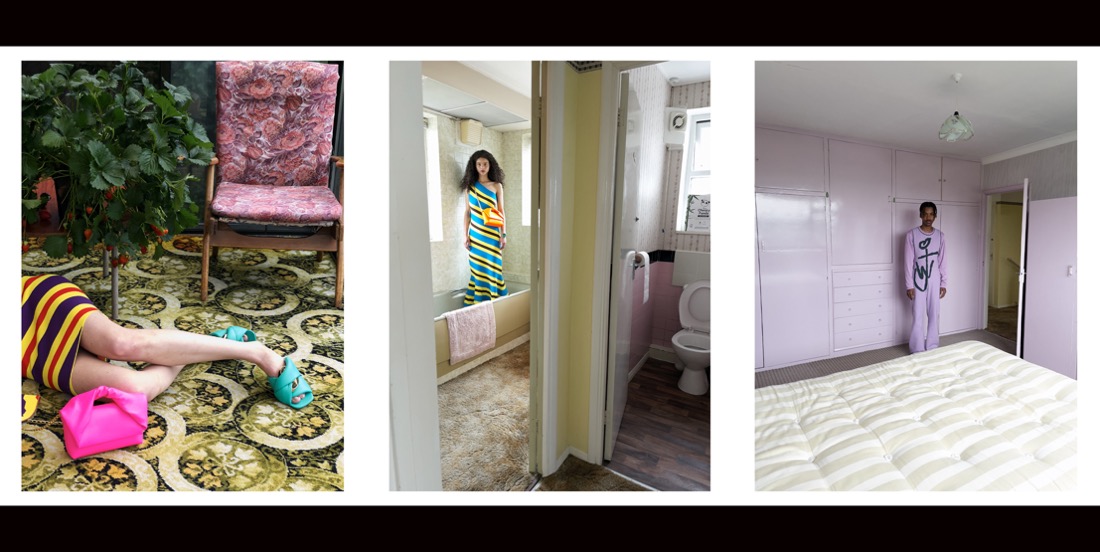
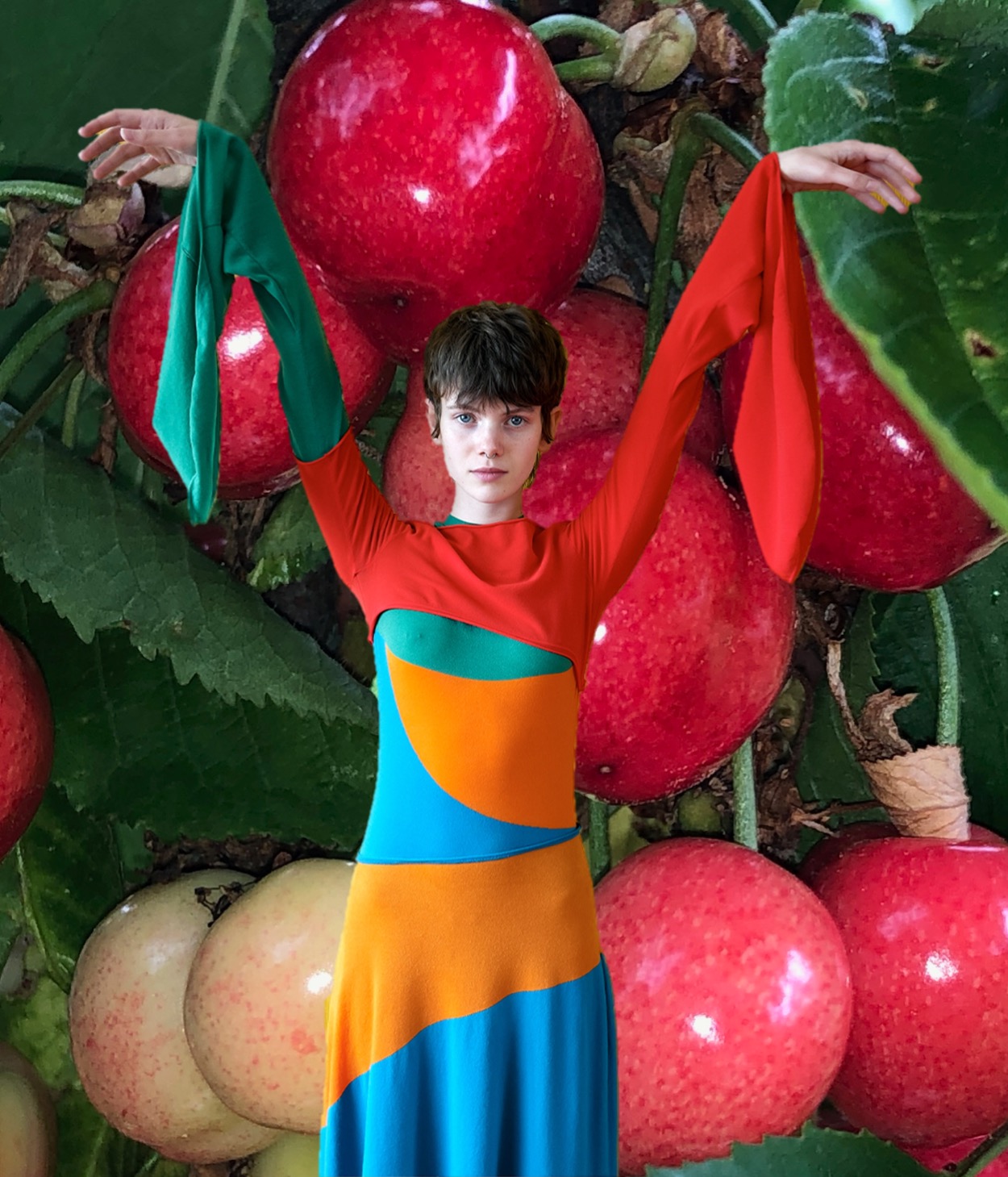
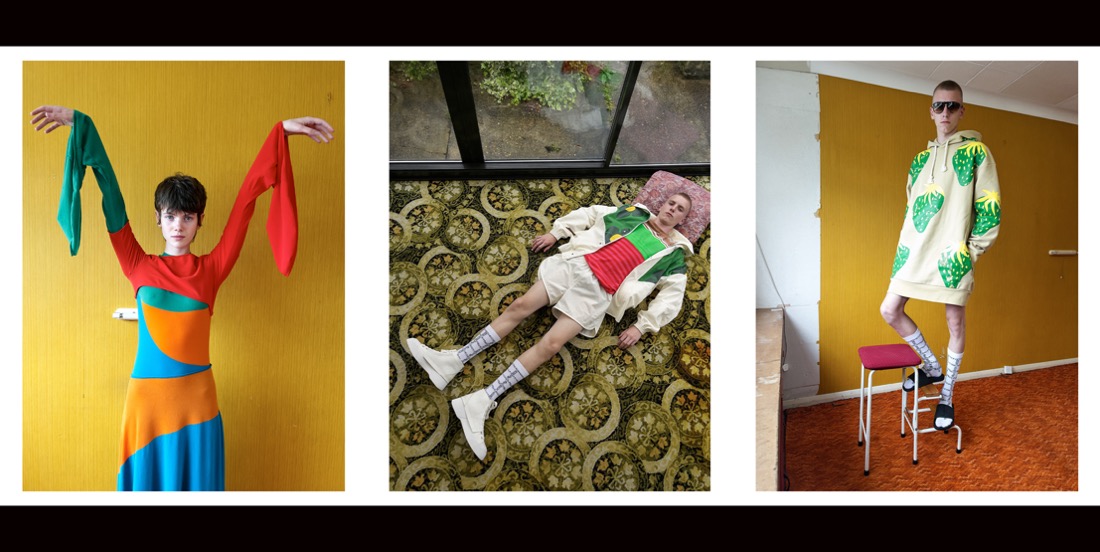
Partly digital, partly physical, men’s Paris Fashion Week starts today. The JW Anderson spring-summer 2022 (and women’s resort 2022) look-book was shot by Juergen Teller, who perfectly captured what’s on Jonathan Anderson‘ mind this season. “Caught in the moment, when sexuality awakens. There is palpable ambiguity, and provocative wrongness, to his dressing choices“, Anderson described the guy he pictures in this playful, bold offering. The collection hits a juvenile note with colourful and hedonistic clothing as a mean of self-expression that blur the lines between stay-at-home, sports and club dressing: “The kind of glorification of being who you are or what want to be: the idea of privacy of the individual“. The line-up’s instant must-have? All the strawberry knitwear, for both him and her. The designer looks forward to full re-emergence, and is clearly ready to celebrate the good days that are coming!
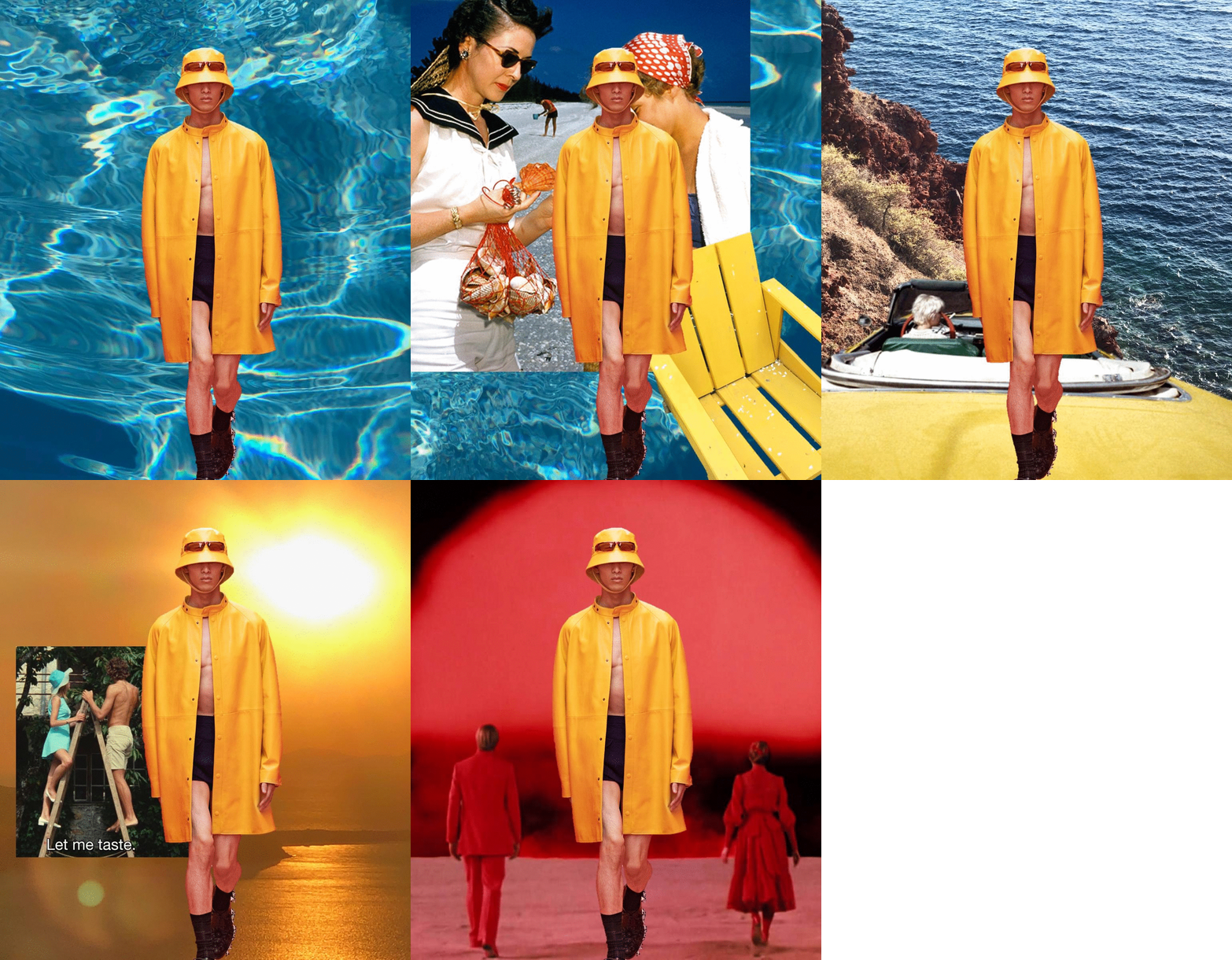
All collages by Edward Kanarecki. Look-book photos by Juergen Teller for JW Anderson.
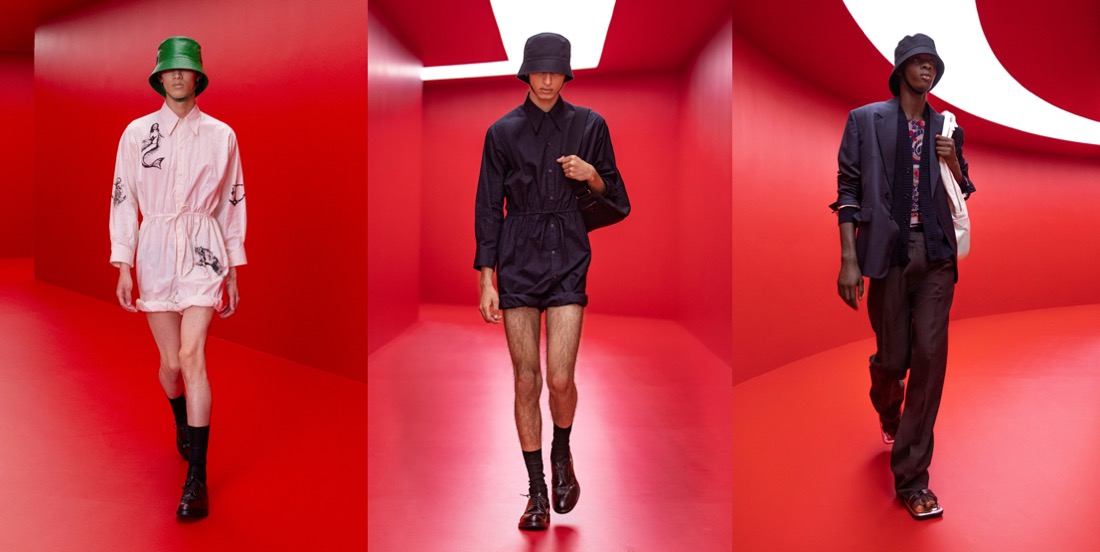
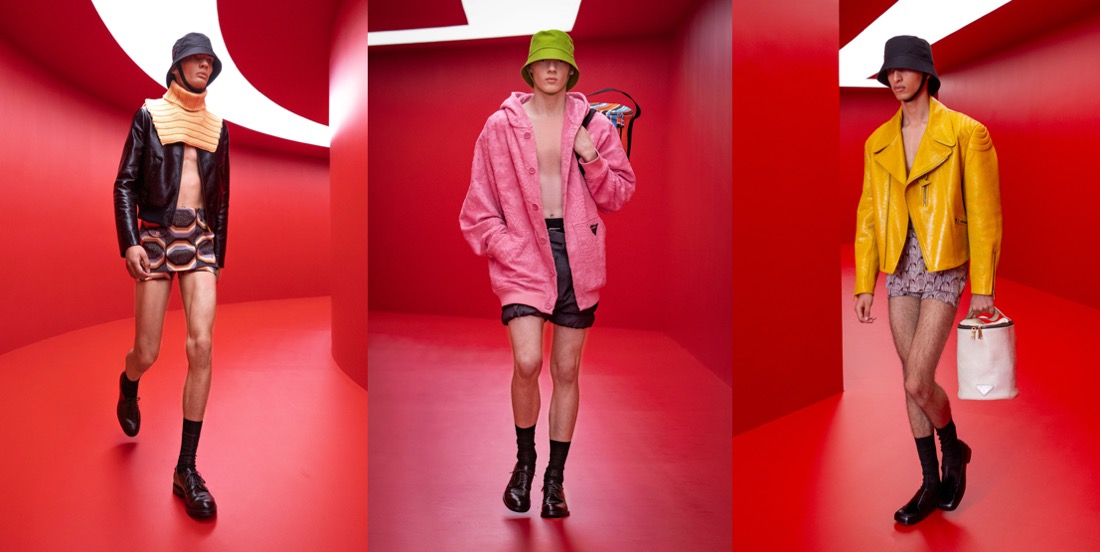
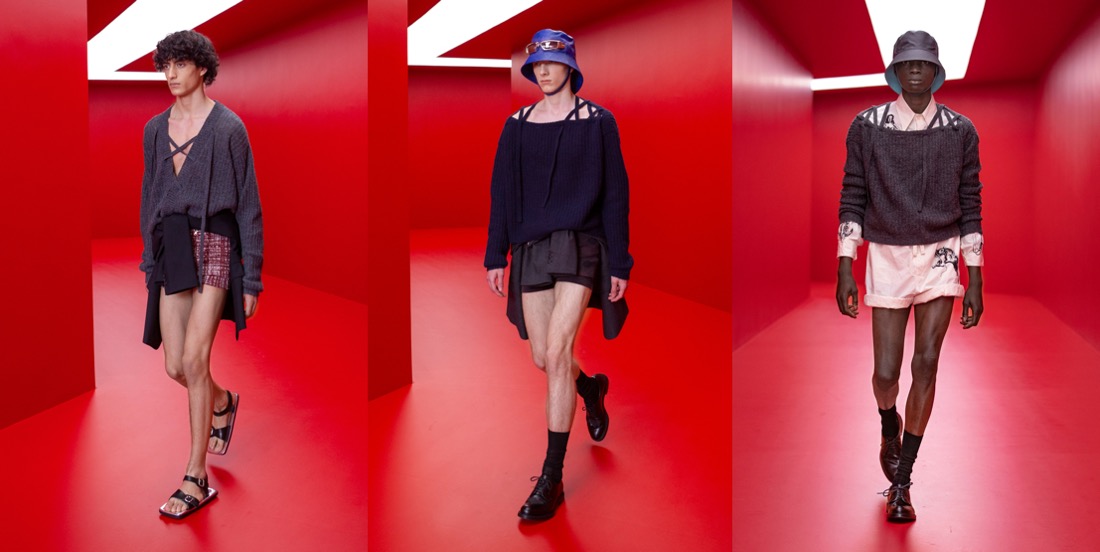
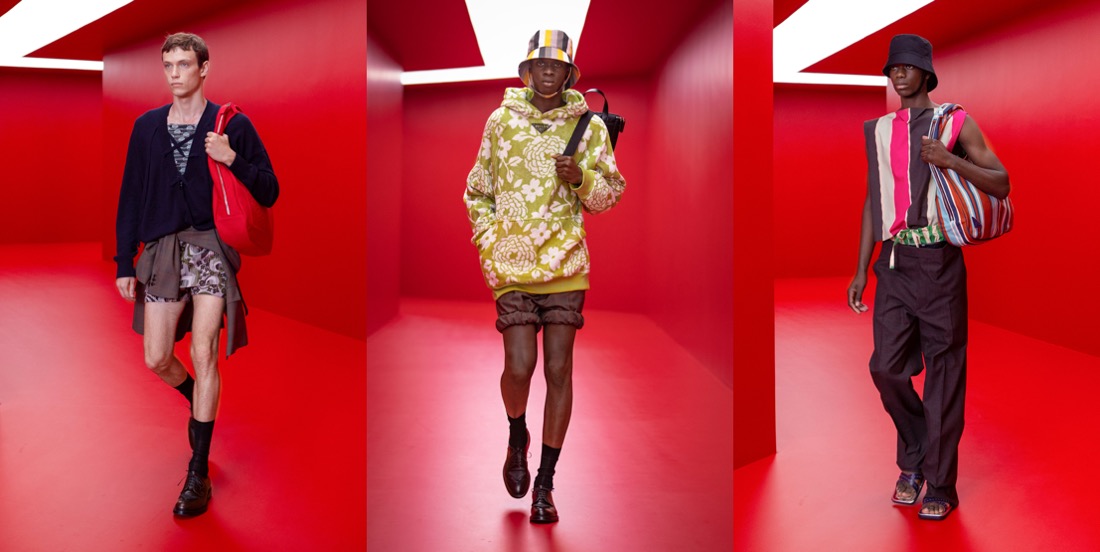
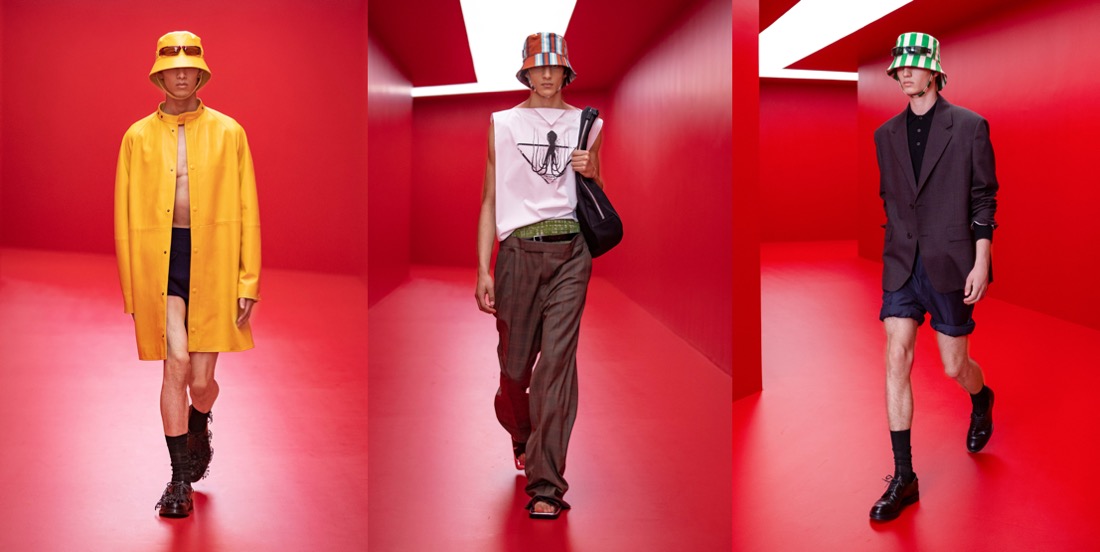
For the first time, Miuccia Prada and Raf Simons let some warmth and a sense of spontainety to their creative dialogue. The Prada man for spring-summer 2022 appears to be a slightly naive beach-boy, who wears his yellow windcheater (nothing underneath) and matching bucket-hat all day long. Which I instantly love, of course. As co-creative director Miuccia observed in a quote released shortly before the collection video: “A sense of the utopian, the ideal, of hope, positivity. To expose yourself to nature, to go to the beach – it’s freedom. It is utopian. That is really a primary need – an intellectual need, too.” This translated into a skin-heavy rendering of a reemergence that was tantamount to a rebirth. The film opened with the models negotiating a “meandering red tunnel”, ready for the world ahead, but not yet in it. Very directly we were presented with some of the key motifs of what looked like a commercially strong Prada suite: bucket hats with almond-shaped brims at the back (a bit British policeman’s helmet) with triangular logo pockets, and some with the awesome functionality of slits at the front to allow sunglasses to be slipped in them. Romper suits with turned-up short hems were presented in corporate-worker charcoal cotton or sailor-boy white, the latter printed with tattoo-ish nautical motifs including octopi, voluptuous mermaid/sirens, anchors and anchor fish. Around two minutes into the film, Prada’s boys finally hit the beach. The scenes were filmed at the south-eastern point of Sardinia, on the coast of Capo Carbonara, an area where the house is funding the reforestation of marine ecosystems. By coincidence, it is also where I’m booked to spend my summer holiday. It was in this setting that the presentation changed from formulaic runway walk into something more apparently spontaneous and free, in order to evoke an essence described by Raf Simons in his pre-show quote portfolio: “The primary feeling is one of joy. It’s almost like that memory of a child, the joy of a child going to the beach. The simplest and most honest of pleasures. In all its simpleness, it’s also something very meaningful and timeless.” Beach-ready were the floral-shorn terry hoodies, the skorts of course, the beautiful bucket bags in cracked leather and rowing stripe cotton drill, and those awesome hats. Away from the water, highlights included a biker jacket in yolk-yellow or show-set-red which felt like an unusual template here; double-waisted pants made to be worn loosely and tantalisingly adrift at the front; plenty of tailoring with (again) rolled up sleeves; and multiple full-look-izations of the skorts via teaming them with matching tank-tops. These looks seemed like summer iterations of the last-show long johns. “This collection and this show is very much about capturing that, the joy of the everyday. The notion that living your life can be a euphoric experience. Much joy can come out of something so simple: when times are complicated, we are searching for simple, direct joys. An innocence“, concluded Prada.
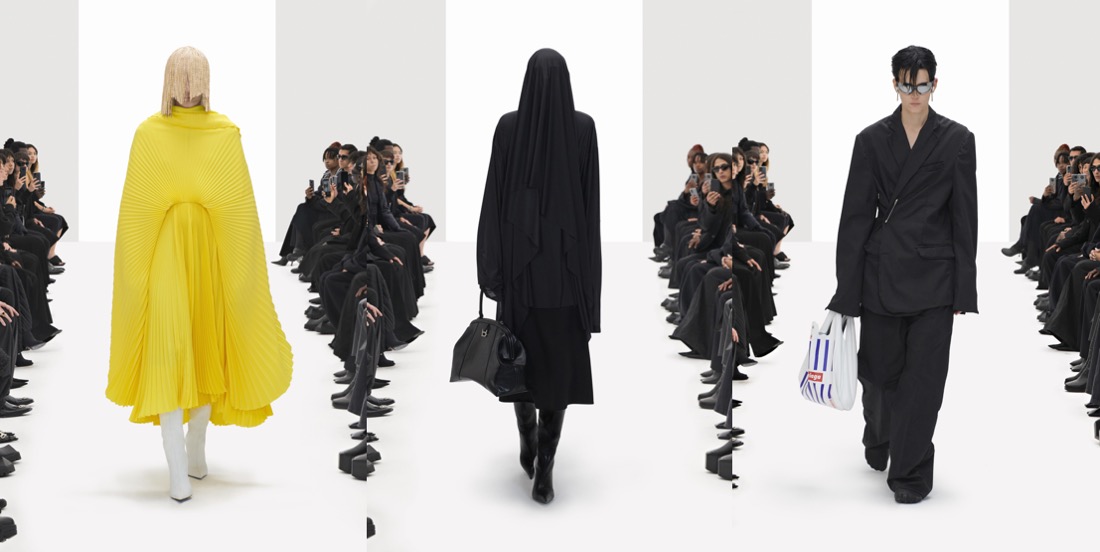
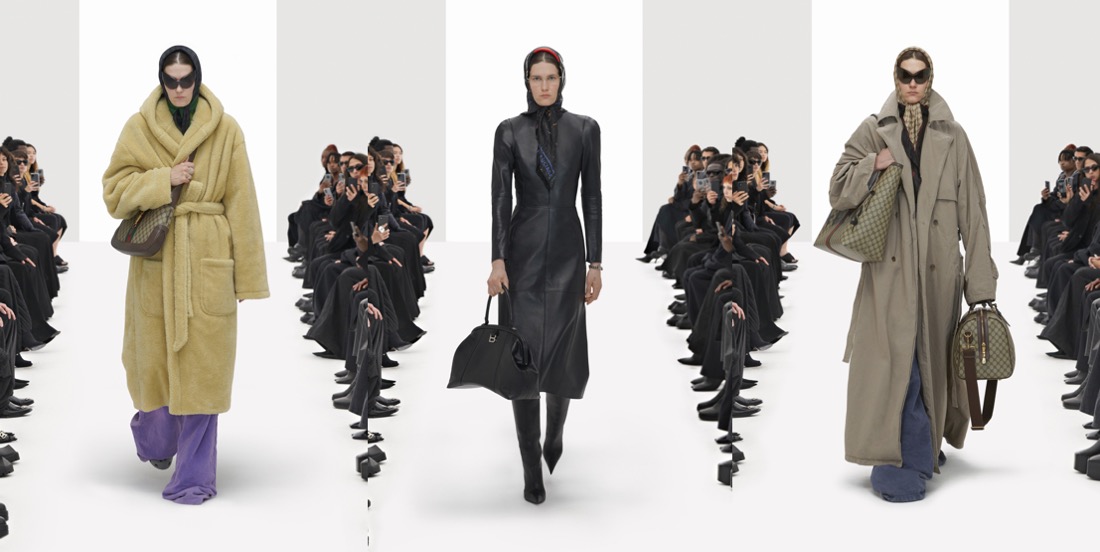
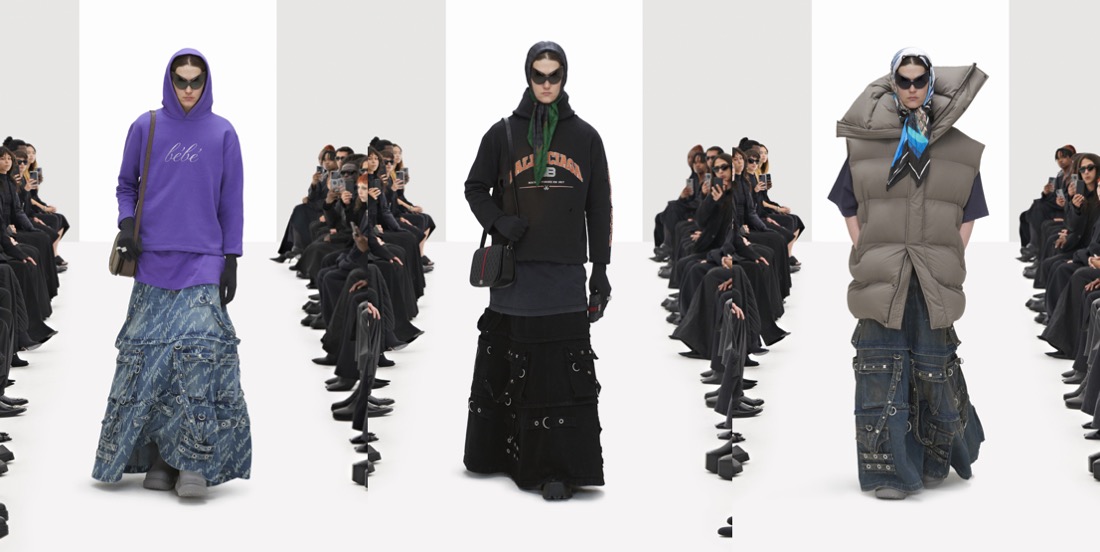
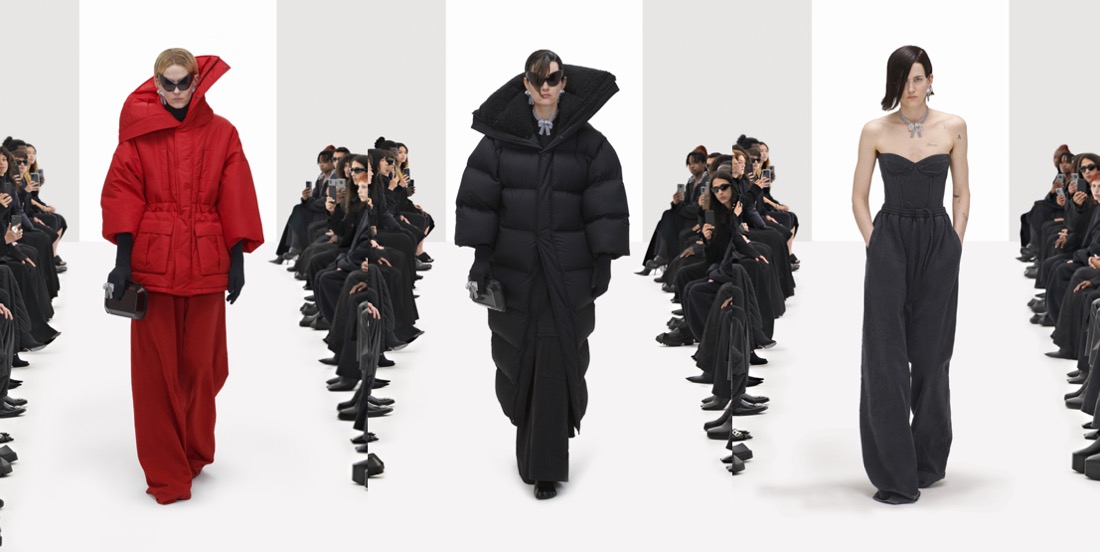
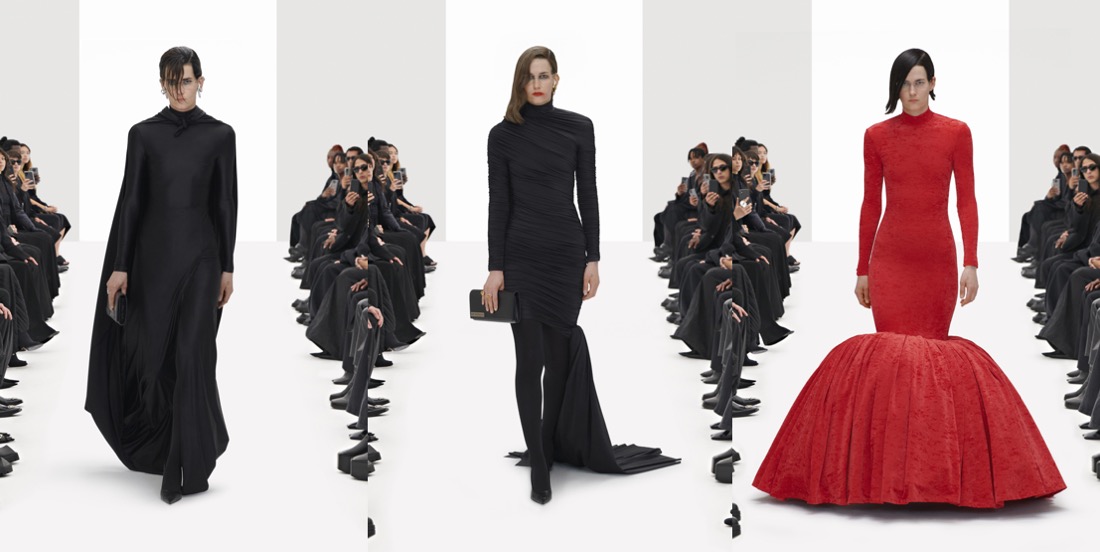
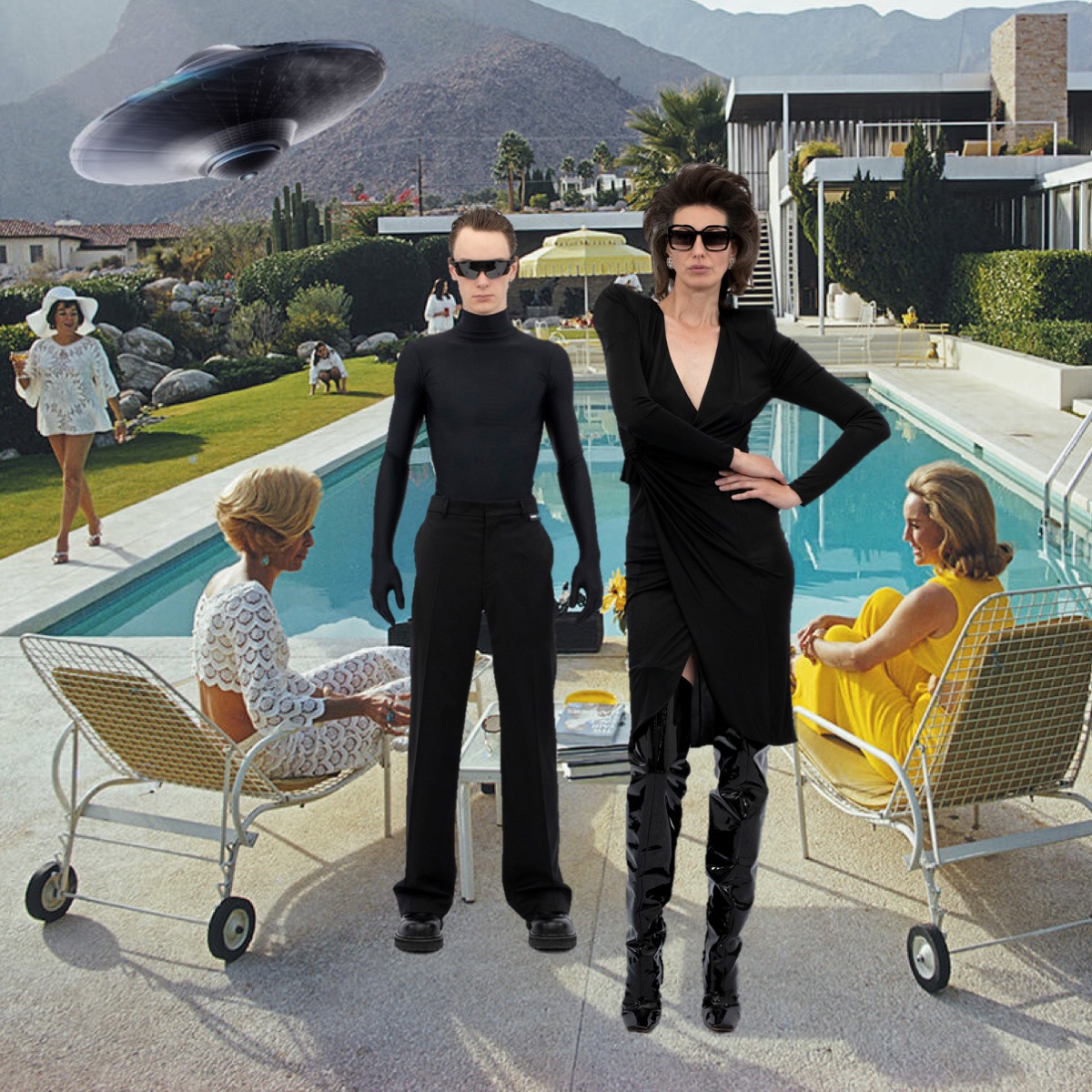
Balenciaga‘s Demna Gvasalia wouldn’t be Demna Gvasalia if he didn’t sprinkle a pinch of irony to his fashion. “It’s a deep fake of a fashion show,” declared the designer ahead of the launch of the ultra-high-tech video for his spring-summer 2022 “Clones” collection. “What we see online is not what it is. What’s real and what’s fake?” Ostensibly, one model – the artist Eliza Douglas, who has opened or closed Balenciaga shows since Gvasalia’s first collection for the house in 2016 – appears wearing both women’s and menswear on a white runway in front of a black-clad audience. But no one was “there” and no one is “real.” “It’s a show that never happened,” Gvasalia laughed. “But the clothes are real; they were made.” Accompanying information came in a deluge of language detailing the techniques the video producer Quentin Deronzier deployed to fake up Douglas’s appearance: photogrammetry, C.G. grafting of her scanned face, planar tracking, rotoscoping, machine learning, and 3D modeling. We’re in a new world now, in large part because all designers have had to grapple with 15 months of the pandemic preventing real-life show gatherings. What’s the alternative onscreen? Gvasalia, for one, has delighted in grabbing the opportunity to shift the medium of brand Balenciaga ever further into the realms of multilevel, conversation-and-meme-generating entertainment. There’s the Hacker Project – this season’s return match with Gucci, in which Balenciaga has “stolen” classic Gucci bag shapes and reprinted them with BBs instead of GGs, just as Alessandro Michele reproduced Demna Balenciaga patterns and diagonal branding in his last collection. There’s a Gucci best seller GG buckle belt redone with BBs too. “Alessandro and I are very different,” Gvaslia remarked. “But we both like to question this whole question around branding and appropriation…because everyone does it, whether they say it or not.” One of the totes comes knowingly scrawled with the graffiti legend “This is not a Gucci bag” – a reference to René Magritte’s 1929 painting The Treachery of Images. Questioning the authenticity of what we’re looking at has been going on in art since Surrealist times. The result here: a perfectly oxymoronic range of “genuine counterfeits” for our mind-twisted times. Other than the Gucci clash, there’s no mistaking Gvasalia’s roster of signatures: the supersized tailoring and coats; the loose printed dresses; the ski jackets, hoodies, and streetwear; the cyber-Gothic denim; the severely elegant eveningwear. With them, a vast range of distinctive Balenciaga accessories, from a reissue of the Crocs collaboration to the diamanté bow jewelry that originated in the house archive. There’s a part of Gvasalia that wanted to illuminate his fake runway with a bit of light and hope, he said. The first look to step out, in black velvet with a heavy veil, refers back to his prophetically apocalyptic show of February 2020. “It’s almost like mourning something, where we’ve all been,” he said. “But I wanted it to go into a bright space. And I ended it with a red ballroom dress.” After the retreat of the Balenciaga clones, he has the exact opposite planned: the showing of his much-anticipated first haute couture show, in real life, in Paris in early July. Handmade, in the works for more than a year, in front of a small audience, it’ll be his next big creative step forward. Can’t wait.
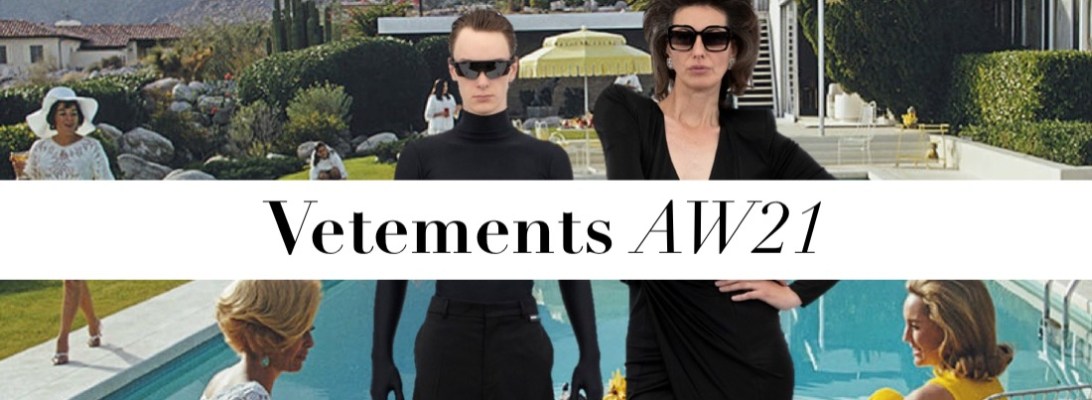
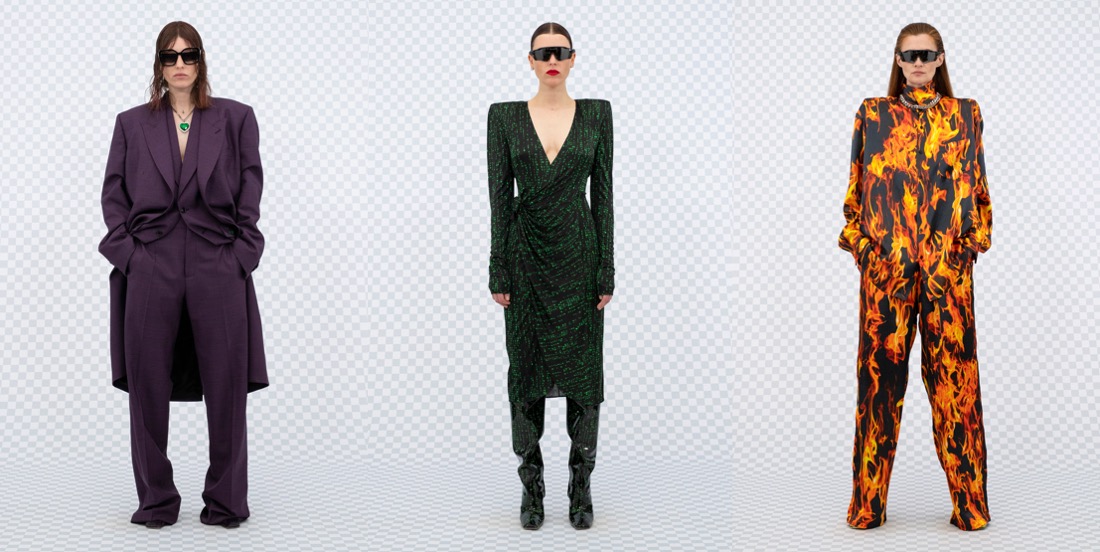
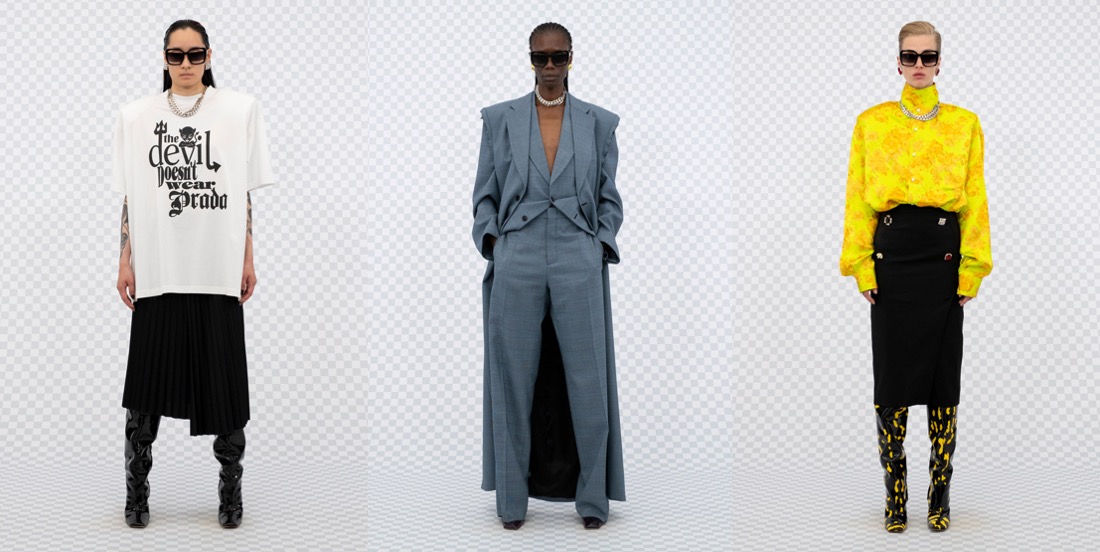
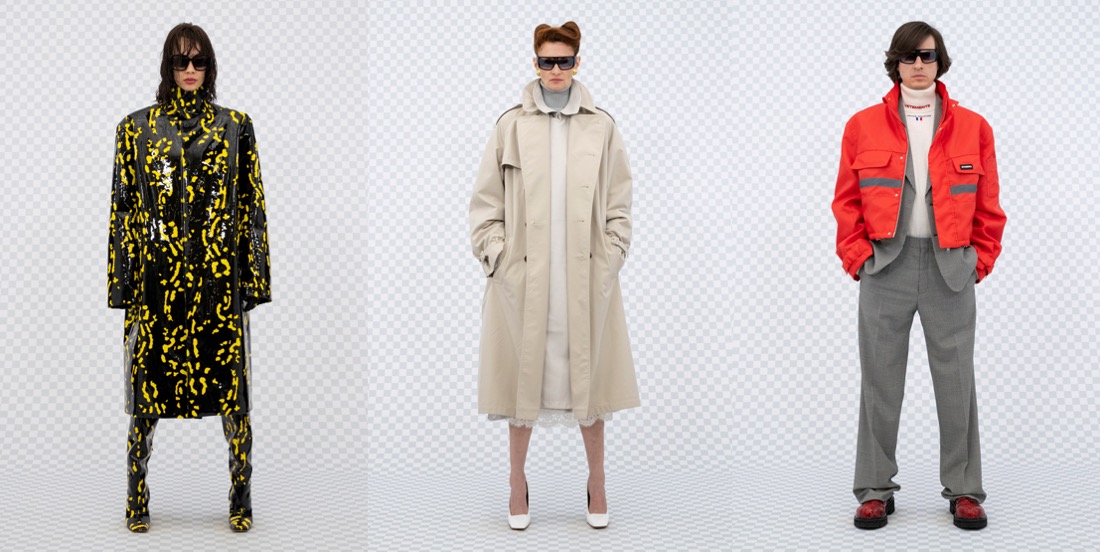
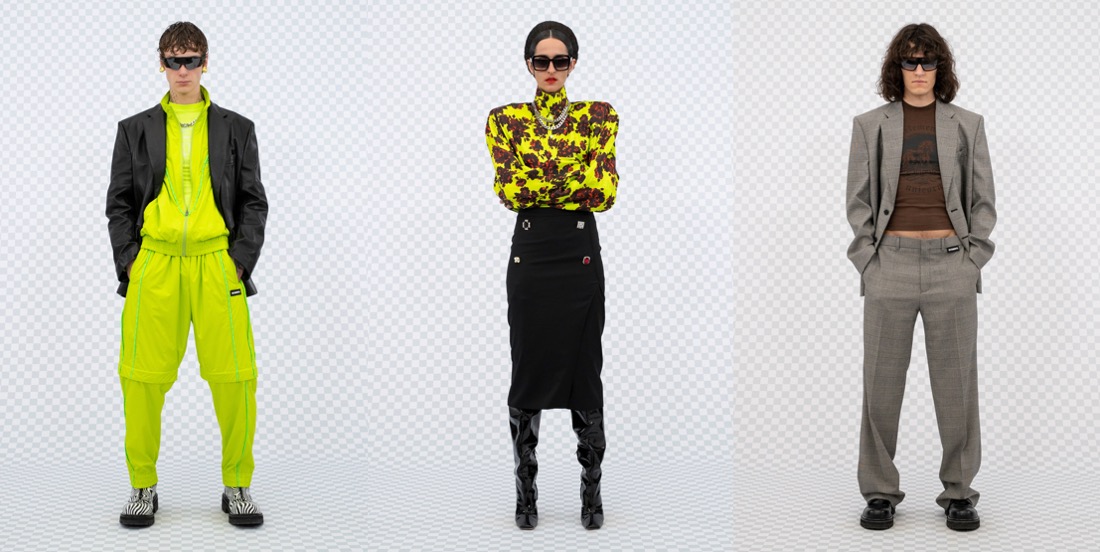
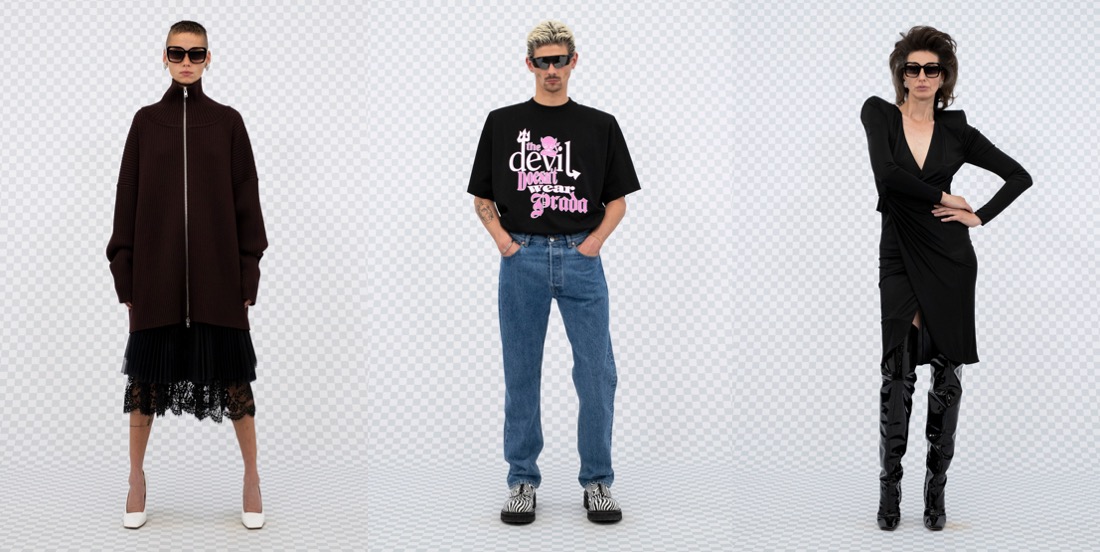
Vetements isn’t what it used to be, and for a couple of seasons now – ironically – the label feels like a mimic of itself. Since Demna Gvasalia’s departure from the label to focus solely on Balenciaga, the brand seems to put emphasis on more commercial stuff. Still, in the spring-summer 2022 look-book featuring over a hundred looks, there are some bits of the Vetements energy that made the brand so controversial (and appealing) a couple of years ago. The checked backdrop of the collection will be familiar to Photoshop users. It’s the background against which graphic designers do their work, and it offers a hint as to what’s on cofounder Guram Gvasalia’s mind. He told Vogue he’s been thinking a lot about our digital existence: “I started to ask myself: What is reality today? We live in this 2D world; the question is, when you scroll through Instagram, is it photoshopped or is it real?” Here’s another one: “Do we consume the internet or does it consume us?” Public opinion may be souring on Silicon Valley, but its digital products have us more firmly in their grip than ever. The pandemic deepened our connections with our computers and smartphones, even as we longed to reacquaint ourselves with nature. The jumbled wires of server farms and a computer font straight out of The Matrix (a timely reference, with The Matrix 4 due out at Christmas) mix with pixelated salamanders and flower prints so bright they almost glow. For every shell suit there was a siren-y gown, and logo-stamped jeans were dressed up with a seriously sharp double trench. The masculine tailoring with its strong shoulder lines, the floral dresses, the puffers and parkas – it’s all about the Vetements foundation pieces. And the slogan tees and hoodies are cleverer than ever; “The Devil Doesn’t Wear Prada” example, Gvasalia said, is an idea he pinned to his mood board some time ago, for a would-be collaboration. A flame print that appeared on a wrap dress and matching boots, among other sportier pieces, was reprised from the brand’s last time on the runway, circa autumn-winter 2020. The boldness of a Vetements show has been integral to the brand’s success from its start. The problem with 2D? It’s not 3D. Gvasalia seemed enthused about the prospect of returning to the runway post-pandemic. “We are 100% going back the moment we can travel,” he promised.










 Design & Culture by Ed