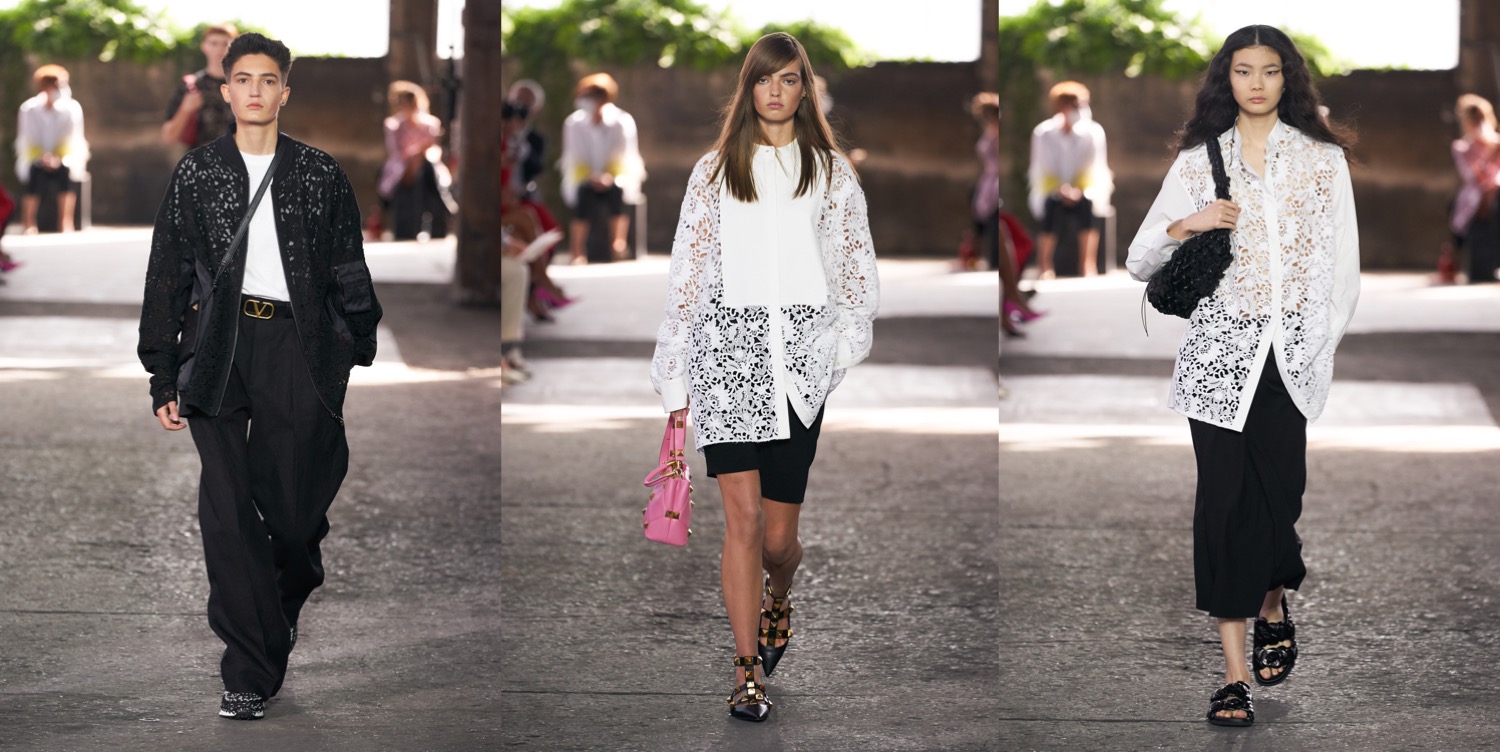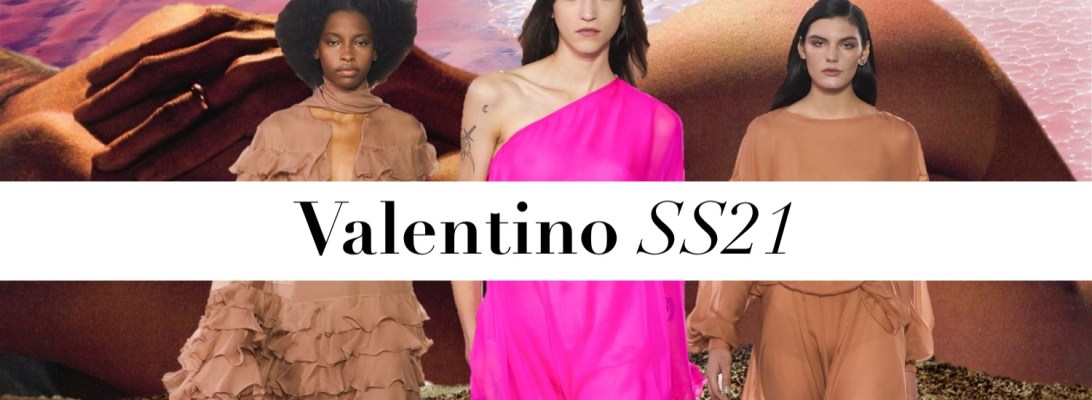
Radical Romantic. Valentino SS21


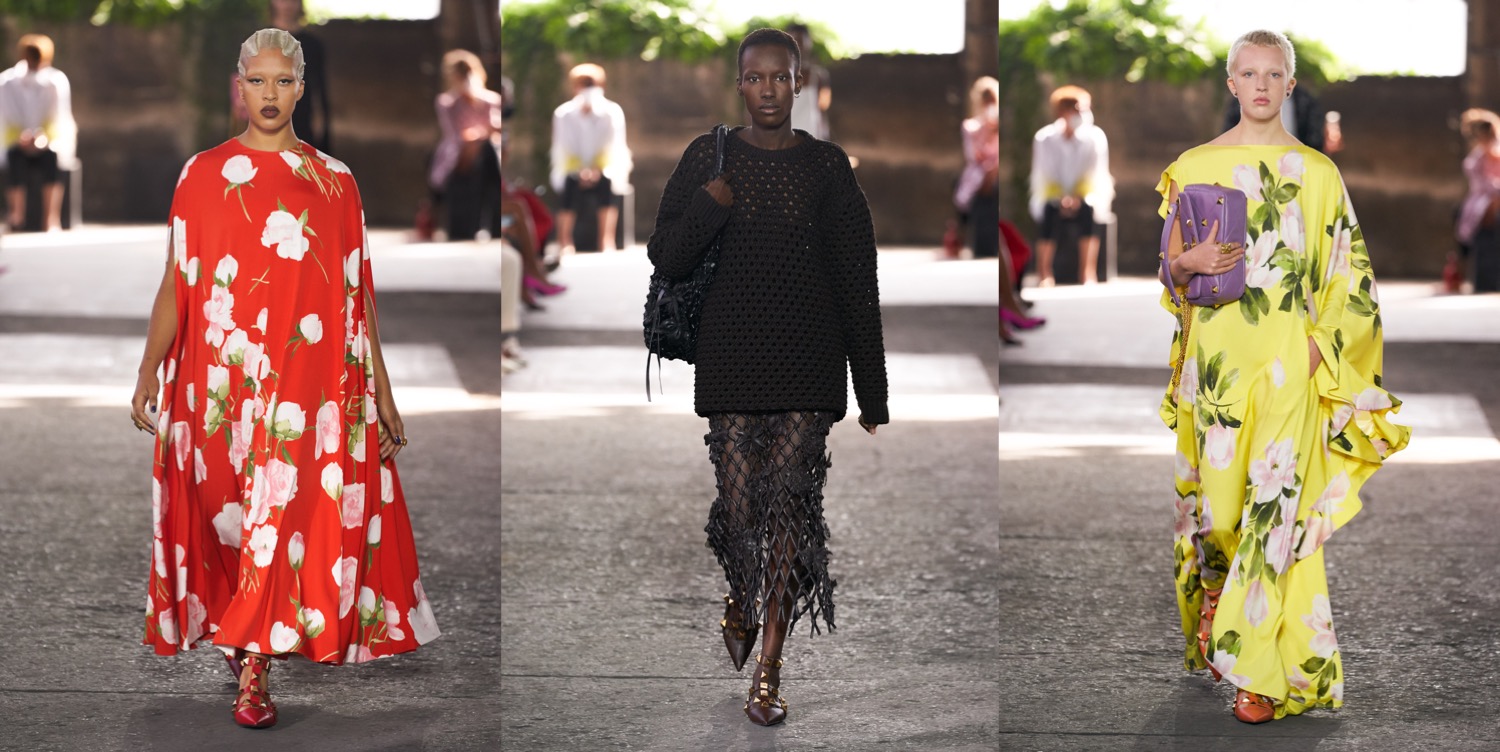
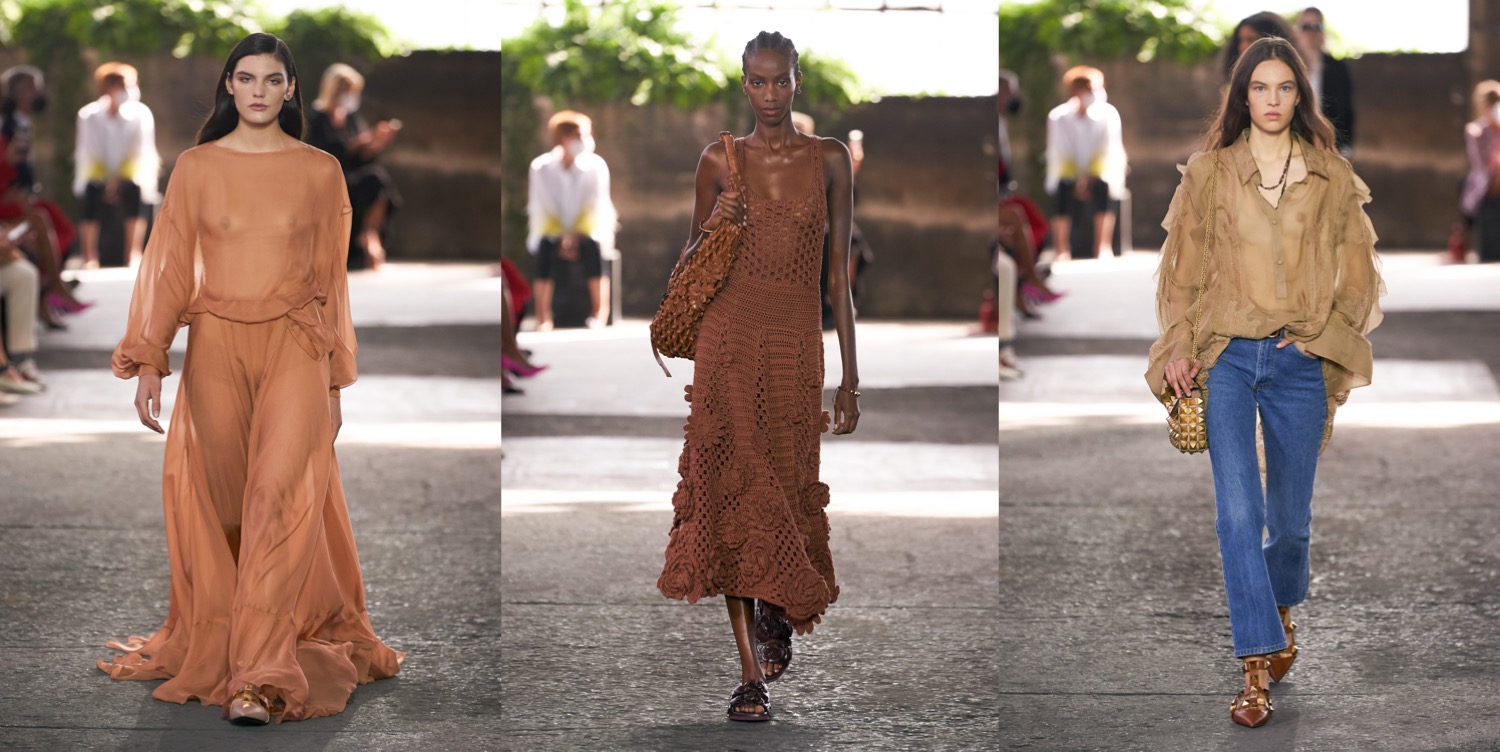
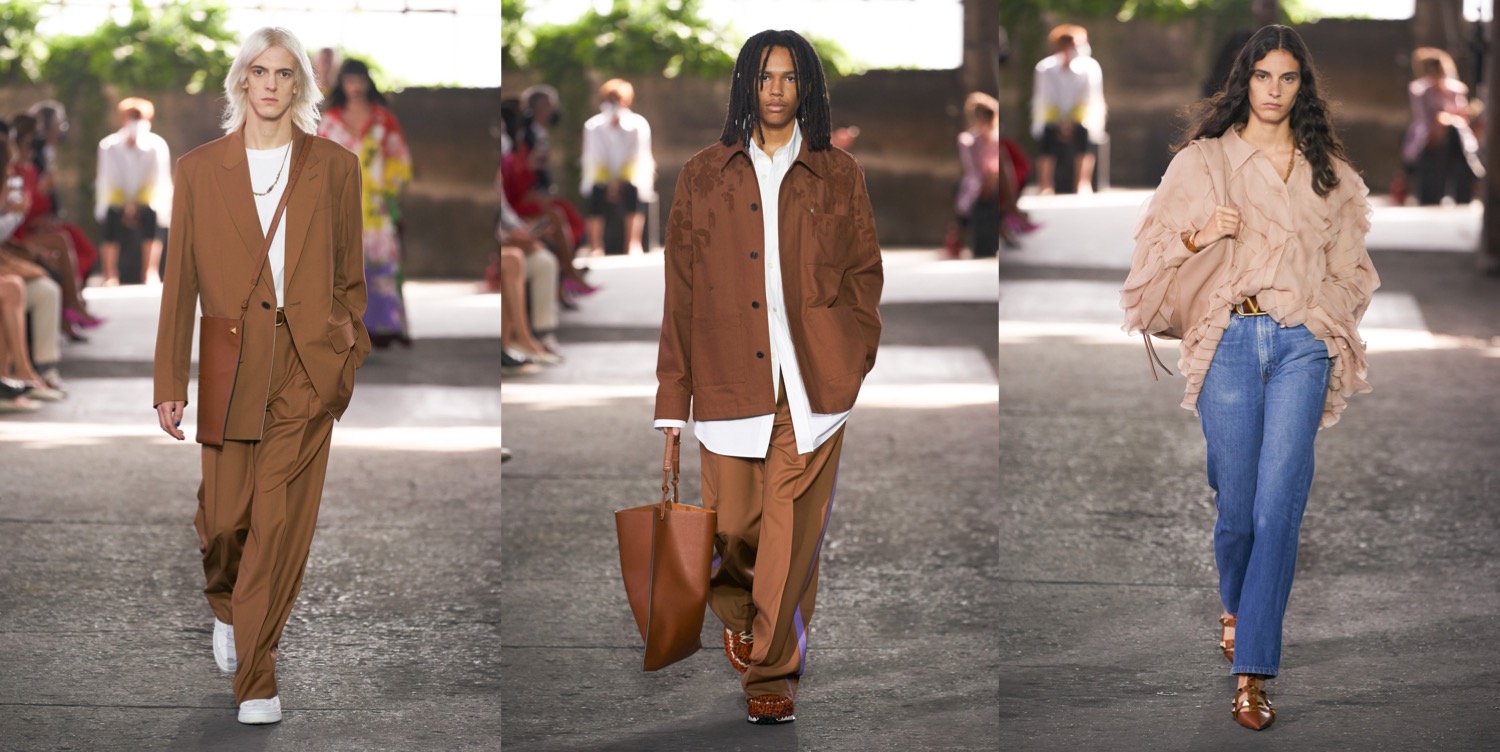
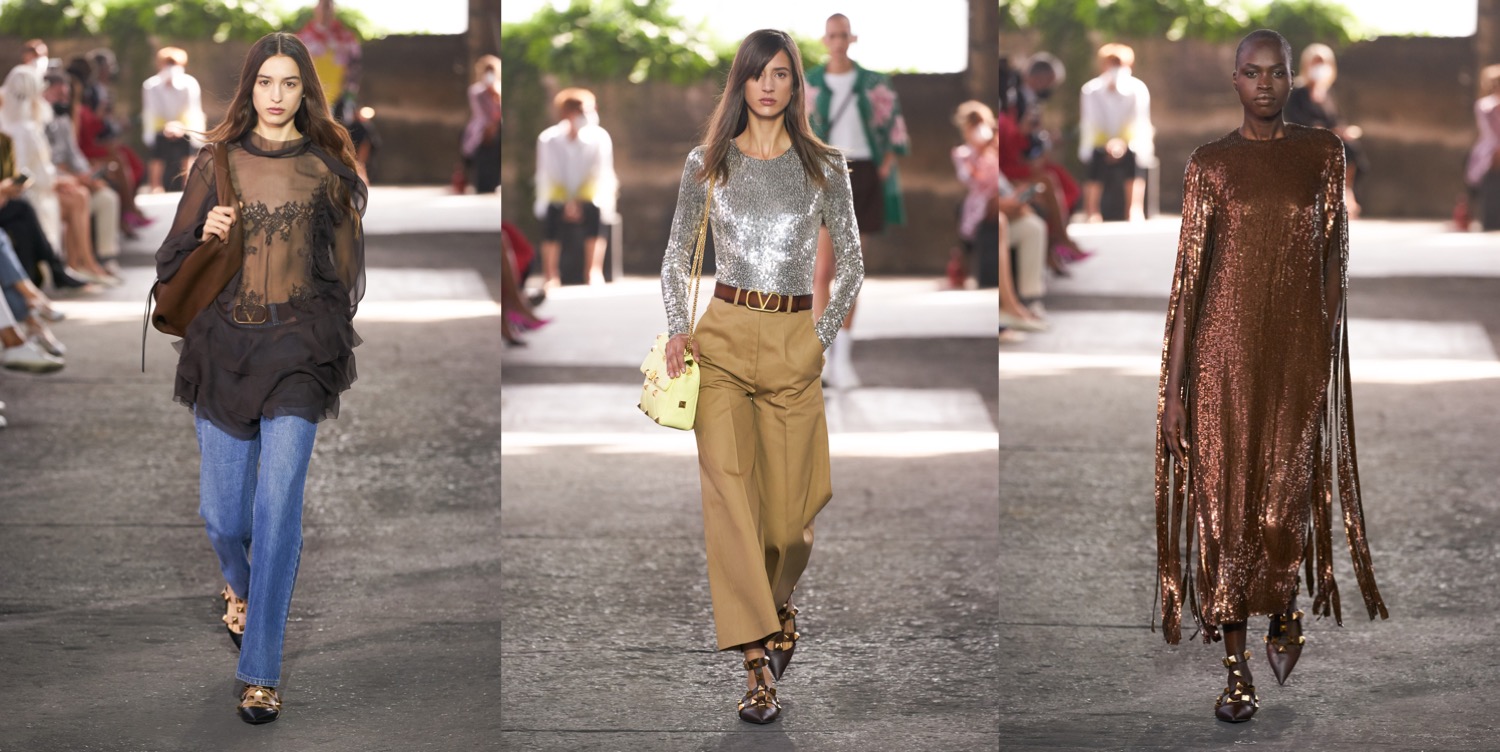
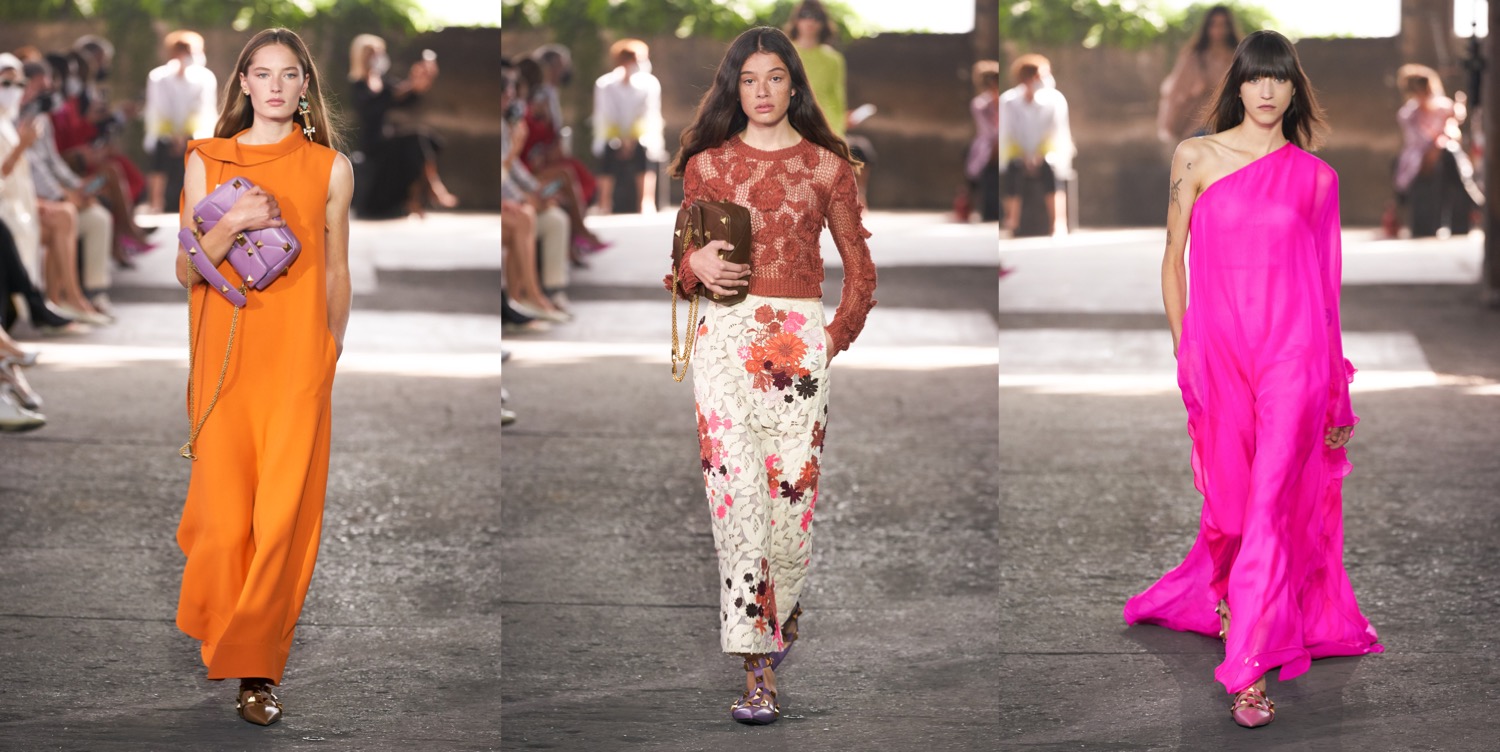
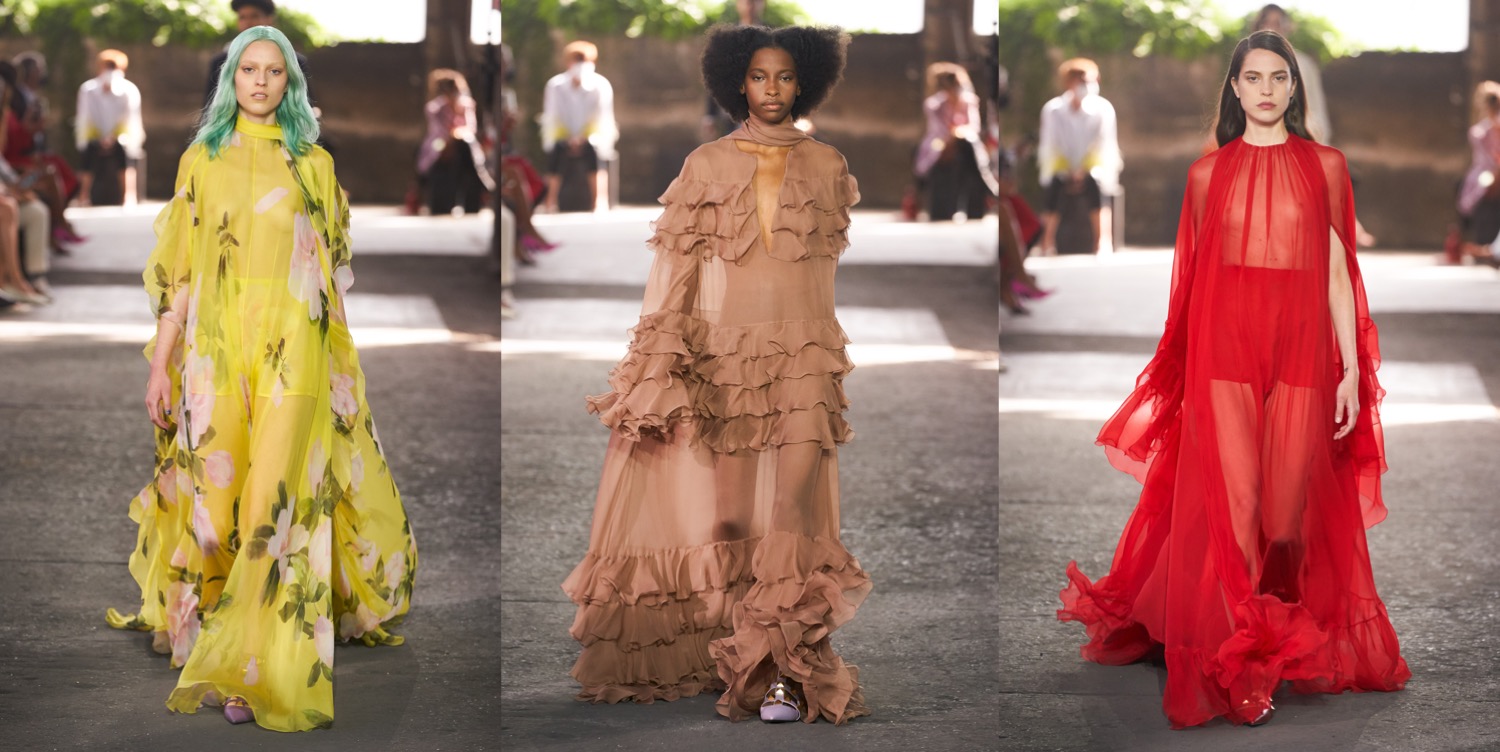
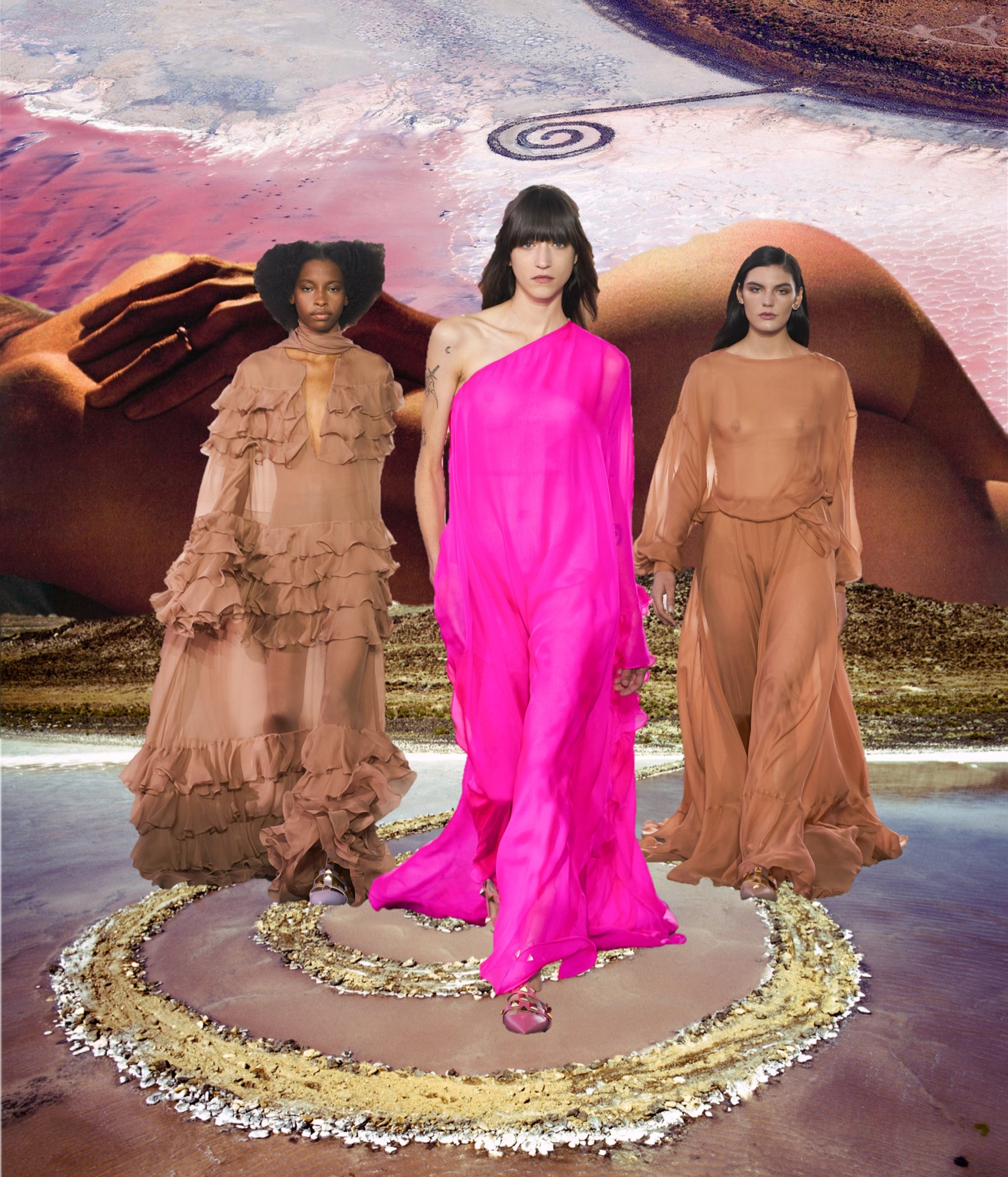
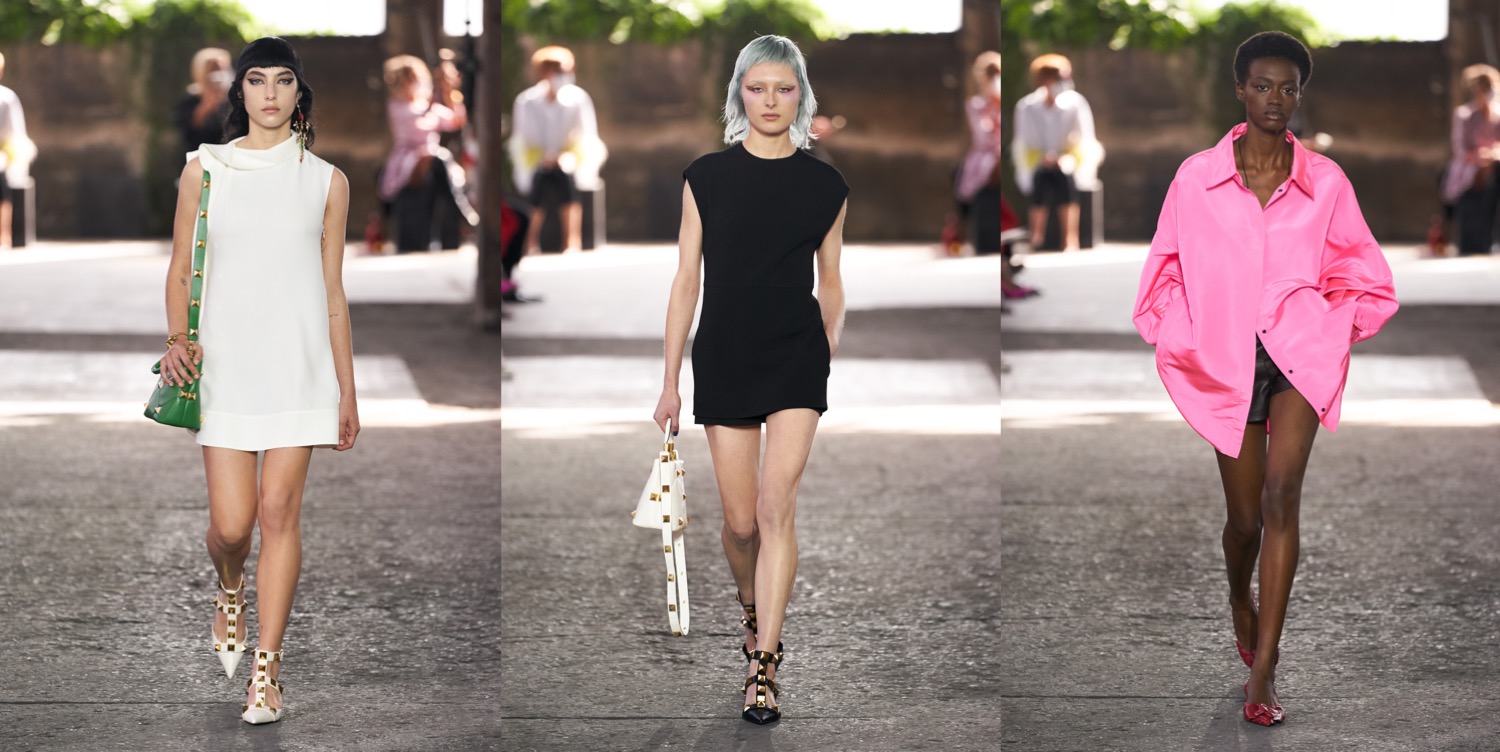
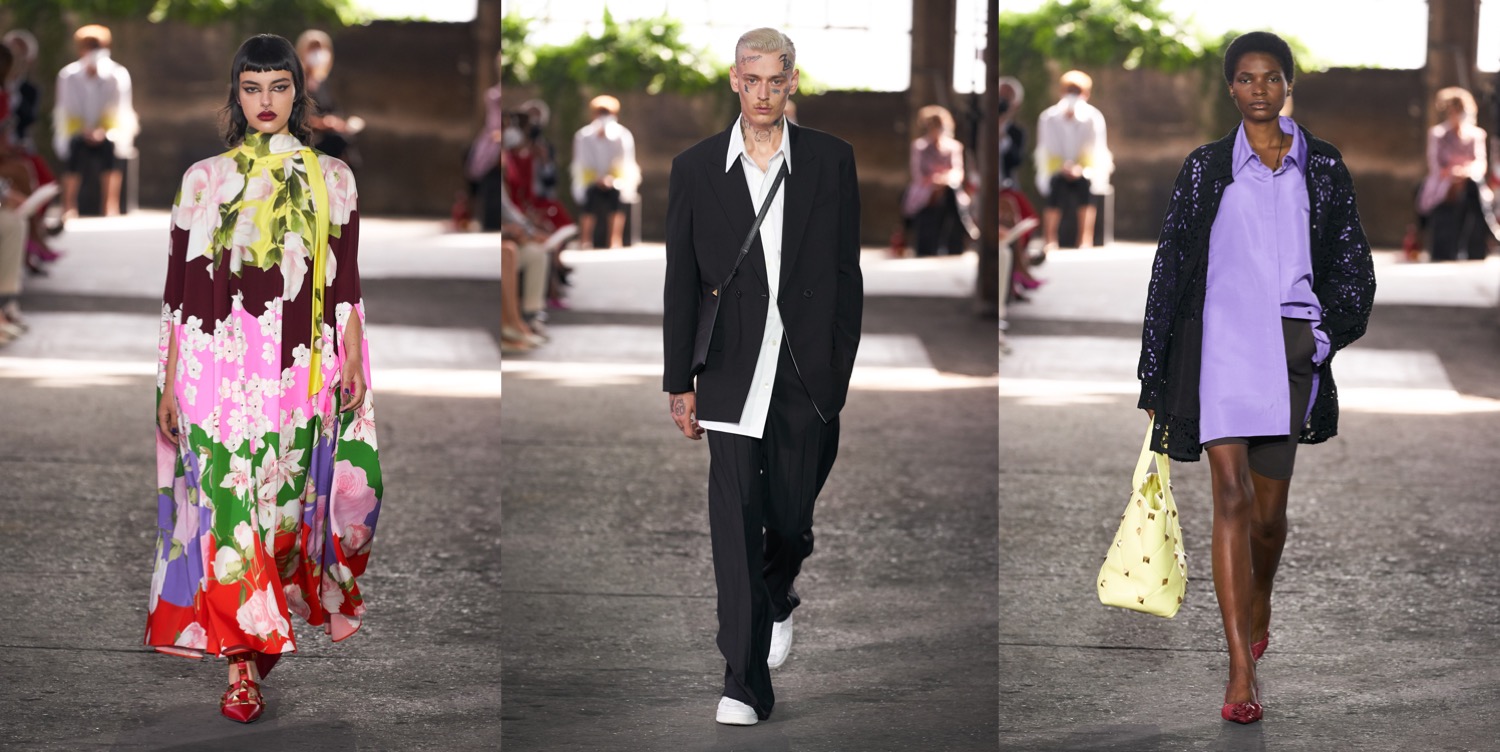
There was something truly powerful about the feeling conveyed by Pierpaolo Piccioli‘s Valentino spring-summer 2021 collection. It was so heartfelt, sincerere, honest. The line-up was presented for the first time in Milan, not in Paris, which in a way also changed the aura. In a declaration of support for the Italian fashion system and making the most out of the difficult circumstances the pandemic has forced upon us, Piccioli opted for an act of bravery – and bravura. He decided to decamp from the ornate Parisian fabulousness of the Salomon de Rothschild salons for the powerful industrial rawness of Fonderie Macchi, a metallurgical foundry active in Milan from 1936. “In this moment, sticking to an old mindset for me just wasn’t an option,” he said at the post-show press conference. Choosing a venue at odds with Valentino’s typical optics, so deep-rooted in couture, signaled the bold stance Piccioli was taking in the re-definition of the house’s stylistic codes – a process he called re-signification. “I focused on working more on Valentino’s identity than on its aesthetics,” he reflected.  As always with Piccioli, his approach was as instinctual as it was sophisticated; he’ll go down as one of fashion’s romantic visionaries, able to orchestrate moments of true creative enjoyment, both emotional and visually elevated. Romanticism was actually much on his mind while working on the collection. He called it radical. But what does it mean being a radical romantic today? “For me, it rhymes with individuality, with the freedom to express our very own identity and diversity,” he answered. Being romantic means also not following the rules, embracing idealism, being rebellious- fighting for a better world. Believing that things can change: “Fashion for me is a way to talk about the values that matter today,” he said. “The true acceptance of diversity. Tolerance and kindness. This is the world I want to tell through my work as a designer.” If aesthetics can actually suggest something about one’s life, then the collection’s street casting was a celebration of the many diverse-looking people Piccioli wants to include in his narration. Each look was individual, thoroughly chosen according to the personality of the character, young men and women coming from different backgrounds and walks of life. Yet from a fashion standpoint, the collection looked more toned down than usual: streamlined and with fewer of the decorative flourishes and certain hyperbolic gestures of couture. Lace, macramé, crochet, and embroideries were among the textural couture accents reworked here with a crafty, more palpable ‘human’ touch. Both the women’s and men’s lines shared shapes, volumes, and fabrics; the same wardrobe staples were often proposed in identical versions for both genders. Progressing from linear, almost minimal looks, the collection flowed into the ethereal evening options that have become synonymous with Valentino style; here the sophisticated shapes of caftans and cape dresses were designed with fluid, efficient precision. Highlighting a somehow reductionist approach, the only print was a vibrantly-hued floral revival of an archival dress: a glamorous yellow number famously worn by Anjelica Huston and lensed by Giampaolo Barbieri in 1972. Arrangements of wildflowers and plants filled the vast industrial set in a powerful installation by Japanese plant artist Satoshi Kawamoto; Piccioli envisioned it as a disruptive element of beauty inspired by guerrilla gardening’s practice of growing delicate plants in gray concrete spaces – another romantic act of urban resistance. The flowers had a story of their own: originated in eight different countries, they were grown in a nursery in Milan, where they’ll be returned after the show. Piccioli is the modern-day master when it comes to turning fashion shows into emotionally charged moments of visual seduction. Music always serves his purpose well. This time, he entrusted the singer, songwriter, and producer Labrinth to perform stirring renditions of some of his hits. It all worked together in a delightful way.
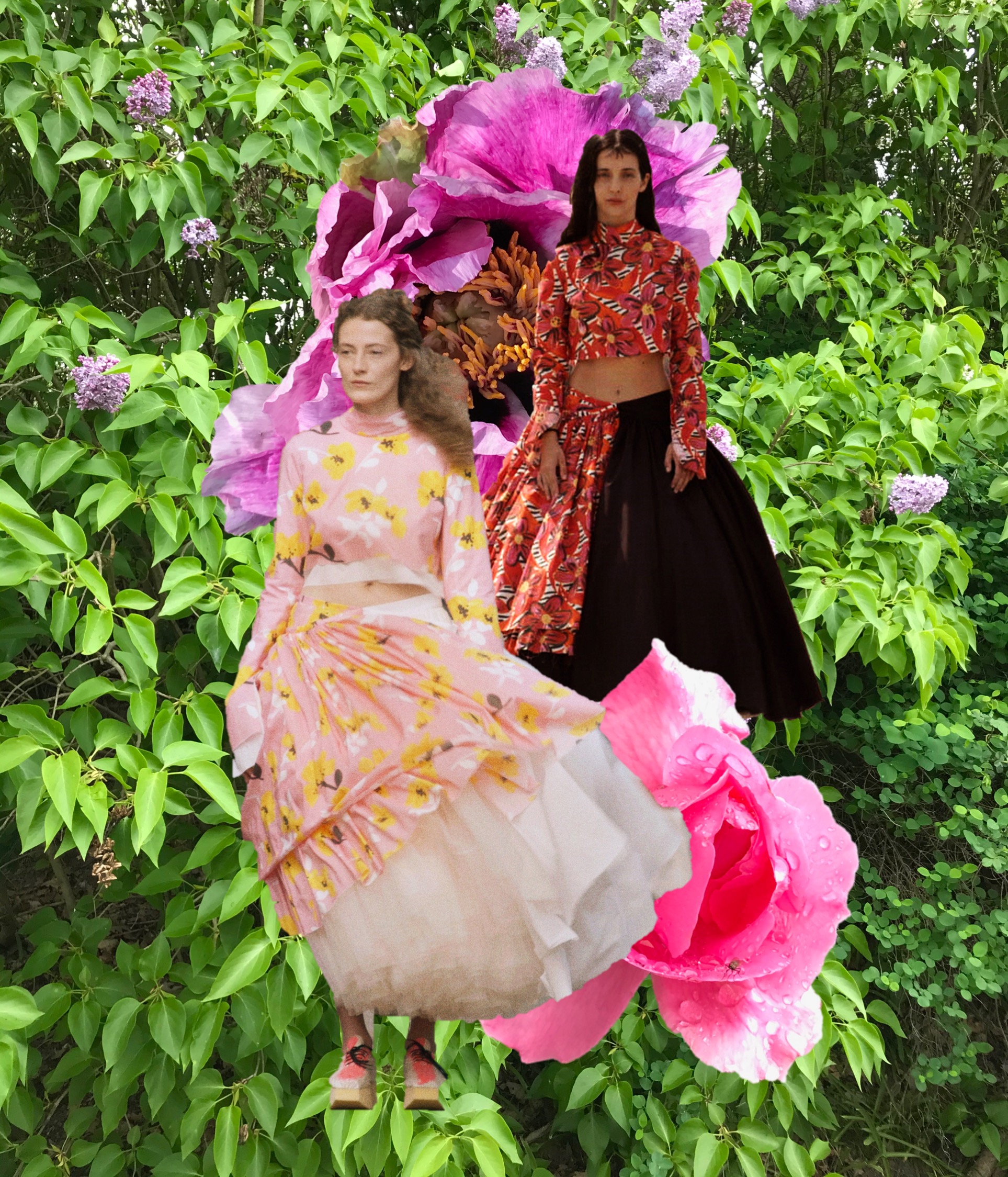
Collage by Edward Kanarecki.

Soft Pragmatism. Salvatore Ferragamo SS21

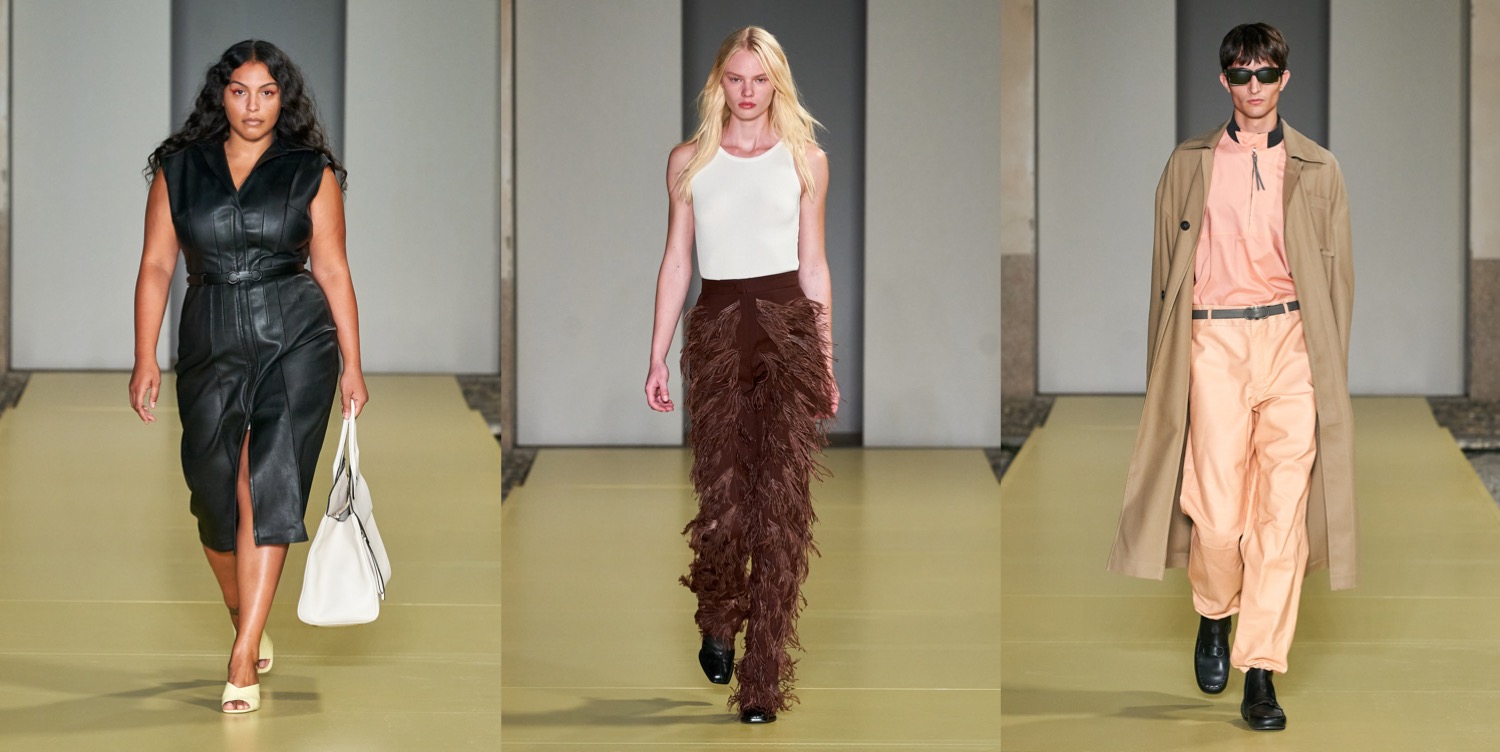
As I wrote earlier this week, it’s really all about pragmatism versus escapism this season. Designers seem not to even look for a balance between the two – they are either this or that, period. And in Milan, we see this division the most clearly. During lockdown, with time on his hands and having exhausted all of Netflix, Salvatore Ferragamo‘s Paul Andrew went on an Alfred Hitchcock binge. The Birds, Marnie, and Vertigo were at the top of his best-of list; he found out that the same obsession was also shared by director Luca Guadagnino, who in his film Io Sono l’Amore apparently referenced a lot of Hitchcock – the gestures, the lighting, the poses; a certain high-class look of enigmatic sophistication. Andrew wasn’t sure at that lockdown time if and when he would be able to stage a real show, so he decided to go for a short movie instead. Asking Guadagnino (I adore him!) to work together on a project for the spring collection was just in the cards – and a thrilling opportunity. The film, shot in an eerily empty and utterly Hitchcockian Milan at the beginning of August, opened Salvatore Ferragamo fashion show, which was staged in the open air in the hectagonal colonnaded courtyard of the late Baroque period Rotonda della Besana. Backstage before the show, Paloma Elsesser was looking intently at one of Andrew’s moodboards, wearing an hourglass black leather number that could’ve come straight out of Kim Novak’s wardrobe in Vertigo. The dress signaled a more sensualist, high-gloss direction for the designer; he tried his hand on less oversized proportions, favoring instead a shapely, more feminine, form-fitting silhouette. The color palette, inspired by the chromatic quality of Technicolor, also added a hint of sensual vibrancy, and visual punch. “That’s my favorite, Tippi Hedren’s green,” he said, pointing out a neat little tailleur with a waisted jacket in eau de nil; it would’ve actually looked slightly bourgeois, if not for the off-kilter intervention of a fluid sarouel, replacing the more conventional pencil skirt. While sticking to the refined linearity he has envisioned for Ferragamo, Andrew punctuated this collection with impactful highlights – think a seersucker checkered fabric with a tactile finish; thick knitted and knotted pieces with an artsy flair; quivering feathers sparsely scattered on straight cotton pants or on a pinafore. The co-ed collection was edited down by Andrew to just 30 looks, which was surely beneficial to conveying a convincing rhythm and a focused message. “Less but better, it’s our way forward,” he said. “I’m really into it.” The Andrew/Guadagnino connection also proved a winning creative combination, to be hopefully continued in the future. “Lockdown has been dark, surreal, and mysterious, like a Hitchcock movie,” chimed Andrew. “But strangely, like in a Hitchcock movie, the ending is always somehow beautiful. I’m trying to celebrate the beauty that is going to come out of it.

Collage by Edward Kanarecki.

A Good Kind Of Nostalgia. Blumarine SS21

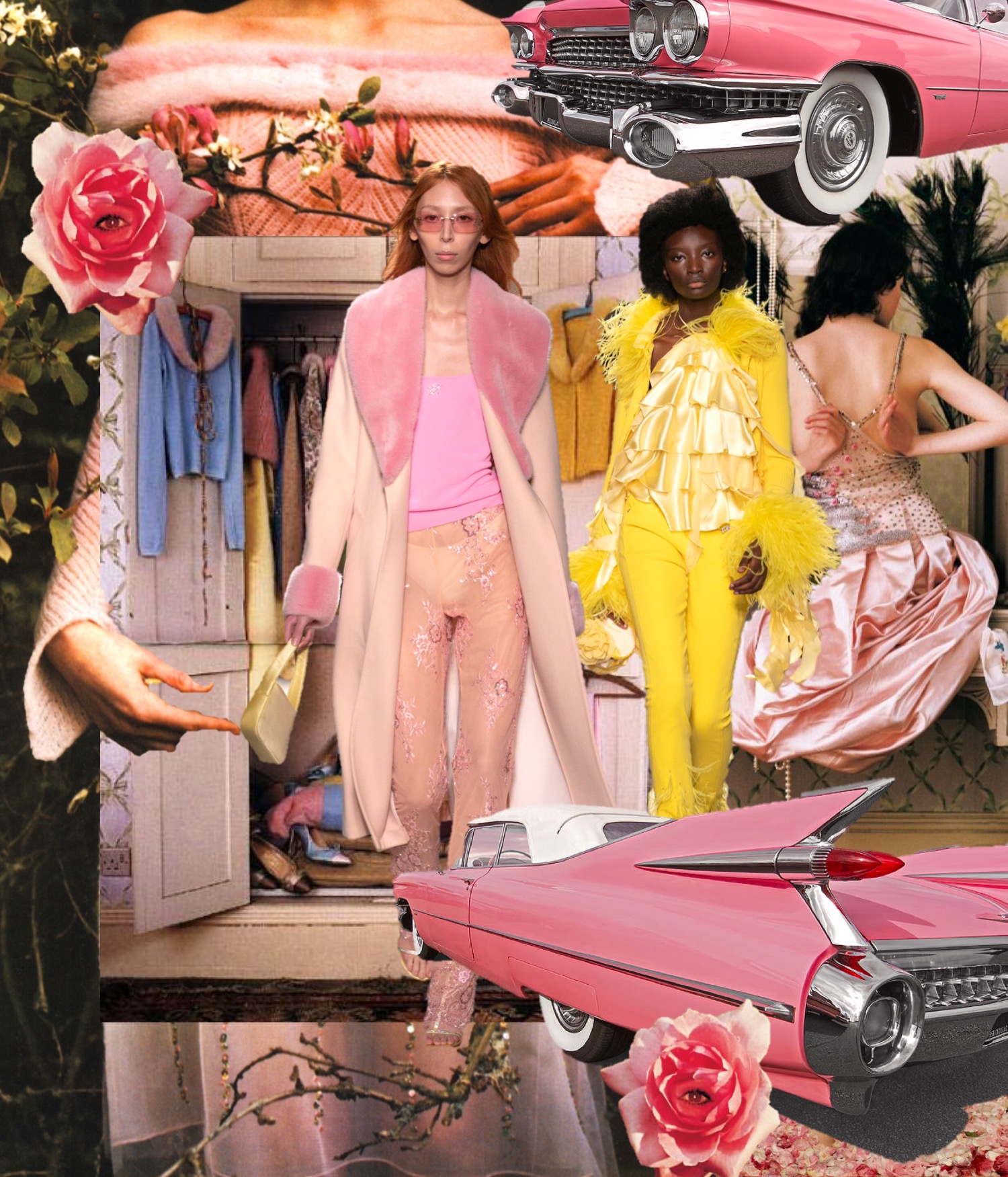
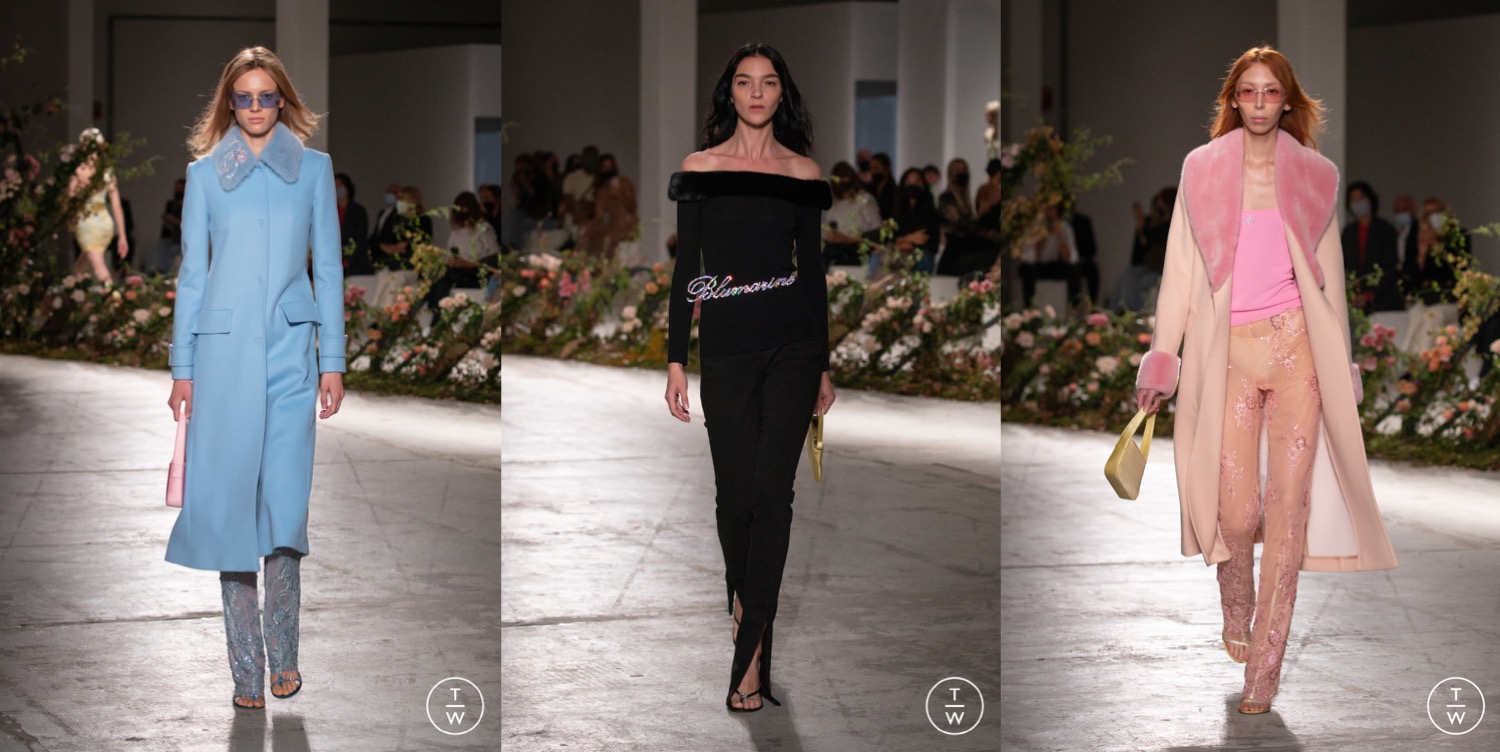
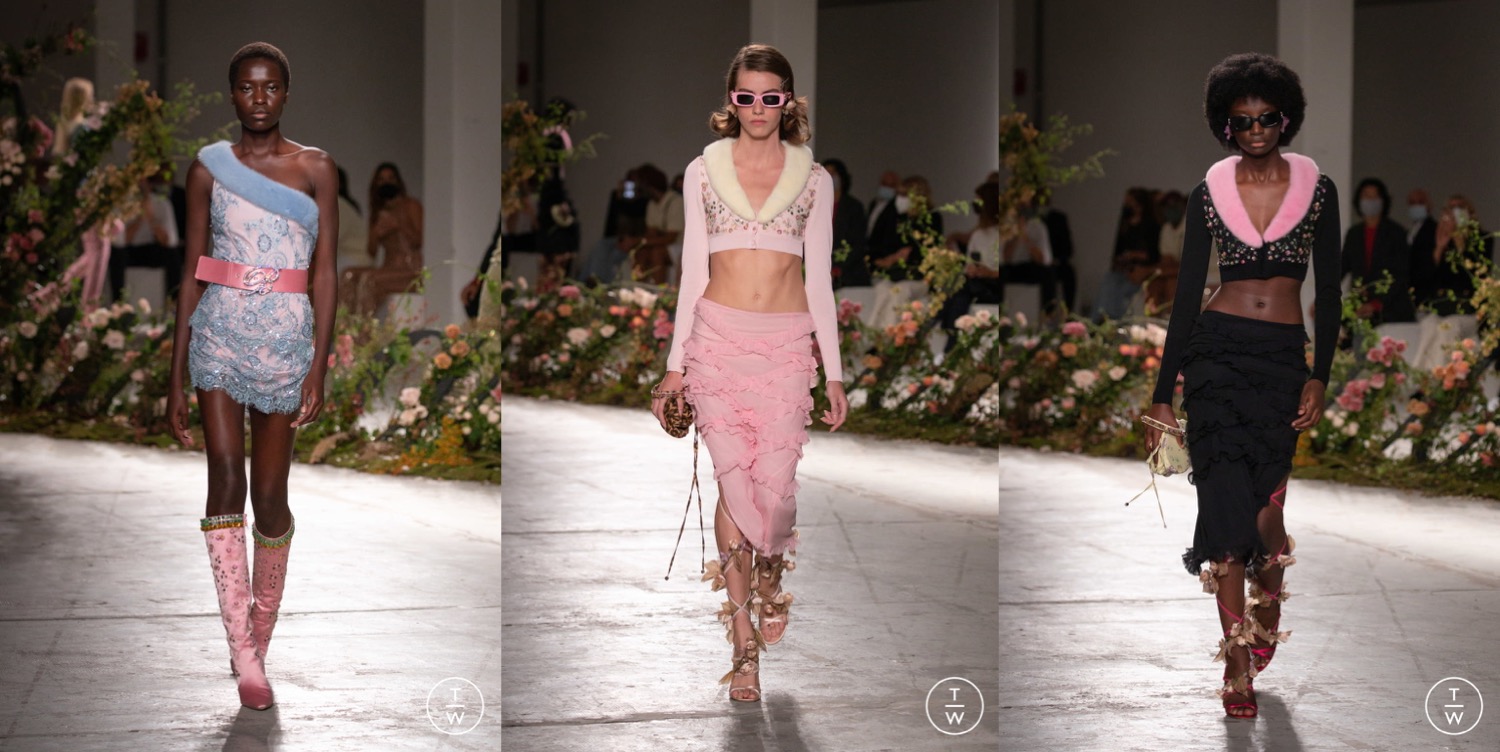
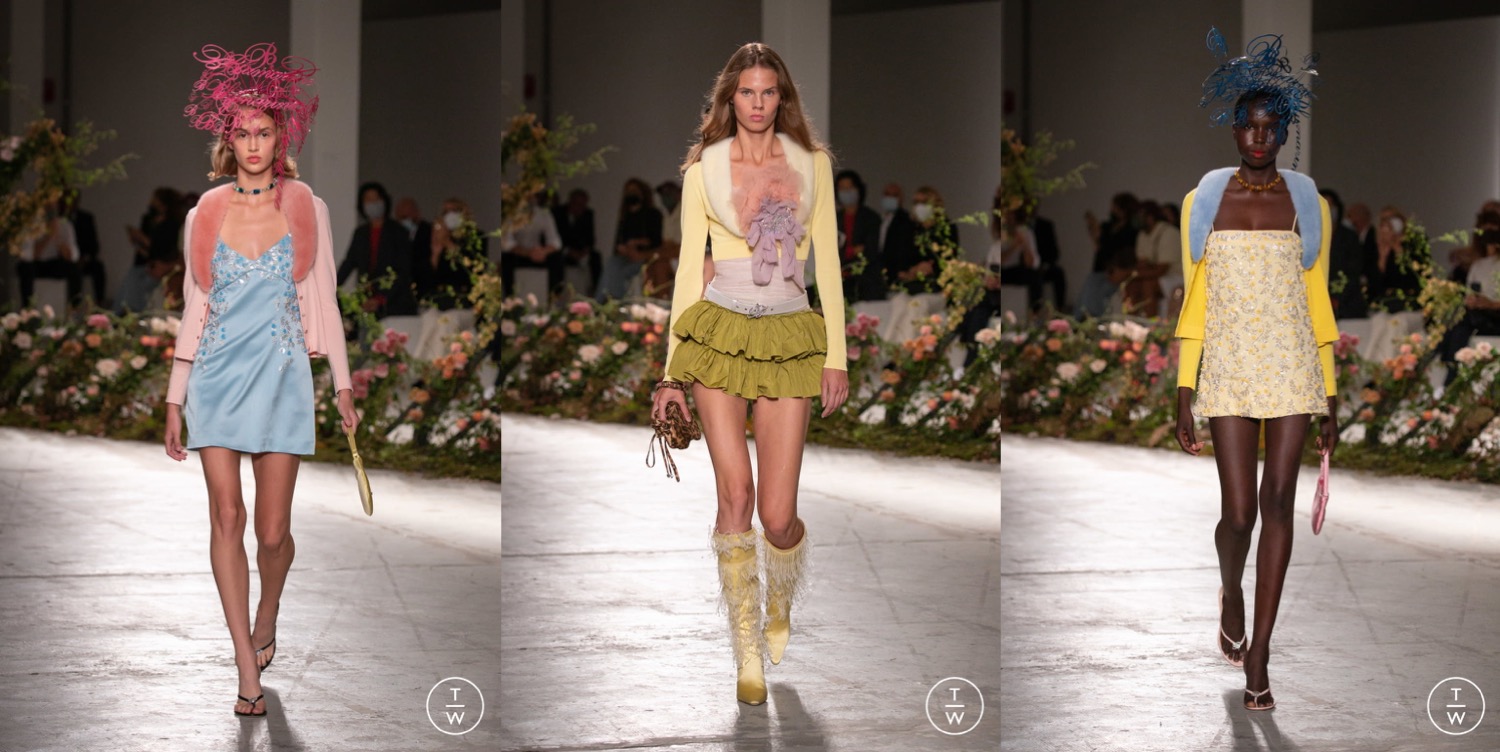
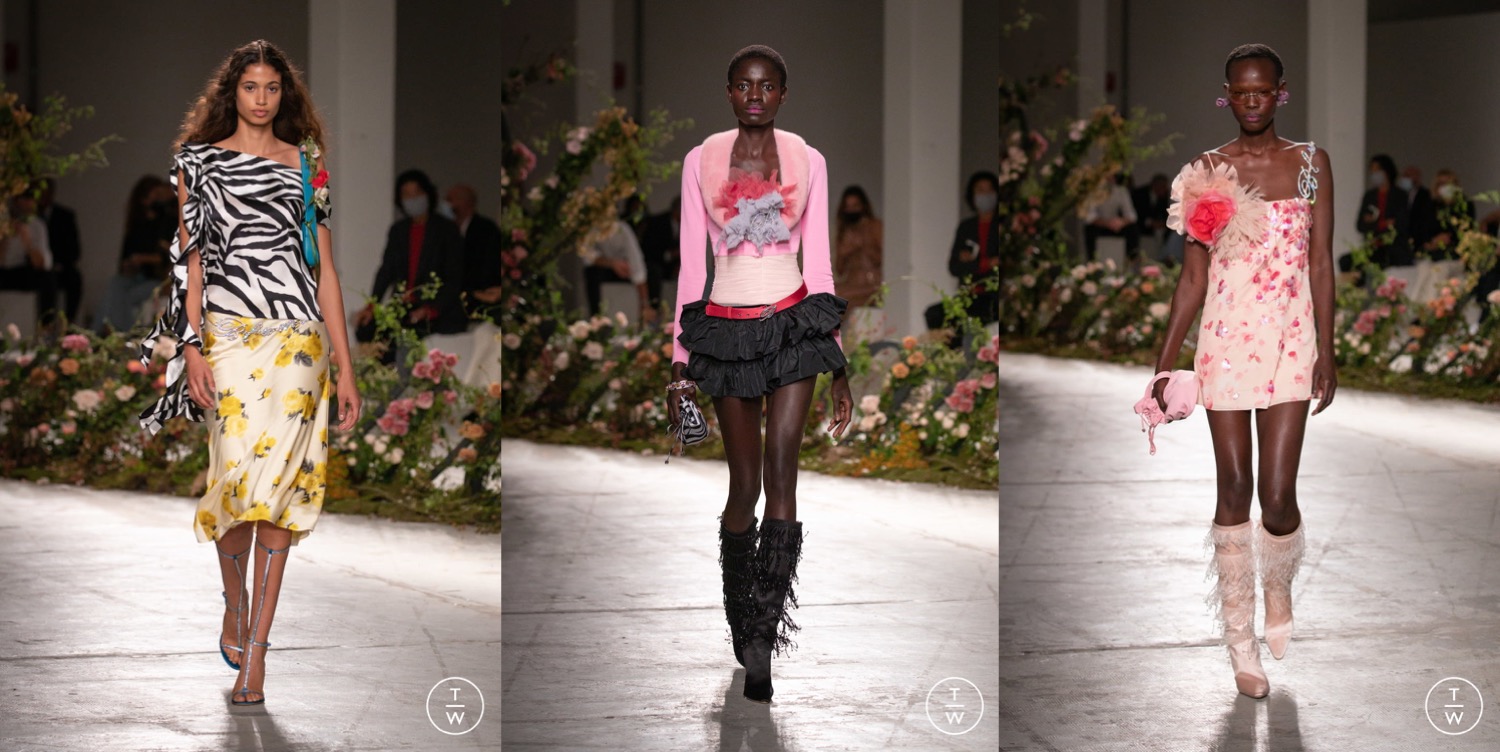
This spring, when Vogue Italia made their magazine archives available for three months, I literally went through every decade. What I loved the most in the 90s and early 00s advertisement pages were the fantastic Blumarine spreads, photographed by Tim Walker. Anna Molinari’s brand was it back then. Youthful, romantic, kitschy in a good way and so, so Italian. I couldn’t help, but wonder, why no one picks up those crazy-good style codes and make it work in 2020? Nicola Brognano, the new creative director of Blumarine, was the smart one. In case you haven’t heard of him, he worked for Giambattista Valli on the pret-a-porter and couture lines, then for Dolce and Gabbana ‘alta moda’.  He launched his brand, Brognano, in 2015, with a feminine, romantic and eclectic spirit – which actually might sound like a Blumarine match. Together with Lotta Volkova, the idiosyncratic stylist, he had his debut in Milan. Not many noticed it (yet), maybe because Prada and Raf Simons over-shadowed every event going on in the city, but I feel Brognano, with Volkova’s help, has a chance to put Blumarine back on the fashion map. Mariacarla Boscono opened the show in a black velvet track-suit styled with a huge, rhinestone-encrusted logo belt, and it was clear right away that the brand is bringing back Molinari hey-day hits to the extremes. Cute pastel coats and mini-cardigans wth (probably faux) fur collars were always present in Blumarine shows, so here they are back again. Big, funky floral brooches, silk bandana crop-tops, hilarious mini-skirts and dresses with plenty of lace, feathers and vintage-y ruffles, and of course a dose of zebra and leopard print. With Lotta’s exaggerated, yet always cool styling, Blumarine 2.0. looks fresh and properly nostalgic at the same time. Also, if you love that style and can’t wait for the spring-summer 2021 collection to hit the stores, take a look at Vestiaire Collective, where you will find plenty of vintage Blumarine in really, really accessible prices (who knows, maybe in a season or two they will sky-rocket?). It’s a good start and I wonder if a long-dormant, Italian brand like this one will every again attract its client – and a new one, of course. The young generation will definitely love the mini, candy-sweet satin bags with rhinestoned “B”. As for Brognano, we know so far that he has an idea for a brand reboot. Now the question is how will he continue that dialogue.

Collage by Edward Kanarecki.

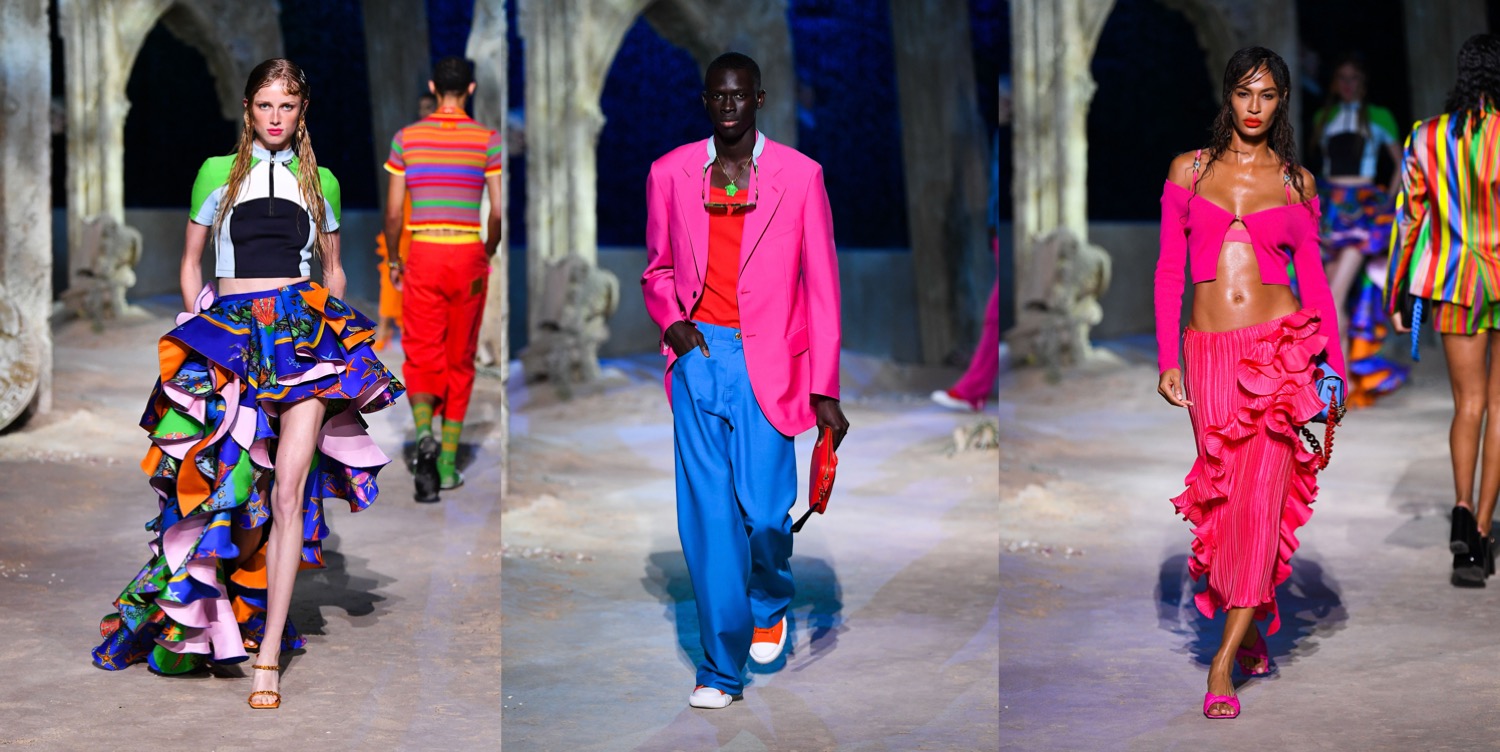
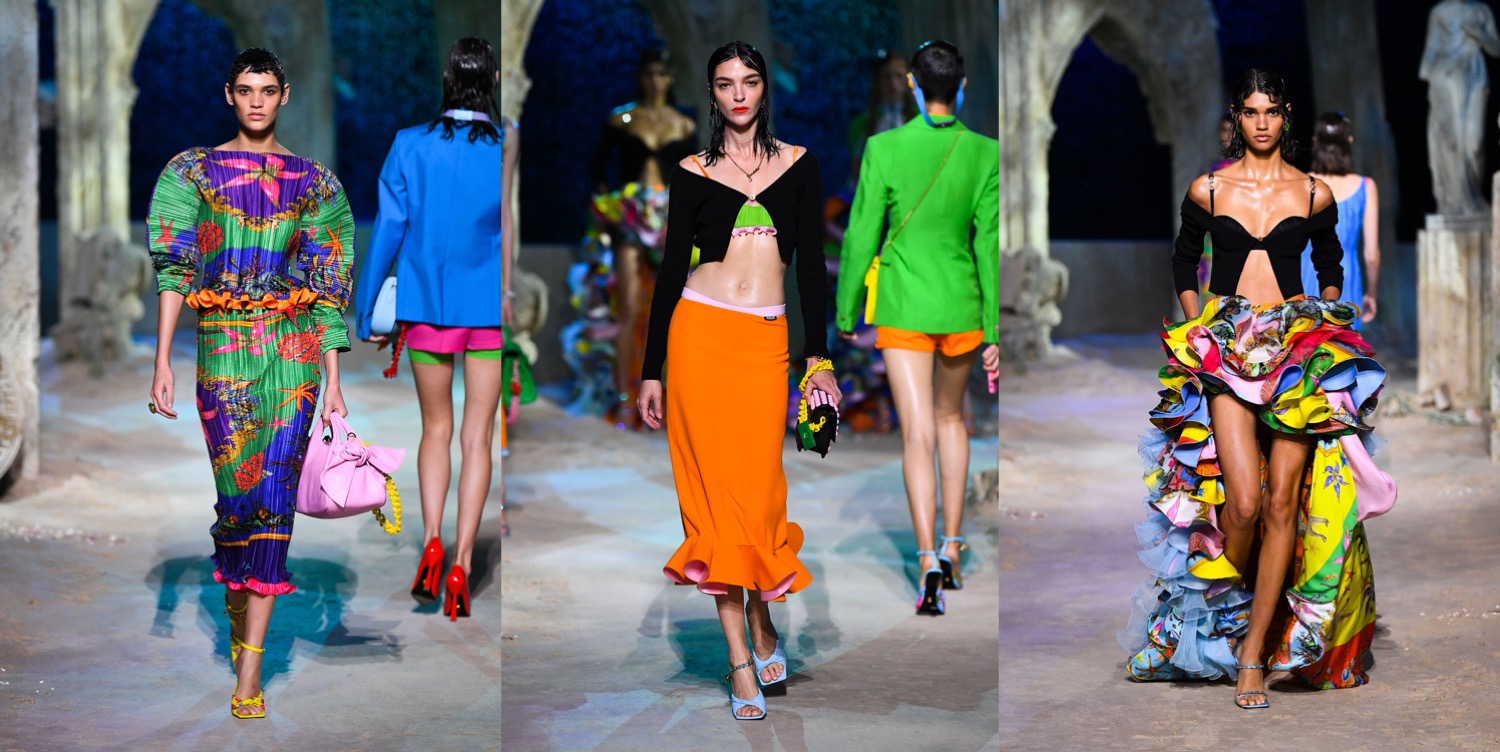
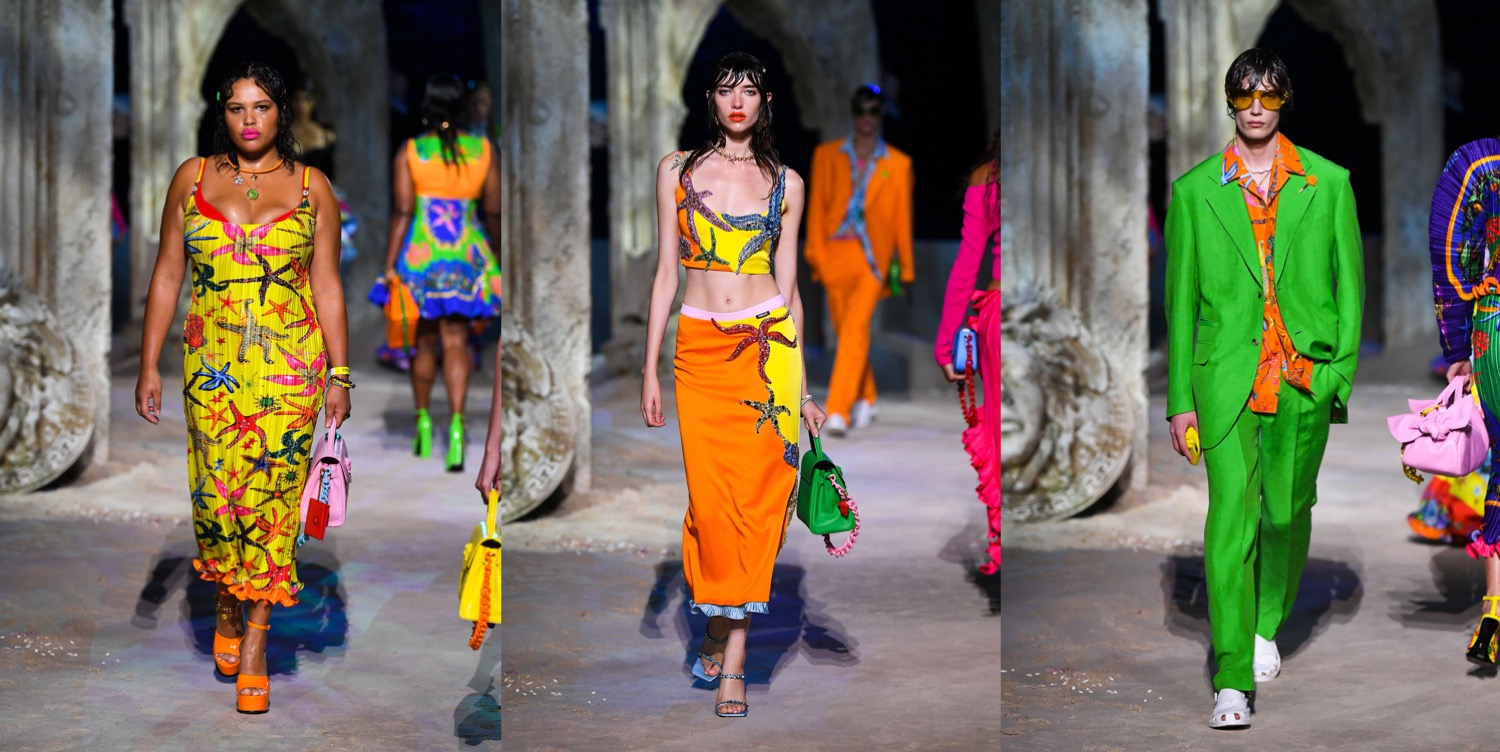
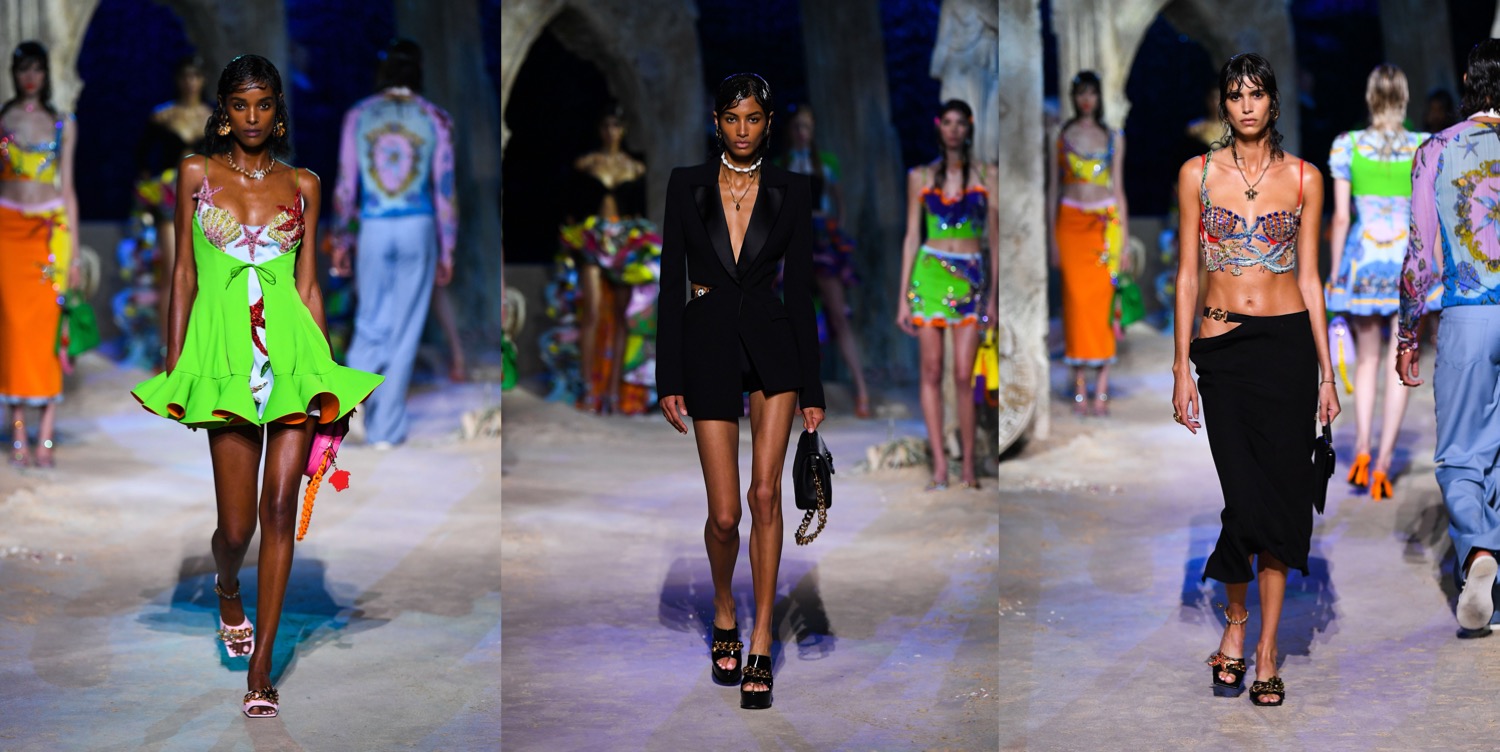
Aquatic Wonderland. Versace SS21

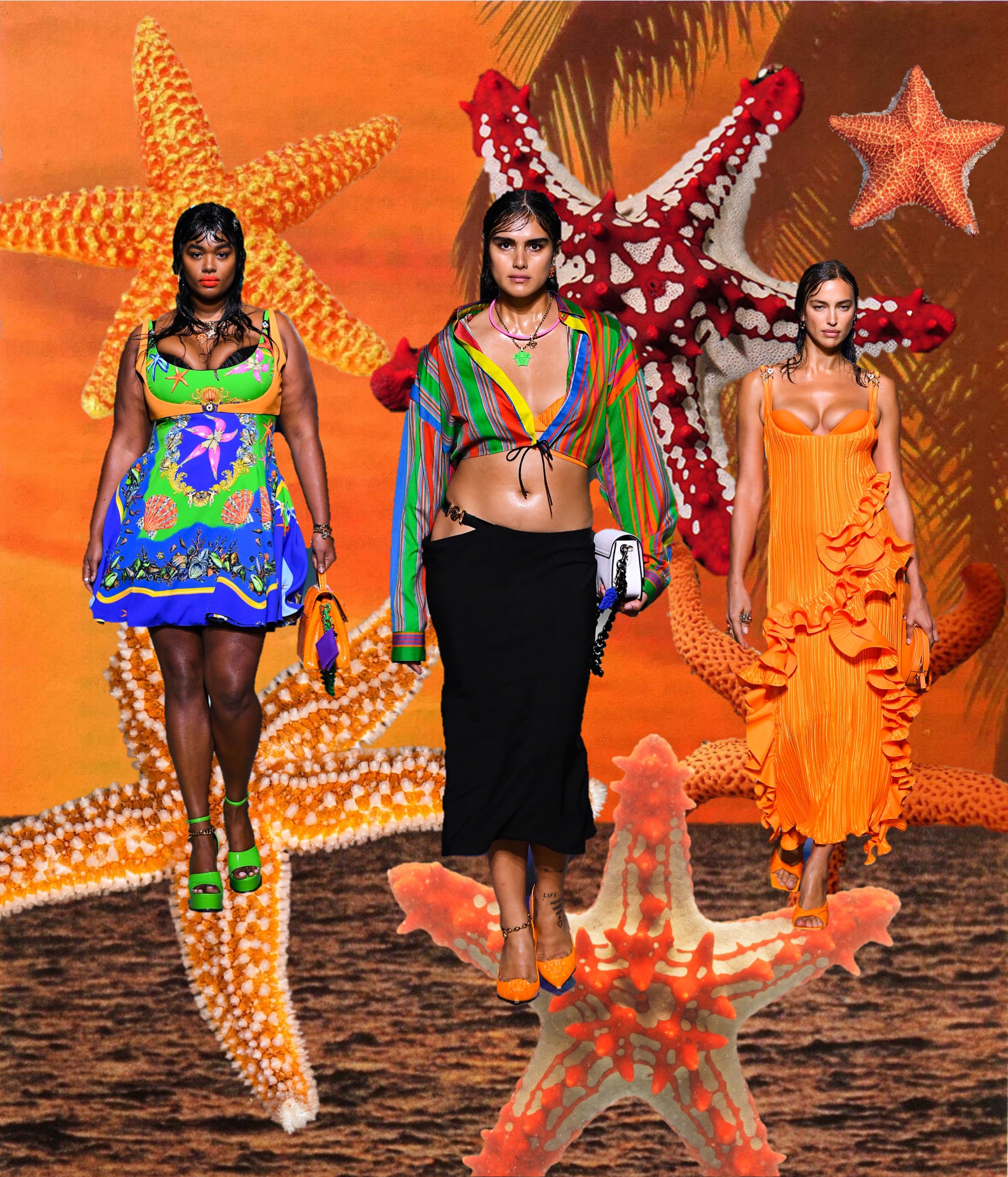
As we are somewhere in the middle of the fashion month, two camps of designers can be noticed: the ones that take the realistic, pragmatic approach, and the ones that prefer escapism in midst of a crisis. Donatella Versace is in the latter group, as she takes us to her aquatic wonderland for spring-summer 2021. The Versace line-up was really good this season (and you know I’m not the biggest fan of the brand), but it was the model casting that truly stole the spotlight. Seeing the gorgeous, body-positive models – Jill Kortleve, Precious Lee and Alva Clair – in the Versace fantasy-land was a inclusivity moment that sadly isn’t a usual sight in Milan (except for Fendi and Marni, which invite different models to their fashion shows for a couple of seasons now). Hopefully, Donatella will keep it up. What about the clothes? In the imagined ruins of Atlantis and water currents streaming down its projected walls. Versace goddesses and gods wore starfish, coral, and seashell motifs from Gianni Versace’s ‘trésors de la mer’ collection for spring-summer 1992. They were ready to take on a new reality like the Rebirth of Venus herself (starring Adut Akech in the title role, of course). Versace, who described the collection as having “an upbeat soul,” said her challenge was to give fashion meaning in a historical moment like this. “I wanted to do something disruptive and to break the rules because I think that, what worked a few months ago, does not make any sense today. Creatively, that meant finding a way to bring the DNA of Versace to a new reality and to people who have undergone a deep change.” Clothes-wise, it’s a fun, high summer venture: it was, on the women’s as well as the men’s side, high-octane sporty cocktail-wear for an optimistic future. In all its sea-centric detailing, it also had its moments of ingenuity: micro-pleated dresses trimmed with twirly ruffles, which bounced like jellyfish in the waves walking down the runway; crazy cascading skirts layered like the lips of shells; and a bag constructed like a big fortune cookie.

Collage by Edward Kanarecki.

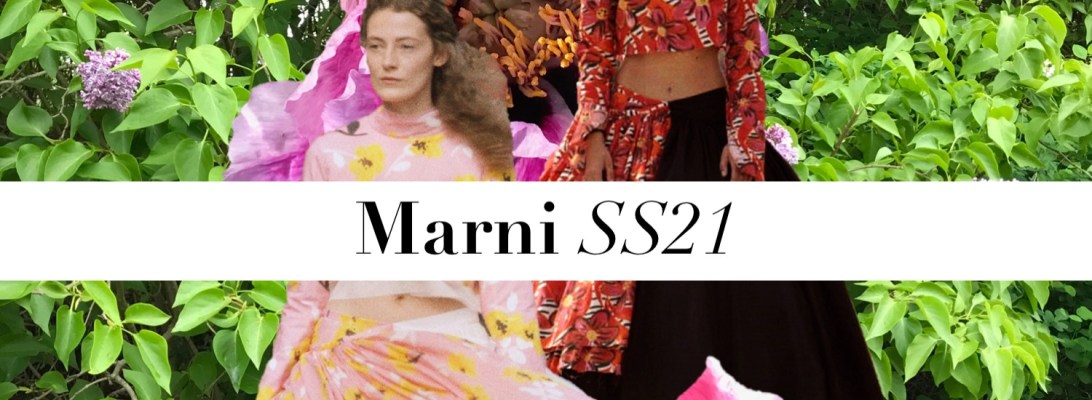
Marnifesto. Marni SS21

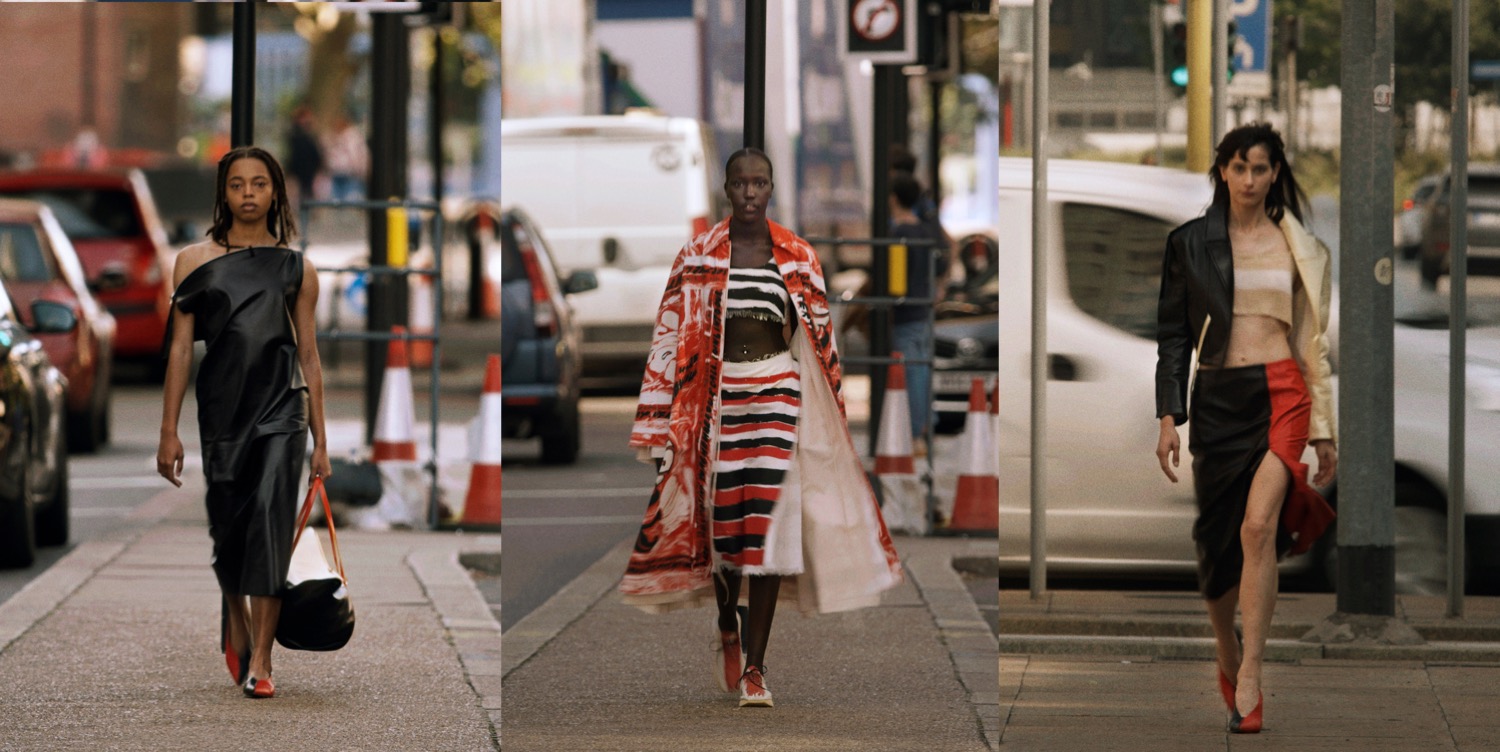
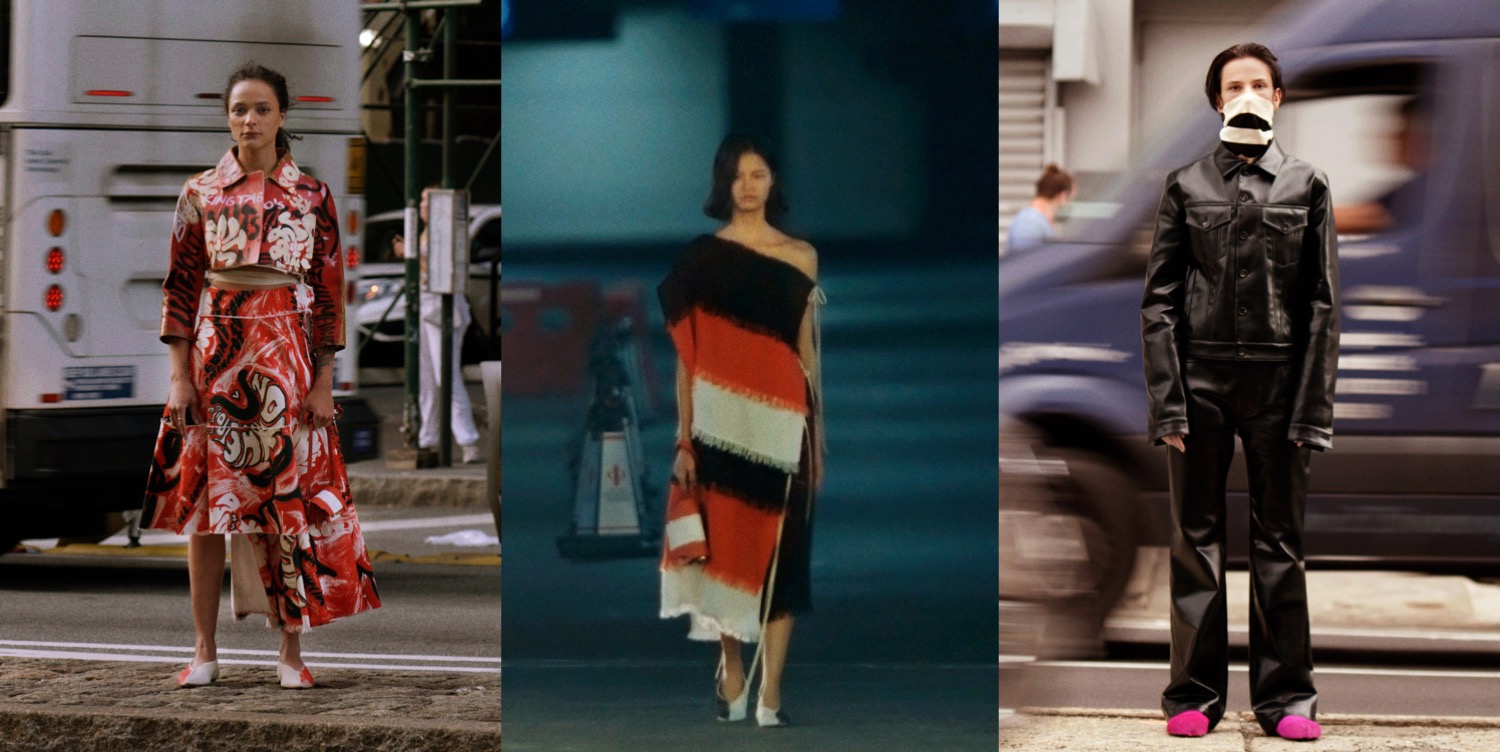
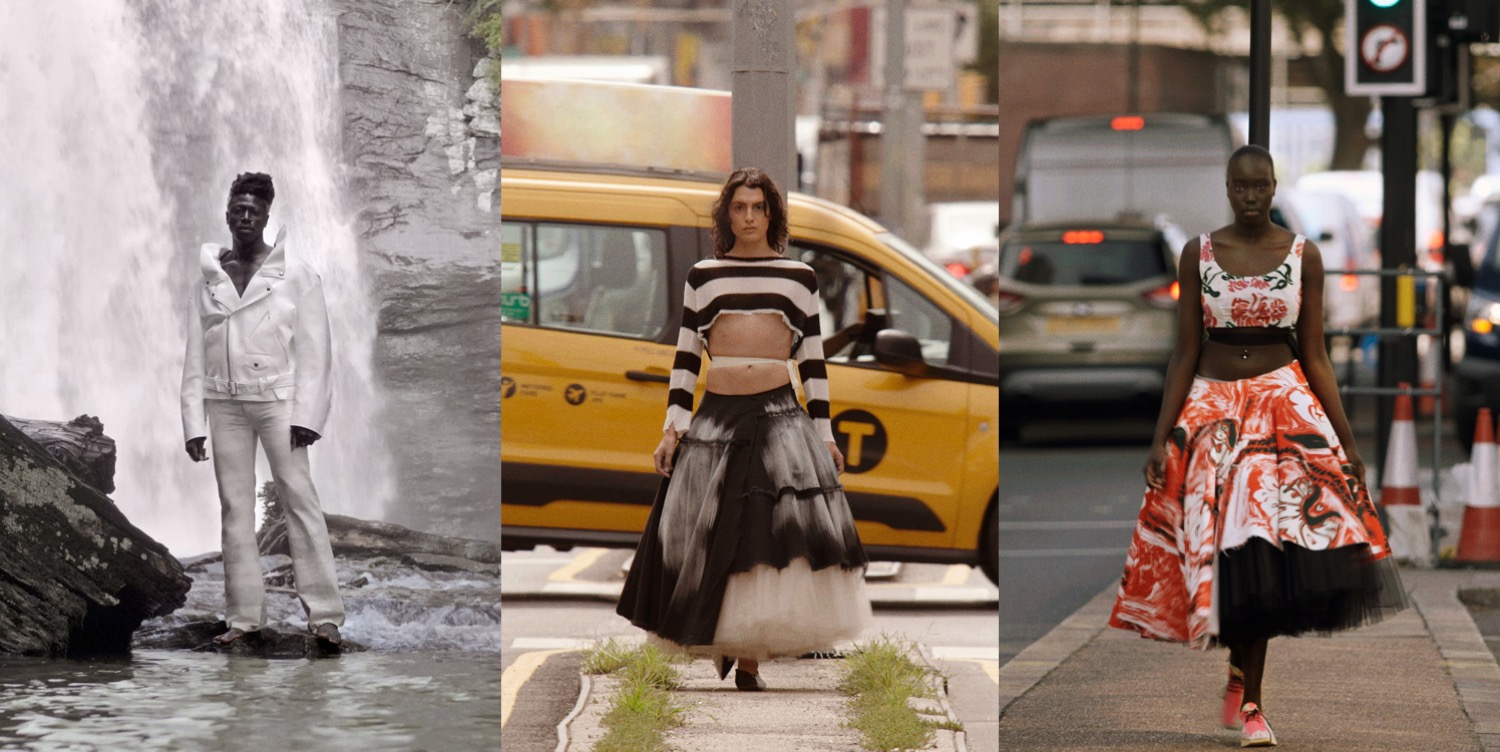
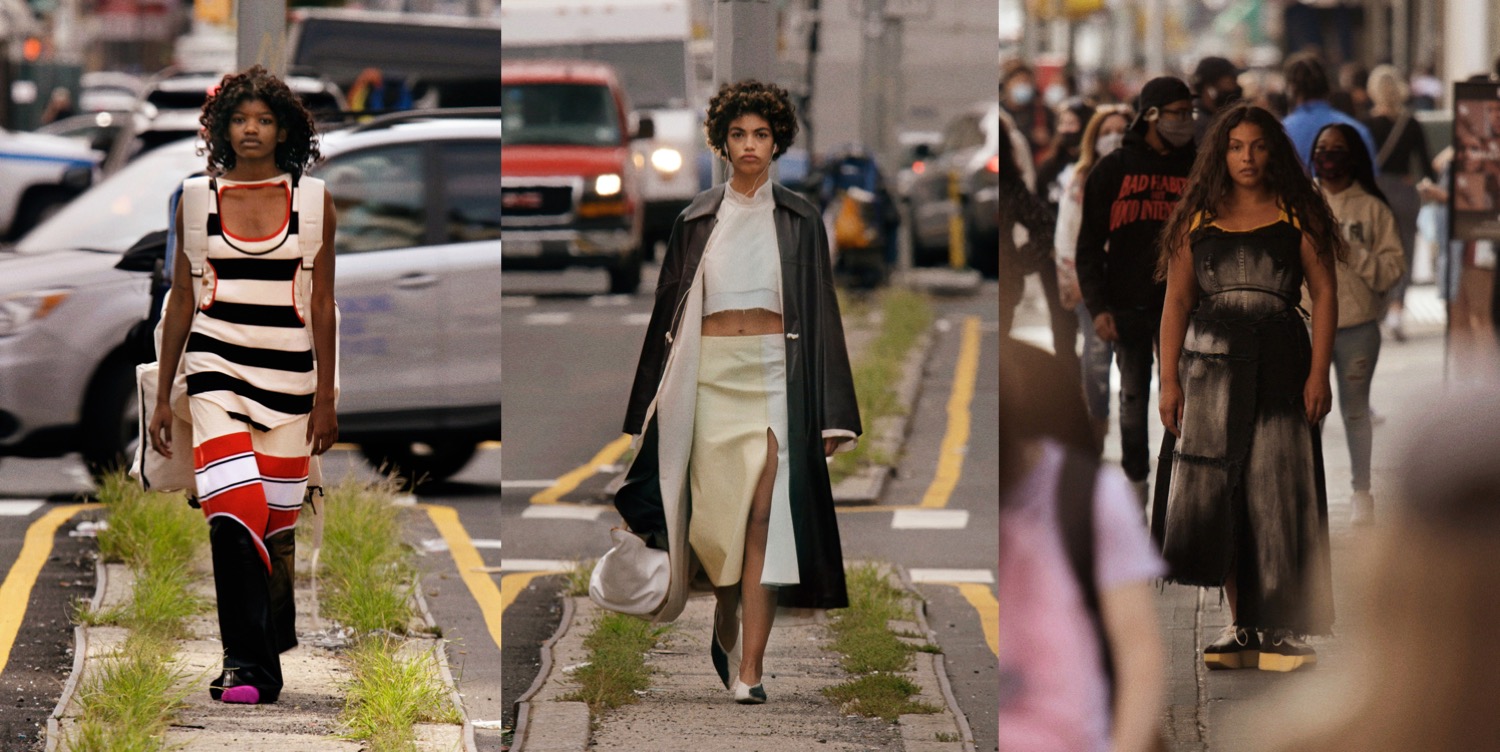
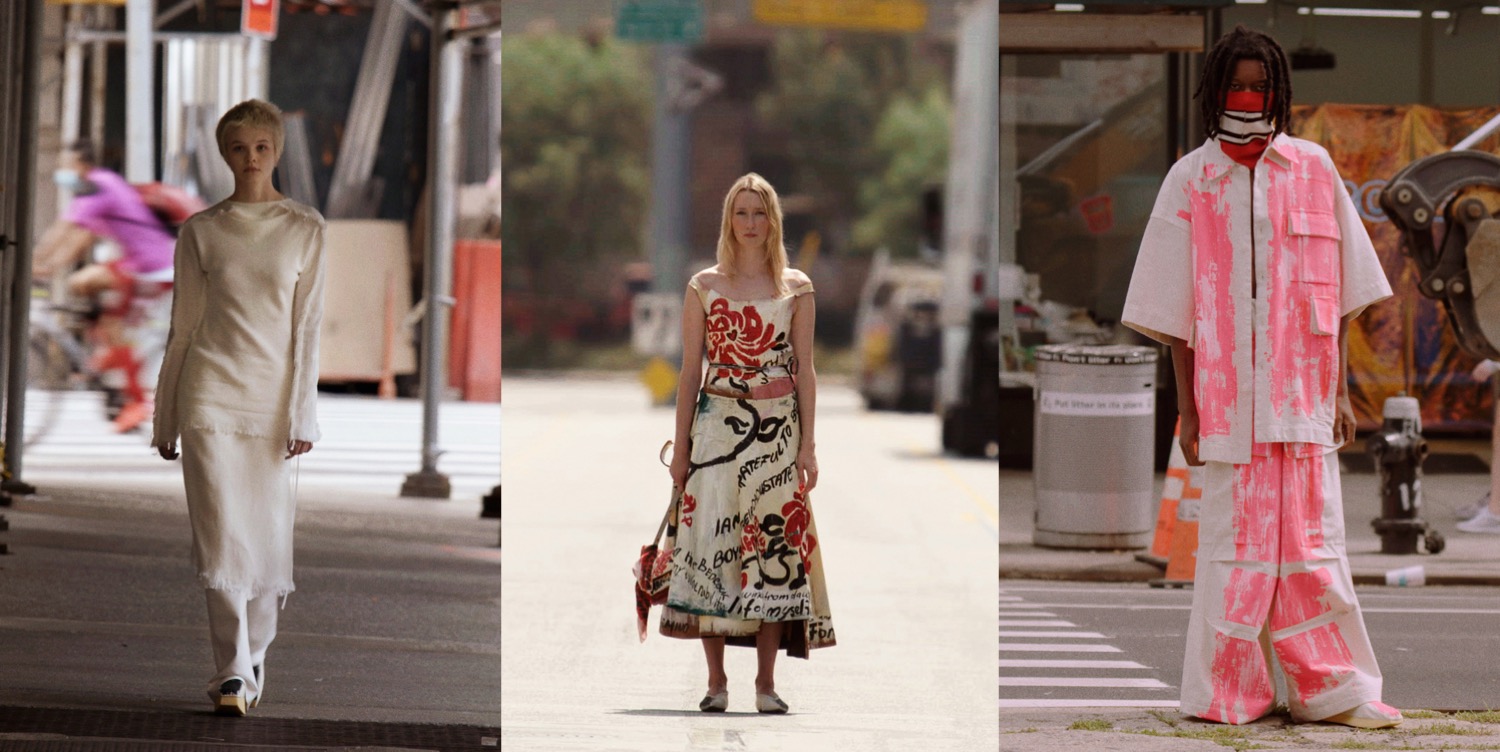
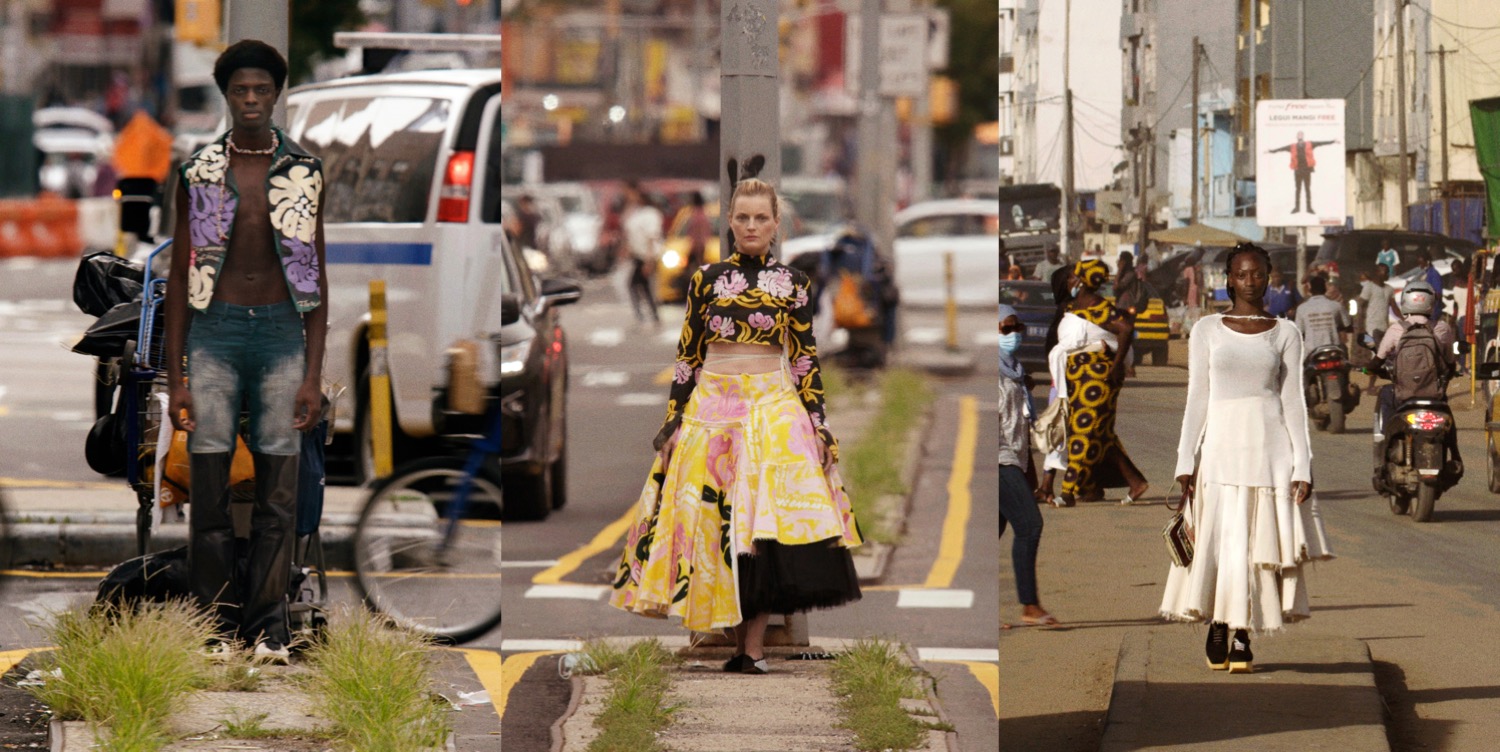
Usually, Marni‘s Franceso Risso takes us to a fairy-tale, where everything has a sort of out-of-this-world meaning. For spring-summer 2021, his collection is strikingly grounded. And literally, out in the world. “I don’t want to make any statements about this show, but this is the idea of it: the people, the individual stories, the lives, the awakenings, my awakening, and the connections,” Risso said in a press preview. “Lockdown felt very oppressive. I have a big dog, and whenever I’d go out, I had police sending me back home. It was strange; bad,” he recalled. While they sounded funny, stories of the Marni studio “making things at home with blankets [and] curtains, [and] dyeing things in their bathtubs” had a more introspective rather than creatively explosive impact on Risso’s approach for his spring proposal. The events of 2020 made him feel caged and powerless. The fragility of freedom was at the heart of this collection. After he finished it, he sent looks to friends and family around the world: Los Angeles, Detroit, Philadelphia, New York City, London, Milan, Paris, Dakar, Shanghai, and Tokyo. In a digital showcase livestreamed from all of those locations, his diverse cast of non-models performed what Risso called his “Marnifesto”: “An experiment of collective neo-humanism, which is so individualist, but actually, this has been collective. It’s celebrating Marni not through the I but through the we,” he explained. It was, quite simply, unity in diversity: Through live-recorded everyday scenarios like walks through traffic, trips to the park, band practice, or grocery shopping, it was an illustration of how we’re less fragile together. Working on the collection, Risso had pulled his most-loved pieces from the Marni archives, re-created them, took them apart, and stapled them back together in new ways. If that was an illustration of fragility versus strength in itself, so were the constructions: unraveling knitwear, de- and reconstructed tank dresses, a rigid, box-fresh leather jumpsuit about to get crinkled. It all felt somewhat “charity shop,” but that inevitably comes with the territory of fragility. Twenty-five coats had been made out of outerwear from old collections, patched together and painted with poetic words sent to Risso by friends through correspondence over the past season. “I can’t talk about hems and drapes and stripes,” Risso said. “I’m more inclined toward thinking of this as a work that’s been more collective than ever. It’s devoted to freedom, self-expression, to celebrating the hand that painted all those objects that create the canvas of Marni.” He didn’t just mean his studio, but the wild and wonderful characters who fill his unconventional mind, and indeed his nonconformist reality. Given the platform of his livestreamed video, they made Risso’s at times outlandish creations feel more real. Emancipated from the staged situation of a runway, you could actually see how the Marni universe manifests IRL.

Collage by Edward Kanarecki.