– Vetements –
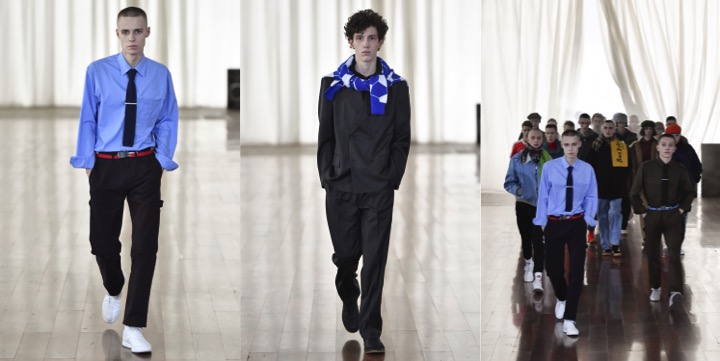
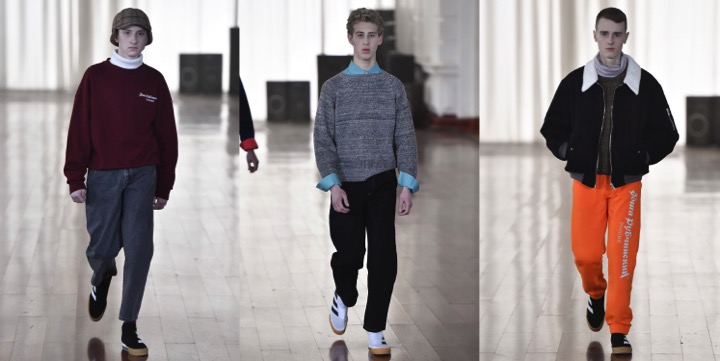
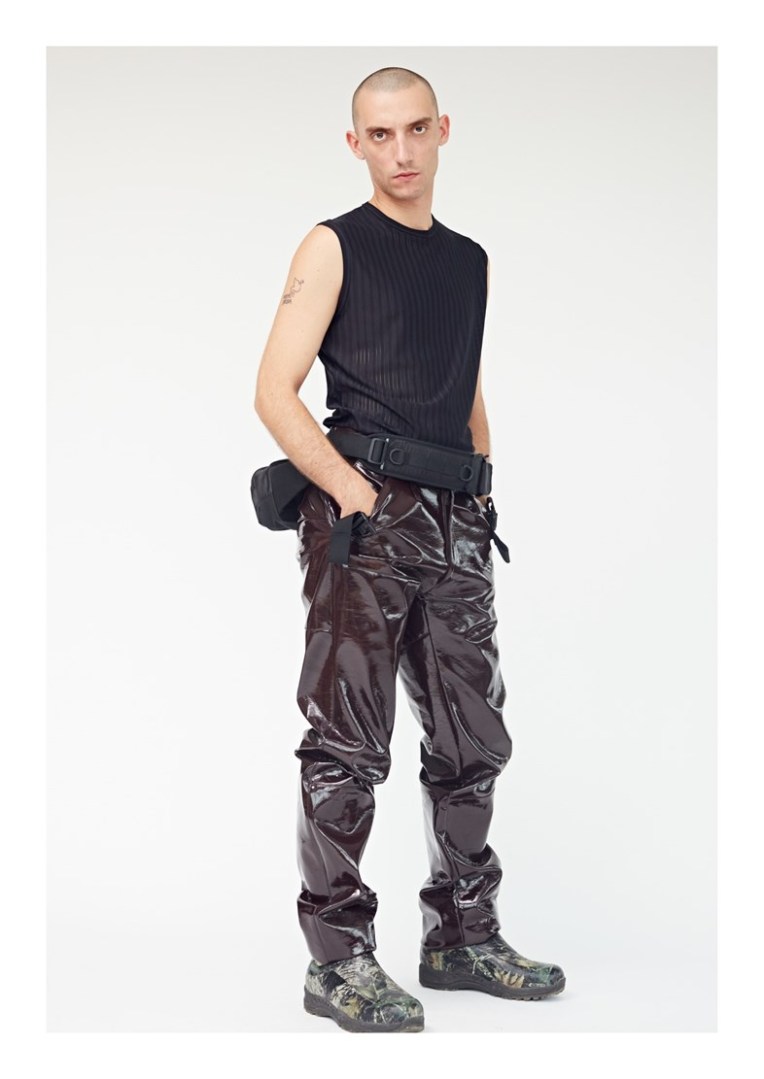
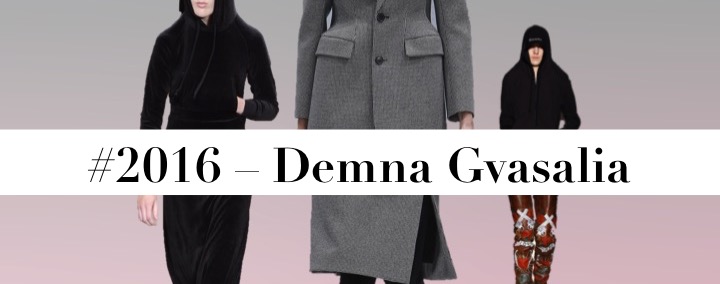
Demna Gvasalia and the design collective behind Vetements presented more than one sin in the gothic-style Cathedral of America during their autumn-winter 2016 show. After a sleazy sex-club Le Depot and a cheesy Chinese restaurant, a church seemed to be the next unconventional choice for a show venue – however, the clothes purely (re)defined Vetements and it’s already well known, anti-fashion approach. Calling it a street wear brand is a colossal mistake, when you see the prices of these very well-manufactured coats and dresses, but in fact, Vetements is based on the sweat-shirts, which are transformed into new silhouettes every season. Moving away from the over-sized one, which stormed all the retail points last season, this time the hoodies had something of a zombie-look – the shoulders were lost somewhere in translation, and the solemn faces of the street-cast models perfectly matched the atmosphere of this undergound-kinky collection. The slogans – Sexual Fantasies, Big Daddy, for instance – had nothing in common with a proper communion
Haute couture, or high dressmaking, refers to the art of creating exclusive, custom-fitted fashion for awfully rich women (and men). Couture is constructed by so called petites mains, the little hands of Parisian ateliers, who consider high quality, expensive textiles and extreme attention to detail as their priority. This long and exhausting definition of haute couture applies to all houses who have their exclusive lines working hard to satisfy their high-end customers. Spoiler: Vetements certainly doesn’t match this crowd.
When Demna Gvasalia‘s off-beat label appeared on the calendar of haute couture week in Paris, no one was sure what’s coming. At the beginning of this year, Vetements declared the change of their fashion show schedule, making it more “realistic” for them, and their customers; also, the brand, which is on everybody’s lips, decided to show womenswear and menswear in one show, just like few other brands lately. So, what did really happen during Vetements’ show, in the middle of Elie Saab and Zuhair Murad glamorama? Let’s look back at it.
Vetements is known for eerie venues, but Galerie Lafayette can be named as one of the most surreal choices up to date. The runway was located along the aisles of cosmetics, perfumes and sales, letting other brands’ logos interact with the fashion collectives’ ready-to-wear. But the meaning of “collaboration” reached further than that – it was a collection made entirely with other brands, including Juicy Couture, Brioni, Schott, Levi’s, Comme des Garçons Shirt, Reebok, Canada Goose, Dr. Martens, Alpha Industries, Eastpak, Lucchesse, Mackintosh and even Manolo Blahnik. An extraordinary company equals an explosive effect. Moreover, brands listed above benefitted from this occasion – Juicy Couture’s velour track suits suddenly became ironically “cool” again, while Manolo was willing to go all the way with exaggerating his duchess satin stilettos. “We’ve done thigh-high, so we asked, could you go waist-high this time for us?” Demna said backstage with excitement. Brioni, Italian tailoring brand for men, which is currently revamped under Justin O’Shea’s wings, let Vetements elongate and recut their classical blazers; Eastpak, every travellers’ favourite producer of backpacks, contributed to creation of the first, Vetements clutch.
“We thought we’d go straight to the brands who make all these things best, and ask to do something in our way with each one,” Gvasalia said. “The people who work at Vetements don’t really wear designer fashion—a lot of these are the labels they wear all the time.” The collection, in overall, is pure Vetements, even though the denim is by Levi’s and boots are from Texas’ cult Lucchesse. Styling is raw, while all beauty cannons are thrown away to the trash, looking at the models. If you’re desperate to seek the most couture-ish part of the collection, then it’s Juicy Couture’s velvet eveningwear – sleek, hooded dresses with zircon embellishments are sexy and somewhat… huh, elegant.
– Balenciaga –
We’re talking about Balenciaga now – the house, which was found by Cristobal Balenciaga in 1919, which raised the designer of our century, Nicolas Ghesquiere, and went under a three-year period of uncertainty with Alexander Wang‘s miserable tumblr-meets-couture attempts. But Demna is a designer, who knows best how to create desirable fashion which will sell (Vetements sales turnout is the perfect example) – the unexpected choice of him as the creative director of this historic maison is both exciting and well-reasoned.
But if you think that Gvasalia is about to change Balenciaga into a higher-cost Vetements, then you’re wrong – the autumn-winter outing seemed to state visible barriers between the post-Soviet soul of the eponymous brand, as it freshly implemented the spirit of Balenciaga into a modern-day wardrobe of pure edginess. Back in the days, Cristobal wanted to look into fashion’s future, and Gvasalia understands that, by giving the audience over-sized, cosmic duvet jackets, leather market bags and embroidered tea-dresses. The floral prints were a bold nod to Balenciaga’s temperament and Spanish origins – while the tailoring, also a long-forgotten signature of the house, was revamped. “How do you persuade a woman to wear a two-piece suit who is not the German Chancellor?” Grey, flannel two-button jacket and a slit pencil skirt, in which the shoulders were slightly over-sized, “was the posture and the attitude, and Cristóbal’s way of working with the body I found interesting.“
In other words, Gvasalia’s debut for Balenciaga isn’t favoured by me and by others just because it’s a debut – these clothes, the concept, and the styling are ground-breaking and intriguingly look back at the codes of Cristobal Balenciaga.
Honestly, Balenciaga‘s spring-summer 2017 collection has been the most anticipated show of the entire Paris Fashion Week. In the most unobvious ways, Demna revives Balenciaga’s couture elements since his first season, reinterpreting the brand’s archives and writing a new chapter. For spring, the Georgian designer explores the intimate relationship between couture and fetishism – two unlikely things that in fact are closely related to each other. Obsessive interest in achieving a result of absolute beauty, which goes in pair with wearing couture, is dangerously connected to a nearly sexual pleasure. When Cristobal’s maison was at its peak, a synthetic, stretchy fabric appeared in 1958 – spandex. Of course, Balenciaga’s aesthetic didn’t match with nonchalance of spandex at those times. But in 2016, Demna feels a strong connection between ‘kinkiness’ of spandex, and haute couture’s endless desire of looking perfect.
Just like couture, spandex isn’t easy. But this didn’t stop Demna and his studio to send out a line of models wearing spandex in the brightest colours and the most eye-catchy, floral prints. The stilettos (which transformed into leggings-like pants) were jaw-dropping. He kept them in purple, orange, pink and even white in order to nail it to the fullest. The semi-shoes, semi-pants looked eerily sexy and glamorous, to a surprise. Gvasalia’s thing for fetish didn’t end here: latex capes, extremely sleek silhouettes and patent leather were the show’s highlights, too.
Gvasalia’s troubled youth in Georgia affected his future mind. When he was young, he was starving for the new; now, he can easily convey those childhood cravings into a multifaceted collection for a very grown-up house. Striped market totes resembled the bags from bazaars, which stored fake Adidas and Levis, so well-remembered to the generation of the post-Iron Curtain. Ornamental brooches made me think of cheesy souvenirs which are easily available in the nearest Euro-shop. The nails with zircons had a lot to do with the 2000s Paris Hilton over-the-top style. And then, the music that still hides in the depths of your grandpa’s Nokia: Whitney Houston’s “I Will Always Love You” and Chris Isaak’s “Wicked Game“. The final effect? Demna left the guests panting and drooling over his jackets with shoulder pads, granny dresses and trench-parkas.
It certainly was his year.