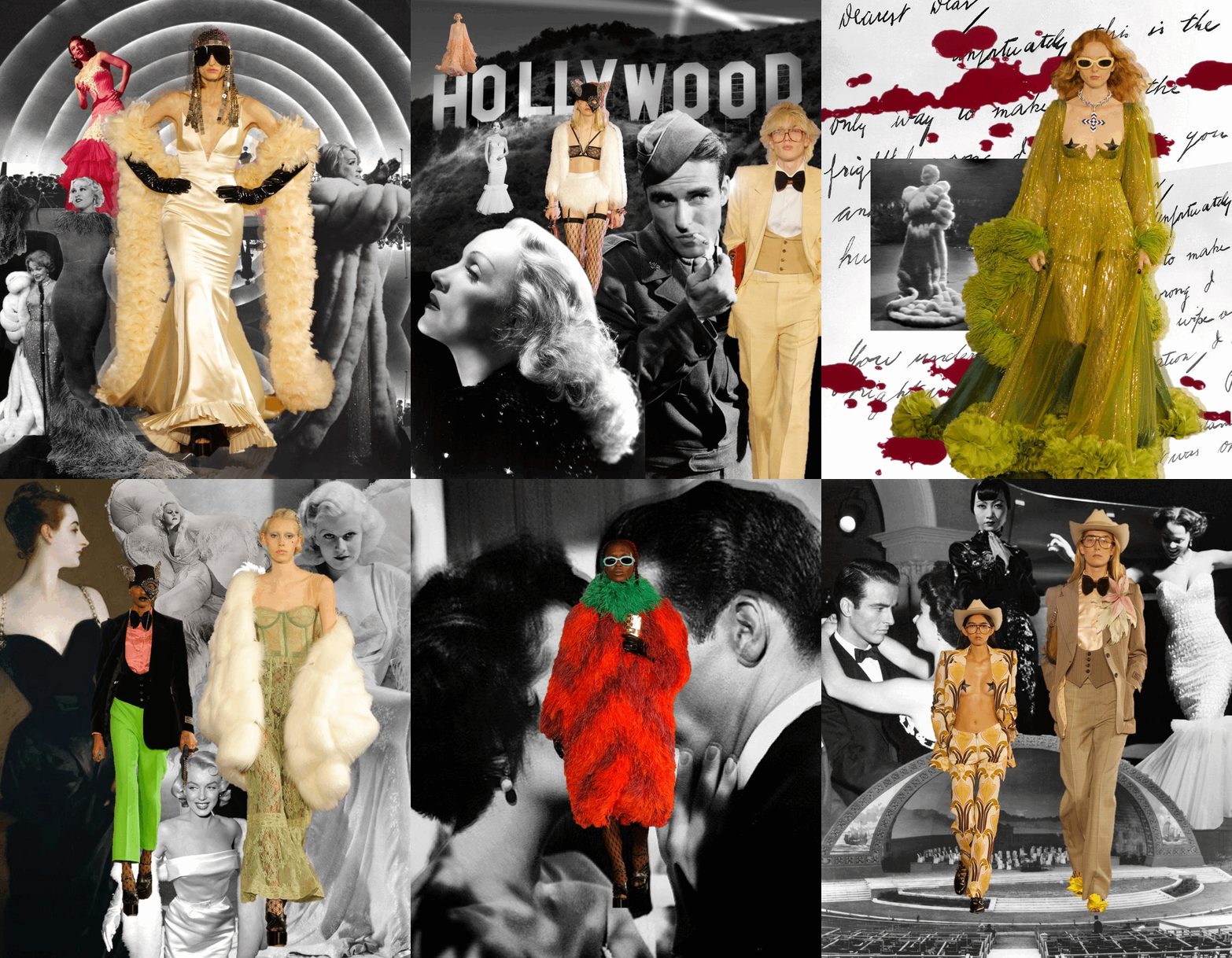
Love Parade. Gucci SS22

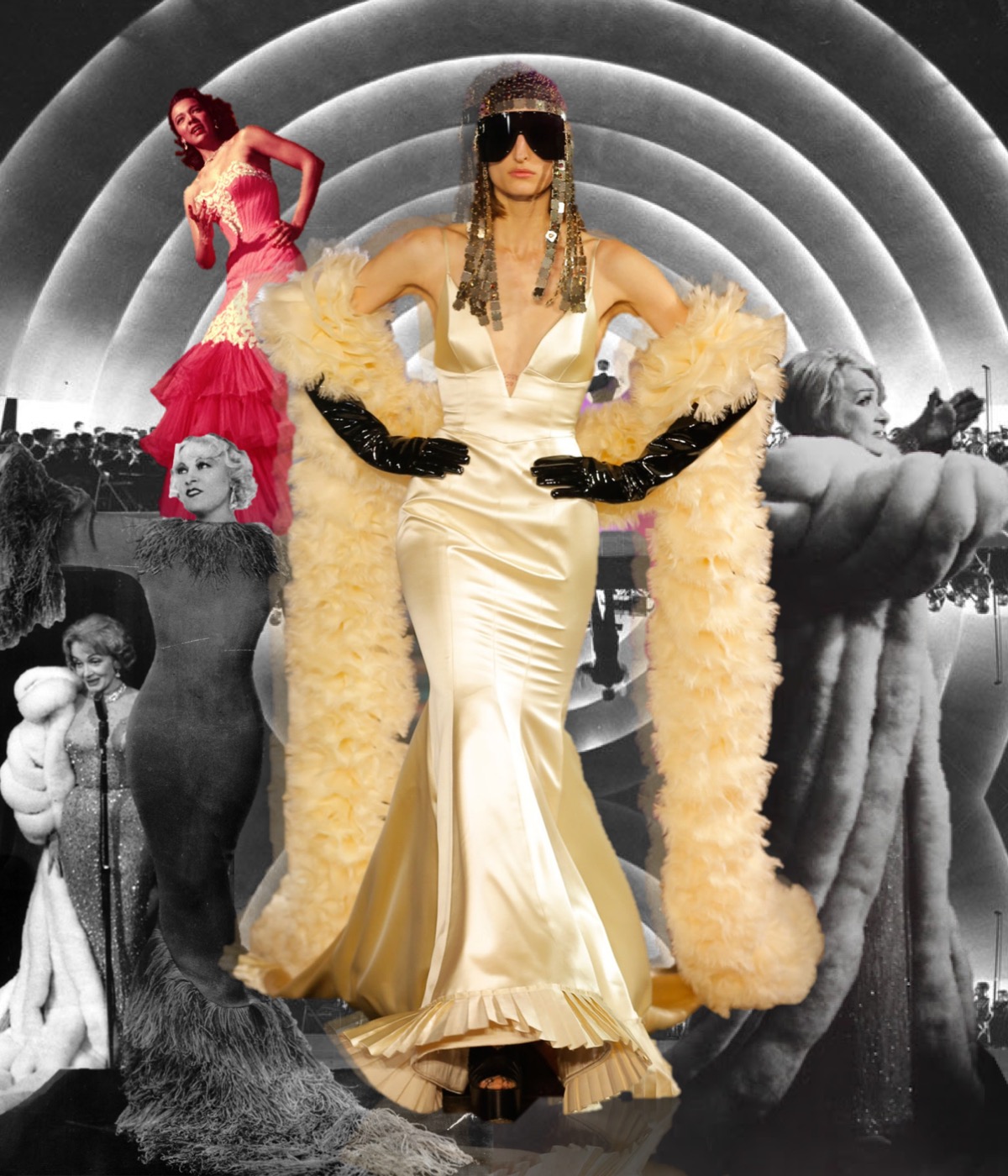
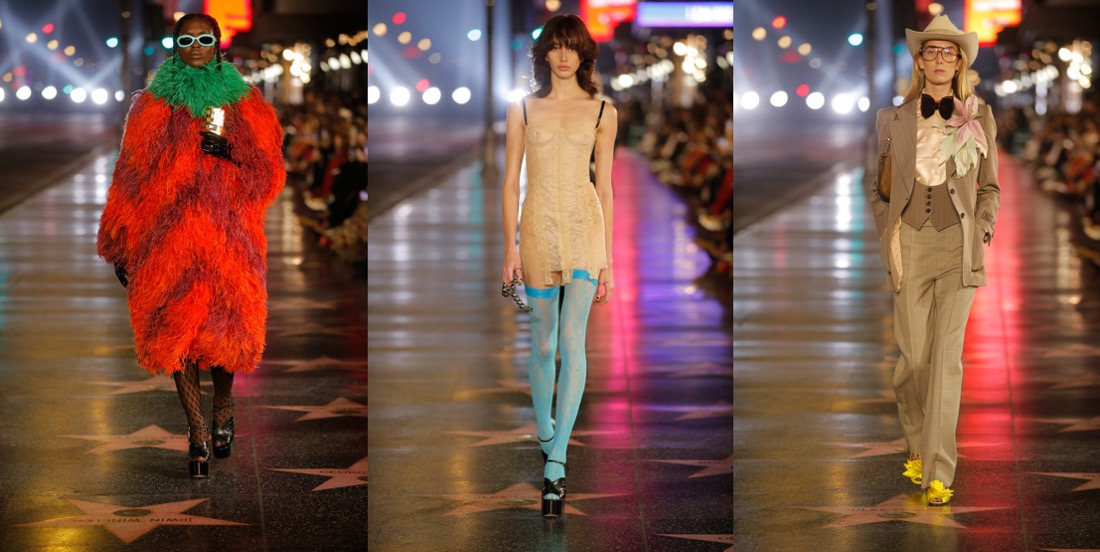
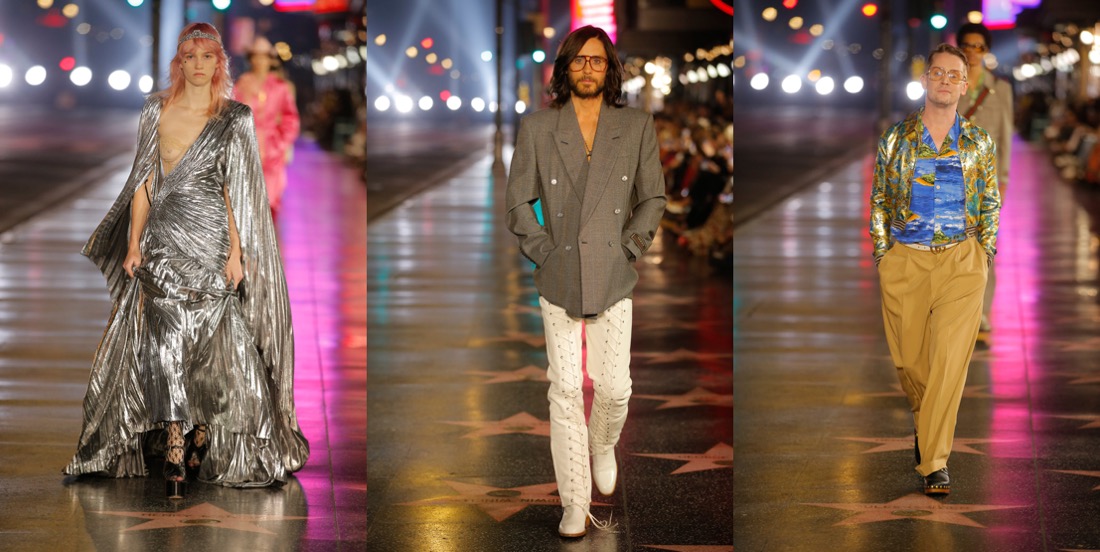
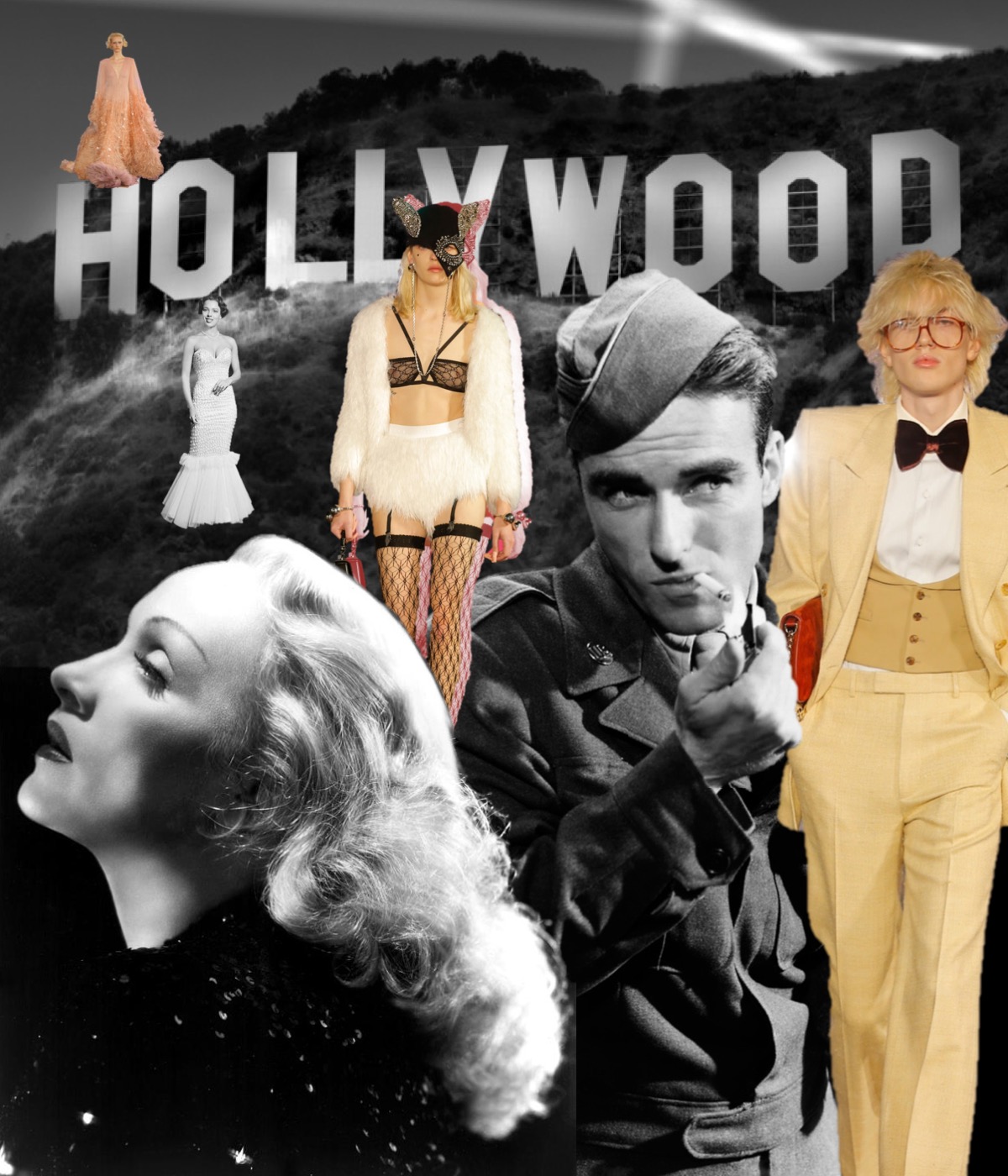
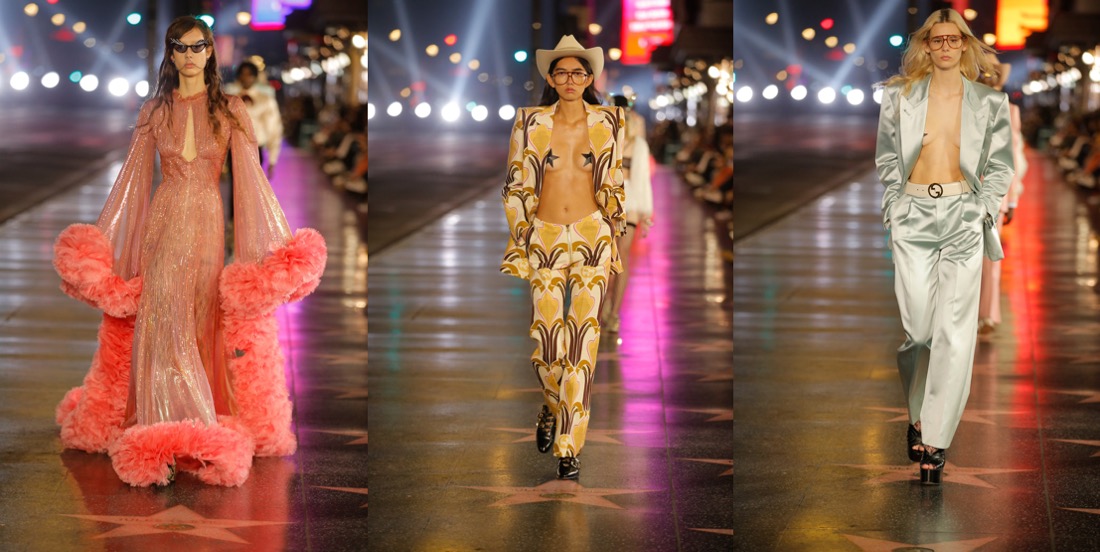
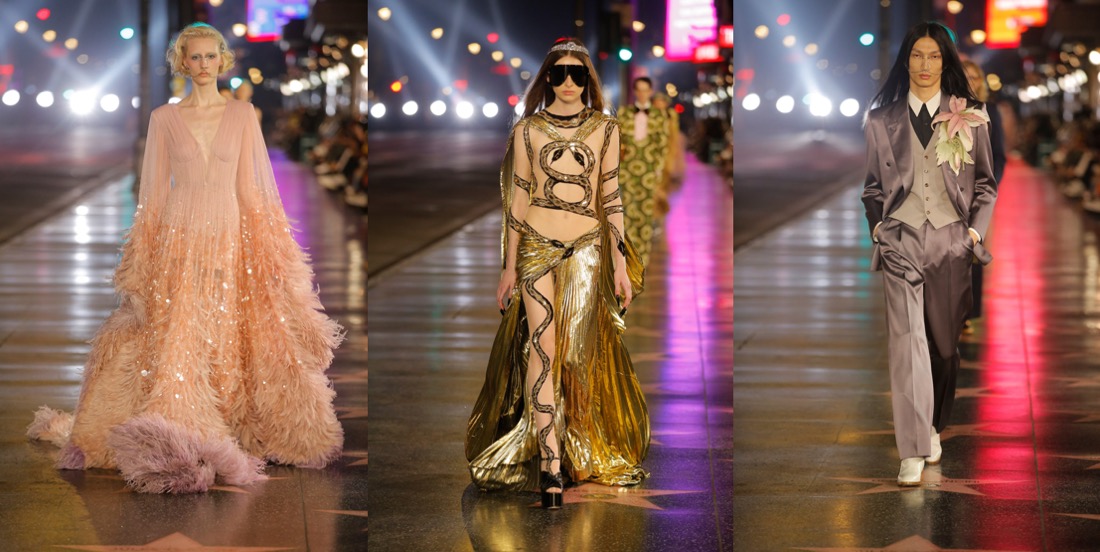
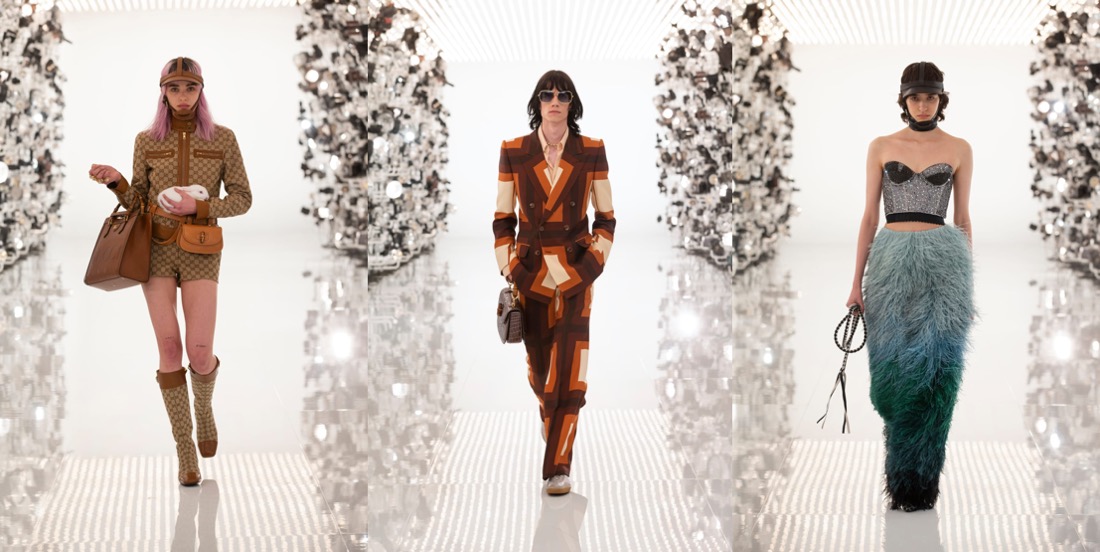
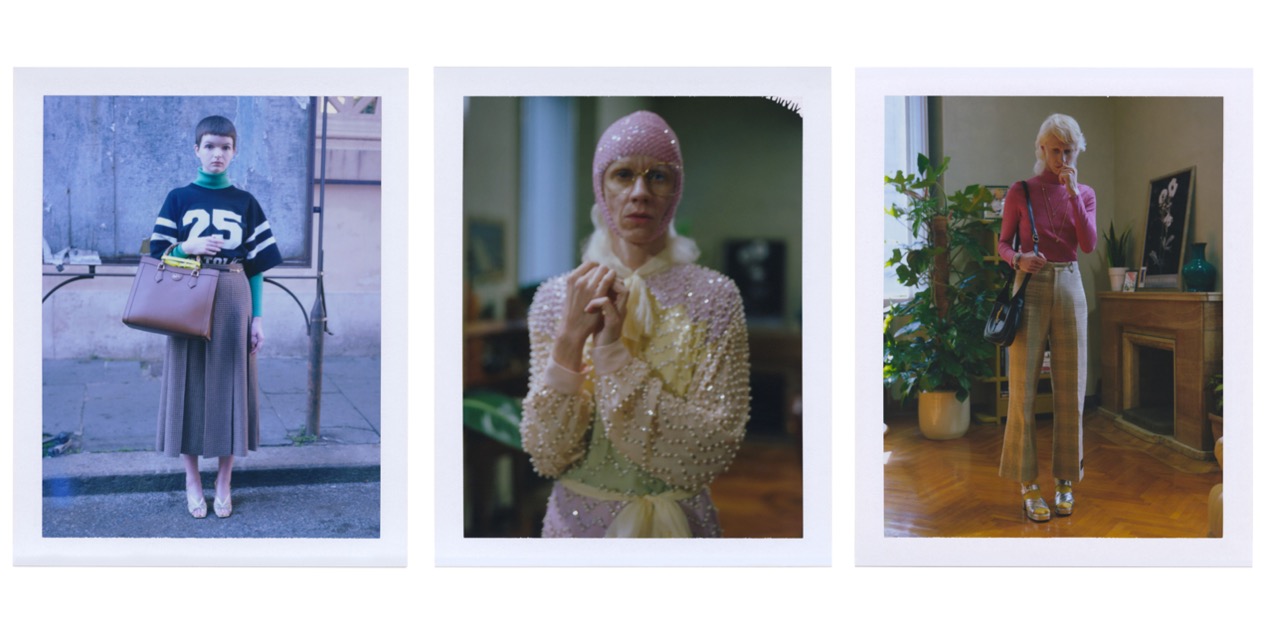
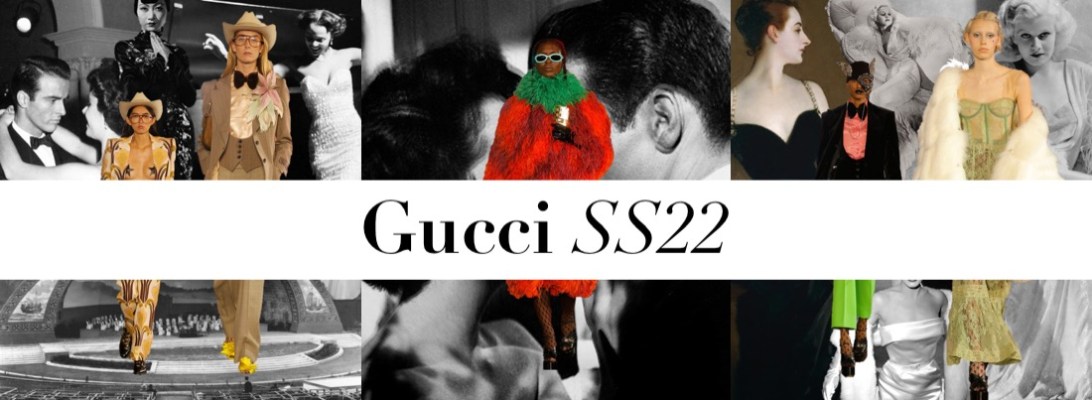
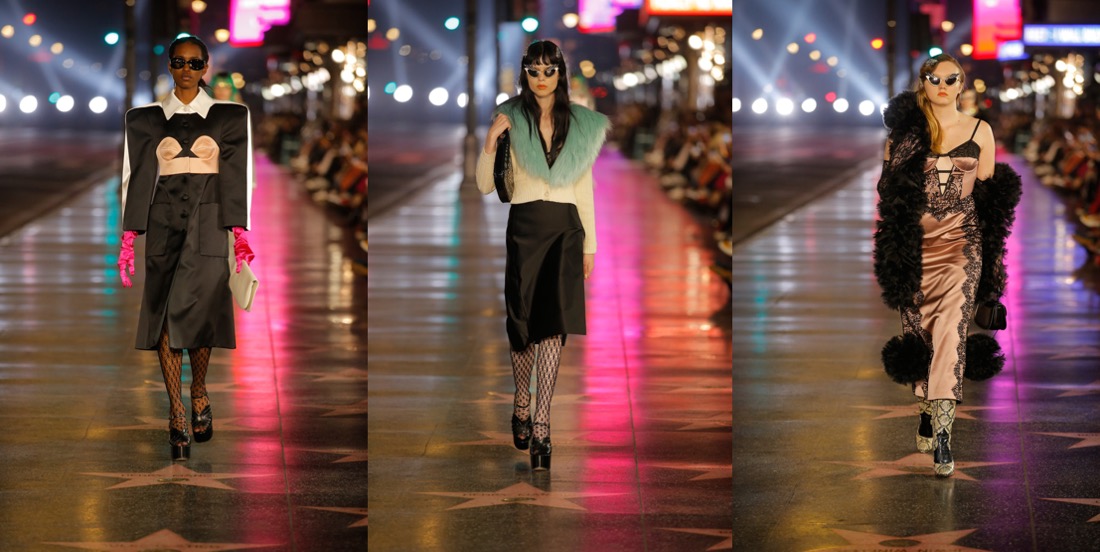
Alessandro Michele‘s latest Gucci adventures are just beyond words. Going for extreme glamour after nearly two years of lockdown style is the best thing one can come up with for spring-summer 2022. But Michele pushed the envelope in festive dressing even further. Gucci’s name has long been linked with Hollywood, long before the upcoming “House of Gucci” film starring Lady Gaga, and its connection with the movies was everywhere you looked at Alessandro Michele’s fab fashion show. There, in the front row, was Gwyneth Paltrow, wearing an updated version of the Tom Ford-designed red velvet Gucci tux she sported circa 1996. And there, on the runway, were a dozen celebrity “friends of Gucci,” including Macaulay Culkin, Miranda July, Jodie Turner-Smith, Phoebe Bridgers and Jared Leto. The backdrop was the iconic Chinese Theater and Hollywood Boulevard itself – “that temple of the gods,” Michele called it. The designer credits his mother, a movie buff and an assistant in a production company, with encouraging his love of old Hollywood. But equally this collection was about contemporary Los Angeles, a place the designer first visited at the age of 27 and that he has much affection for. “LA is not a fashion city, but it’s so fashionable,” he said backstage before the show. “Sometimes they are not appropriate, but in being not appropriate they are so precise. Maybe it belongs to my way of looking at fashion – it’s personal.” When it was finally time to return to in-person shows after two seasons of the virtual experiences that lockdowns required, Los Angeles seemed the obvious choice. Seven years into his Gucci tenure, he’s presented in New York, Paris, Rome, and most often Milan, but Michele’s collections have never made more sense than this one did tonight on Hollywood Boulevard, with its neon lights and Walk of Stars. At the post-show press conference, Michele said he originally wanted to be a costume designer. He spent part of the day today at the freshly opened Academy Museum of Motion Pictures, where he admired a bow-covered Shirley Temple dress, among other pieces. On the topic of special occasion dresses, it’s fair to say he raised the bar for himself this season. With their cinematic sweep, if his gowns don’t make it to a museum, we’ll surely be seeing them soon on an awards show red carpet. With his hungry eye, he’s absorbed all manner of Hollywood tropes, and mixed in with the screen sirens were would-be stars fresh off the bus in calico dresses, with dreams as big as their 10-gallon cowboy hats. “My Hollywood is in the streets,” he said, and the sartorial-sporty mix of wide-lapeled jackets worn with brightly colored knit leggings and running sneakers did look lifted from real life, combining post-pandemic polish with the famous California ease. As for the sex-toy jewelry, and the erotic undercurrent of skintight latex and see-through lace, Michele reminded the press conference crowd that Gucci isn’t a “monarchy of bourgeois” like many of its heritage brand peers, but has its roots in the “jet-set, artists, and cinema.” As Madonna once sang, “you get it right now, cause you’re in Hollywood”…
Collage by Edward Kanarecki.
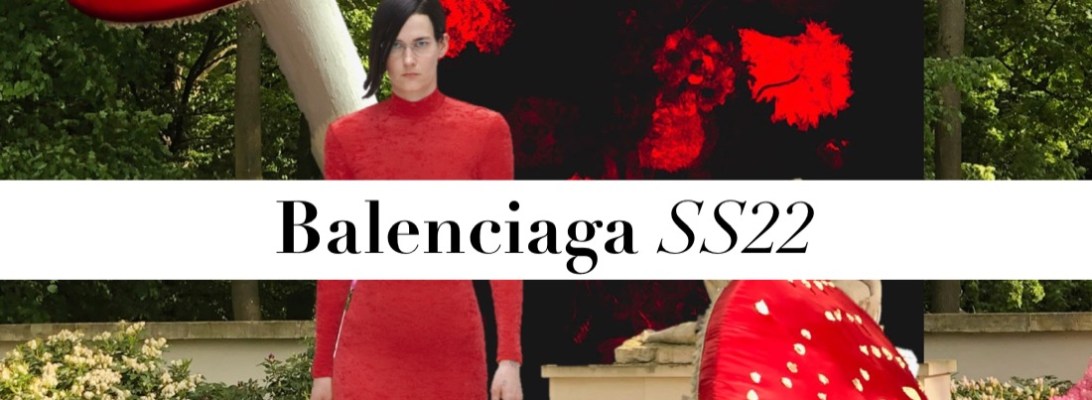
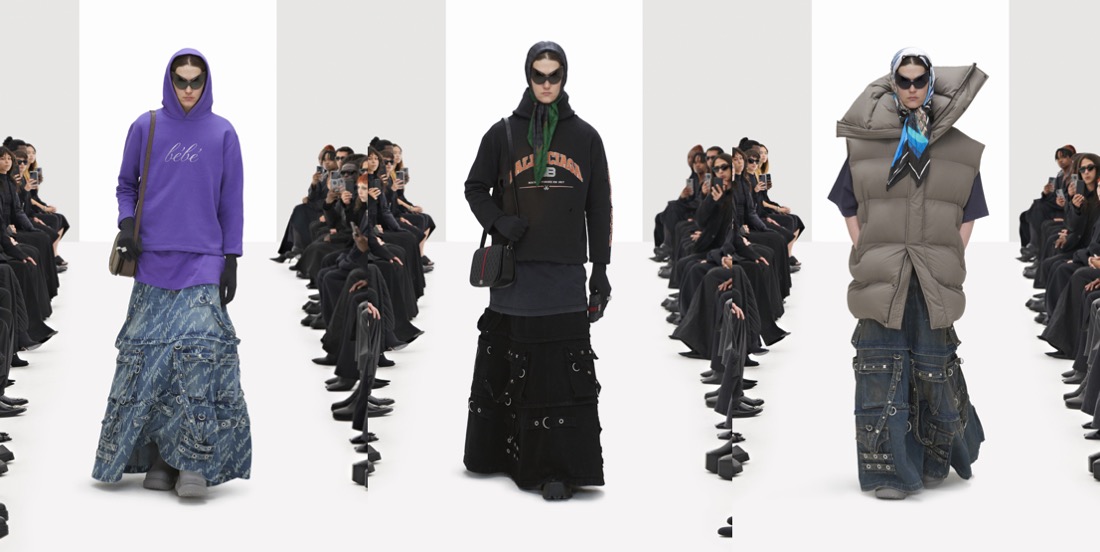
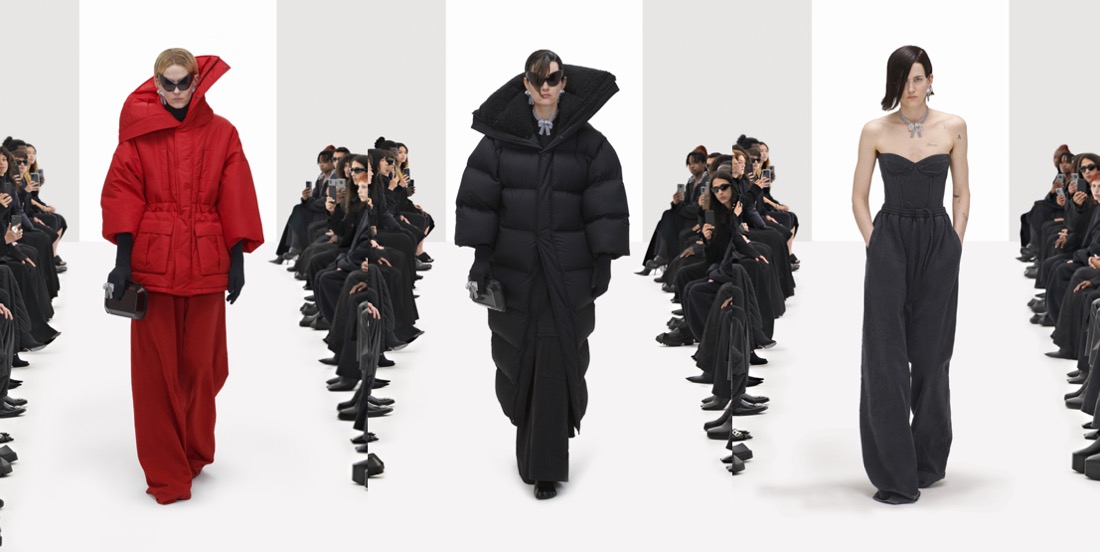
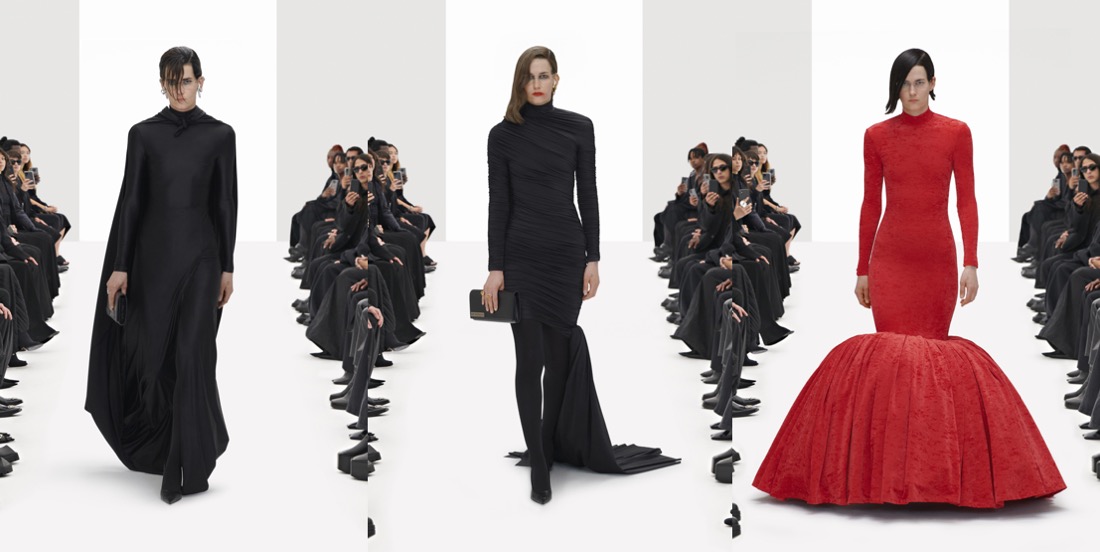
Fake Is Real. Balenciaga SS22

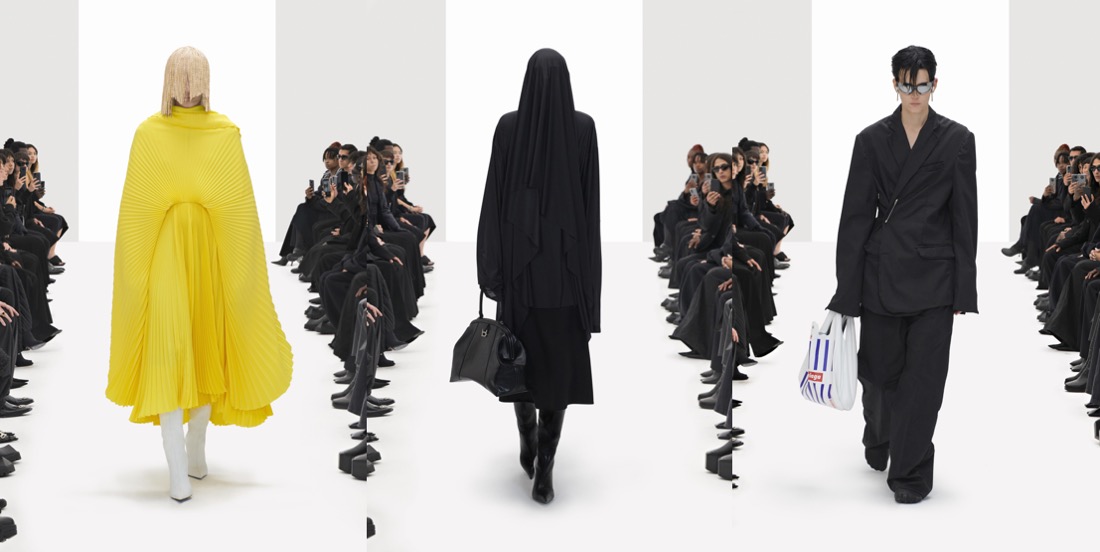
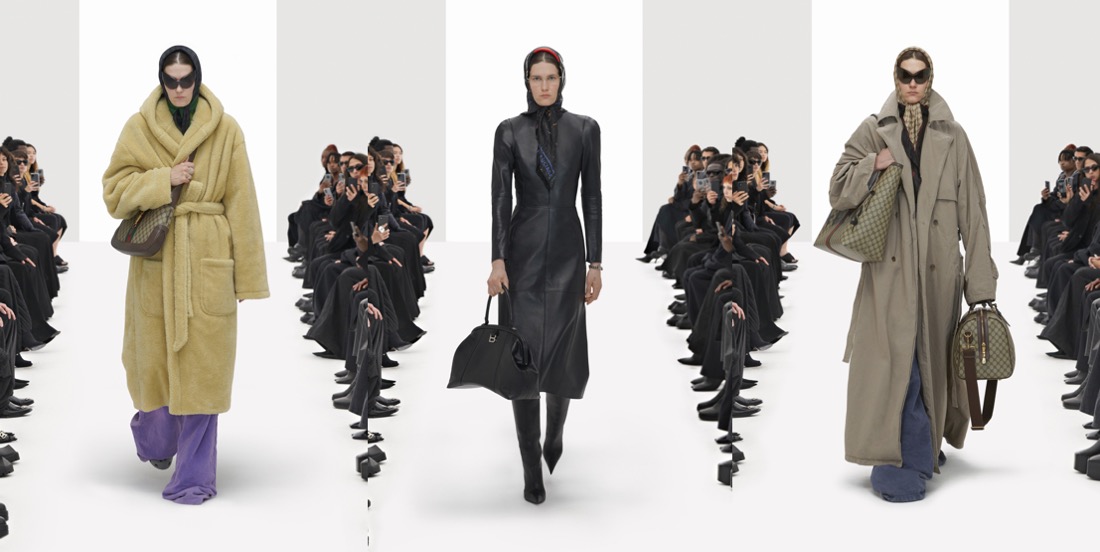
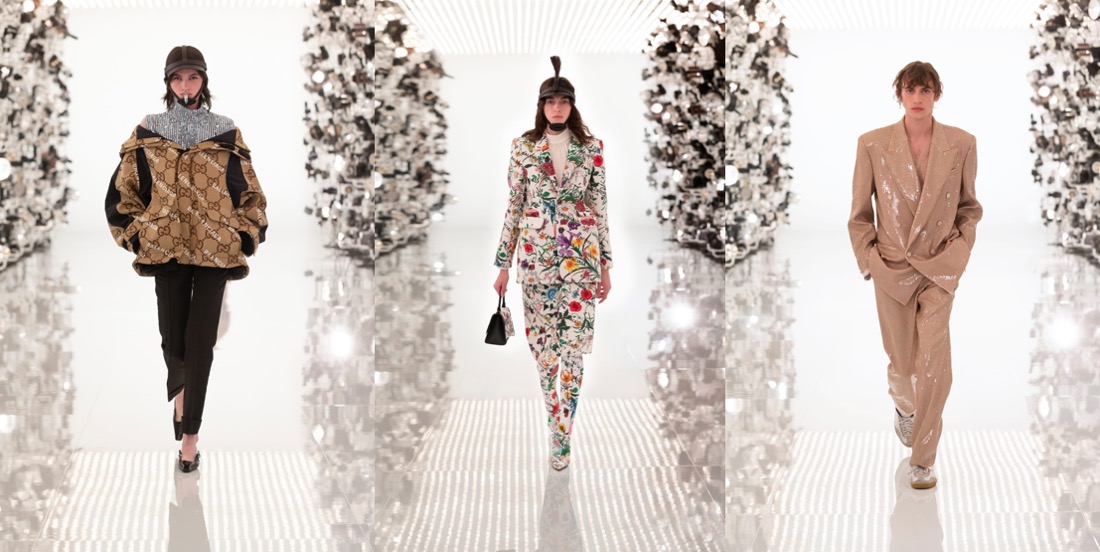
Balenciaga‘s Demna Gvasalia wouldn’t be Demna Gvasalia if he didn’t sprinkle a pinch of irony to his fashion. “It’s a deep fake of a fashion show,” declared the designer ahead of the launch of the ultra-high-tech video for his spring-summer 2022 “Clones” collection. “What we see online is not what it is. What’s real and what’s fake?” Ostensibly, one model – the artist Eliza Douglas, who has opened or closed Balenciaga shows since Gvasalia’s first collection for the house in 2016 – appears wearing both women’s and menswear on a white runway in front of a black-clad audience. But no one was “there” and no one is “real.” “It’s a show that never happened,” Gvasalia laughed. “But the clothes are real; they were made.” Accompanying information came in a deluge of language detailing the techniques the video producer Quentin Deronzier deployed to fake up Douglas’s appearance: photogrammetry, C.G. grafting of her scanned face, planar tracking, rotoscoping, machine learning, and 3D modeling. We’re in a new world now, in large part because all designers have had to grapple with 15 months of the pandemic preventing real-life show gatherings. What’s the alternative onscreen? Gvasalia, for one, has delighted in grabbing the opportunity to shift the medium of brand Balenciaga ever further into the realms of multilevel, conversation-and-meme-generating entertainment. There’s the Hacker Project – this season’s return match with Gucci, in which Balenciaga has “stolen” classic Gucci bag shapes and reprinted them with BBs instead of GGs, just as Alessandro Michele reproduced Demna Balenciaga patterns and diagonal branding in his last collection. There’s a Gucci best seller GG buckle belt redone with BBs too. “Alessandro and I are very different,” Gvaslia remarked. “But we both like to question this whole question around branding and appropriation…because everyone does it, whether they say it or not.” One of the totes comes knowingly scrawled with the graffiti legend “This is not a Gucci bag” – a reference to René Magritte’s 1929 painting The Treachery of Images. Questioning the authenticity of what we’re looking at has been going on in art since Surrealist times. The result here: a perfectly oxymoronic range of “genuine counterfeits” for our mind-twisted times. Other than the Gucci clash, there’s no mistaking Gvasalia’s roster of signatures: the supersized tailoring and coats; the loose printed dresses; the ski jackets, hoodies, and streetwear; the cyber-Gothic denim; the severely elegant eveningwear. With them, a vast range of distinctive Balenciaga accessories, from a reissue of the Crocs collaboration to the diamanté bow jewelry that originated in the house archive. There’s a part of Gvasalia that wanted to illuminate his fake runway with a bit of light and hope, he said. The first look to step out, in black velvet with a heavy veil, refers back to his prophetically apocalyptic show of February 2020. “It’s almost like mourning something, where we’ve all been,” he said. “But I wanted it to go into a bright space. And I ended it with a red ballroom dress.” After the retreat of the Balenciaga clones, he has the exact opposite planned: the showing of his much-anticipated first haute couture show, in real life, in Paris in early July. Handmade, in the works for more than a year, in front of a small audience, it’ll be his next big creative step forward. Can’t wait.

“Live” collage by Edward Kanarecki.

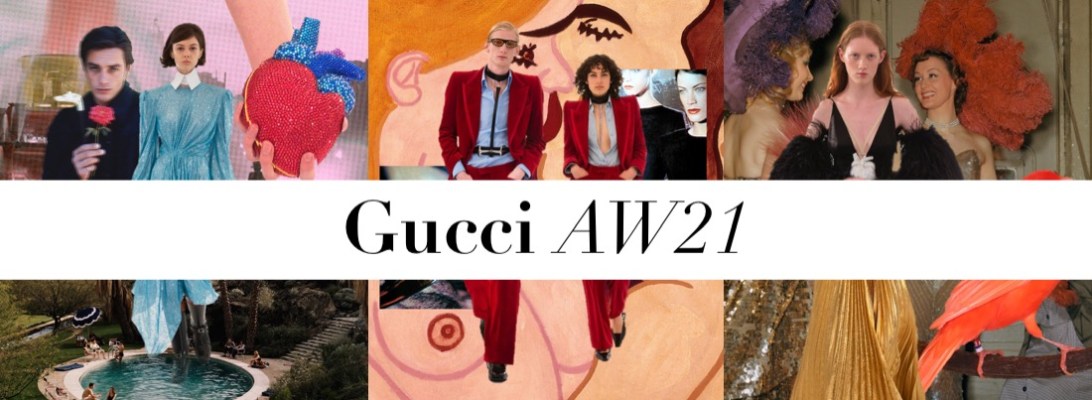
Aria. Gucci AW21

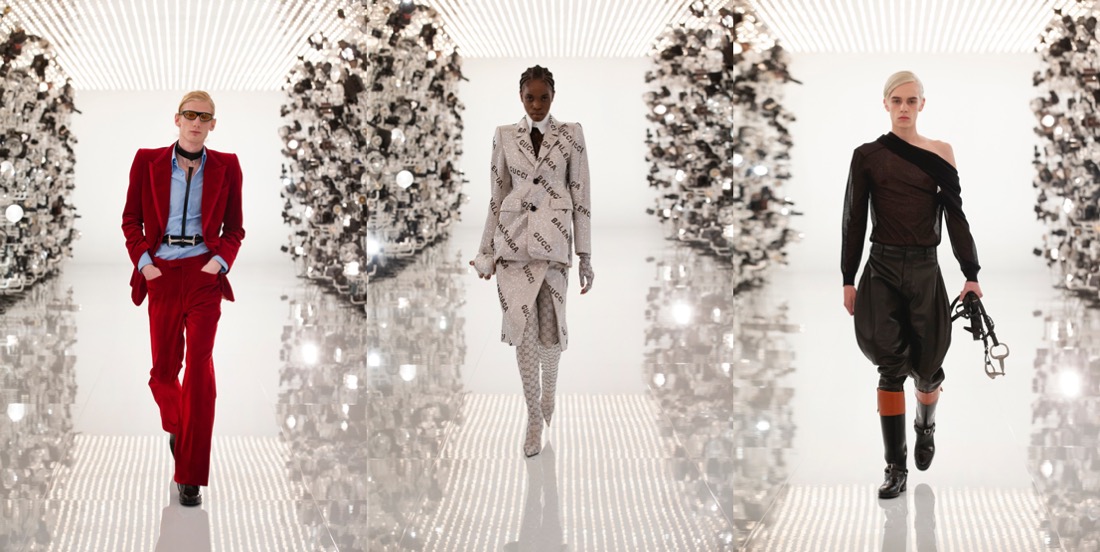
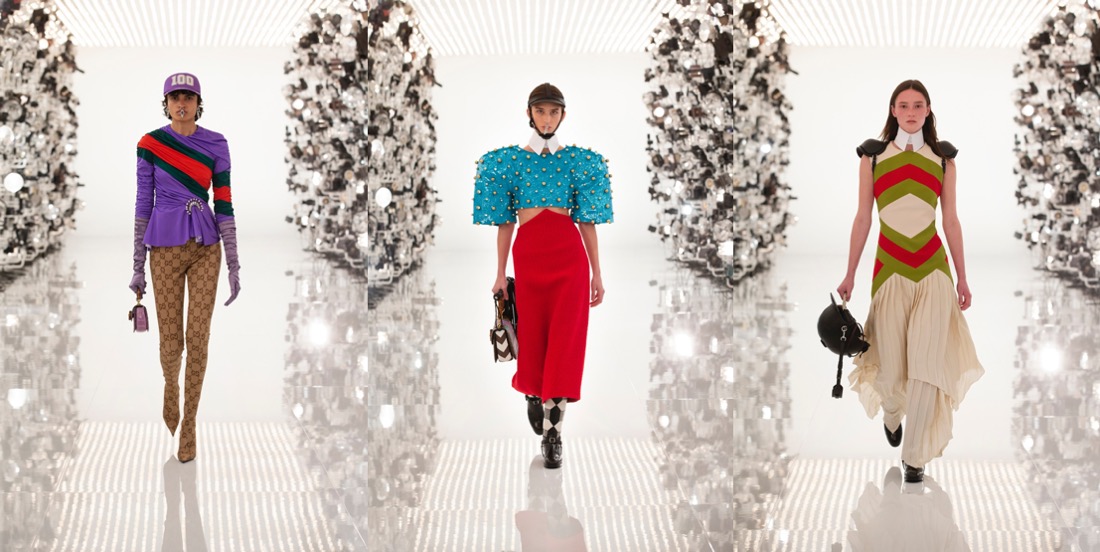
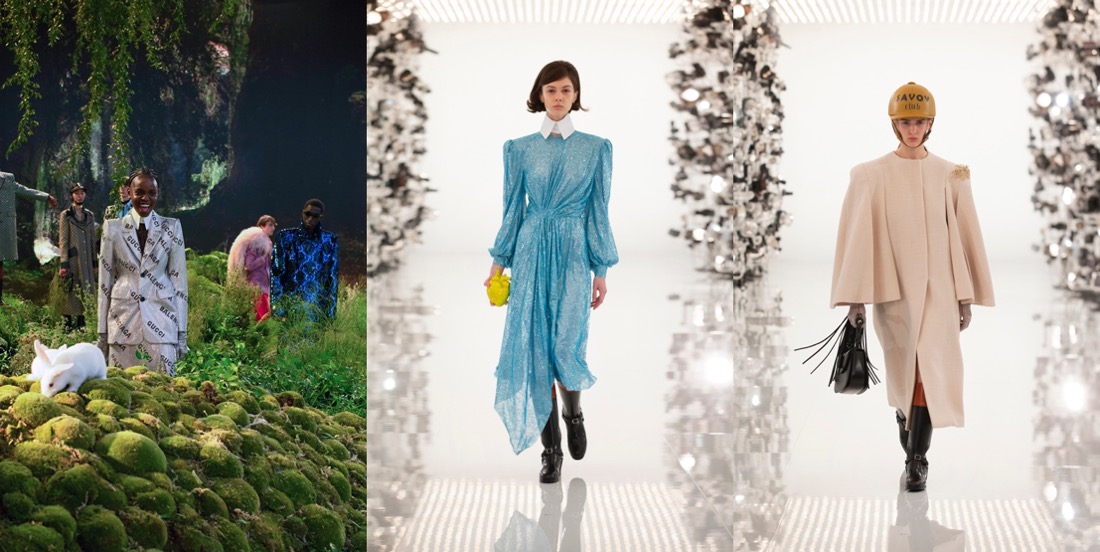
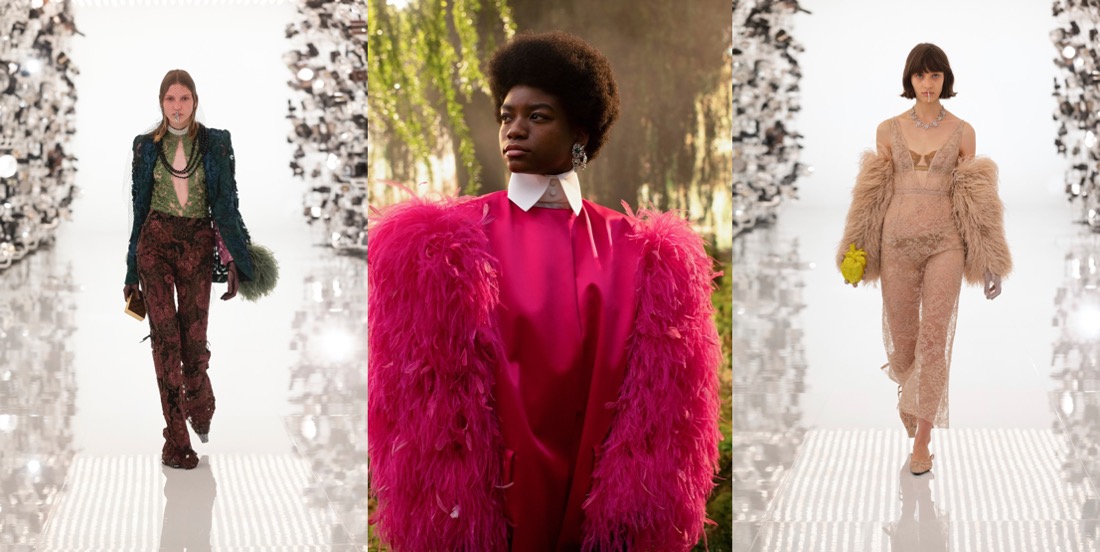
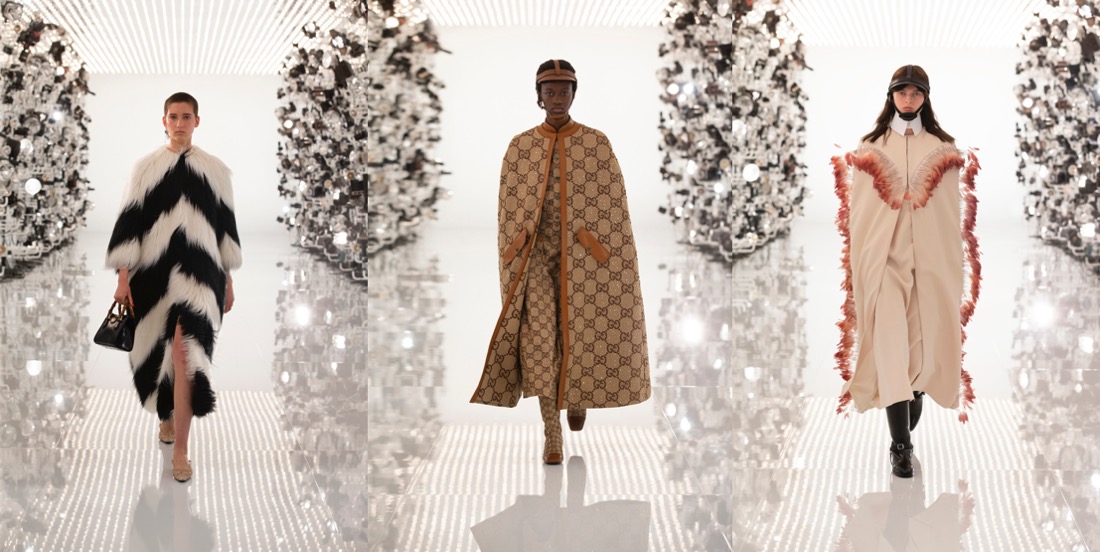
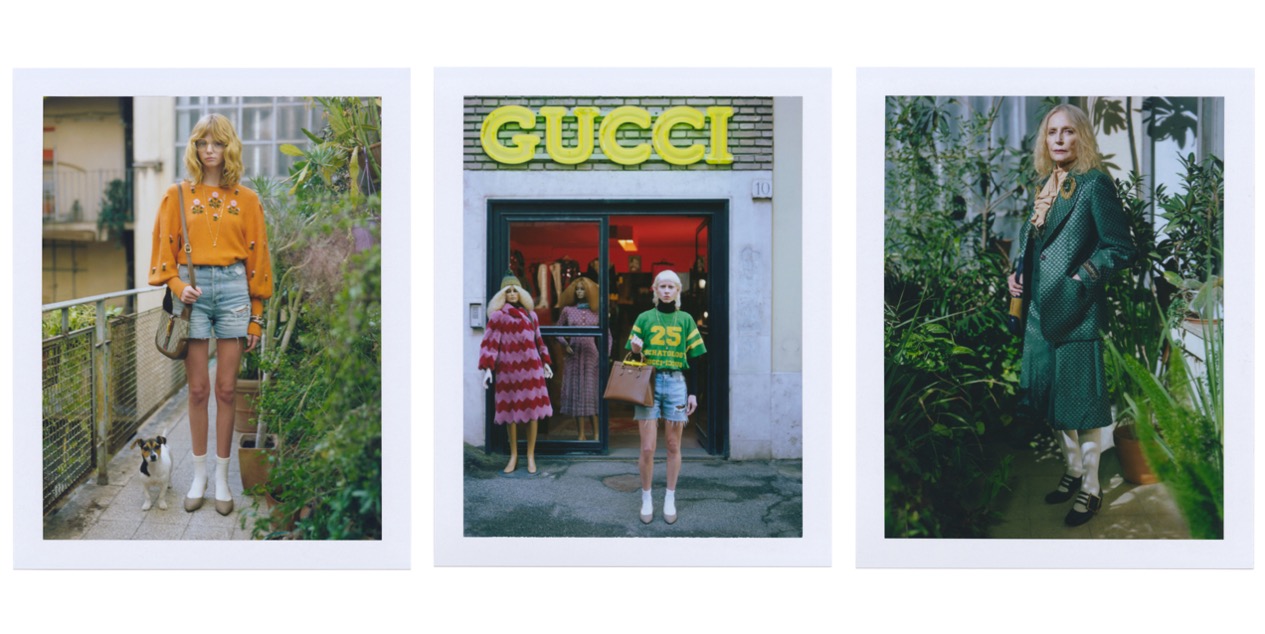
Gucci turns 100 this year, and Alessandro Michele’s new collection is a very bold and sexy celebration of that milestone. Not unexpectedly it reexamines the house’s history. Michele picked up on Gucci’s equestrian codes, giving them a fetishistic spin – one model cracked their whip as they made their way down the runway. He also reprised one of Tom Ford’s greatest hits, the red velvet tuxedo from autumn-winter 1996, with tweaks including new, more pronounced shoulders, a leather harness, and versions for both men and women. More surprising were the pieces that Michele “quoted” from Demna Gvasalia’s Balenciaga, another brand in the Kering stable. As the show began and social media started pinging with chatter about the collaboration, a press representative clarified that this was not in fact one of fashion’s familiar hookups but rather the first output from Michele’s so-called hacking lab. With Gvasalia’s permission, Michele used some of the Balenciaga designer’s iconic shapes and symbols, including the padded hip jacket from 2016 and spring 2017’s spandex peplum top and leggings. All these things mixed and mingled with his own symbols (glitter for day, copious amounts of marabou, and anatomical heart minaudières encrusted with rhinestones) alongside a vital new emphasis on classic tailoring. In that hacking, Michele has something in common with the sample-loving musicians on his soundtrack (from Lil Pump’s “Gucci Gang” to Die Antwoord and Dita Von Teese’s “Gucci Coochie). But it’s a rarer occurrence in fashion, a point made clear by a written statement from François-Henri Pinault, Kering’s chairman and CEO: “I have seen how [Alessandro and Demna’s] innovative, inclusive, and iconoclastic visions are aligned with the expectations and desires of people today,” he said. “Those visions are reflected not only in their creative offerings but also in their ability to raise questions about our times and its conventions.” The industry will be watching how, with whom, and where this concept goes next. Gucci is as pop as fashion brands can be. Michele gets that on a fundamental level, and he understandably relishes that he’s a culture maker as much as a designer of clothes and accessories. “Young people look at the brand as a platform, a place. They visualize Gucci a million different ways, a million different times,” he told Vogue. Hence the music video he made with his friend, the filmmaker Floria Sigismondi. After walking the gauntlet of old-fashioned cameras that lined the runway, like superstars working a red carpet, the models paused in a darkened anteroom before pouring out into an imaginary forest where they cavorted with white horses, peacocks, and cockatoos. The film closes with one of those crystalized heart minaudières lifting into the air. It’s a post-pandemic dreamscape. And finally, a great example of a fashion (show) film.

“Live” collage by Edward Kanarecki.

Ouverture Of Something That Never Ended. Gucci SS21

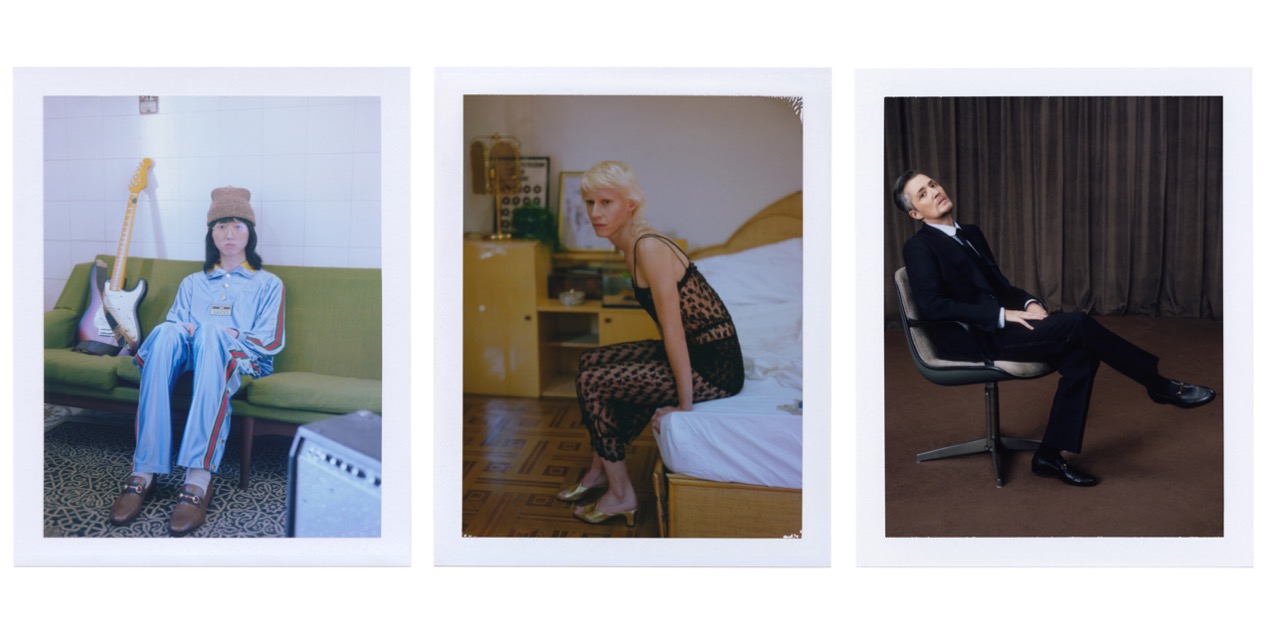
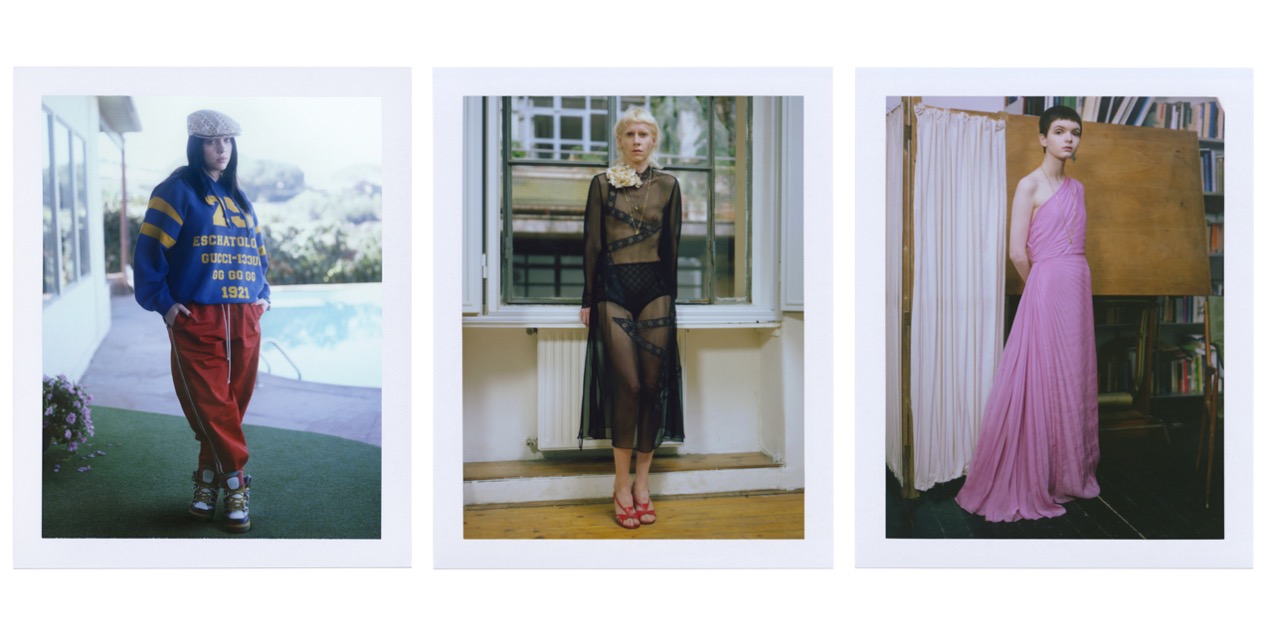
COVID-19 made fashion rethink many matters, from fashion week schedules to overproduction, but most of all, it accelarated the reflection on how to show a collection to wide audience, through the digital media, in the most appealing ways. Most of brands come up with a video or film. But the latest example takes notes from Netflix. Gucci‘s Alessandro Michele hired the one and only Gus Van Sant to make seven-episode miniseries that were shown one by one, for the entire week. At moments, the experience was bumpy. The poll I’ve made on Instagram mid-week suggested that 75% no longer paid attention to the digital Gucci event. While the visuals of Ouverture Of Something That Never Ended were striking, Silvia Calderoni’s acting was phenomenal and Gucci celebs appearances were amusingly witty (Harry Styles made a cameo wearing a pink tee tucked into denim shorts, and pronounced his improvised modern-day art manifesto: “when it comes to making art it’s about finding the thing you’ve always wanted to see that has never been made. It’s always an uncomfortable moment, I think, when you find the thing. You don’t know if you love it or hate it because you don’t really know what it is yet. But I think that’s the most exciting place to work in“; Florence Welch glided through a Gucci-fied vintage store and slipped handwritten notes into the pockets of jeans or the purse of a passerby; Billie Eilish performed her new song and danced with her pet robot dogs in what looked like the suburbs of L.A.), the focus on the clothes was hard to comprehend. Fashion films are pretty much always product-driven and lack substance, and here it was quite the opposite. There was plenty of substance, but I felt there was not enough of the collection itself. Maybe, as some editors suggested, the episodes could be shoppable? It would be great to find that golden balance. The miniseries streamed on Instagram and on a dedicated site dubbed GucciFest, where the brand also supported videos made by 15 emerging designers from around the world – which was a lovely gesture. Once you finally look at the look-book to see the actual spring-summer 2021 (and pre-fall 2021) clothes, you will be surprised (or not so much) that Michele decided to utterly focus on the core of his Gucci. The 90 looks saw some most distinct signatures, as well as Alessandro’s archives (especially pieces from his first Gucci collections). There was pretty much nothing new, and the collection was free of bizarre over-the-topness that made the label feel just too much for me in the pre-pandemic times. So, the brand’s customer will be pleased with all the vintage-y, wearable styles that are just the right amount of quirk, while the rest of the audience might use the line-up as an inspiration-filled portfolio. It seems to say: “shop your closet, no need to buy new stuff“.

Collage by Edward Kanarecki.

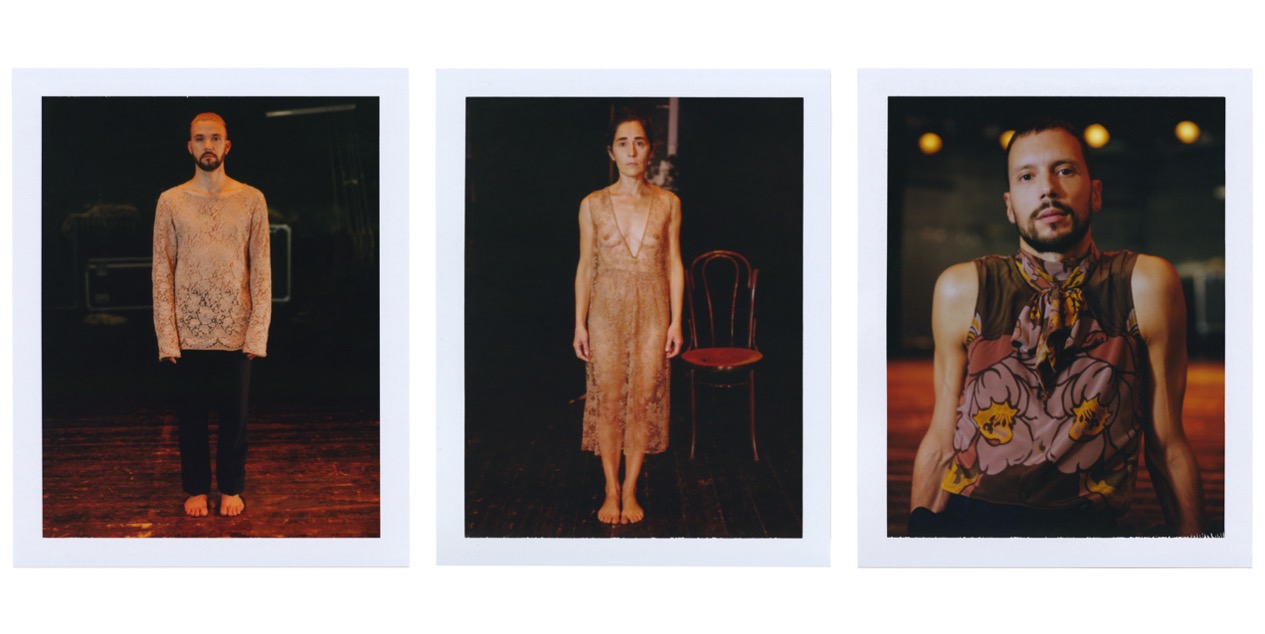
Gucci Team. Gucci Resort 2021

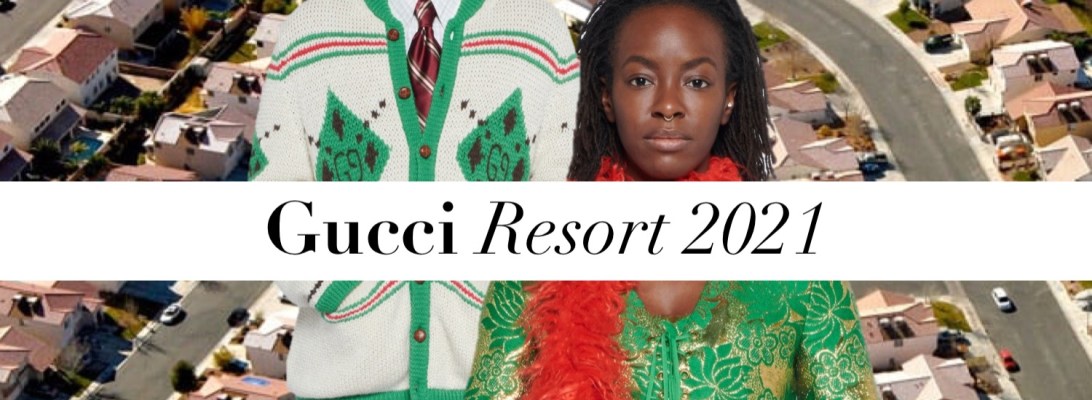
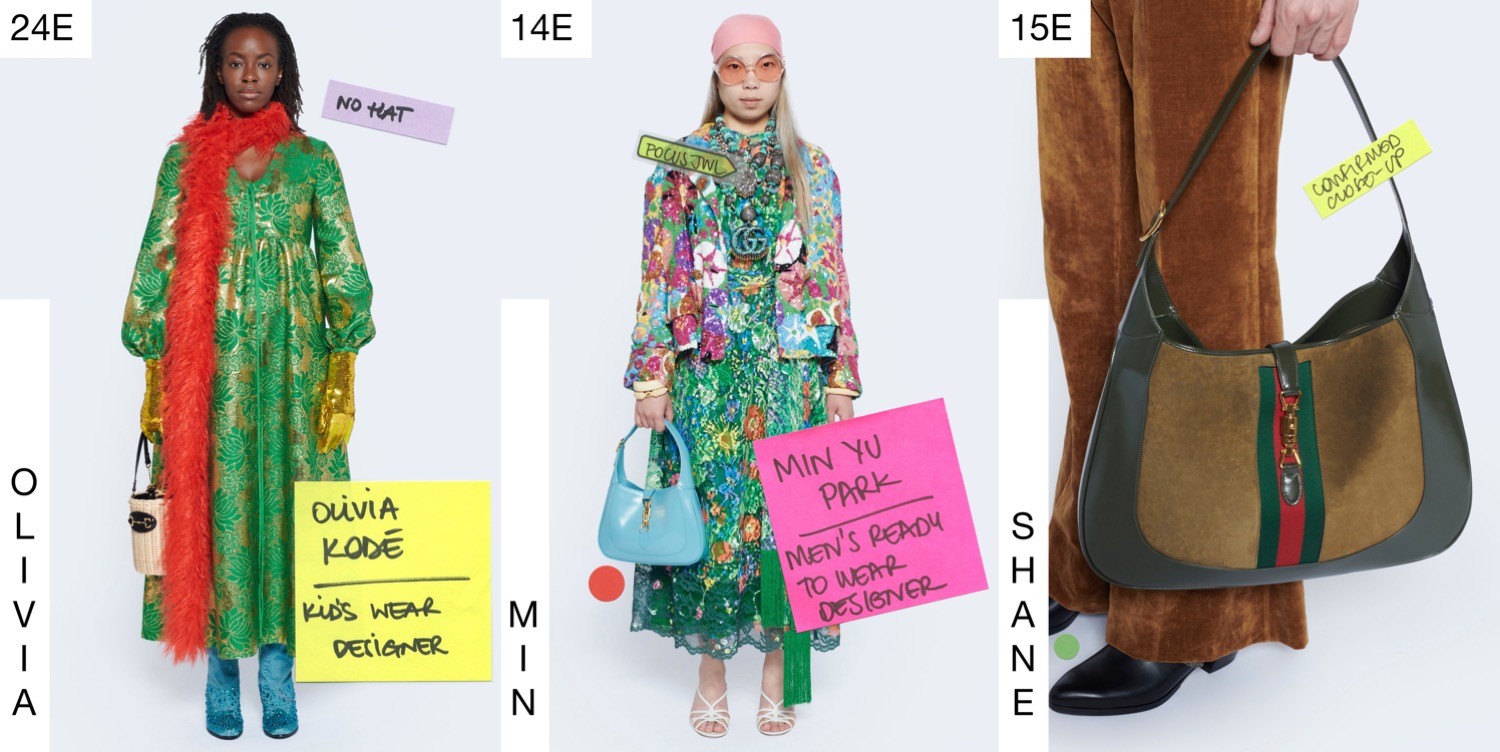
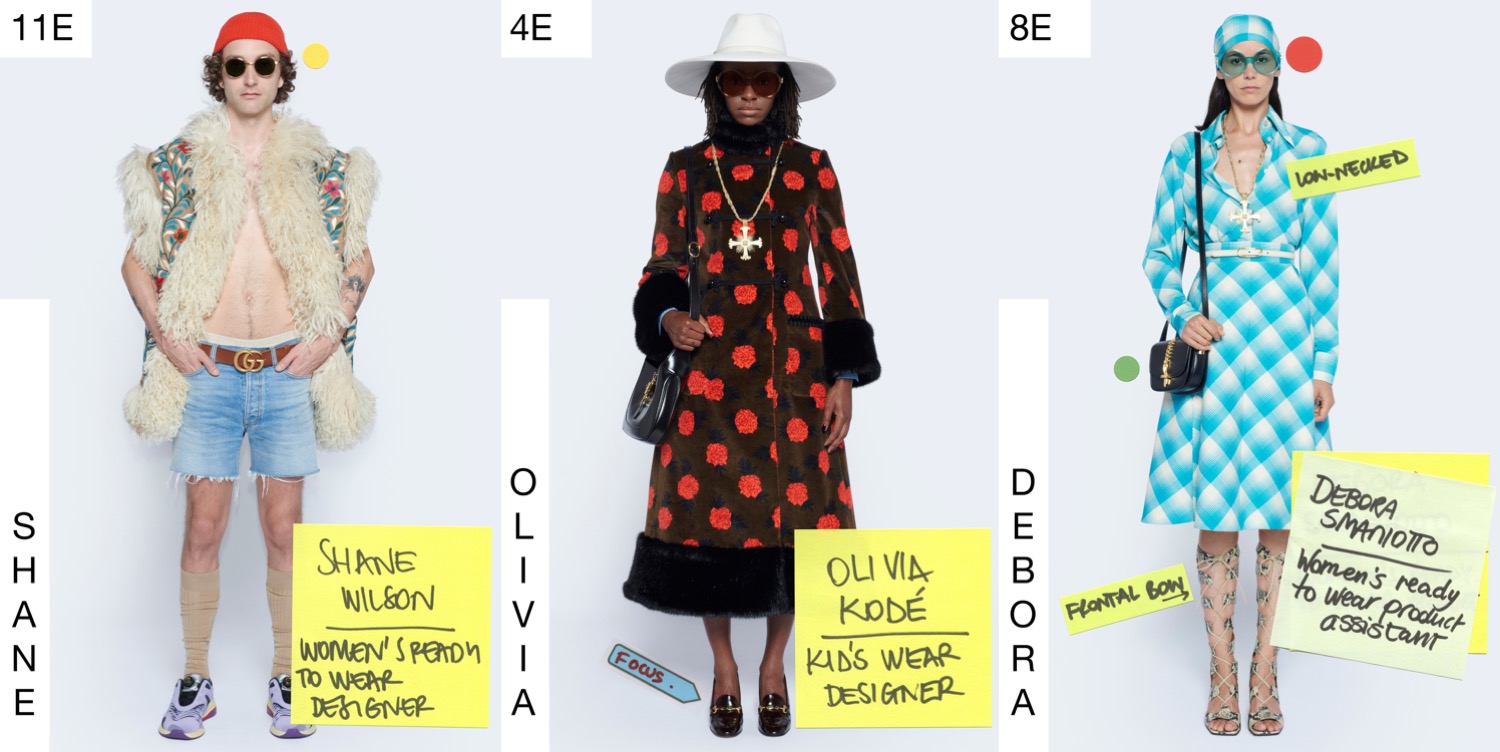
Last February, days before the coronavirus crisis broke out near Milan, Alessandro Michele staged a Gucci show in the round that was spectacular and intimate at once. In retrospect, it looks rather prescient: in inviting the audience behind the scenes and exposing the backstage goings-on of the hair and makeup crews and model dressers Michele was celebrating the very things that we’re all missing so badly in COVID-19-time: human interaction, collaboration, being part of a receptive audience. “Fashion is not just what we decide to show,” Michele said on a WhatsApp video call earlier this week. “The idea that a campaign is just a piece of paper? No, there is another show in the show.” The concept for the 12-hour livestream the brand produced for resort 2021, which the designer named “Epilogue,” and staged at the glorious Renaissance-era Palazzo Sacchetti in Rome with a natural soundtrack of cicadas, is to document the advertising campaign, to capture that “show within the show.” Only this time, Michele explained, “it’s less theater. This one will be more dirty. It’s a few cameras in a very Andy Warhol way, maybe they’re looking at nothing interesting. The experiment doesn’t work if I plan too much.” The Gucci designers working in his studio modelled the resort looks they worked on. On the WhatsApp call, he remembered a time as a young designer when a piece he was making was pulled for a show or a shoot and he didn’t see it again. “It was like someone tried to take from you your son.” Spotlighting his colleagues was “something beautiful,” he said, “they were so happy.” As for the clothes themselves, Michele called them “a celebration of my point of view, things that I did in the past, pieces that belong to my aesthetic.” That aesthetic is as singular and idiosyncratic as ever. Min Yu Park, a men’s ready-to-wear designer wears a beaded floral jacket, a floral lace dress, and a turquoise necklace that matches her Jackie bag. Alexandra Muller, an embroidery designer, models a long filmy floral-print ruffled dress with clear sequins that pick up the light. David Ring, a celebrities designer, sports an embroidered velvet blazer, a striped tee, logo flares, and sneakers. Just taking a glace at the clothes tells you right away: Gucci. Back in May Michele announced Gucci’s reduced show schedule. This may be the brand’s last resort collection, but the name “Epilogue” might be a misnomer. The learnings of lockdown – the importance of his team, the value of feeling – will stick with him, he thinks. “It’s not just a way to close, but to say what we’ve done and put seeds of what will be in the next chapter. Yes, it could also be a beginning.

Collage by Edward Kanarecki.