
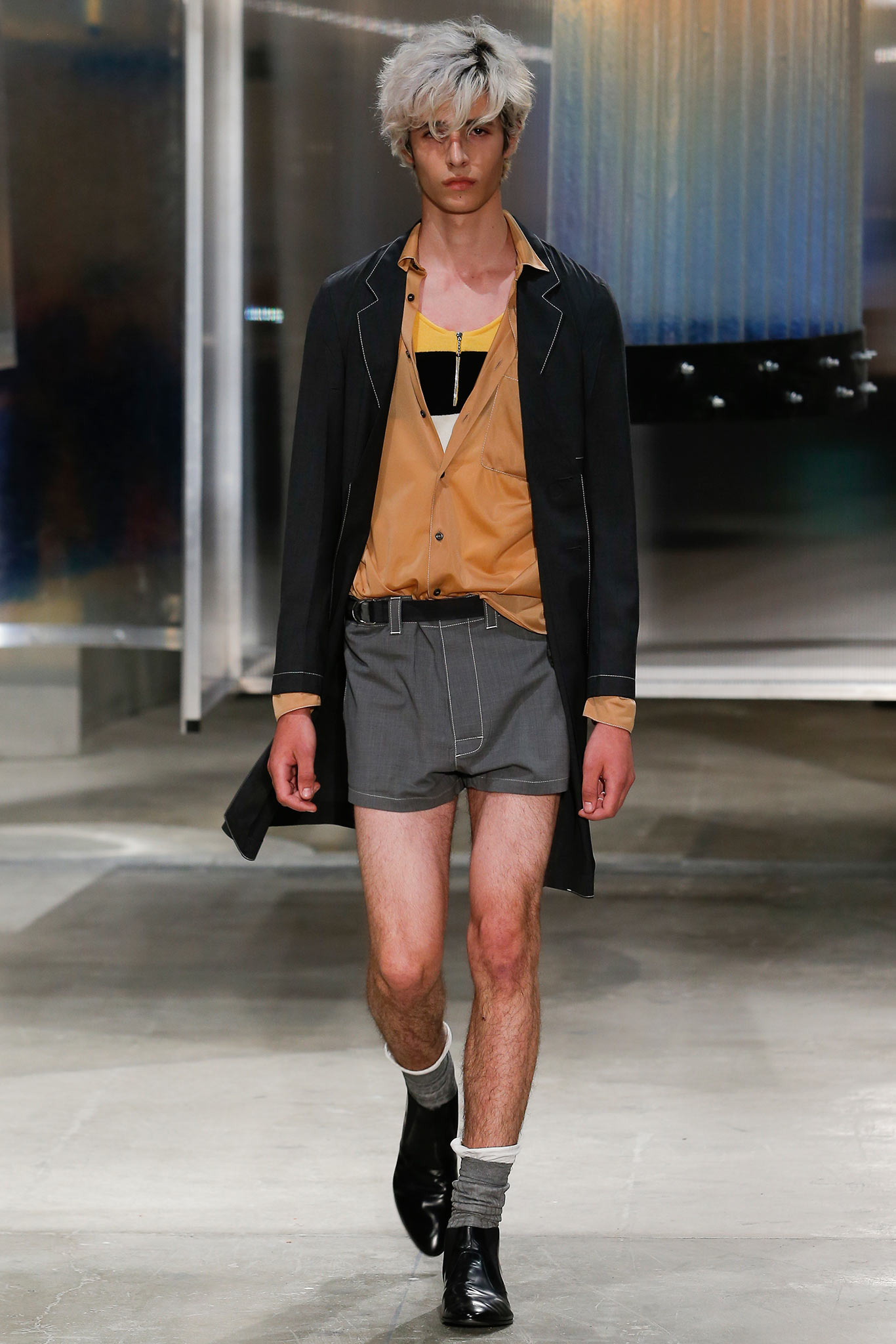
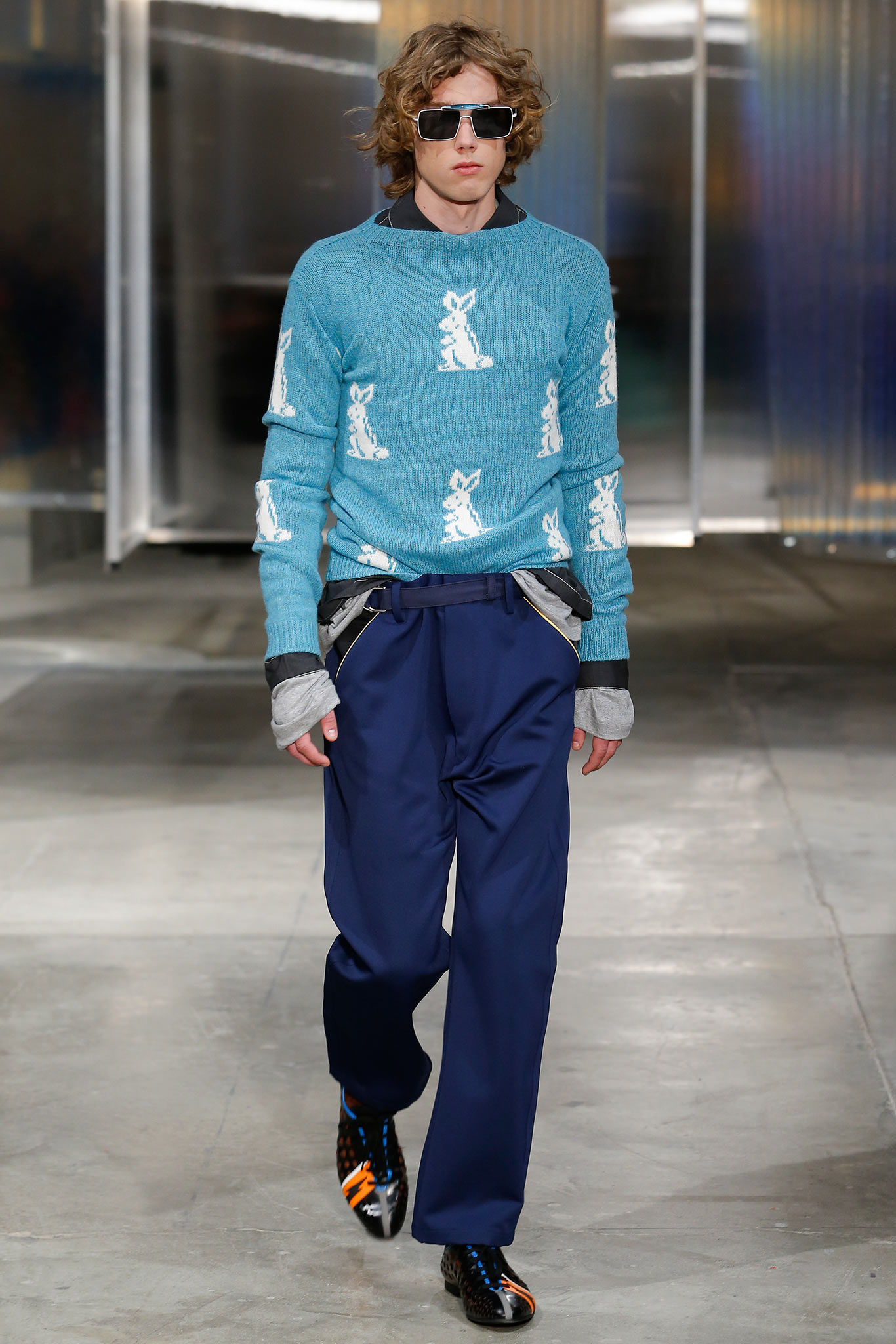
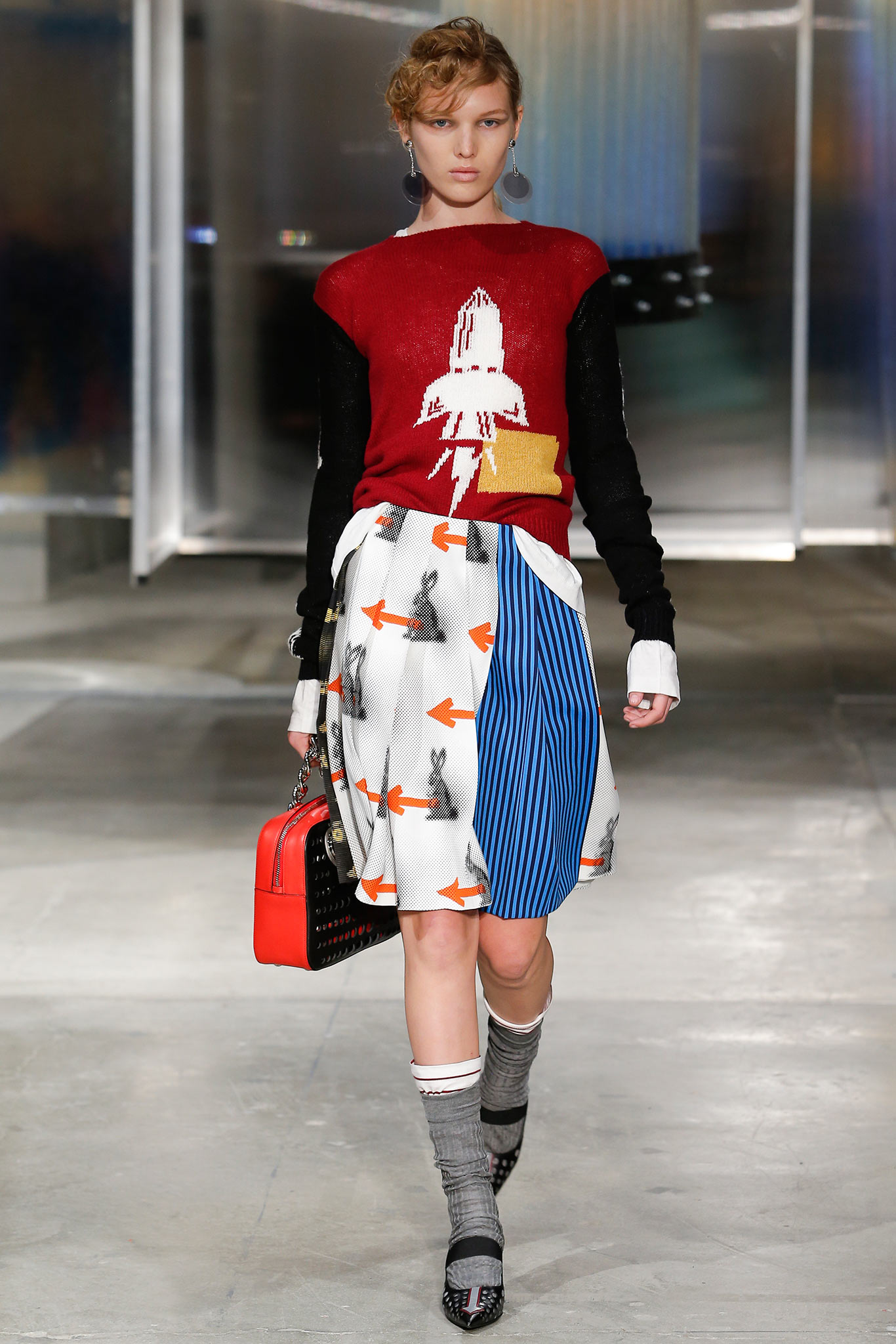
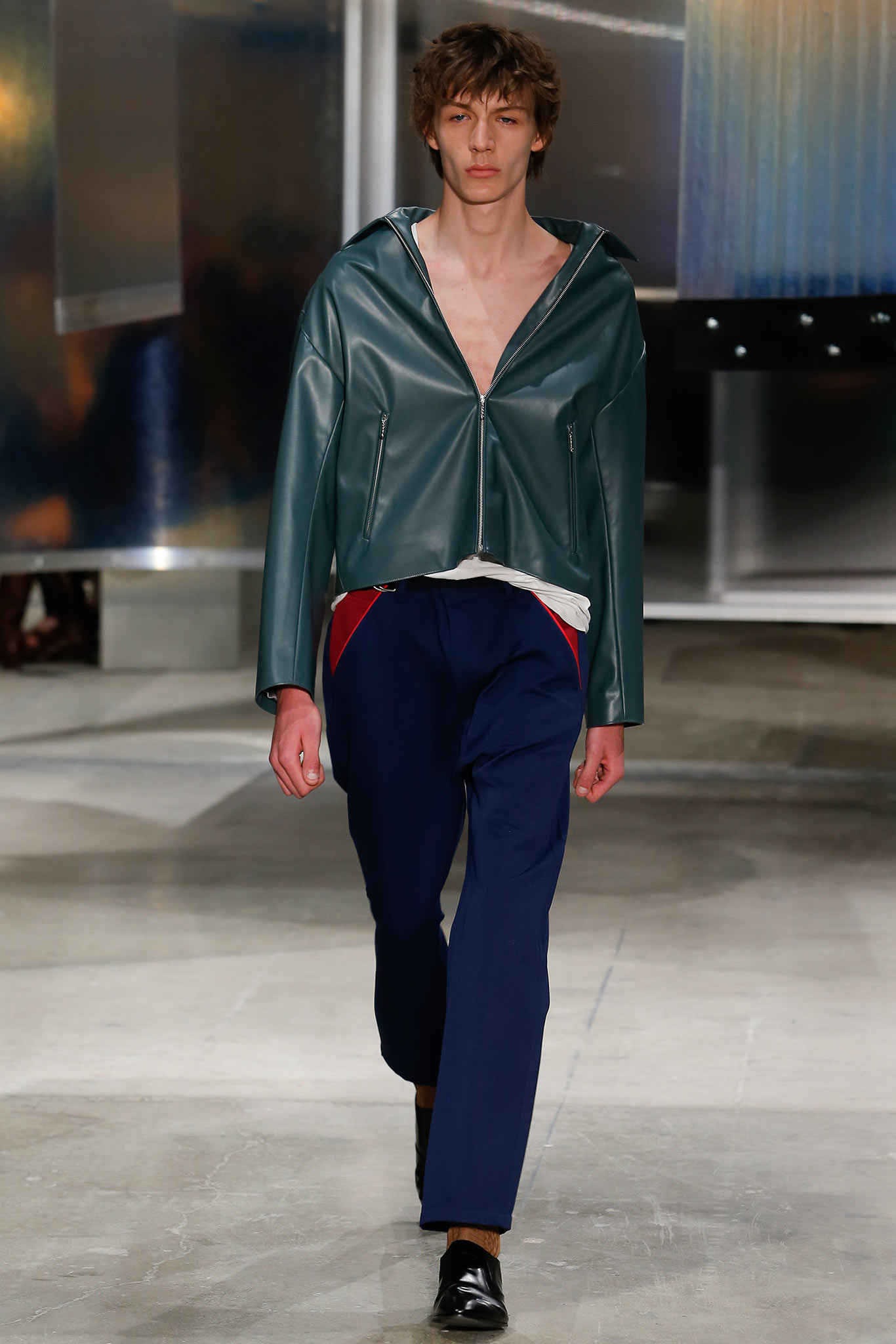
Youth and naive were the main keywords behind the recent Prada collection for men (and women). Miuccia Prada made everybody confused this time, bringing on the wardrobe of messy, skinny boys, which wear over-sized socks, “poor looking” sweatshirts and turlenecks-under-shirts. I am not just uncertain about what it all means (the rabbits and rockets on knitwears, the post-Soviet attitude kept all around these clothes), but whether I actually like or dislike the collection, as Prada bases her ideas on the power of ‘ugly’, transforming it into something strangely desirable. By that, I mean the clothes from SS16 are not beautiful at all – they are definitely ugly. The way the models wore the jackets; the perverse short shorts; even the creepy colour palette made it all look like a wardrobe of a crusty. It felt like seeing a Gosha Rubchinkiy show, but sponsored by a major luxury house.
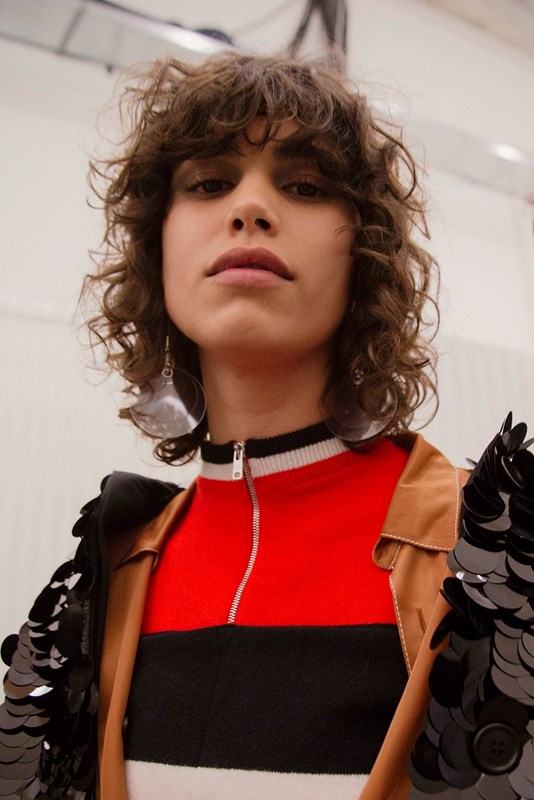
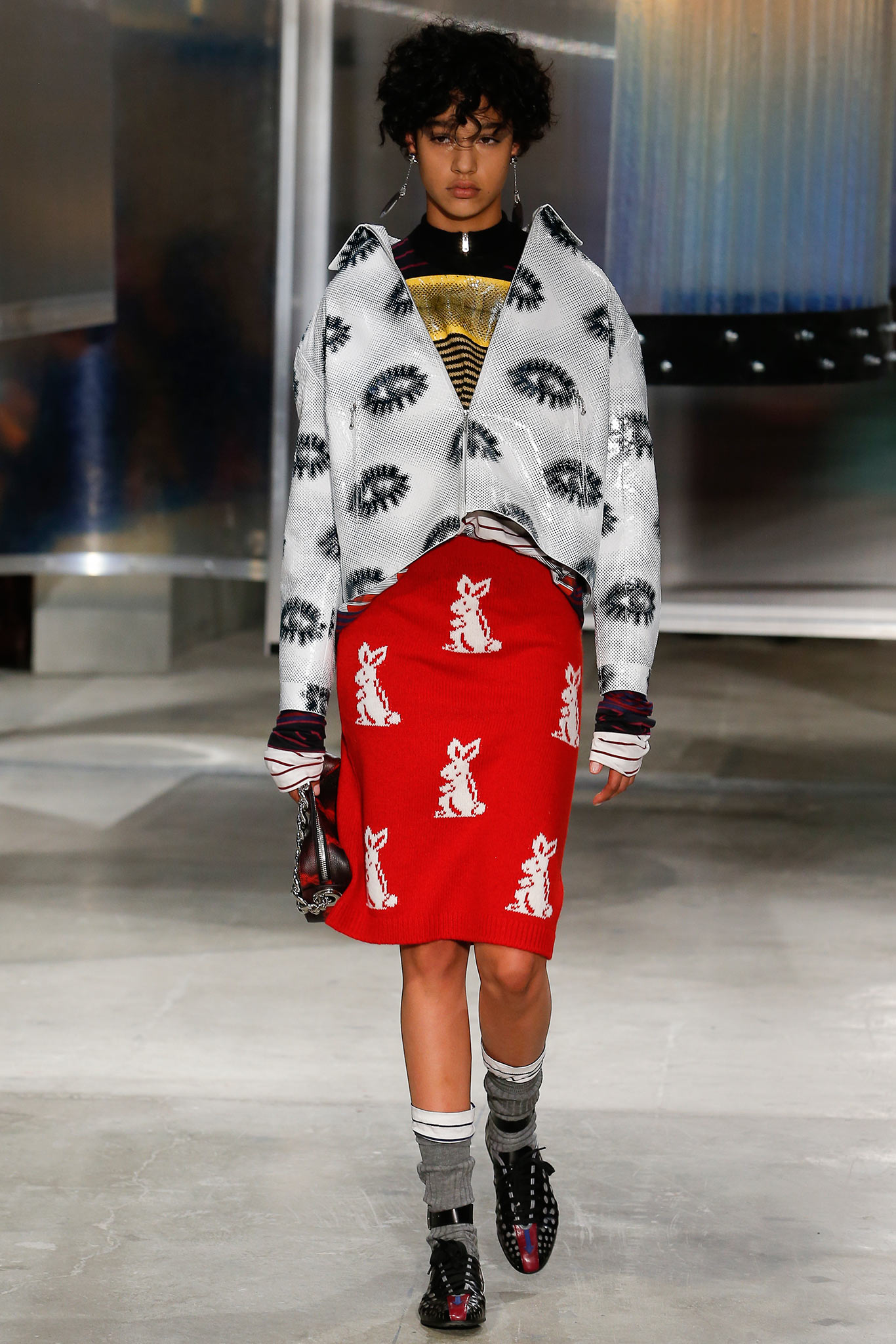
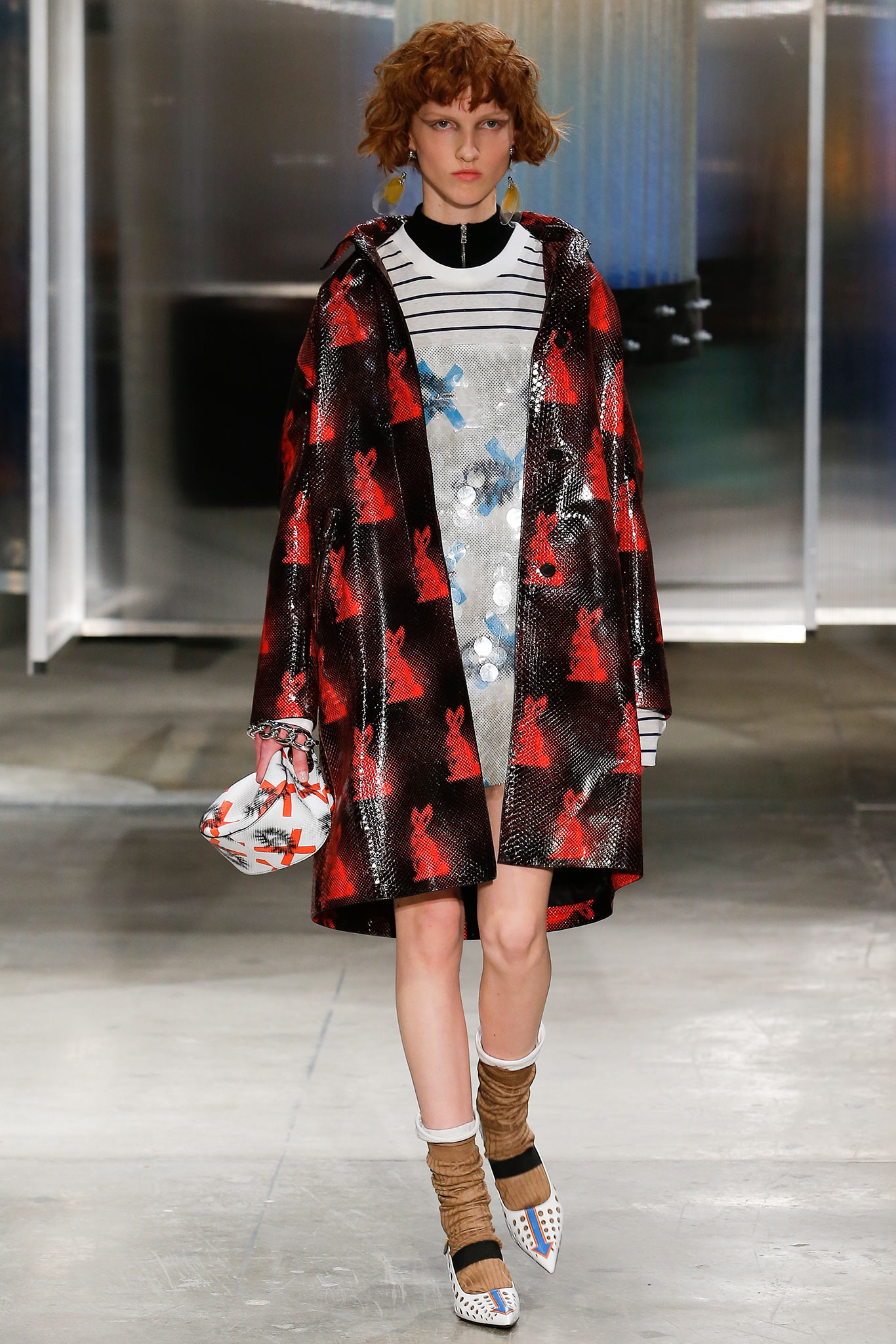
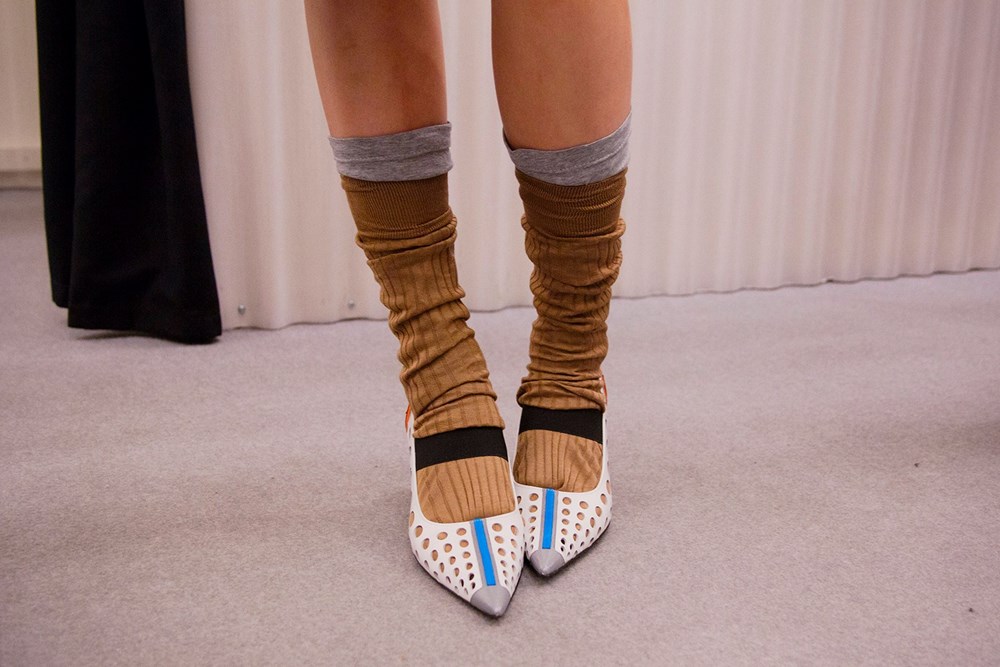
As usually, Miuccia did not forget about girls. In this collection, almost 50% of the models were girls. And their outfits did not really differ from the boys. Slouchy, over-sized rain coats; mini python skirts; same, pixellated prints on knits, which told a story of naive childhood, where the boy dreams of being an astronaut while the girl is pretending to be a bunny. However, the collection definitely told a more “parental advisory” kind of story – one of the main inspirations behind the women’s collection was the famous film, Female Trouble by John Waters. The cat-eye makeup and kitten heels with socks instantly transported us back to Chicklette and Concetta, the symbols of bad-girl defiance from Water’s 1974 work of genius. These troublemakers have made their presence in Miuccia’s world more than once (Miu Miu SS15, for instance). As you see, there is always a kind of pleasure while interpreting Miuccia Prada’s collection – even though some are definitely not in my taste. This collection represented a mingle of many topics and ideas – childhood, femininity, fake modesty and of course, ugliness. All of those often appear at Prada, but they are always presented in a new, reflection-causing way.
 Design & Culture by Ed