
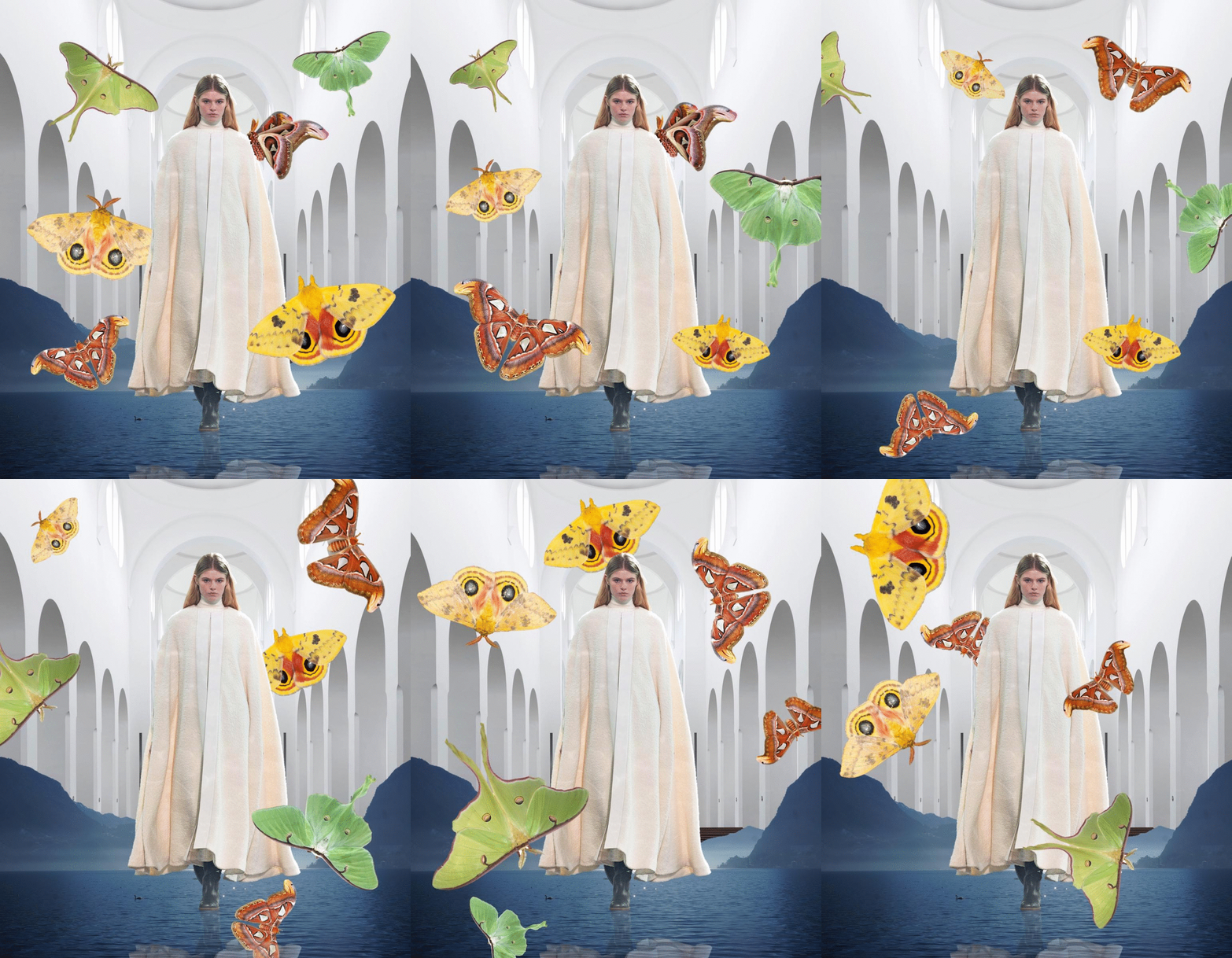
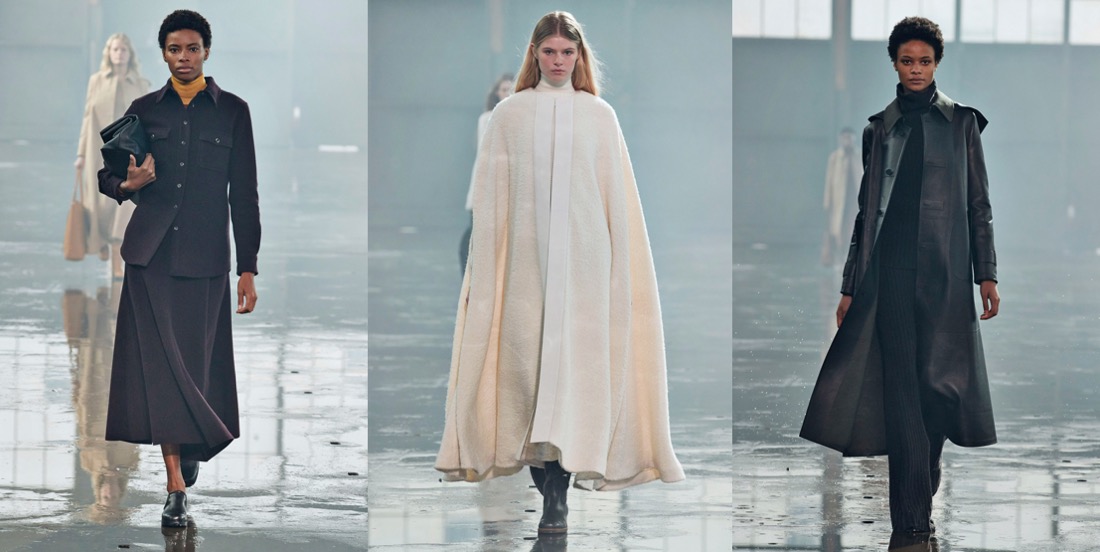
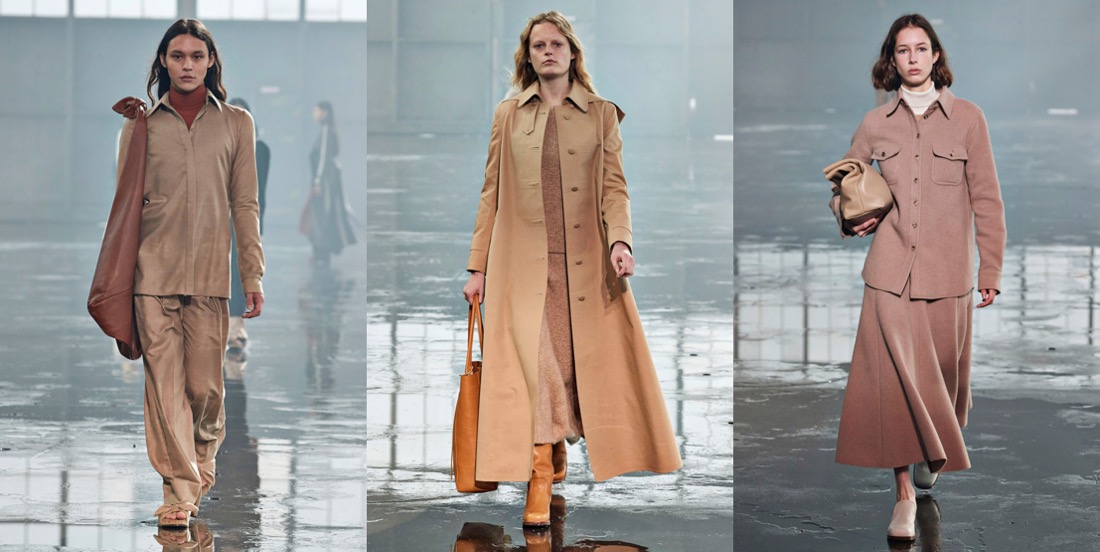
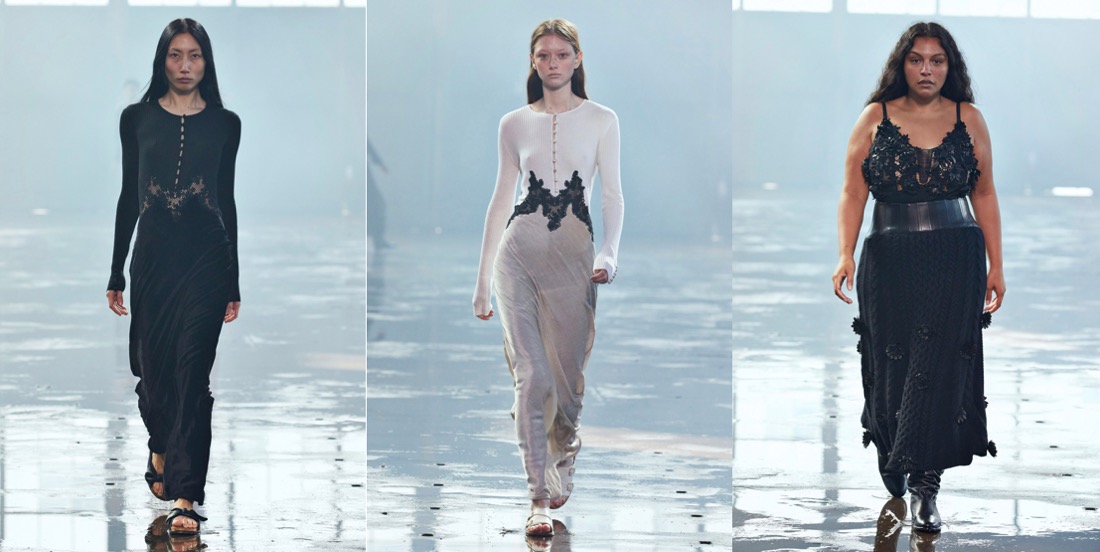
There’s an unofficial trend circulating this season: finding inspiration in powerful women from the past, often with a religiously-charged background. First, Bevza‘s designer mentioned Olga of Kiev as a reference for her knitted hoods and elongated silhouettes; yesterday, Gabriela Hearst talked about Hildegard of Bingen. A writer, composer, philosopher, mystic, and Benedictine abbess, Hildegard was a regular Renaissance woman, except that she predated the Renaissance by about two centuries. “I’m convinced,” Hearst said, “that if she had been a man we’d know her name like we do Leonardo da Vinci’s.” In fact, Hildegard sketched a Universal Man, not unlike Da Vinci’s Vitruvian Man, only hers was completed 300 years earlier. Hildegard resonates with Hearst because among her other polymath pursuits, she was an herbalist, a woman really at one with nature. “She believed in ‘green power,’” said the designer. The environment is a passion of Hearst’s too. Fashion isn’t the greenest of industries, but her company is making strides. She reported that last year 40% of the materials used in the production of her collections were repurposed and deadstock. Her 2021 goal is 50%. Hearst’s efforts around responsible design are at least partly why she was hired as Chloé’s new creative director in December (looking forward to her debut this Paris Fashion Week!). Hearst’s autumn-winter 2021 line-up is all about timeless, beautifully-crafted design that actually needs no further explanantions or mood-boards behind. Still, those behind-the-scenes details are intriguing. Hearst’s 12-year-old daughter Mia’s interpretations of Hildegard’s painted flowers appear as a print on a silk shirtdress and as crocheted appliqués on knit sweater and skirt sets. They also inspired a pair of extraordinary ruanas, hand-knit by the Manos del Uruguay women’s collective in Hearst’s native country. Hearst’s own renditions of Hildegard’s flowers were transformed into hand-painted belt buckles at the center of which she placed mano figas, talismans signifying fertility and, by extension, female power. As usual, the designer offers a well-edited wardrobe of soft, yet empowering tailoring, gorgeous dresses that can be both for the day and night and remarkable outerwear (knotting details at the shoulders softened the lines of a trench and the hem of another coat was finished with a deep band of macramé lace).

“Live” collage by Edward Kanarecki.
 Design & Culture by Ed